Most people overlook one of the most powerful tools in their estate plan: beneficiary designations. These designations determine who receives your retirement accounts, life insurance, and other assets outside of your will, often bypassing probate entirely.
At Family, Estate & Mediation Law, we see firsthand how a single outdated designation can derail an otherwise solid estate plan. This guide walks you through beneficiary designations explained, the mistakes that cost families thousands, and how to align them with your overall strategy.
What Beneficiary Designations Actually Do
Beneficiary designations are instructions you file with financial institutions that specify exactly who receives specific assets when you die. They’re not suggestions or preferences-they’re legal directives that supersede almost everything else in your estate plan. When you open a 401(k), IRA, life insurance policy, or certain bank account, the institution asks you to name who gets the money. That person or entity is your beneficiary. The critical part most people miss: these designations operate completely outside your will.
How Designations Differ From Your Will
Your will controls assets like your house, car, and personal items. Beneficiary designations control retirement accounts, life insurance death benefits, and payable-on-death bank accounts. This separation matters enormously because designated assets skip probate entirely. Instead of waiting months for a court to process your estate, beneficiaries receive funds directly from the financial institution. Families save tens of thousands in probate fees and legal costs simply because beneficiary designations were properly set up.
Which Assets Actually Have Beneficiary Designations
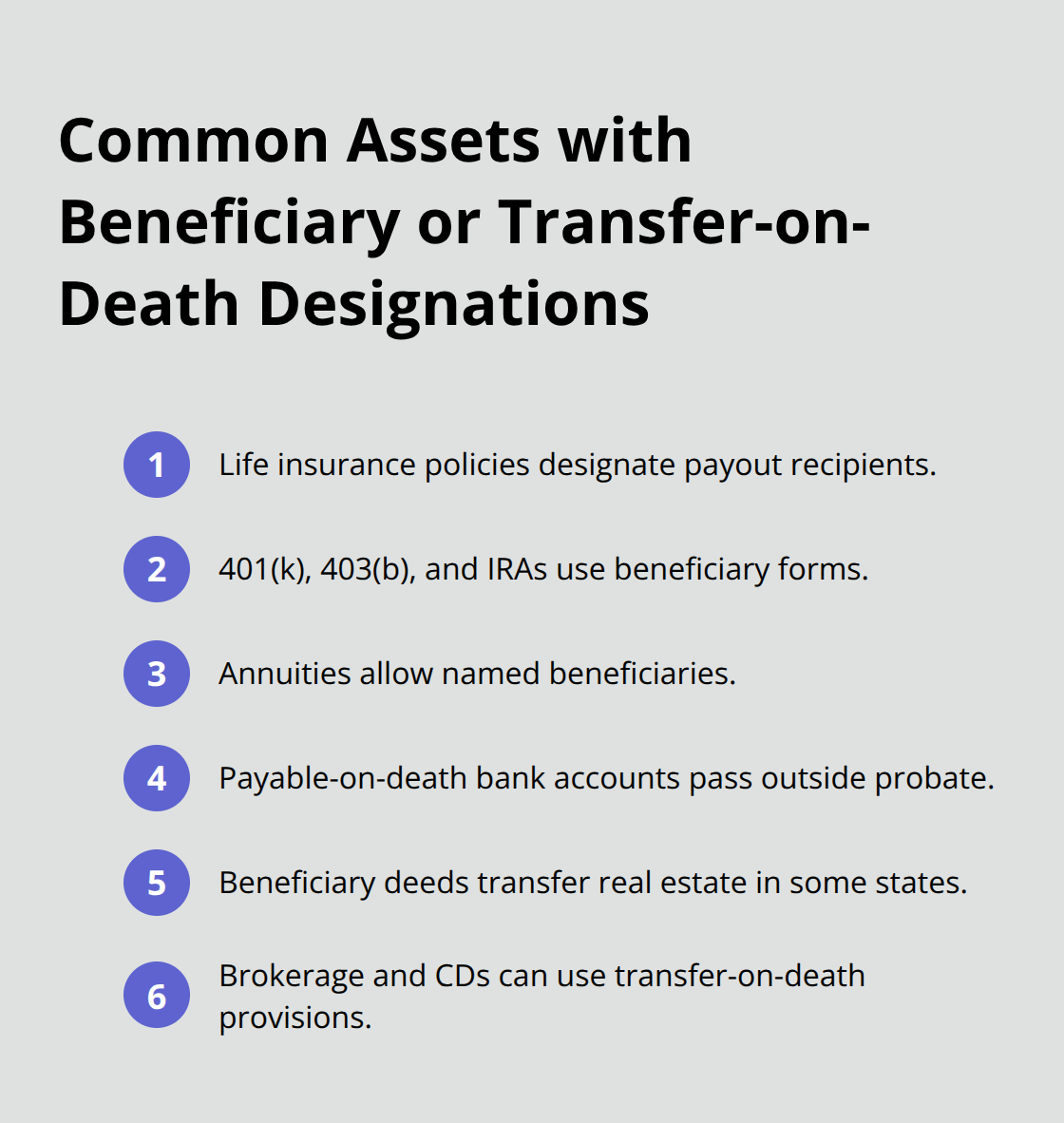
Life insurance policies, 401(k)s, 403(b)s, IRAs, annuities, and payable-on-death bank accounts all use beneficiary designations. Some states even allow beneficiary deeds for real estate-sometimes called lady bird deeds-which let you name who inherits your home outside probate. Brokerage accounts and certificates of deposit can have transfer-on-death provisions.
The scope is wider than most people realize. A typical person might have designations scattered across multiple employers, banks, and insurance companies accumulated over decades. This fragmentation creates the conditions for costly mistakes.
Why Designations Override Your Will and Everything Else
When you name a beneficiary on a 401(k), that designation legally overrides what your will says, what your trust says, and what you verbally told family members. If your will leaves your 401(k) to your three children equally but your beneficiary designation names only your ex-spouse, the ex-spouse receives the full balance. The IRS confirmed this hierarchy in its rules governing retirement account distributions. Your will cannot change a beneficiary designation on a retirement account-only the financial institution holding that account can. This creates real danger when life circumstances change but designations do not.
Understanding how these designations work sets the foundation for recognizing where mistakes happen and how they damage your estate plan.
Where Outdated Designations Derail Your Plan
Life happens fast, and beneficiary designations rarely keep pace. We at Family, Estate & Mediation Law watch this scenario unfold repeatedly: someone names their spouse as primary beneficiary on a 401(k) in 1998, divorces in 2005, remarries in 2012, and dies in 2026 with the ex-spouse still listed. The ex-spouse receives the full account balance while the current spouse receives nothing. This isn’t theoretical-it happens constantly because people assume beneficiary designations update automatically or that their will overrides them. They don’t and it won’t.
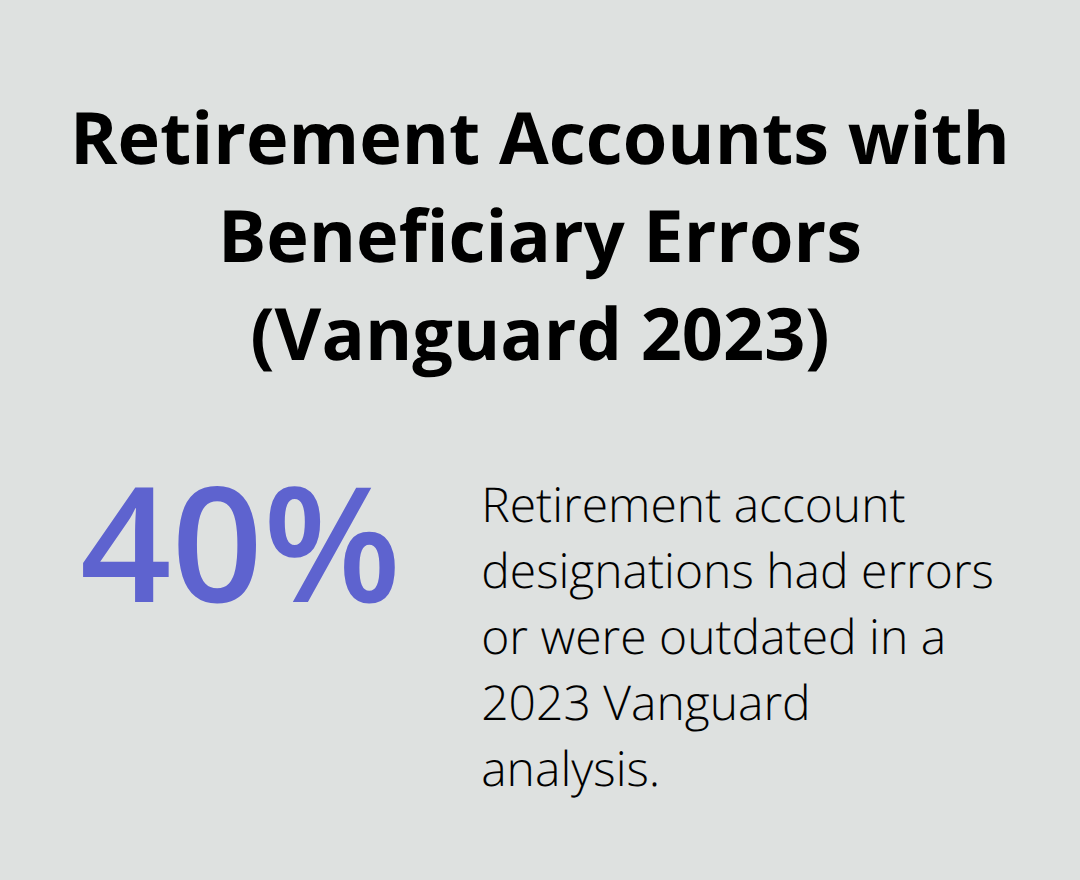
The IRS maintains strict rules: whatever name appears on the beneficiary designation form at the time of death controls where the money goes. A 2023 Vanguard analysis found that approximately 40 percent of retirement account beneficiary designations contained errors or outdated information, with divorce being the leading cause of unintended designations.
Life Events That Demand Immediate Action
Marriage, divorce, births, deaths, and remarriage are the four moments when you must act. Most people miss at least two of them. After a divorce, many states require you to remove an ex-spouse as beneficiary on certain accounts, yet countless individuals overlook this step entirely. After remarriage, the second spouse often expects to inherit retirement accounts, but the first spouse from decades earlier still holds the designation. After a child is born, parents frequently forget they named only older children years ago. After a parent dies, adult children sometimes fail to update designations that named a deceased parent as contingent beneficiary. Each oversight compounds the next one.
The Danger of Naming Only a Primary Beneficiary
Naming only a primary beneficiary without a contingent creates a legal vacuum. If your primary beneficiary dies before you do, the account passes to your estate by default, which triggers probate and potentially adverse tax treatment. For IRAs, if you die without naming a contingent and your spouse is already deceased, the IRS directs the account to your estate, which then distributes it according to state intestacy law-a process that can take months and cost thousands in court fees.
We at Family, Estate & Mediation Law recommend naming both a primary and at least one contingent beneficiary on every account that allows it. The contingent beneficiary acts as an automatic backup if the primary predeceases you, is incapacitated, or refuses the inheritance. Without this layer, your heirs face unnecessary delays and expense.
Strategic Contingent Beneficiary Choices
For retirement accounts, consider naming your adult children as contingent beneficiaries rather than your estate. This preserves the ability for non-spouse beneficiaries to stretch distributions over 10 years under current IRS rules, potentially reducing their tax burden significantly. If you have minor children, naming them directly creates guardianship complications; instead, name a trust as contingent beneficiary so distributions are managed until adulthood. The cost of setting up a trust is far lower than the legal chaos that follows when a minor inherits a six-figure retirement account without proper structure.
These outdated and incomplete designations set the stage for the next critical mistake: failing to coordinate your beneficiary choices with your overall estate plan and tax strategy.
How Your Beneficiary Designations Fit Into Your Complete Estate Plan
Building an effective estate plan means treating beneficiary designations not as isolated forms but as interconnected pieces that must align with your will, trust, and overall financial strategy. Many people update their will and create a trust while leaving beneficiary designations frozen in time, creating contradictions that confuse executors and trigger family disputes. A client updates their will to leave everything equally to three children, but retirement account beneficiary designations still name only the oldest child from a form filled out in 2008. When the parent dies, the oldest child receives the 401(k) worth $400,000 while the other two children split the remaining estate, creating resentment that poisons family relationships for years. The solution is straightforward but requires discipline: every time you update your will or trust, pull the beneficiary designation forms for every account and verify they reflect the same intentions.
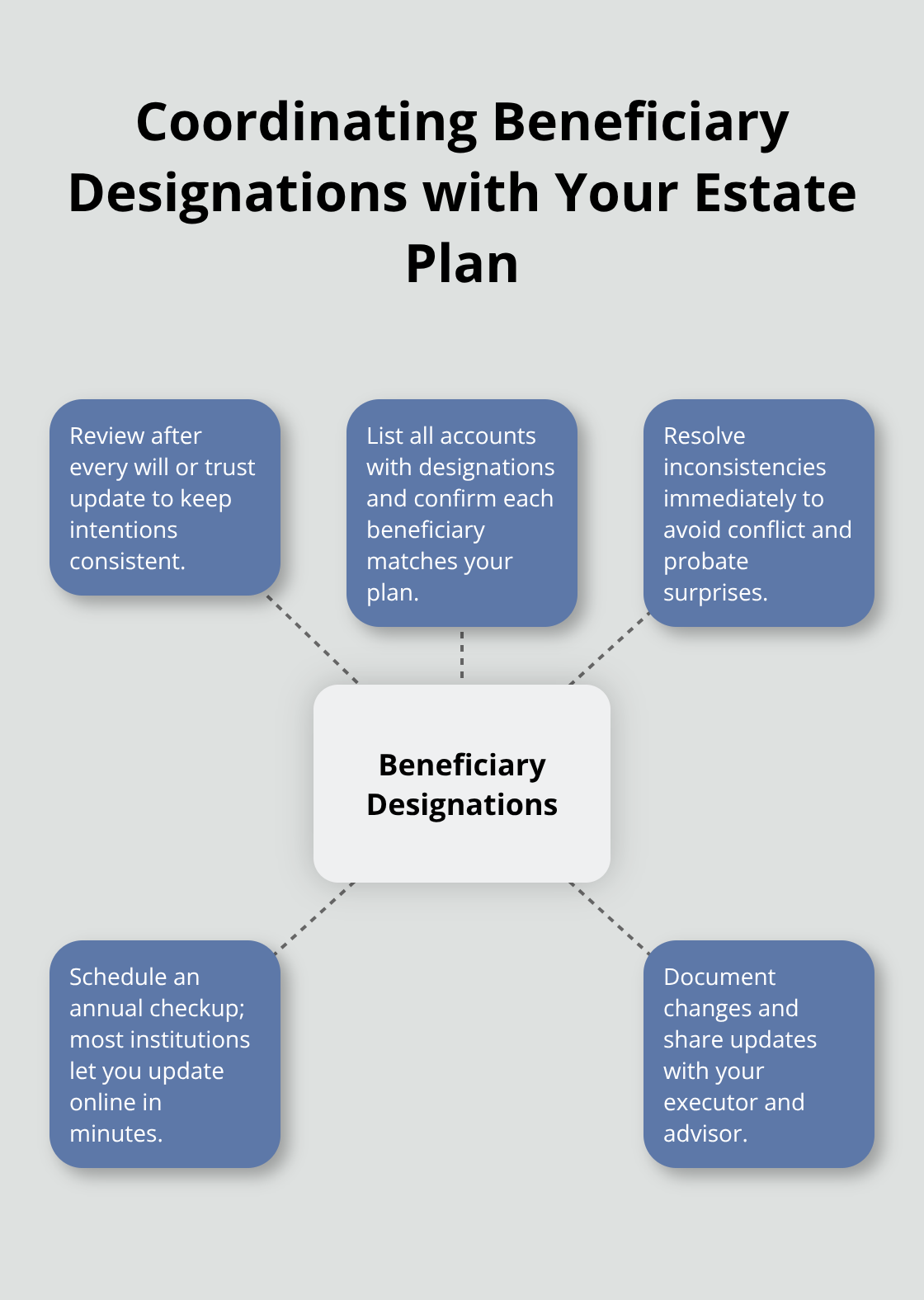
Fewer than 30 percent of people review and update designations annually, according to Vanguard research, even though most financial institutions allow you to complete this task online in minutes.
Align Designations With Your Will and Trust
Your will and trust express your overall intentions for your estate, yet beneficiary designations on retirement accounts, life insurance policies, and transfer-on-death accounts operate independently of these documents. A mismatch between what your will says and what your designations specify creates legal confusion and family conflict. If your will directs that all retirement accounts pass to your estate (to be distributed equally among heirs), but your 401(k) designation names only one child, that child receives the full 401(k) balance outside probate while the estate receives nothing. The other heirs receive only what remains in probate assets, which may be far less valuable. To prevent this, list every account with a beneficiary designation-retirement accounts, life insurance policies, payable-on-death bank accounts, and transfer-on-death brokerage accounts-and compare each designation to your will and trust. Inconsistencies reveal where you need to make changes. This exercise takes a few hours but prevents decades of family tension.
Tax Consequences Vary Dramatically by Beneficiary Type
Tax consequences differ substantially depending on which account type you designate to which beneficiary, and this is where most people leave money on the table unnecessarily. A surviving spouse who inherits a traditional IRA can roll it into their own IRA and delay distributions until age 73, potentially decades of tax-deferred growth. A non-spouse beneficiary inheriting the same IRA must take distributions within 10 years under current IRS rules and pay income tax on those withdrawals, which can push them into higher tax brackets and trigger unexpected Medicare premium increases. This distinction alone can cost a family $50,000 to $150,000 in unnecessary taxes depending on account size and the beneficiary’s income level. If you have substantial retirement assets and adult children, try naming your spouse as primary beneficiary of your largest retirement account to maximize the rollover advantage, while designating other assets like life insurance to children or trusts.
Strategic Designations for Charities and Minors
Charitable organizations make excellent contingent beneficiaries for retirement accounts because distributions to charities are income-tax-free, allowing you to satisfy philanthropic goals while avoiding income tax that would otherwise hit your heirs. If you have minor children or grandchildren, naming a properly structured trust as beneficiary of retirement accounts costs a few hundred dollars upfront but prevents the legal nightmare of a child inheriting six figures without guardianship protections or tax planning. A trust allows trustees to manage distributions strategically rather than forcing lump-sum payments that derail a child’s financial stability. The upfront cost of trust setup is minimal compared to the legal chaos that follows when a minor receives a substantial inheritance without proper structure in place.
Final Thoughts
Beneficiary designations explained throughout this guide reveal a straightforward reality: these forms control more of your wealth than your will ever will. A single outdated designation can undo years of careful estate planning, redirect thousands to unintended recipients, and fracture family relationships permanently. Yet most people treat them as one-time paperwork rather than living documents that demand regular attention.
Start by listing every account that holds a beneficiary designation and pull the actual forms from your financial institutions, not what you think you named. Compare each designation to your current will and trust, look for mismatches and outdated names, and verify that your designations coordinate with any trusts you’ve created. This review takes a few hours and costs nothing, while ignoring it costs thousands and creates family conflict that lasts years.
Update your designations whenever you marry, divorce, have children, experience a death in your family, or make major changes to your estate plan. Family, Estate & Mediation Law helps families across Northeast Florida align their beneficiary designations with their complete estate strategy and protects your legacy for the people who matter most.