A trust is one of the most powerful tools for protecting your family’s future, yet many people put it off because the trust formation process seems complicated. At Family, Estate & Mediation Law, we’ve helped hundreds of Northeast Florida families move from confusion to confidence by breaking down each step.
This guide walks you through creating a trust that actually works-from identifying your assets to funding it properly and keeping it current with your life.
Understanding What a Trust Actually Does for Your Family
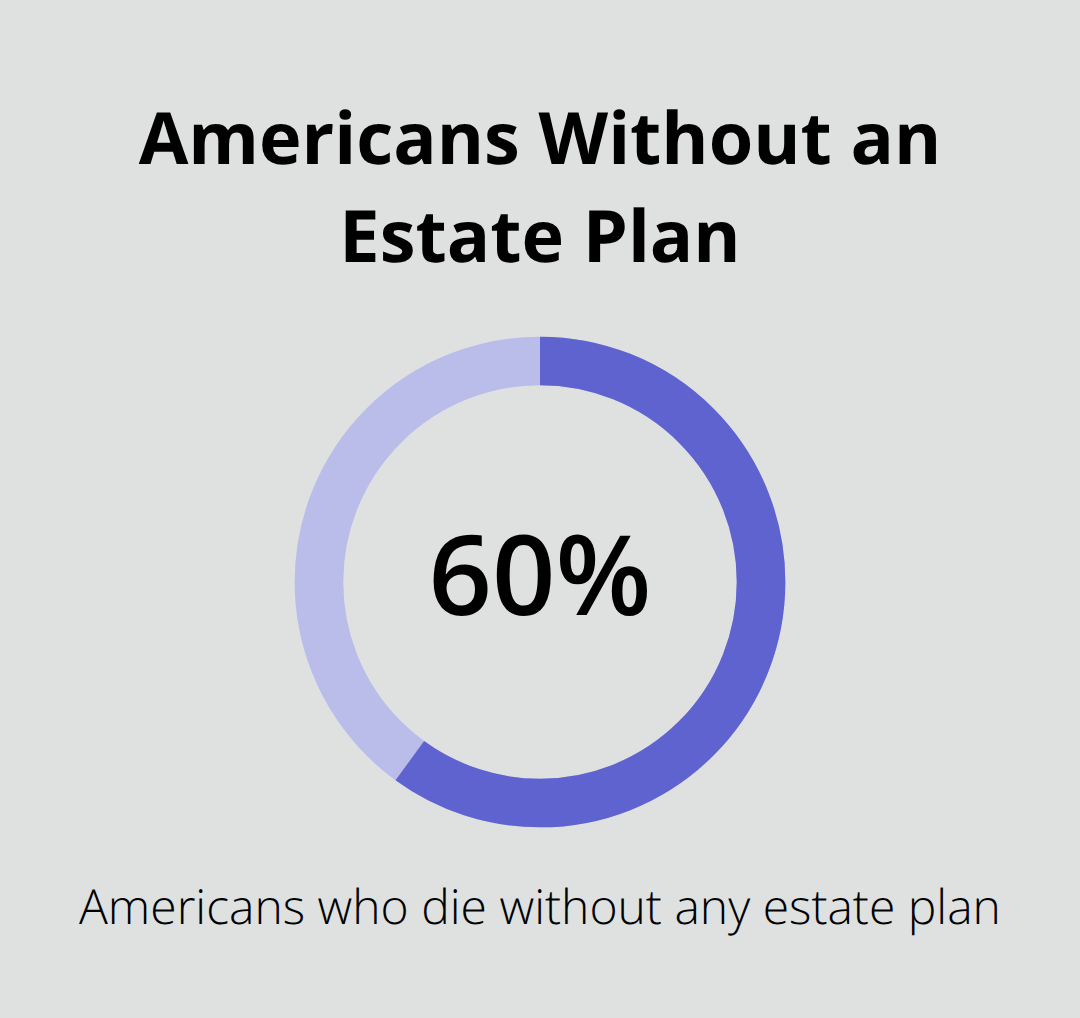
A trust is a legal arrangement where you transfer ownership of your assets to a trustee who holds and manages them for the benefit of your beneficiaries. Unlike a will, which only takes effect after you die and must go through probate court, a trust operates immediately and keeps your affairs private. Trusts avoid the public record, court delays, and fees that accompany probate. According to the American Academy of Estate Planners and Councils, approximately 60% of Americans die without any estate plan at all, yet those who establish trusts report significantly faster asset distribution to heirs-often within weeks rather than months or years.
The person you name as trustee (which can be yourself initially) has a legal duty to follow your instructions and act in your beneficiaries’ best interests, creating accountability without court involvement.
How Trusts Outperform Wills
A will requires probate, meaning a judge must validate it, inventory your assets, pay debts and taxes, and finally distribute what remains to heirs. This process typically costs 3% to 7% of your estate’s value in court fees and attorney costs, and in Florida it can take anywhere from six months to two years depending on complexity. A trust bypasses probate entirely because assets held in the trust technically don’t belong to you at death-they belong to the trust itself. This distinction matters enormously. Your family gains access to funds faster, your privacy remains intact since trusts aren’t public documents, and your beneficiaries avoid the stress of court proceedings. Wills do serve a purpose for naming guardians of minor children and handling assets you forgot to place in the trust, but they cannot replace a trust’s protective power. Families in Northeast Florida increasingly recognize that a will alone leaves their loved ones vulnerable to probate delays and expense.
Why Northeast Florida Families Establish Trusts
Beyond avoiding probate, families establish trusts to maintain control over how and when beneficiaries receive money. Parents with adult children who struggle with finances can structure a trust so funds are distributed gradually rather than in a lump sum, preventing poor decisions from derailing their legacy. Blended families use trusts to ensure assets go to their own children rather than being consumed by a surviving spouse’s new relationship. Business owners place their companies in trusts to maintain continuity if they become incapacitated. Families with special needs children establish trusts to provide for them without disqualifying them from government benefits like Medicaid or SSI. Retirees in Florida appreciate that trusts help minimize estate taxes and protect assets from creditors in certain circumstances.
Revocable Versus Irrevocable Trusts
The flexibility of a trust-whether revocable (changeable during your lifetime) or irrevocable (permanent)-makes it the practical choice for families with more than simple circumstances. A revocable trust allows you to modify terms, add or remove assets, and change beneficiaries as your life evolves. An irrevocable trust, once established, cannot be altered, but it offers stronger tax benefits and creditor protection. Most families start with a revocable trust because it provides control and flexibility while still accomplishing probate avoidance. Understanding which structure fits your situation requires looking at your specific assets, family dynamics, and long-term goals-the next step in the trust formation process.
Building Your Trust Step by Step
Inventory Your Assets and Clarify Your Goals
List every asset that matters to your legacy: real estate, bank accounts, investment portfolios, retirement accounts, life insurance policies, business interests, vehicles, and personal property with significant value. Many people skip this step and regret it later because assets left outside the trust still go through probate. The IRS reports that the average American household holds assets across five to seven different financial institutions, which means scattered paperwork makes funding your trust harder. Write down account numbers, current values, and where each asset is held. This inventory becomes your roadmap for what actually transfers into the trust.
Next, clarify what you want the trust to accomplish. Do you want your children to receive money at age 30 rather than immediately? Should your surviving spouse have access to all funds, or should some assets go directly to your children? Are you concerned about protecting assets from a beneficiary’s creditors or divorce? Do you have a child with special needs who requires careful planning? These decisions shape whether you need a revocable trust, an irrevocable trust, or some combination of both structures.
Choose Between Revocable and Irrevocable Trusts
Most Northeast Florida families choose a revocable trust because it handles probate avoidance while keeping you in control during your lifetime. You can change beneficiaries, adjust distributions, add new assets, or even dissolve the trust if circumstances shift dramatically. The trade-off is that revocable trusts offer no tax advantages or creditor protection during your life, though they still protect assets from probate after death.
Irrevocable trusts lock in your decisions permanently, which sounds restrictive but delivers real benefits. They remove assets from your taxable estate, which reduces estate taxes for wealthy families, and they shield assets from creditors and divorce claims because you no longer own them legally. The decision between these structures depends on your net worth, family situation, and how much control you need to keep.
Work With a Professional to Draft Your Trust
Working with a professional who understands Florida law matters tremendously because the trust document must be drafted correctly and funded properly to actually work. The technical details separate effective trusts from expensive paperwork that fails when families need it most. A qualified attorney reviews your asset list, family circumstances, and tax situation to recommend the right trust structure for you.
The professional also explains how funding works-retitling assets in the trust’s name, updating beneficiary designations on retirement accounts and insurance policies, and transferring bank accounts properly. This coordination between drafting and funding determines whether your trust actually protects your family or leaves gaps that trigger probate anyway. Once your trust is drafted and you understand the funding requirements, the next critical phase begins: actually moving your assets into the trust and avoiding the mistakes that render trusts ineffective.
Making Your Trust Actually Work
Drafting a trust on paper accomplishes nothing if your assets never move into it. This is where most trusts fail. Families spend thousands on a beautifully drafted trust document, then never fund it properly, leaving their assets to go through probate anyway. The gap between a trust document and a functioning trust is where real mistakes happen.
Retitling Assets Into Your Trust’s Name
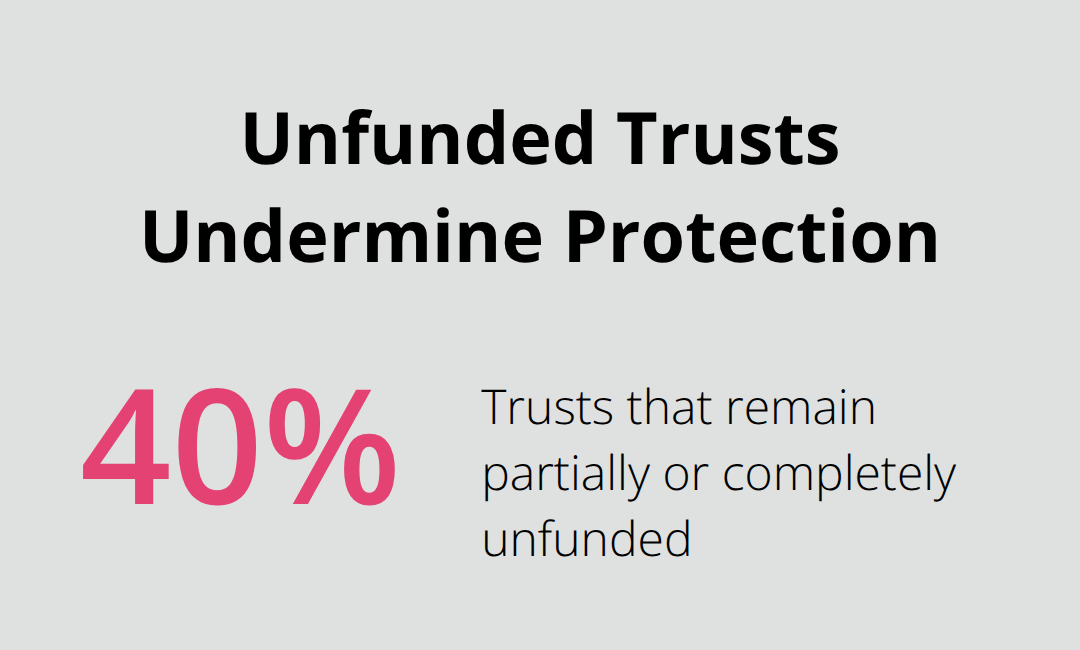
Real estate requires a new deed naming the trust as owner, not just listing it on a piece of paper. Bank accounts need to open in the trust’s name or transfer formally through your financial institution. Investment accounts and brokerage holdings must change to the trust, which involves contacting each company and completing their specific transfer forms. Approximately 40% of trusts remain partially or completely unfunded, which defeats the entire purpose of creating one.
Each asset type has its own process, and missing even one significant holding means that asset goes through probate when you die. Your financial institutions have no idea a trust exists unless you tell them and provide documentation proving it.
Handling Retirement Accounts and Life Insurance Separately
Retirement accounts like IRAs and 401(k)s require special attention because transferring them into a revocable trust triggers tax consequences. Instead, you name the trust as beneficiary on these accounts, which requires updating beneficiary designation forms with your employer or financial institution. Life insurance policies work the same way-the trust should become the beneficiary rather than your estate.
These beneficiary designation updates are separate from the trust funding process but equally important. Many people overlook this step entirely, assuming the trust document handles everything automatically. It does not.
Avoiding the Most Costly Funding Mistakes
Common pitfalls emerge when families treat trust funding as optional or delay it indefinitely. Some people retitle real estate but forget about the investment portfolio held at a brokerage firm. Others update bank accounts but never change the beneficiary designations on life insurance or retirement accounts, causing those assets to go directly to their estate rather than into the trust.
The cost of correcting these mistakes after death often exceeds what proper funding would have cost initially. If a house is not in the trust’s name, your heirs face probate court just to transfer it, even though the trust document exists. If beneficiary designations point to your estate instead of the trust, those assets bypass the trust’s protective structure entirely and go through probate.
Creating a Funding Checklist That Works
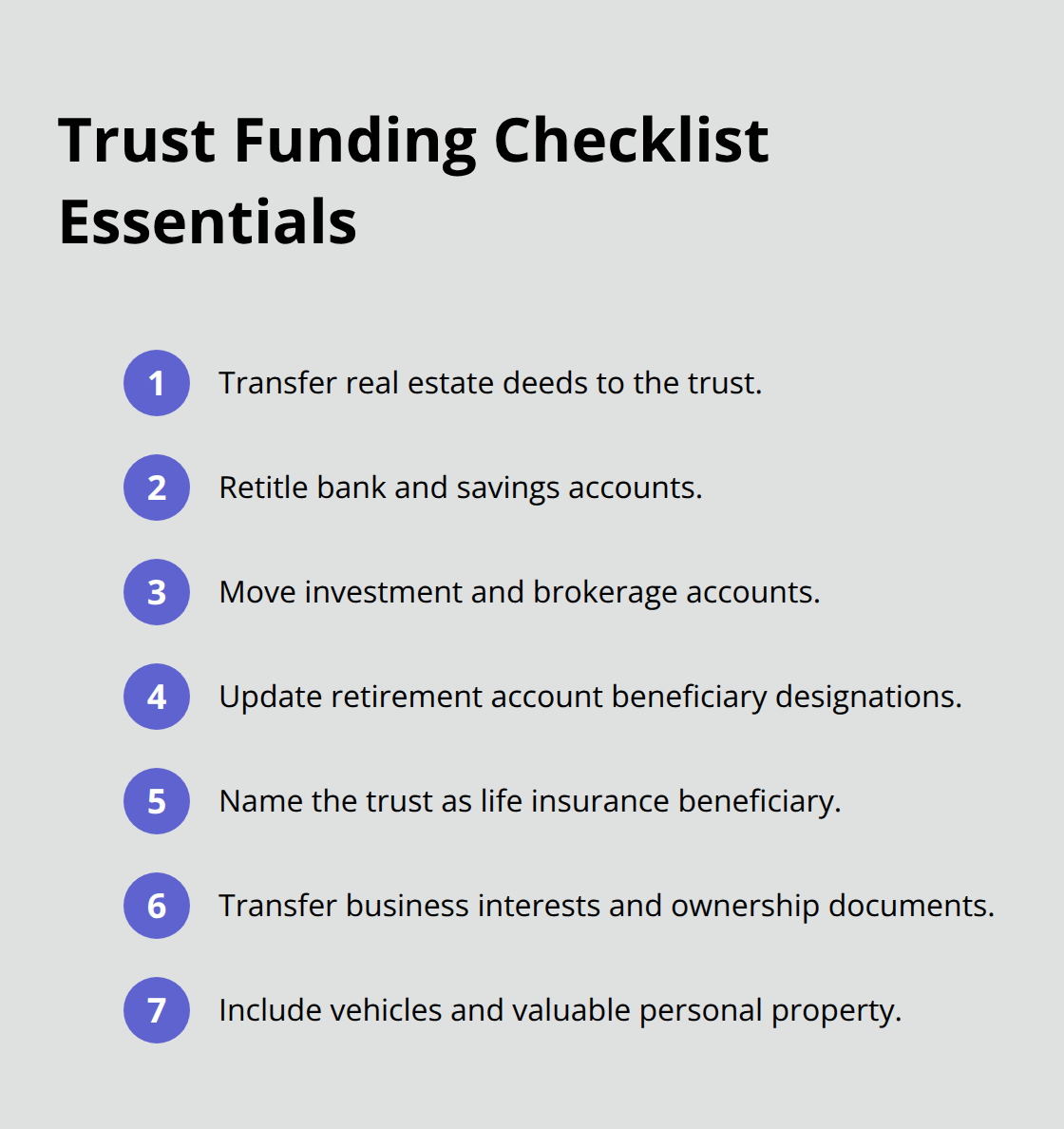
Create a detailed funding checklist that accounts for every single asset you identified during the planning phase, then check each one off as it transfers into the trust. This takes time but prevents the expensive corrections that happen when families discover gaps years later. Account for real estate deeds, bank and savings accounts, investment portfolios, retirement account beneficiary designations, life insurance policies, business interests, and any other holdings with meaningful value.
Final Thoughts on Your Trust Formation Process
A properly funded trust protects your family from probate delays and court costs, but that protection only works if you maintain it over time. Your trust is not a set-it-and-forget-it document because life changes constantly-you acquire new assets, your children grow older, your financial situation shifts, and tax laws evolve. A trust that made perfect sense five years ago may no longer fit your current circumstances.
Review your trust every three to five years or whenever major life events occur (marriage, divorce, the birth of grandchildren, significant increases in wealth, or moves to different states). Florida residents who relocate from another state should have their trust examined to confirm it complies with Florida law. If you’ve acquired substantial real estate, investment accounts, or business interests since creating your trust, those assets need to transfer into the trust to receive its protection.
Estate taxes represent another reason for regular reviews because federal estate tax exemptions change periodically. Families with estates exceeding $13.61 million in 2024 face federal estate taxes unless their trust structure accounts for this threshold, and a professional review identifies whether your trust still minimizes tax exposure or whether adjustments would benefit your family. Contact Family, Estate & Mediation Law to review and update your trust as your life evolves.