A will that isn’t legally sound can create chaos for your family when you’re gone. We at Family, Estate & Mediation Law see firsthand how invalid wills lead to disputes, delays, and heartbreak.
Will validity verification protects what you’ve worked to build. This guide walks you through what makes a will legally binding and how to prevent challenges before they start.
The Three Legal Foundations of a Valid Will
Testamentary Capacity: The Mental Competency Requirement
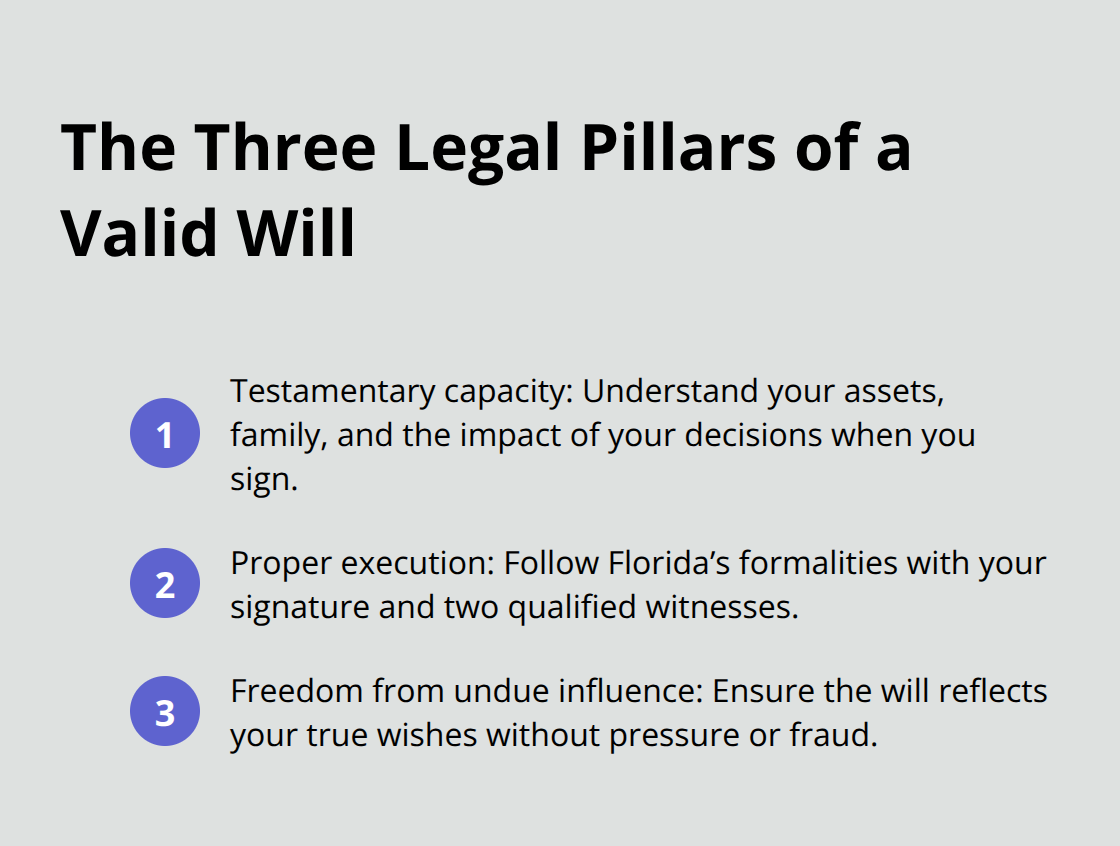
A valid will rests on three legal pillars that courts examine closely when disputes arise. The first is testamentary capacity, which means you must have sound mental ability when you sign your will. You need to understand what assets you own, who your family members are, and how your decisions affect them. Courts don’t require perfect memory or the absence of medical conditions-they require that you grasp the basic scope of your estate and the natural objects of your bounty.
Proper Execution: Formalities That Matter
The second pillar is proper execution, which involves strict formalities: your signature, typically two witnesses who watch you sign, and compliance with your state’s specific requirements. Florida law requires that your will be in writing, signed by you or someone authorized to sign on your behalf, and witnessed by at least two people who aren’t beneficiaries. These formalities create a clear paper trail and discourage forgery. Courts take these requirements seriously because they’ve seen too many disputes where the wrong people benefited from poorly drafted or executed documents.
Freedom from Undue Influence and Fraud
The third pillar is freedom from undue influence and fraud. Your will must reflect your true wishes, not the manipulative pressure of someone positioned to benefit from it. This protection guards against situations where family members or caregivers pressure vulnerable individuals into changing their estate plans.
Why These Foundations Protect Your Family
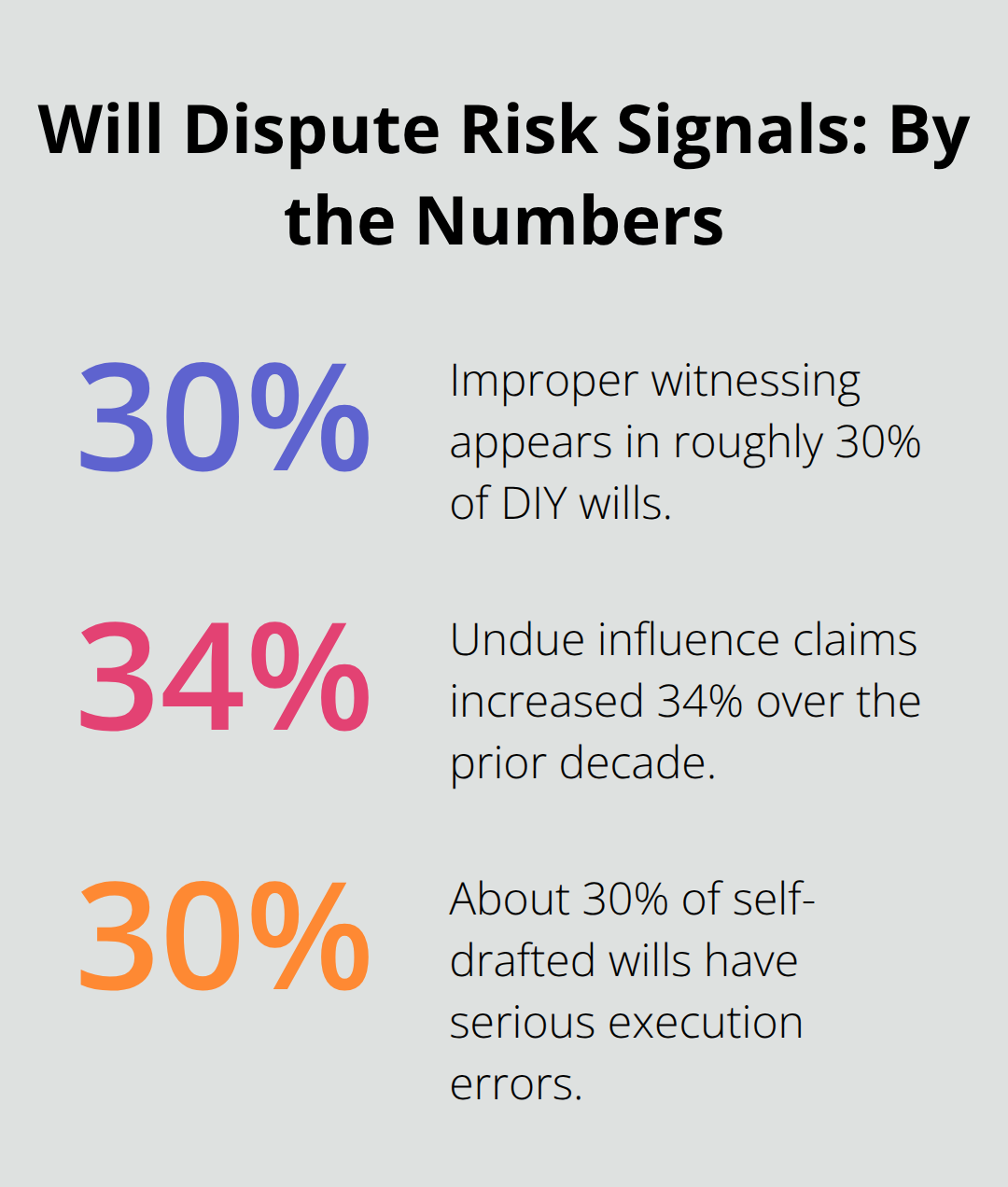
These three foundations matter because they prevent fraud and protect your actual intentions. Research on advance directives shows that approximately 4 in 10 adults don’t have a valid will, leaving families vulnerable to intestacy laws and costly litigation. Improper witnessing appears in roughly 30 percent of DIY wills created without professional guidance. The testamentary capacity requirement protects you from challenges if you were dealing with cognitive decline, medication effects, or temporary confusion at the time of signing.
Your best protection involves having a qualified professional draft your will and oversee its signing with proper witnesses present-this eliminates most validity challenges before they start. Understanding these three pillars prepares you to recognize what makes a will legally sound, but knowing the foundations isn’t enough. Common issues still emerge even when people try to follow the rules.
What Derails a Will in Court
Vague Wording Invites Litigation
Vague wording creates immediate problems when courts must interpret your intentions. Phrases like “leave my estate to those I love” or “divide things fairly between my children” invite litigation because no two judges read ambiguous language the same way. Specificity matters enormously-you must name exact beneficiaries, state precise dollar amounts or percentages, and describe property clearly to eliminate guesswork. Courts in Florida have ruled repeatedly that ambiguous wills favor the interpretation that promotes intestacy over rewarding someone’s guess about what you intended.
Missing or Improper Signatures Invalidate Everything
Missing or improper signatures present another frequent challenge that remains entirely preventable. A will signed by only one witness instead of two fails Florida’s execution requirements, period. Someone who signs in front of a beneficiary who shouldn’t have been present as a witness invalidates the entire document regardless of how clearly it was written. The signature itself must be your actual signature, not initials or an X unless you cannot write and properly document that fact. Florida law specifies where your name must appear and where witnesses must sign relative to your signature-placement matters as much as the signature itself.
Undue Influence Claims Strike Years Later
Claims of coercion or manipulation often emerge years after death when someone challenges the will based on allegations that pressure from a caregiver, family member, or healthcare provider influenced your decisions. These challenges succeed far more often than people expect because burden of proof issues favor the challenger in many circumstances. Courts examine whether the person with something to gain had unusual access to you, whether you changed your will suddenly near the end of life, and whether you isolated yourself from other family members before signing. A 2019 study published in the Journal of Elder Abuse and Neglect found that undue influence claims increased 34 percent over the previous decade, with caregivers and family members as the most frequent accused parties.
Documenting your mental state, your reasons for specific decisions, and your understanding of what you owned creates a protective record that courts respect. Professional drafting and execution with witnesses who can testify that you appeared competent and free from pressure provides the strongest defense against these challenges. These preventive steps address the most common validity problems, but protection requires more than understanding what goes wrong-it demands action before disputes arise.
Protecting Your Will Before Disputes Start
Document Your Mental State and Intentions
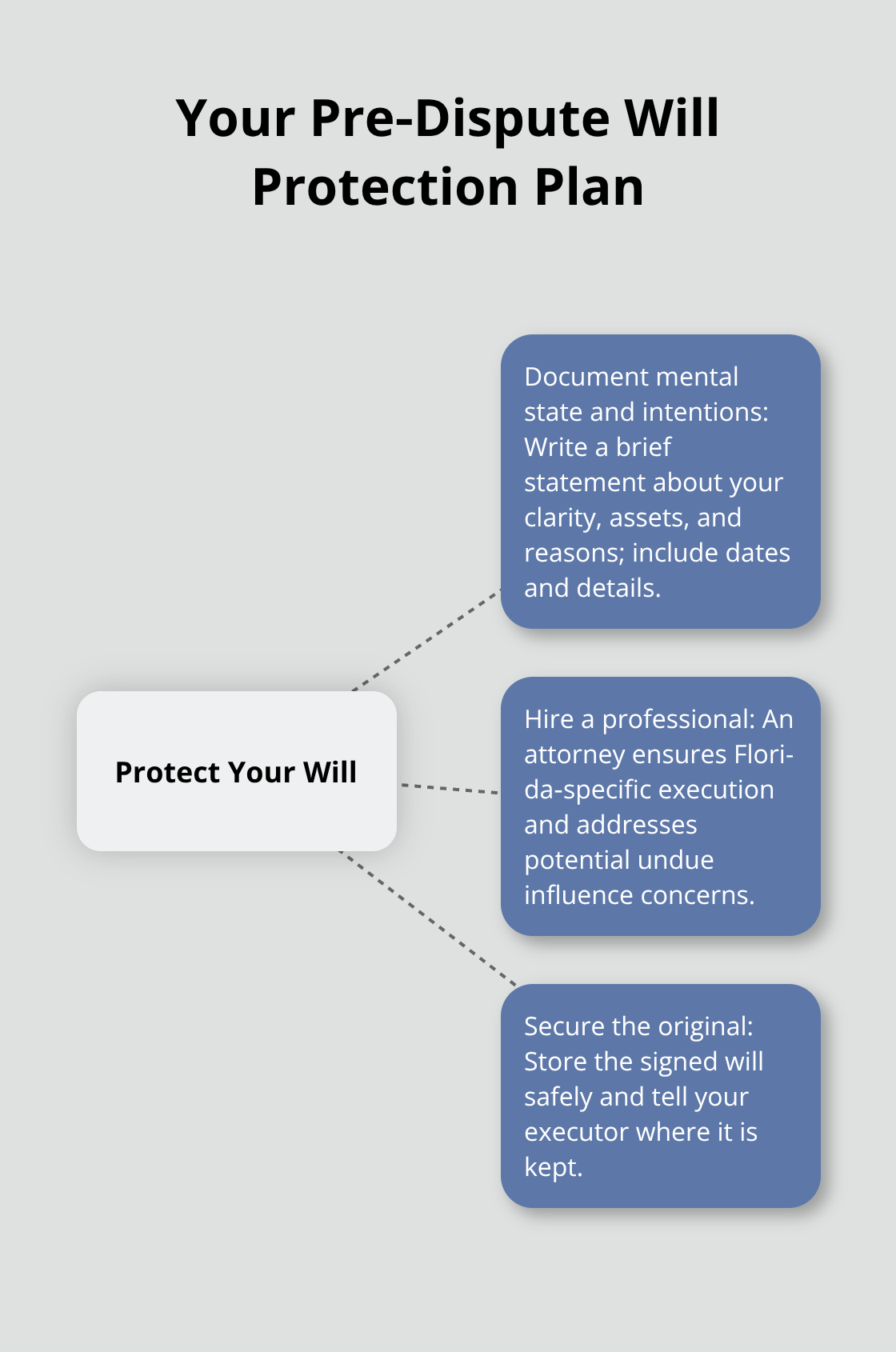
Create a protective record around your will that transforms it from a vulnerable document into one that withstands courtroom scrutiny. Write a brief personal statement explaining why you make specific decisions, particularly if your will differs from what family members might expect. This statement does not need formal language-a few paragraphs describing your mental clarity, your understanding of your assets, and your reasons for naming particular beneficiaries or excluding certain people create a contemporaneous record that courts heavily favor. Include dates and specific details about your physical and mental condition on the day you sign. If you manage a medical condition, mention that you remain lucid despite treatment. If you worry about future challenges, ask your doctor to document your testamentary capacity in writing before you sign (though this step remains uncommon and is not legally required in Florida). Store these protective documents with your original will, not separately, so courts see them together as evidence of your sound mind and genuine intentions.
Hire a Professional to Draft and Execute Your Will
Professional drafting eliminates the majority of validity problems that plague DIY wills. Approximately 30 percent of self-drafted wills contain execution errors serious enough to invite challenges, according to data on probate litigation patterns. An attorney ensures your will meets Florida’s exact requirements for signature placement, witness qualifications, and document formatting while helping you identify and address potential undue influence concerns before they become problems. The attorney also guides you through decisions that protect your actual wishes from future attack.
Secure Your Original Will Properly
After signing, keep your original will in a safe deposit box at your bank or with your attorney’s office-never in a home safe where it might be lost, damaged, or disputed regarding when changes occurred. Maintain a written list of where your will is stored and who can access it, and inform your executor and close family members of this location. Digital copies stored securely with password protection provide backup access without creating confusion about which version is authentic (courts recognize only the original signed document as your will, so protecting that physical document prevents the chaos that erupts when families cannot locate or verify the authentic version).
Final Thoughts
A valid will protects your family from the legal chaos that follows when courts must interpret unclear language or when disputes erupt over whether your document meets legal standards. We at Family, Estate & Mediation Law have watched families spend tens of thousands of dollars fighting over wills that could have withstood scrutiny with proper planning. Will validity verification starts with reviewing your current document against the three legal pillars we covered: testamentary capacity, proper execution, and freedom from undue influence.
If you drafted your will yourself or had it prepared years ago without professional guidance, that document likely contains vulnerabilities that invite challenges. Write a brief personal statement explaining your decisions and your mental clarity on the day you signed, then store your original will securely with your attorney or bank. Professional drafting costs far less than litigation over an invalid will, and the peace of mind you gain knowing your document will withstand scrutiny matters enormously.
If your will is more than five years old, if your circumstances have changed significantly, or if you’ve never had one reviewed by someone qualified in estate planning, we at Family, Estate & Mediation Law Group work with families across Northeast Florida to create wills and estate plans that reflect your true wishes. Contact us to schedule a consultation and verify your will’s legal standing.