A will that fails legal requirements can leave your family in conflict and your wishes unfulfilled. Will validity checks matter because Florida courts strictly enforce specific rules about signatures, witnesses, and mental capacity.
At Family, Estate & Mediation Law, we see preventable mistakes derail estates regularly. This guide walks you through what makes a will legally sound and how to protect yours from challenges.
Will Validity Checks Demystified: St. Augustine and Palatka, FL Standards
Florida’s Non-Negotiable Will Requirements
Florida Statutes Section 732.502 establishes the baseline: a will must be in writing, signed by the testator, and witnessed by two individuals who sign in the presence of the testator and each other. Courts will not bend on this. The Florida Supreme Court has consistently upheld these requirements because they prevent fraud and confirm the document reflects genuine intent.
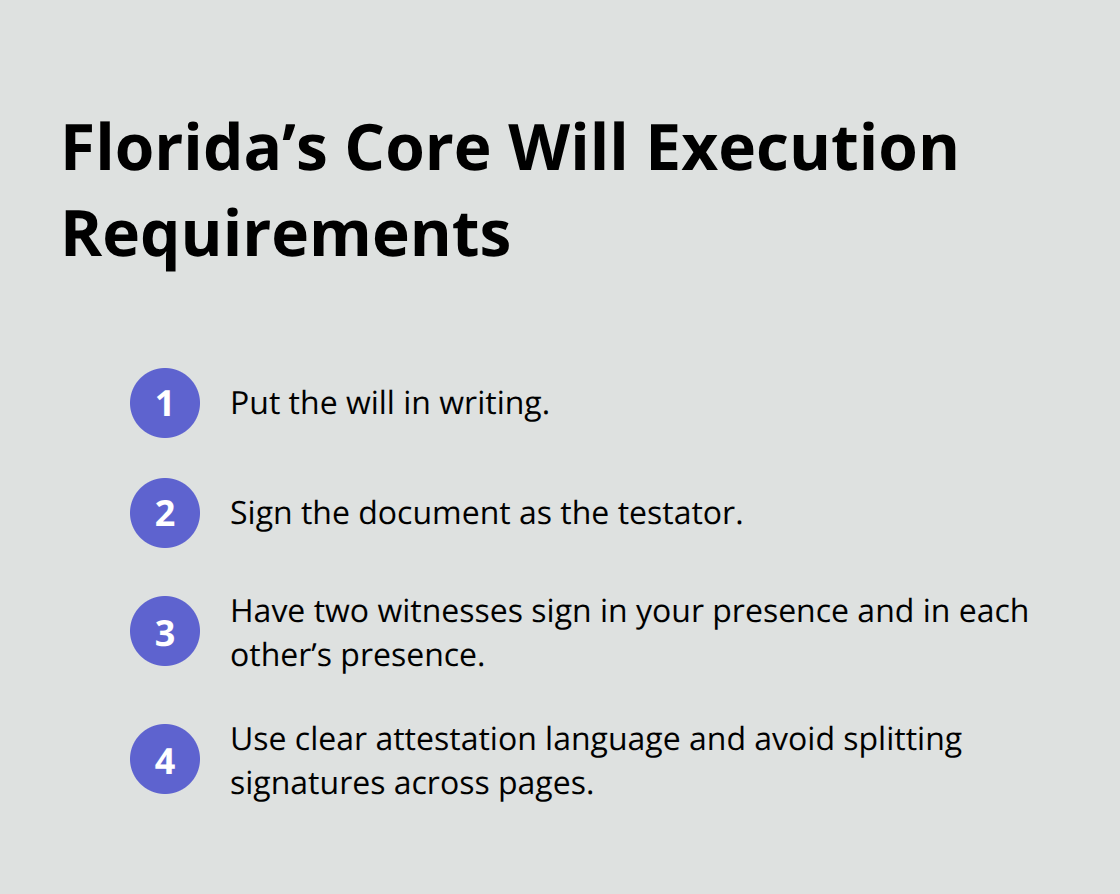
Wills fail when a single witness is missing or when signatures appear on different pages without proper attestation language. Courts reject these documents without exception.
Understanding Testamentary Capacity
The testator must possess testamentary capacity at the moment of signing-meaning sound mind, understanding of assets, awareness of family members, and comprehension of how the will disposes of property. Florida law sets a low threshold for capacity, so you don’t need perfect health or perfect memory. However, you must understand what you’re doing when you sign. Many people wait too long to create or update their wills, then face capacity questions when cognitive decline becomes apparent. Timing matters significantly in will creation.
The Role of Witnesses
Florida requires disinterested witnesses, meaning they cannot benefit from the will. A beneficiary who signs as a witness creates immediate grounds for challenge, though Florida law does allow interested witnesses under certain conditions with reduced inheritance rights. The witnesses themselves carry legal responsibility for the execution ceremony. Both witnesses must watch the testator sign or acknowledge the signature, then sign immediately afterward in the testator’s presence and in each other’s presence. Simultaneous signing isn’t required, but the sequence matters.
Execution Precision and Self-Proving Affidavits
A formal execution with an attorney present, a notary, and clear documentation of the date and circumstances protects your will from technical challenges. Self-proving affidavits, authorized under Florida Statutes Section 732.503, eliminate future witness testimony requirements if the document includes proper sworn statements from the testator and witnesses. This single addition prevents countless disputes. Without a self-proving affidavit, probate courts may need to locate and depose witnesses years later-an expensive and uncertain process.
Avoiding Digital Will Pitfalls
Digital wills remain problematic in Florida; the state requires traditional wet signatures unless you’re a military member deploying overseas. Online services that promise quick, cheap wills often produce documents that fail these technical requirements, leaving families scrambling during probate. The cost of attorney review before signing is minimal compared to litigation costs afterward. With over 50 years of combined experience, Family, Estate & Mediation Law Group helps individuals across Northeast Florida navigate these requirements and create wills that withstand scrutiny. Understanding what makes a will valid protects your legacy, but common mistakes still derail estates-mistakes that often stem from misunderstanding what Florida courts actually require.
Why Wills Fail in St. Augustine and Palatka, FL
Signature and Witness Defects
Signature and witness failures account for the majority of will invalidations. Florida courts reject wills missing even one required witness, and they reject wills where witnesses signed on different occasions or where the testator’s signature appears questioned. The Florida Bar’s probate practice guide confirms that technical execution errors remain the leading cause of will contests. One common mistake involves having only one witness present when the testator signed, then locating a second witness afterward to sign as a formality.
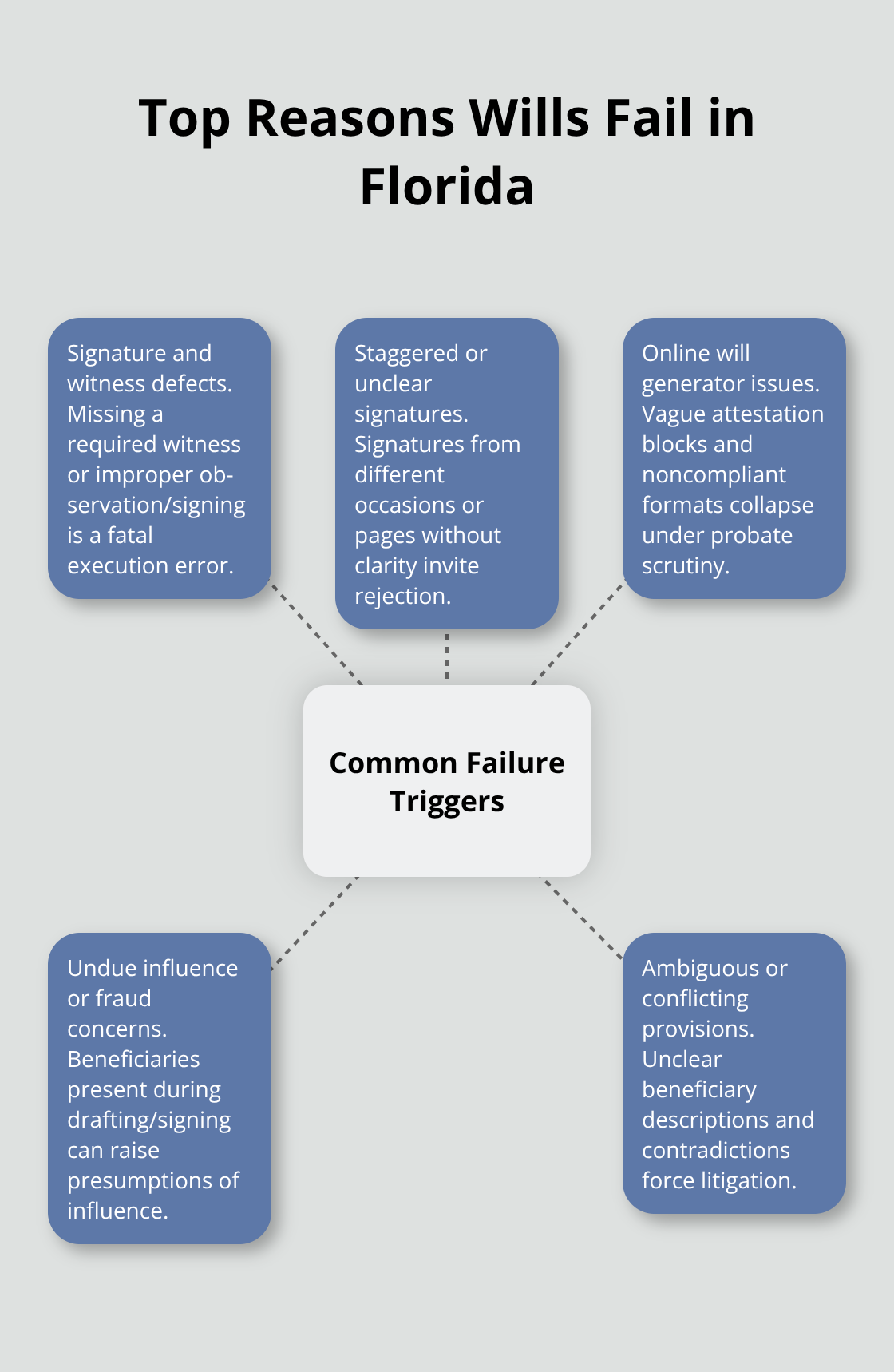
Courts view this as a fatal defect because both witnesses must observe the testator’s signature in real time.
Another frequent problem occurs when people use online will generators that produce documents without proper attestation language or with vague signature blocks that don’t clearly identify who witnessed what. These documents may look official but fail immediate scrutiny in probate court. The cost of attorney review before signing is minimal compared to litigation costs afterward.
Online Will Generators and Technical Problems
Digital wills remain problematic in Florida; the state requires traditional wet signatures unless you’re a military member deploying overseas. Online services that promise quick, cheap wills often produce documents that fail Florida’s technical requirements, leaving families scrambling during probate. Families only discover these signature and witness problems after death, forcing expensive litigation to establish validity.
Undue Influence and Fraud Claims
Undue influence and fraud claims arise when family members challenge whether the testator acted freely or whether someone manipulated the will’s contents. Courts in Florida take these allegations seriously and examine the circumstances surrounding will creation closely. If a caregiver, child, or other beneficiary was present during drafting and signing, courts may presume undue influence depending on the relationship and the will’s terms.
Ambiguous Language and Conflicting Provisions
Ambiguous language creates different problems entirely. Wills with conflicting provisions, unclear beneficiary descriptions, or vague instructions about asset distribution force probate judges to interpret intent rather than execute clear wishes. A will stating that property goes to your son John and your son John Smith creates confusion if both individuals exist. Wills leaving assets to your grandchildren without naming them specifically invite disputes about which grandchildren qualify.
Precise language, specific identification of beneficiaries using full legal names and identifying information, and clear statements about how assets distribute if primary beneficiaries die first solve these substantive clarity issues. These execution precision problems combine with substantive clarity issues to create most will invalidity problems in Northeast Florida-and they also determine whether your estate planning strategy protects your family or leaves them vulnerable to costly disputes.
Shielding Your Will From Attacks in St. Augustine and Palatka, FL
Document Your Mental State at Signing
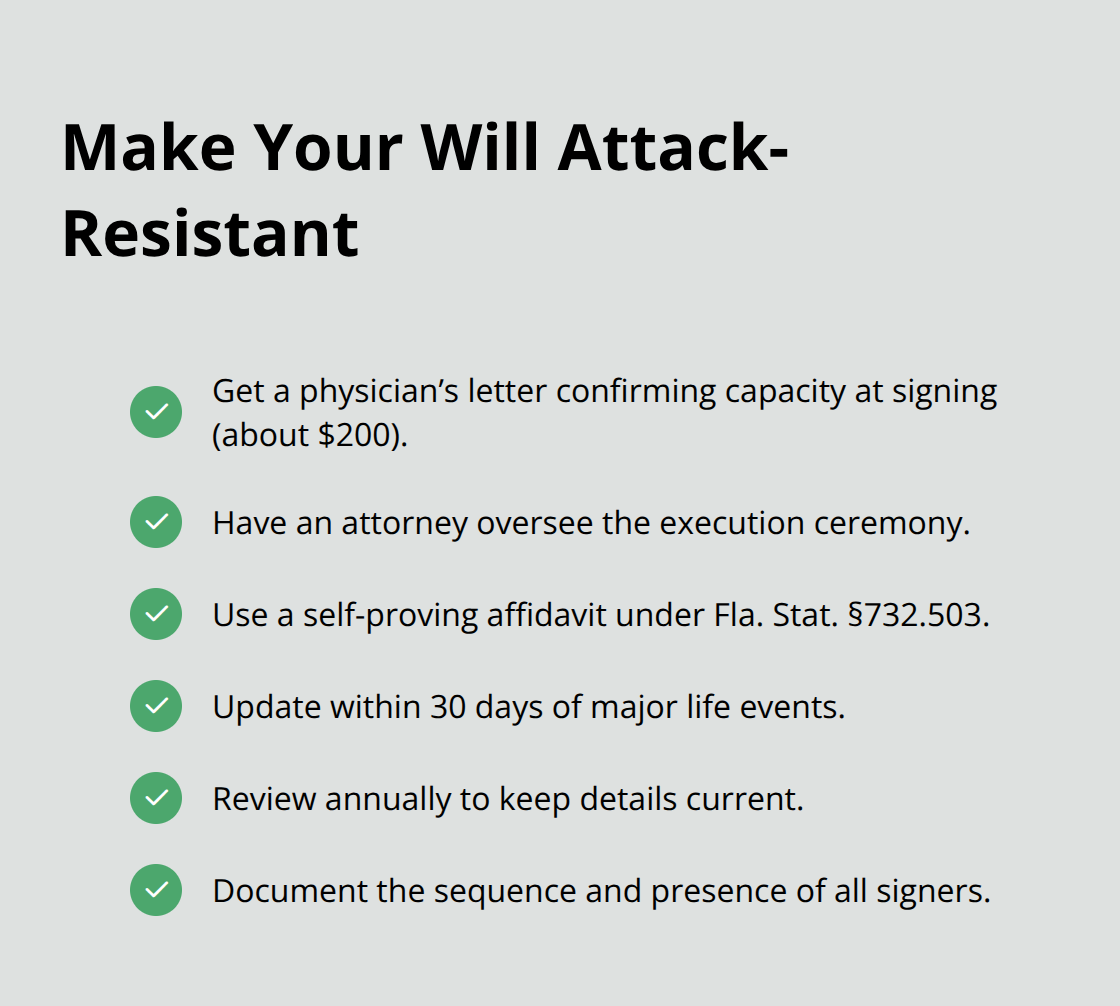
Creating a will means nothing if it collapses under legal scrutiny after your death. The solution starts with contemporaneous medical evidence that proves your mental capacity when you signed. A physician’s letter or cognitive assessment performed within weeks of execution stops most capacity challenges before litigation begins. Your doctor should state that you understood your assets, family members, and the will’s contents at the time of signing. This letter costs under $200 and carries substantial weight in Florida probate courts because it provides objective proof of your mental state on the exact date that matters most.
Hire an Attorney to Oversee Execution
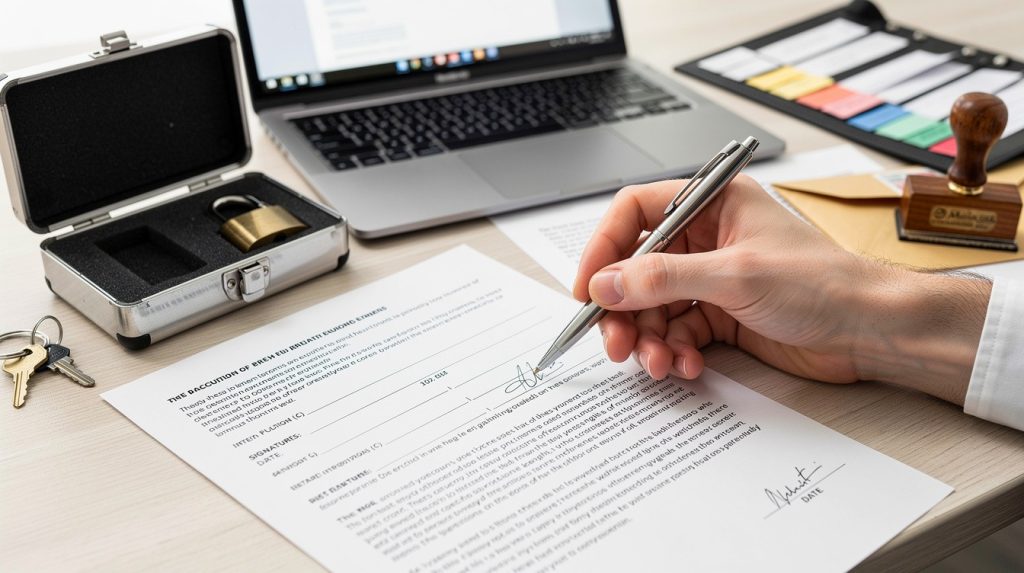
An attorney present during signing creates a powerful protective record. The attorney should prepare an execution memorandum describing your appearance, demeanor, statements about capacity, and the exact sequence of signing. This memo becomes critical evidence if someone later claims you lacked capacity or faced coercion. The attorney also verifies that both witnesses observe your signature in real time and that all parties sign in proper sequence. This oversight prevents the technical defects that cause most will invalidations in Florida courts.
Add a Self-Proving Affidavit
Florida Statutes Section 732.503 authorizes self-proving affidavits that eliminate the need to locate witnesses years after your death for probate testimony. The affidavit costs nothing extra when prepared by an attorney but saves thousands in potential witness location and deposition fees. This single addition prevents countless disputes and accelerates probate proceedings significantly.
Update Your Will After Major Life Events
Your will also needs precision in language and regular updates tied to major life changes. Vague beneficiary descriptions, outdated provisions referencing deceased family members, or property descriptions that no longer match your actual holdings create ambiguity courts must resolve through interpretation. Update your will within 30 days of marriage, divorce, the birth of children or grandchildren, significant asset changes, or moves between states. Florida courts presume older wills reflect outdated intent, particularly when family circumstances shift dramatically.
Conduct Annual Review Meetings
Annual review meetings examine whether your will still matches your wishes and current situation. Most people need only minor updates, but the process catches problems like naming an executor who has since moved out of state or died, or leaving property you no longer own. Wills created with attorney oversight and updated regularly survive challenges because they demonstrate clear intent, proper execution, and ongoing engagement with your estate plan rather than a forgotten document drafted years ago.
Final Thoughts
Will validity checks protect your family from costly disputes and allow your wishes to matter after you’re gone. The rules Florida courts enforce aren’t complicated, but they’re absolute-a missing witness, an unclear beneficiary description, or a will created without proper documentation can unravel everything you’ve planned. Start by having an attorney oversee your will’s creation and execution, add a self-proving affidavit to eliminate future witness problems, and obtain a physician’s letter documenting your mental capacity at signing.
Your will also needs regular attention to remain effective. Update it within 30 days of marriage, divorce, births, significant asset changes, or moves between states, and conduct annual review meetings to catch problems before they become disasters. A will that reflects your current situation and demonstrates clear intent survives challenges because it shows genuine engagement with your estate plan rather than a forgotten document.
At Family, Estate & Mediation Law, we help individuals and families across Northeast Florida create wills that withstand scrutiny and protect legacies. We maintain offices in both St. Augustine and Palatka, Florida, and we understand the specific requirements that matter in our community. Your legacy deserves more than hope-it deserves a will that works.