Most Northeast Florida families don’t realize their assets are vulnerable without proper planning. A trust isn’t just for the wealthy-it’s a practical tool that protects what you’ve built and controls how your family inherits it.
At Family, Estate & Mediation Law, we’ve seen firsthand how the right trust strategy prevents costly mistakes and family conflict. This guide walks you through the trusts that work for Northeast Florida residents and how to avoid the pitfalls that derail so many plans.
Why Trusts Protect Your Northeast Florida Assets
Shielding Assets from Creditors and Legal Claims
Without a trust, your assets become vulnerable the moment creditors or legal claims arise. Florida’s homestead exemption protects your primary residence up to a certain value, but it does nothing for investment accounts, rental properties, or business interests. A trust removes these assets from your personal name and places them under a legal structure that creditors cannot easily access. This matters particularly in Northeast Florida, where real estate values have climbed significantly, making asset protection increasingly necessary.
When lawsuits or medical debts emerge, families without trusts face unnecessary losses. The difference between having a trust and not having one can mean keeping hundreds of thousands of dollars in your family rather than paying it to creditors.
Bypassing Probate and Maintaining Privacy
Probate in Florida costs between 3 and 7 percent of your estate’s total value, according to estate planning data, and that process takes nine months to two years to complete. During probate, your family finances become public record, meaning anyone can access information about what you owned and who inherited it. A trust bypasses probate entirely, allowing your assets to transfer directly to beneficiaries within weeks rather than years.
Beyond privacy, trusts give you precise control over when and how your beneficiaries receive money. This matters enormously if you have adult children with spending problems, minor children who need guidance, or family members with special needs.
Controlling Distributions to Beneficiaries
You can structure distributions so a beneficiary receives income annually but cannot access the principal, or you can stagger distributions across multiple years. This level of control is impossible through a will alone. A trust lets you protect heirs from poor financial decisions while still providing for their needs.
With a trust in place, your Northeast Florida family gains the ability to tailor how money flows to each beneficiary based on their circumstances and maturity level. This precision transforms a simple transfer of wealth into a thoughtful strategy that reflects your values and protects your legacy for generations to come.
Which Trust Type Matches Your Northeast Florida Situation
Revocable Living Trusts: Maximum Flexibility
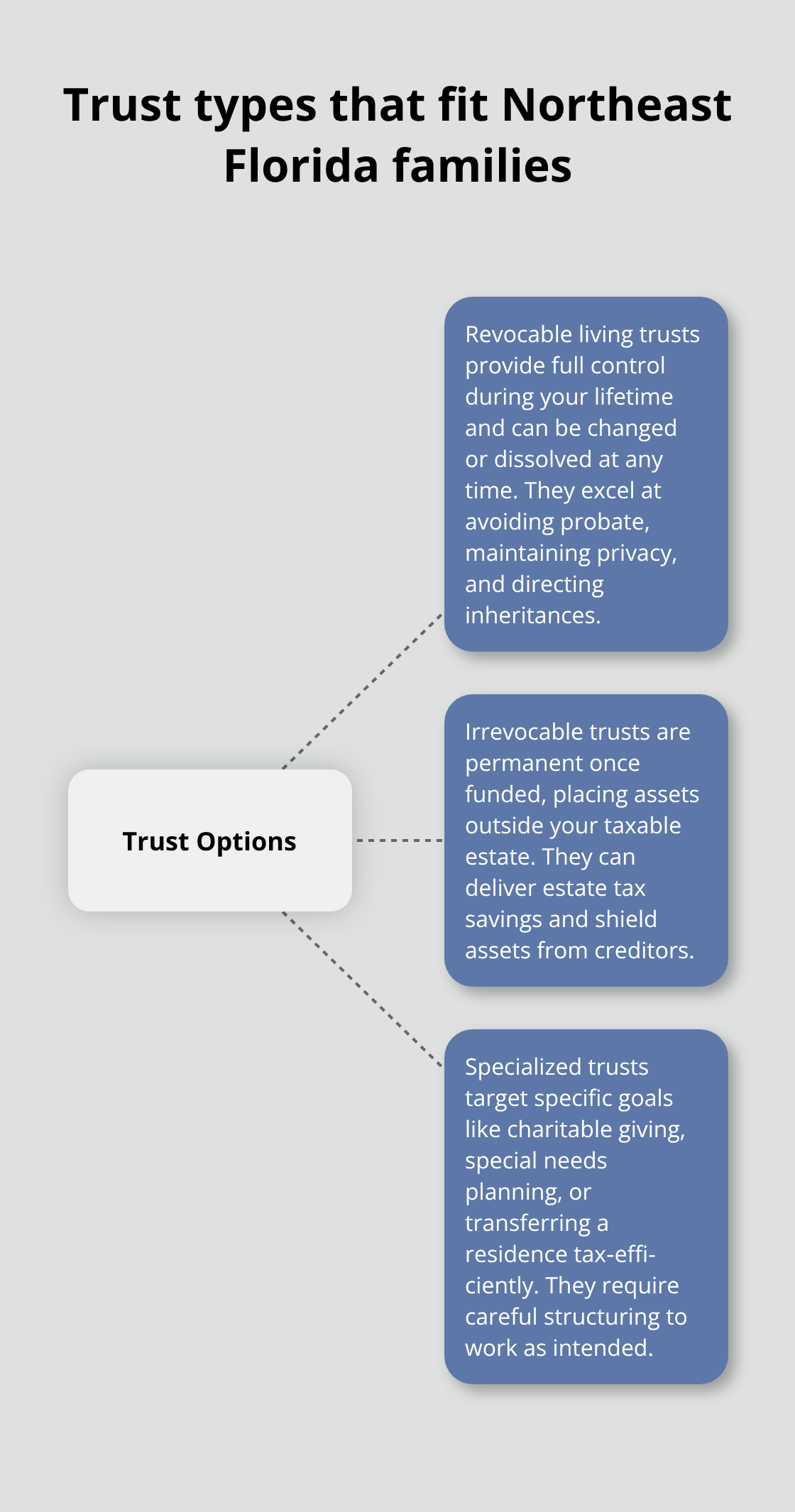
Revocable living trusts dominate Northeast Florida estate planning because they give you complete control while you’re alive and continue functioning after death. You can add assets, remove assets, change beneficiaries, or dissolve the trust entirely without court involvement. Life changes constantly. You might acquire rental property, sell a business, or experience a shift in family circumstances. A revocable trust adapts to these changes instantly.
The trade-off is straightforward: revocable trusts provide no tax benefits and no asset protection from creditors during your lifetime. They work best if your primary goal is avoiding probate, maintaining privacy, and controlling how your heirs inherit. Most Northeast Florida families start here because the simplicity outweighs the limitations.
Irrevocable Trusts: Permanent Protection and Tax Savings
Irrevocable trusts operate differently and demand a different mindset. Once you transfer assets into an irrevocable trust, you cannot change your mind, reclaim those assets, or alter the terms. This permanence sounds restrictive, but it delivers substantial rewards.
The IRS recognizes irrevocable trusts as separate entities, which means assets inside them fall outside your taxable estate. For Northeast Florida residents with significant real estate holdings or investment portfolios, this can reduce estate taxes by hundreds of thousands of dollars. Additionally, creditors cannot touch assets in an irrevocable trust because you no longer legally own them. High-net-worth families or individuals concerned about liability exposure from business ownership find irrevocable trusts particularly valuable. The commitment is real, but the protection is permanent.
Specialized Trusts for Specific Goals
Specialized trusts address particular situations that standard trusts cannot handle effectively. A charitable remainder trust lets you donate assets while receiving income during your lifetime, then passing remaining value to charity at your death, creating meaningful tax deductions. Special needs trusts protect assets for disabled beneficiaries without disqualifying them from government assistance programs. Qualified personal residence trusts allow you to live in your home while transferring it to heirs at a reduced tax cost.
Each serves a distinct purpose and requires careful structuring to function correctly. The complexity of these arrangements means that selecting the right trust type depends entirely on your financial situation, family structure, and long-term objectives. Understanding which trust aligns with your goals sets the foundation for avoiding the mistakes that derail so many Northeast Florida families during the planning process.
Common Mistakes Northeast Florida Residents Make with Trust Planning
Failing to Fund Your Trust with Assets
Most Northeast Florida residents create a trust, then never actually fund it with their assets. The trust document sits in a drawer while bank accounts, investment portfolios, and real estate remain titled in the owner’s personal name. This fundamental mistake renders the trust useless because probate still applies to unfunded assets. Funding requires retitling your home and other properties into the trust’s name, updating beneficiary designations on retirement accounts, and transferring investment accounts to the trust.
Many people delay this step because they view it as tedious paperwork, but this delay defeats the entire purpose of having a trust. Without proper funding, your family still faces months of probate, public disclosure of your finances, and expensive court fees. We at Family, Estate & Mediation Law provide clients with a detailed funding checklist and timeline to prevent this mistake from derailing your plan.
Neglecting to Update Trusts After Major Life Changes
Life changes constantly, yet most people treat their trust as a static document created once and forgotten forever. A divorce, remarriage, the birth of grandchildren, significant changes in asset values, or new business ventures all demand trust updates. Florida law does not automatically adjust your trust when circumstances shift. If you acquire substantial rental properties in Northeast Florida but never add them to your trust, those assets still go through probate.
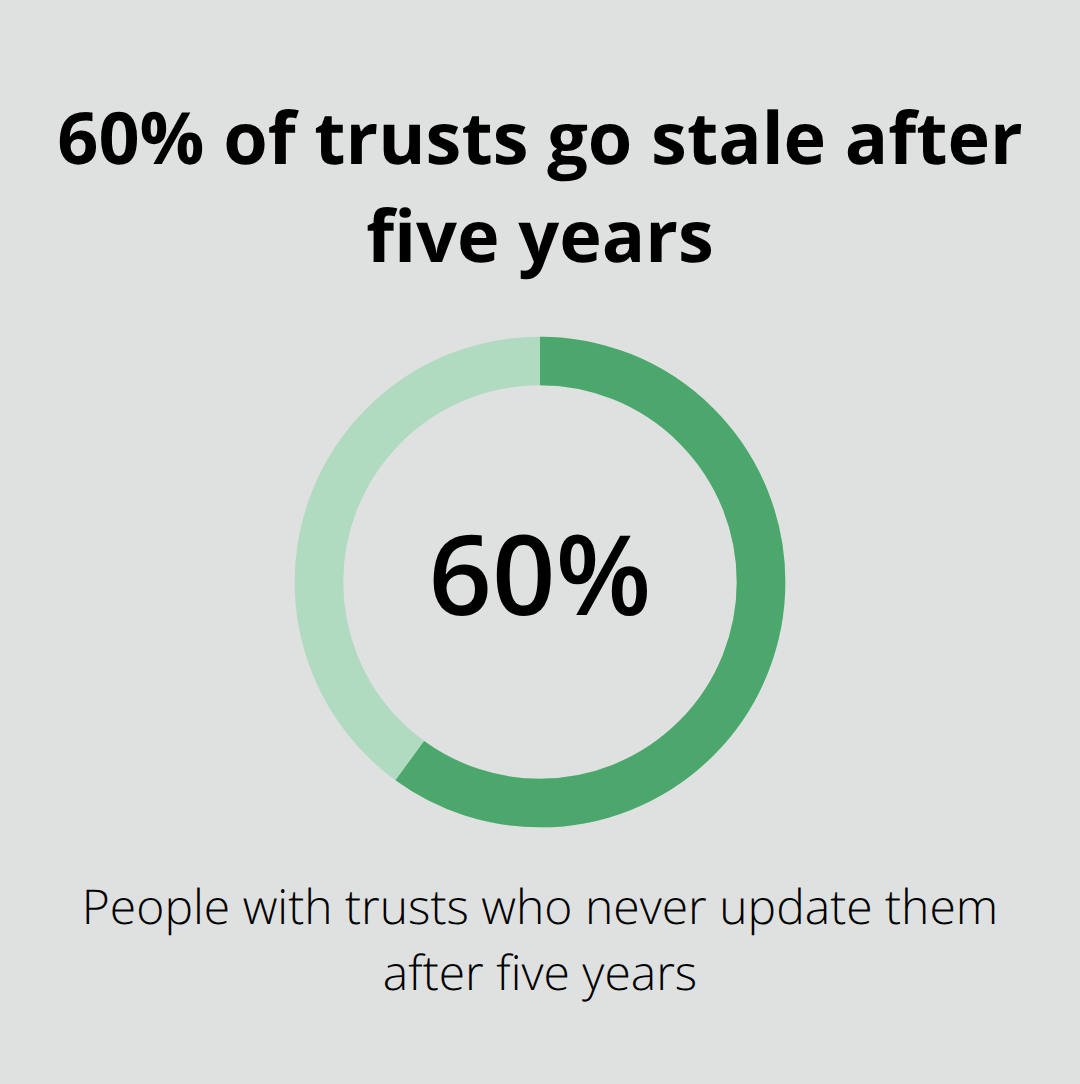
Estate planning data shows that approximately 60 percent of people with trusts never update them after five years, creating outdated documents that no longer reflect their intentions. If you name a beneficiary who later experiences financial or legal problems, your legacy could end up paying their creditors instead of supporting them. Your trust must evolve as your life evolves, or it becomes a liability rather than a protection.
Selecting the Wrong Trustee or Providing Unclear Instructions
Your trustee needs specific guidance on how you want distributions handled, which beneficiaries have special circumstances, and how to manage your properties. Without these instructions, even a well-meaning trustee struggles to execute your plan effectively, and family members may question every decision made. Choosing the wrong trustee-someone without financial acumen, someone with conflicts of interest, or someone unwilling to take on the responsibility-creates confusion and conflict after your death.
The trustee you select carries enormous responsibility (managing assets, paying bills, distributing funds to beneficiaries). Clear written instructions prevent misunderstandings and protect both your trustee and your family. A trustee who understands your values and has detailed guidance can honor your wishes without hesitation or second-guessing from beneficiaries.
Final Thoughts
A trust transforms how your family inherits what you’ve built. Without one, your Northeast Florida trusts strategy leaves assets vulnerable to probate delays, public exposure, and unnecessary costs that drain your legacy before beneficiaries receive anything. With a trust in place, your family gains privacy, speed, and control over how money flows to the people you care about most.
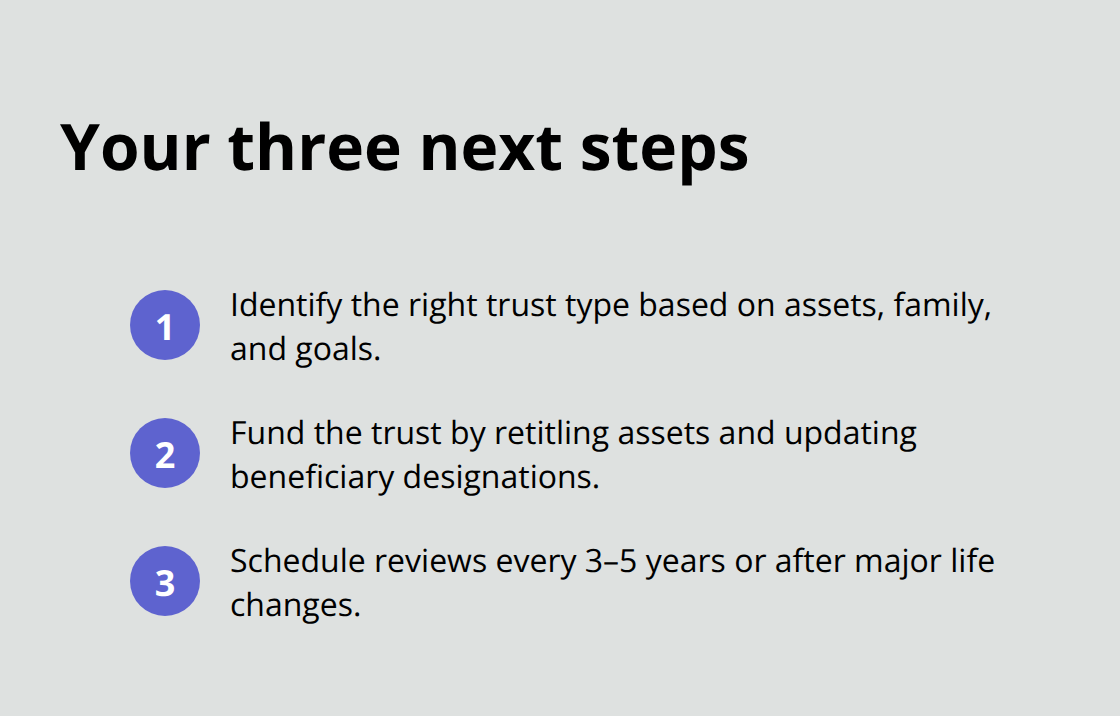
Getting started requires three concrete steps: identify which trust type matches your situation based on your asset level, family structure, and goals; commit to funding your trust completely by retitling assets and updating beneficiary designations; and schedule regular reviews every three to five years or whenever major life changes occur. Professional guidance makes the difference between a trust that actually protects your family and one that sits unused in a drawer.
Contact Family, Estate & Mediation Law to discuss your Northeast Florida trusts strategy-our offices in St. Augustine and Palatka stand ready to help you move from uncertainty to confidence about your legacy.