Most Florida residents put off estate planning because they think it’s complicated or only for the wealthy. The truth is simpler: without a solid estate planning checklist, your family could face unnecessary stress, delays, and expenses when they need clarity most.
At Family, Estate & Mediation Law, we’ve helped hundreds of Northeast Florida families create plans that actually work. This guide walks you through exactly what you need, what mistakes to avoid, and how to protect what matters most.
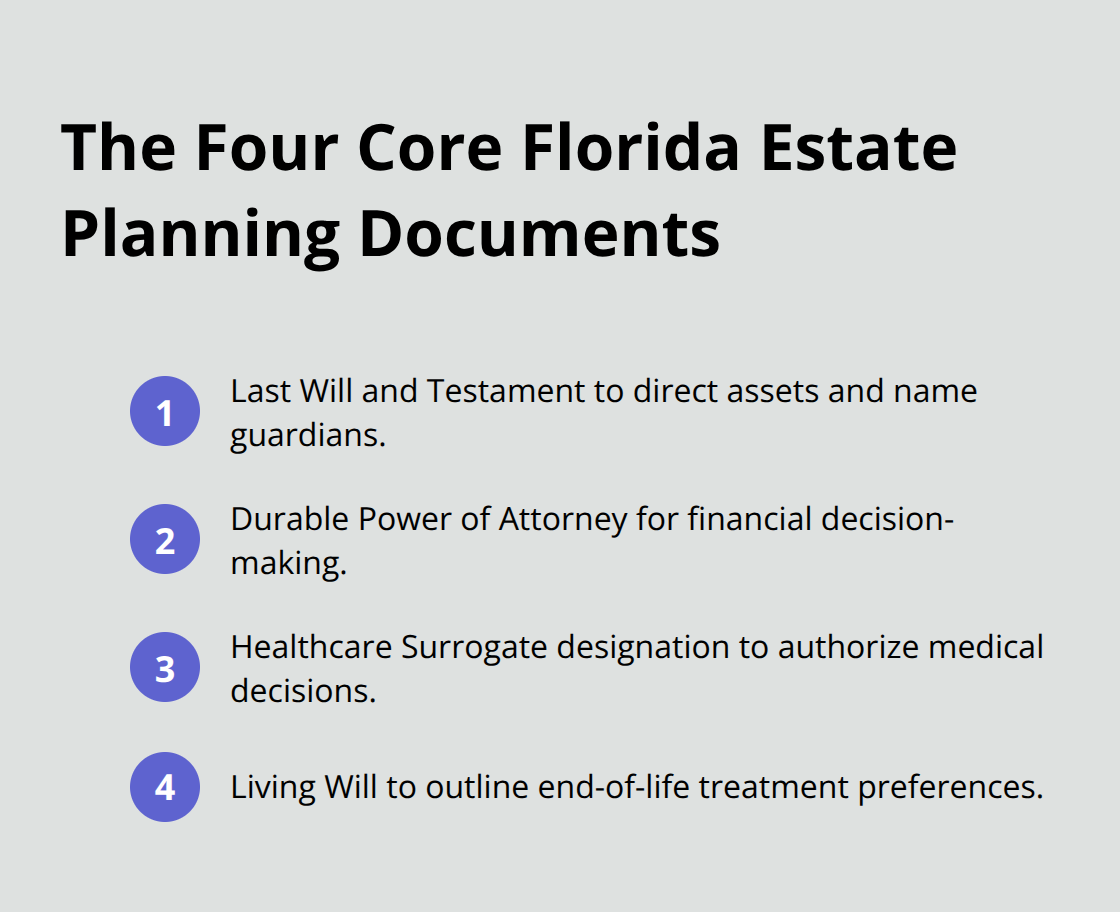
What Four Documents Every Florida Adult Needs
A Last Will and Testament forms the foundation of any Florida estate plan, but it cannot stand alone. Florida law requires wills to meet strict formalities-two witnesses and notarization through a self-proving affidavit-to be valid. Many Florida residents mistakenly believe a will handles everything, then discover it only addresses assets without designated beneficiaries. Your 401(k), IRA, life insurance, and bank accounts with payable-on-death designations pass directly to named beneficiaries and completely bypass your will. An outdated beneficiary designation naming an ex-spouse can override your entire estate plan, and this happens more often than most people realize.
Your Durable Power of Attorney Prevents Court Intervention
A Durable Power of Attorney under Florida Statutes Chapter 709 designates someone to manage your finances if you become unable to do so. Without one, your family must petition the court for guardianship-a public and expensive process that costs thousands of dollars and takes months. Florida no longer recognizes springing powers of attorney, so your agent’s authority begins immediately upon signing. This document protects your financial interests and spares your loved ones from navigating the court system during a crisis.
Healthcare Decisions Require Two Separate Documents
A Healthcare Surrogate designation and Living Will under Chapter 765 work together to guide medical decisions when you cannot make them yourself. The healthcare surrogate names who can access your medical records and make treatment decisions, while the Living Will documents your specific end-of-life preferences. These two documents work in tandem to eliminate confusion and ensure medical professionals follow your wishes without delay.
Why Ladybird Deeds Matter for Your Home
A Ladybird deed, also called an enhanced life estate deed, transfers your home to beneficiaries after your death while you retain full control during your lifetime. This tool avoids probate for your most valuable asset, preserves your homestead exemption, does not trigger a property tax reassessment, and provides a stepped-up tax basis at death. You can revoke it at any time and sell your home without complications. Combined with a will, a Ladybird deed costs around $350 in additional fees and achieves many trust-like benefits without the complexity.
The Beneficiary Designation Reality Check
Your beneficiary designations on IRAs, 401(k)s, life insurance, pensions, and investment accounts must align with your overall plan or they will contradict everything else you’ve arranged. A common disaster occurs when someone remarries but forgets to update a 401(k) naming their previous spouse-Florida courts cannot override these designations even if your will says otherwise. Review every account holder and every named beneficiary at least every three to five years, especially after marriage, divorce, the birth of children, or significant financial changes. These designations carry more power than your will, which makes them one of the easiest mistakes to make and one of the hardest to fix after death.
Protecting Your Family and Assets in Florida
Guardianship Decisions Shape Your Children’s Future
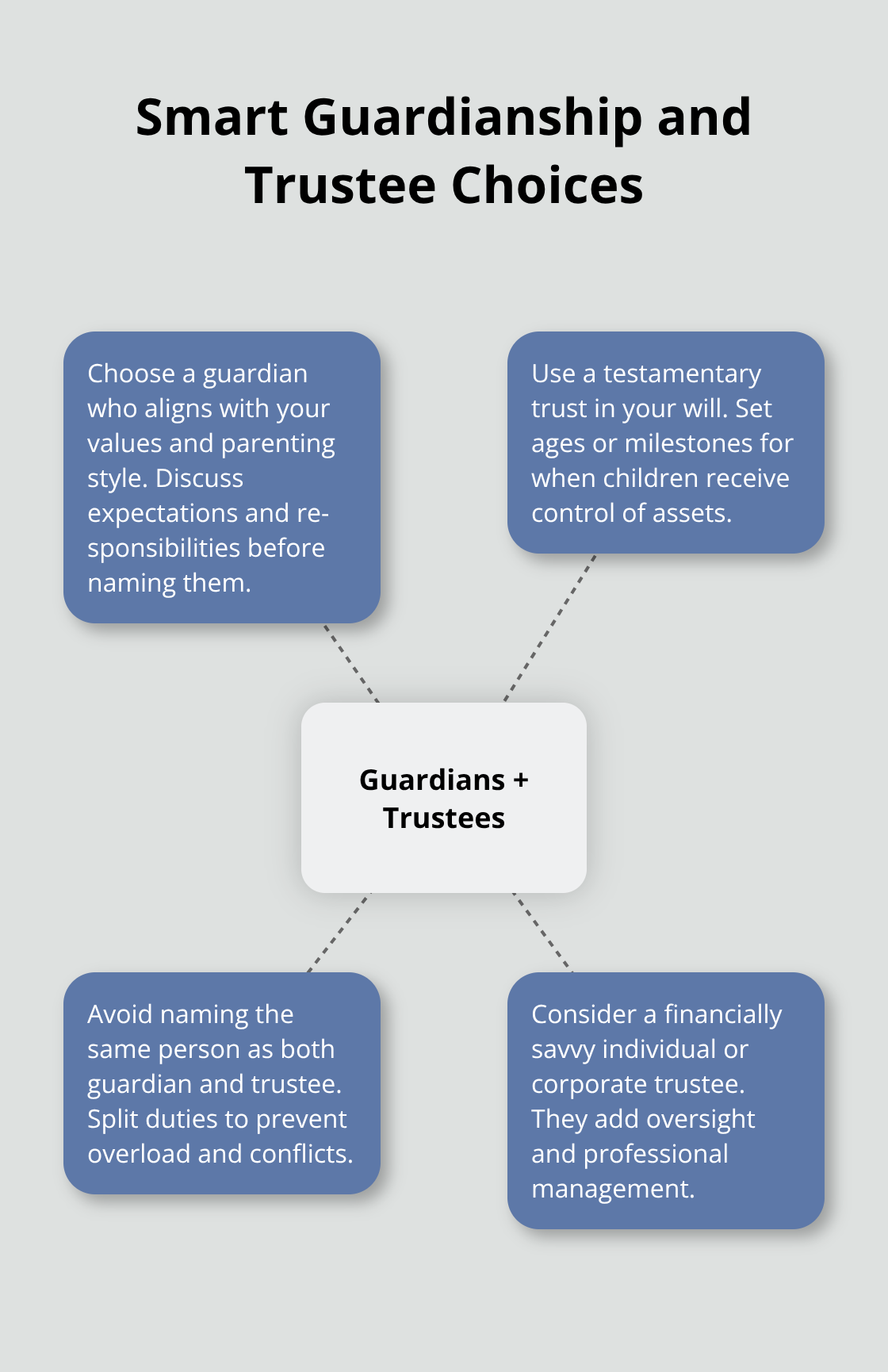
Naming a guardian for minor children ranks among the most consequential decisions in your estate plan, yet many Florida parents delay this choice indefinitely. Without a designated guardian, Florida courts will appoint someone to raise your children if both parents die or become incapacitated-and that person may not align with your values or parenting philosophy. Florida law allows you to name a guardian through a pre-need guardianship designation, which gives your chosen person legal preference in court proceedings if the need arises.
Select someone who shares your approach to discipline, education, religious upbringing, and daily routines, then discuss the role frankly before naming them. Your will should also establish a testamentary trust to manage any inheritance your minor children receive, specifying the age at which they gain control of those assets. Many parents make the mistake of naming the same person as both guardian and trustee, which concentrates too much responsibility in one individual. Try naming a trusted family member as guardian and a financially savvy person or corporate trustee to oversee funds separately.
Asset Protection Through Strategic Titling
Asset protection and beneficiary titling decisions determine whether your heirs actually receive what you intend or whether creditors, divorces, and court judgments strip away value after your death. Florida law protects assets held as tenants by the entirety-a form of ownership available only to married couples-so real estate titled this way passes automatically to the surviving spouse outside probate and shields the property from individual creditor claims.
Revocable living trusts offer similar protection (moving assets outside your personal name during your lifetime), and assets held in trust pass to beneficiaries without court involvement. Your beneficiary designations on retirement accounts, life insurance, and investment accounts must work in concert with your overall titling strategy or they create contradictions that courts later struggle to resolve. Naming your estate as beneficiary of a 401(k) triggers unnecessary income taxes and probate delays that a direct beneficiary designation would have avoided.
Aligning Every Account and Designation
Your beneficiary designations on IRAs, 401(k)s, life insurance, pensions, and investment accounts must align with your overall plan or they will contradict everything else you’ve arranged. A common disaster occurs when someone remarries but forgets to update a 401(k) naming their previous spouse-Florida courts cannot override these designations even if your will says otherwise. Review every account holder and every named beneficiary at least every three to five years, especially after marriage, divorce, the birth of children, or significant financial changes (these designations carry more power than your will).
Getting these details right prevents costly mistakes, but the process requires careful attention to how each piece fits together. The next section walks you through the mistakes that derail even well-intentioned plans and how to avoid them.
Common Estate Planning Mistakes Florida Residents Make
Outdated Documents Create Costly Contradictions
Life changes fast, and your estate plan must keep pace or it becomes a liability instead of a protection. Most Florida residents create a solid plan, then fail to update it when they marry, divorce, have children, buy property, or experience significant financial shifts. Florida courts see this constantly: a will naming guardians for children who are now adults, beneficiary designations still listing an ex-spouse, or a Ladybird deed that contradicts a new trust structure. Your documents need review every three to five years at minimum, and immediately after any major life event.
A divorce decree automatically revokes some provisions in your will under Florida law, but only certain ones-leaving gaps where your old plan contradicts your new circumstances. If you remarry and fail to update your beneficiary designations, your 401(k) or life insurance may still pass to your previous spouse, and Florida courts cannot override those designations even if your will explicitly says otherwise. The cost of updating documents-typically $200 to $500 for modifications-pales against the thousands in legal fees and family conflict that outdated plans generate during probate or incapacity proceedings.
Ignoring Incapacity Planning Forces Court Intervention
Incapacity planning ranks second on the list of critical oversights, yet many Florida residents ignore it entirely because they assume they will always manage their own affairs. Without a Durable Power of Attorney and Healthcare Surrogate designation, your family faces a forced guardianship petition if you suffer a stroke, dementia, accident, or serious illness. Guardianship in Florida costs $3,000 to $8,000 in legal fees alone and requires ongoing court supervision, public hearings, and annual accountings-all of which drain your estate and expose your financial details to public record.
A Durable Power of Attorney costs roughly $350 to $500 and takes an afternoon to execute, yet it prevents this entire ordeal. Your chosen agent can then manage finances and healthcare decisions without court involvement. This simple document protects your interests and spares your loved ones from navigating the court system during a crisis.
Tax Minimization Requires Intentional Strategy
Tax minimization requires intentional planning that most DIY estate plans completely miss. Florida has no state income tax, which is a major advantage, but federal estate taxes still apply to estates exceeding $13.61 million in 2024 according to the IRS. If your estate approaches this threshold through retirement accounts, life insurance, real estate, or business interests, you need specific strategies like irrevocable life insurance trusts or charitable remainder trusts to reduce what your heirs owe in taxes.
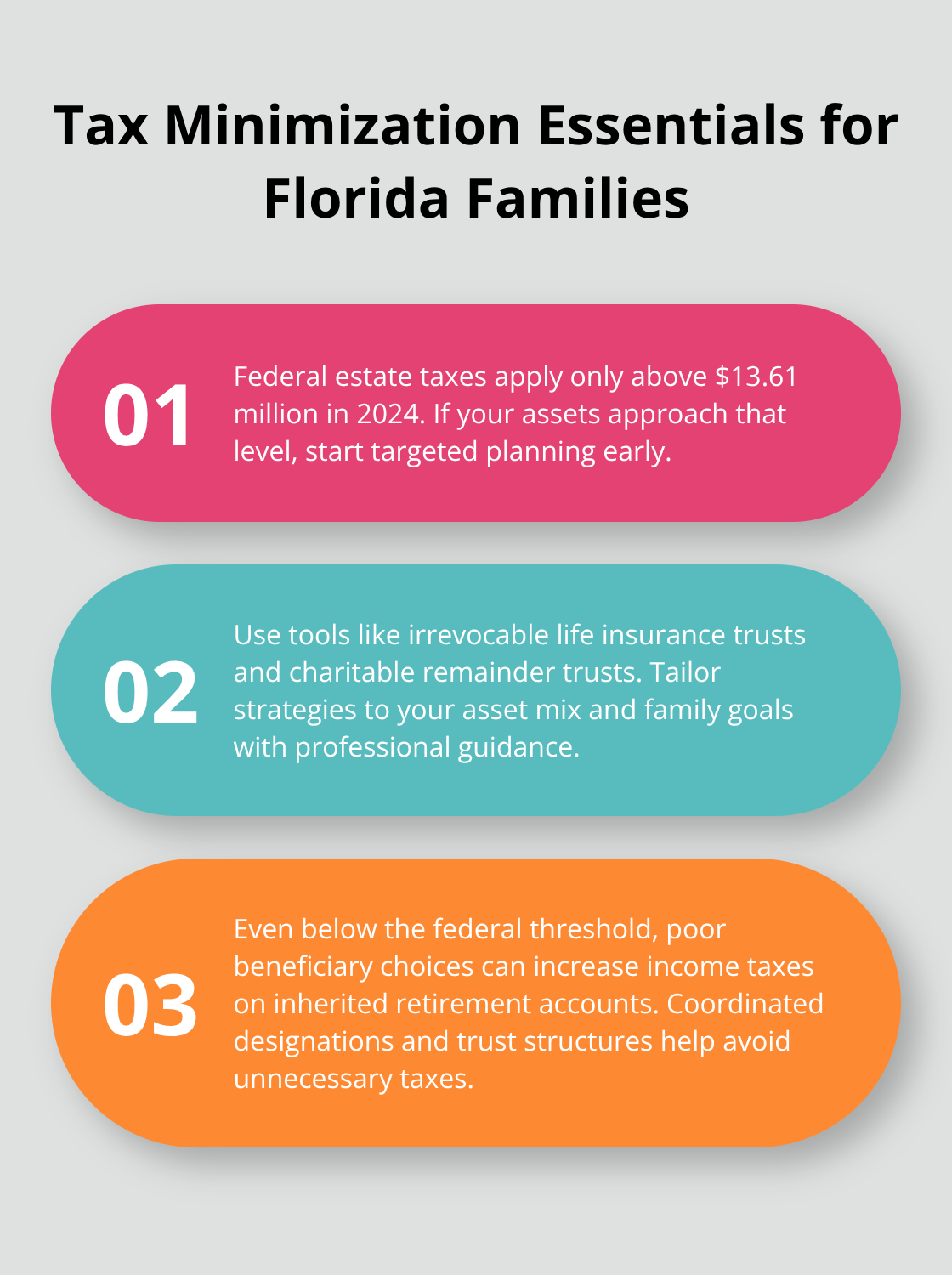
Even below the federal threshold, improper beneficiary designations can trigger unnecessary income taxes on inherited retirement accounts-a problem that proper planning structure eliminates entirely. The tax consequences of a single wrong decision can cost your heirs tens of thousands of dollars, making professional guidance a practical investment rather than an expense.
Final Thoughts
The estate planning checklist Florida residents need goes beyond downloading free templates or copying a neighbor’s will. Your situation is unique, and documents that work for someone else may create contradictions or tax problems in your plan. We at Family, Estate & Mediation Law have helped Northeast Florida families navigate these decisions, and we’ve seen firsthand how professional guidance prevents costly mistakes that free forms simply cannot catch.
A Durable Power of Attorney that fails to comply with Florida Statutes Chapter 709, a beneficiary designation that contradicts your will, or a Ladybird deed that conflicts with a trust structure can unravel everything you’ve built. These mistakes happen constantly with DIY approaches, and fixing them after death costs your family thousands in legal fees and court time. Working with an experienced estate planning attorney means your documents reflect your specific assets, family structure, and goals rather than generic templates that miss the details that matter.
Contact Family, Estate & Mediation Law to schedule a consultation and discuss your specific situation. We’ll walk you through exactly what you need and answer questions about your unique circumstances. Our offices in St. Augustine and Palatka serve families throughout Northeast Florida and know the local landscape inside and out.