When a loved one passes away, families in St. Augustine and Palatka often face difficult conversations about wills and assets. These disagreements can strain relationships and lead to costly court battles that drain both time and money.
We at Family, Estate & Mediation Law believe probate mediation tips can help families navigate these conflicts without the adversarial nature of litigation. Mediation offers a calmer, more affordable path forward.
What Triggers Probate Disputes in Florida Families
Will Interpretation Creates Immediate Conflict
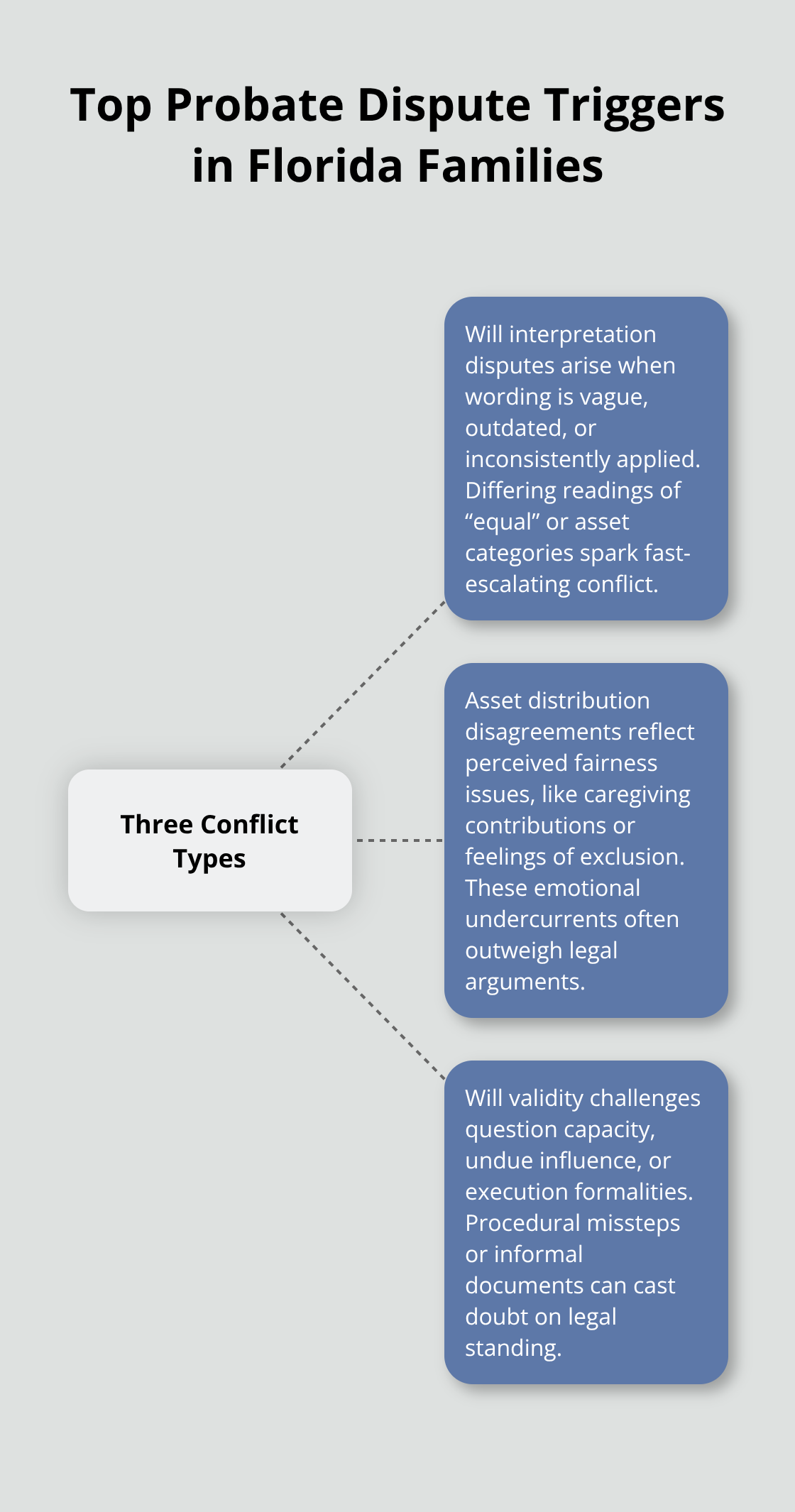
Probate conflicts in St. Augustine and Palatka arise from three main sources, and understanding them helps you anticipate problems before they escalate. Will interpretation disputes happen when the deceased’s language is vague or outdated. A parent might write that assets go to children equally, but one child interprets this as equal shares of everything while another believes it means equal distribution only of liquid assets, leaving real estate to be handled separately. These disagreements consume time and money fast.
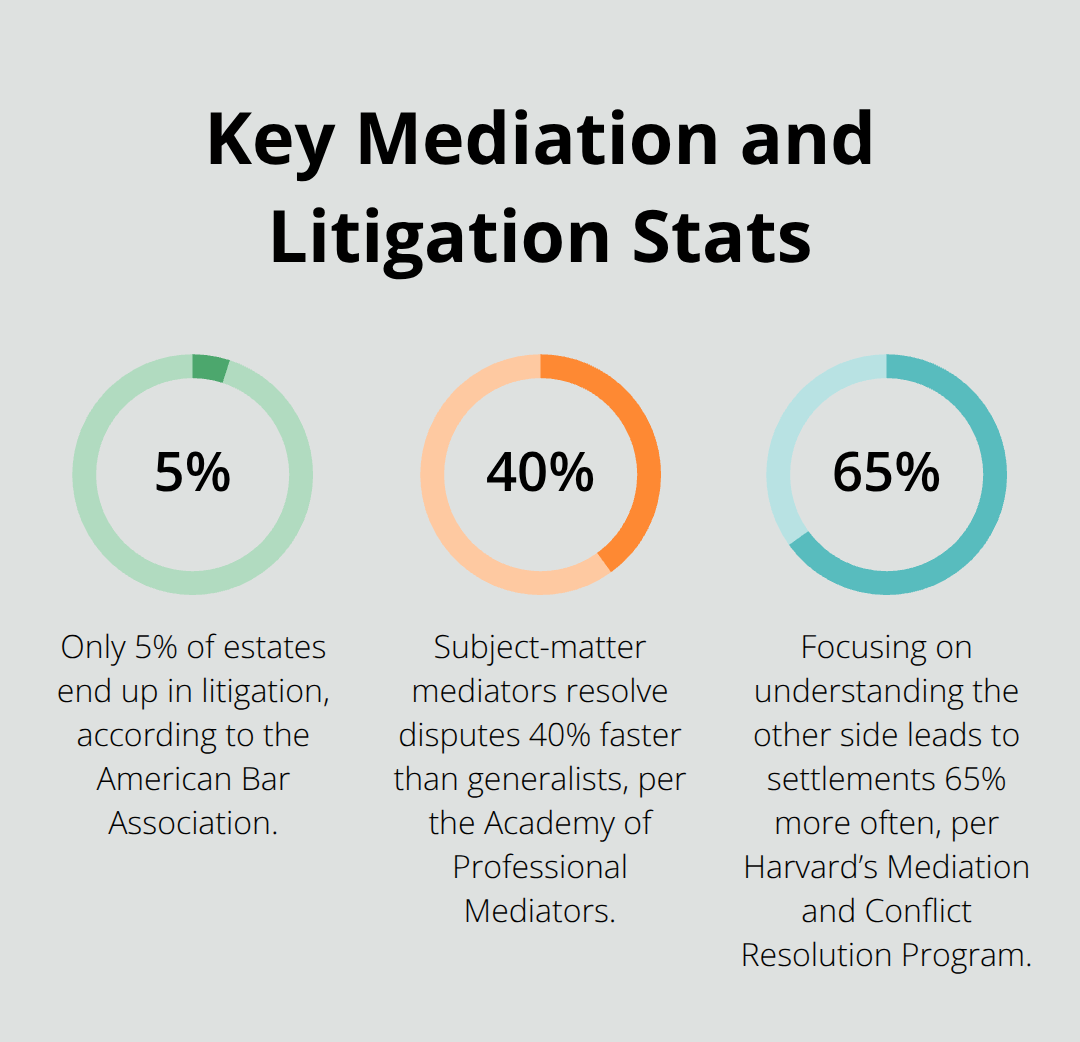
According to the American Bar Association, roughly 5% of estates result in litigation, but many more families experience disputes that never reach court because they settle through mediation first. The language in a will matters enormously-ambiguous phrases create openings for conflict that multiply legal fees and family tension simultaneously.
Asset Distribution Masks Deeper Family Wounds
Asset distribution disagreements often mask deeper family tensions that existed long before death. One sibling may believe they deserve more because they provided caregiving during the final years, while others argue the will should control everything regardless of personal sacrifice. In Florida, adult children frequently contest distributions when they feel excluded or undervalued, and these emotional wounds run deeper than any legal argument.
The second major source of disputes involves will validity challenges, where beneficiaries question whether the deceased had mental capacity, faced undue influence from another family member, or failed to follow proper execution requirements. Florida law requires specific formalities for valid wills, and families in our region sometimes discover that a handwritten will or an informally executed document creates ambiguity about its legal standing.
Three Conflict Types Damage Relationships Permanently
These three conflict types-interpretation, distribution disagreements, and validity questions-account for the vast majority of probate disputes families face. They share one common thread: they pit family members against each other in ways that damage relationships permanently. The emotional cost of fighting over a parent’s or spouse’s estate often exceeds the financial stakes involved (and sometimes dramatically so).
Understanding what triggers these disputes positions you to address them before they spiral. Mediation offers a structured way to handle these conflicts while keeping family bonds intact.
Why Mediation Beats Litigation for Probate Disputes
Mediation stops probate disputes from consuming years of your life and draining your family’s finances. When families choose mediation instead of court, they avoid the adversarial process that turns siblings into opponents and transforms grief into legal warfare. Florida probate litigation typically takes 6 to 12 months minimum, and complex cases often stretch to 2 or 3 years, according to data from the Florida Bar. During that time, assets sit frozen, family relationships deteriorate, and legal bills accumulate with each court filing and motion.
Mediation Resolves Disputes in Weeks, Not Years
Mediation resolves most probate disputes within weeks or a few months because the process focuses on finding solutions rather than proving who is right. The cost difference proves staggering: litigation expenses in Florida probate cases average $10,000 to $50,000 or more when attorneys bill hourly and disputes escalate through depositions and trial preparation, while mediation typically costs between $1,000 and $5,000 total, according to the American Bar Association. Families who choose mediation preserve tens of thousands of dollars, and more importantly, they preserve their relationships with one another.
Court Battles Freeze Assets and Relationships
Litigation freezes estate assets while the case proceeds, meaning beneficiaries cannot access their inheritance and the estate cannot be distributed. This creates financial hardship for family members who may need funds for immediate needs, and it transforms the probate process into a waiting game where everyone loses. Mediation allows the estate to move forward because parties work toward agreement rather than waiting for a judge’s decision, and this momentum itself often reduces the emotional toll that prolonged conflict inflicts.
Mediation Restores Communication Between Family Members
When families sit across from each other in a mediation session with a neutral third party present, they hear directly how their actions affect one another, and this human connection frequently opens doors that courtroom proceedings never will. The mediator does not impose solutions but instead helps family members communicate their concerns and find common ground on asset distribution, will interpretation, or validity questions. This collaborative approach means the final agreement reflects what the family actually wants, not what a judge ordered them to accept. Families in St. Augustine and Palatka who choose mediation report higher satisfaction with outcomes because they retained control over the resolution rather than surrendering that power to the court system.
Understanding these advantages positions you to make an informed choice about how to handle your family’s probate conflict. The next step involves learning what actually happens during a mediation session and how to prepare for it.
Making Mediation Work for Your Family
Successful probate mediation requires three concrete actions that most families overlook until they sit down with a mediator. First, you need a mediator who understands Florida probate law specifically, not just general mediation principles. The Academy of Professional Mediators reports that mediators with subject-matter knowledge resolve disputes 40% faster than generalist mediators because they recognize legal nuances and can help parties understand realistic settlement ranges. When you interview potential mediators in St. Augustine and Palatka, ask directly about their probate experience, how many cases they have handled involving will disputes or asset distribution conflicts, and whether they have worked with Florida probate courts. A mediator with 10 or 15 years of probate-specific experience will catch issues that an untrained mediator misses entirely, and this prevents your family from wasting time exploring settlement options that Florida law would never allow.
Select a Mediator with Probate Knowledge
The right mediator makes the difference between resolution and prolonged conflict. You should verify that your mediator has handled at least 50 probate cases and can explain how Florida law shapes settlement possibilities in your specific situation. Ask whether they have mediated will interpretation disputes, asset distribution conflicts, or validity challenges. A mediator who understands probate court procedures will help you avoid settlement terms that a judge would reject, which saves your family from returning to court after mediation fails. Interview at least two or three candidates before you commit, and trust your instinct about who will listen fairly to all parties involved.
Organize Your Documents Before the Session
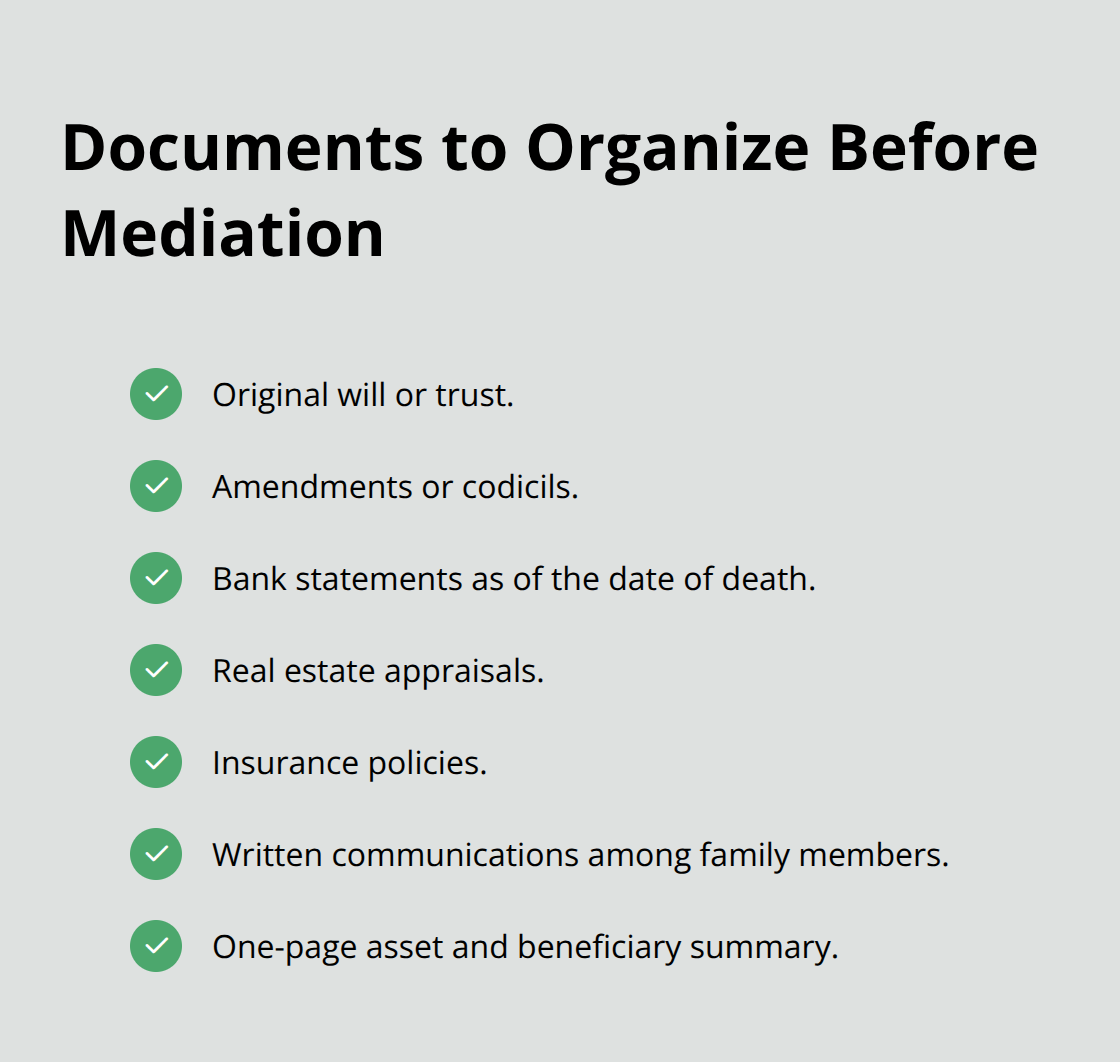
Second, prepare every relevant document before your mediation appointment. Gather the original will or trust, any amendments or codicils, bank statements showing account balances as of the death date, real estate appraisals, insurance policies, and any written communications between family members about the dispute. The American Bar Association found that mediation sessions stall when parties lack financial documentation because mediators cannot help families evaluate settlement options without knowing exactly what assets exist and what they are worth. If you arrive unprepared, you waste time during the session collecting information instead of actually negotiating, and your mediator charges hourly whether you are productive or not. Create a single folder with organized, labeled copies of everything relevant to the dispute. Include a one-page summary listing all assets, their approximate values, and the names of all beneficiaries or interested parties. This preparation demonstrates good faith to other family members and gives everyone the information they need to make informed decisions about settlement.
Listen to Understand Other Family Members’ Perspectives
Third, approach the mediation session with a genuine willingness to hear why other family members feel they deserve what they are requesting. Most families enter mediation still convinced they are completely right and the other party is completely wrong, and this rigid position prevents resolution. Mediators succeed when they help parties understand that their siblings or relatives may have legitimate concerns rooted in different interpretations of the deceased’s wishes, not in greed or malice. When your sibling explains why they believe they should receive the family home, listen to understand their emotional connection to that property rather than immediately countering with your legal argument. Research from the Mediation and Conflict Resolution Program at Harvard Law School shows that parties who focus on understanding the other side’s perspective reach settlement agreements 65% more often than parties who spend the session defending their position. The mediator will give you plenty of time to explain your view, but the real progress happens when you genuinely hear what matters most to the other people in the room and find creative solutions that address those underlying concerns rather than simply splitting assets according to one person’s interpretation of the will.
Final Thoughts
Probate mediation tips work because they shift your family’s focus from winning a legal battle to preserving relationships that matter far more than any asset. When you select a mediator with probate knowledge, organize your documents thoroughly, and listen to understand other family members’ perspectives, you create the foundation for resolving disputes calmly and fairly. Mediation offers something litigation cannot: control over your own outcome.
When you choose mediation, you and your family members decide how assets get distributed and how disputes get resolved, rather than surrendering that power to a judge who knows nothing about your family’s history or values. The financial savings alone justify the choice-mediation typically costs between $1,000 and $5,000 total compared to $10,000 to $50,000 or more for litigation. The real benefit emerges in the months and years after the dispute ends, when your relationships with siblings and relatives remain intact instead of fractured by courtroom warfare.
We at Family, Estate & Mediation Law understand that probate conflicts feel overwhelming when you are grieving and managing complex family dynamics simultaneously. Contact Family, Estate & Mediation Law in St. Augustine or Palatka to discuss how mediation can resolve your family’s probate conflict while keeping your relationships whole.