Probate disputes drain families emotionally and financially. When a loved one passes, disagreements over estate distribution, executor decisions, or will validity can fracture relationships for years.
At Family, Estate & Mediation Law, we’ve seen how probate mediation in Northeast Florida offers a faster, less adversarial path forward. Mediation keeps families out of court and preserves what matters most: your legacy and your relationships.
What is Probate Mediation and Why It Matters
Probate mediation is a structured negotiation process where a neutral third party helps heirs, beneficiaries, and fiduciaries reach agreements on estate distribution, executor decisions, and will interpretation without stepping into a courtroom. Unlike litigation, where a judge imposes a binding decision, mediation gives families control over the outcome. The mediator does not decide who wins or loses; instead, they facilitate honest dialogue, clarify positions, and help parties find common ground. This process is confidential, meaning discussions and private sessions stay out of the public record entirely. Florida courts recognize mediation’s value so strongly that many judges require it before allowing probate cases to proceed to trial, which accelerates settlement timelines significantly.
Why Mediation Beats Litigation for Estate Disputes
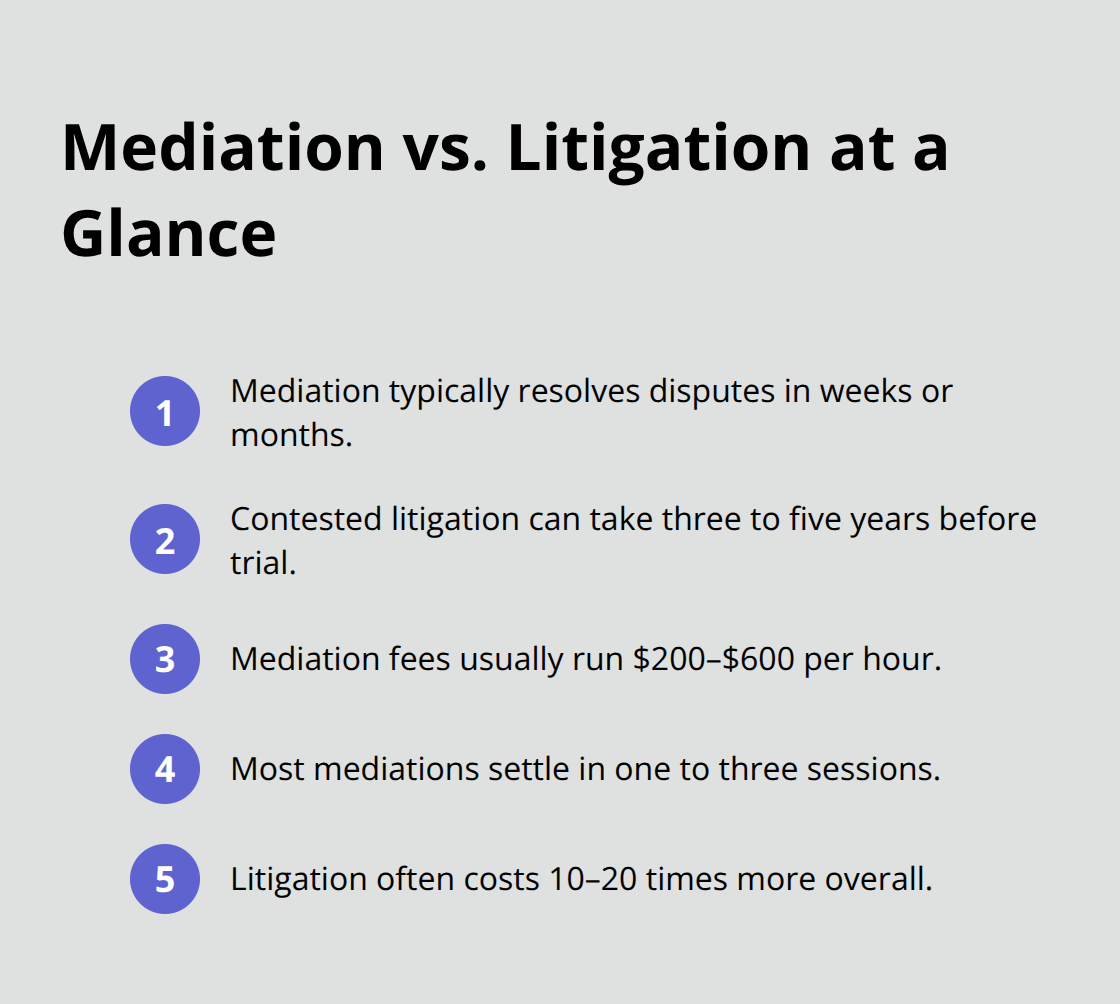
Probate litigation consumes time and money at a rate families rarely anticipate. Court backlogs in Northeast Florida mean contested estates can stretch three to five years before trial, during which assets sit frozen and legal fees accumulate. Mediation typically resolves disputes in weeks or months. The financial difference is stark: probate mediation costs range from two hundred to six hundred dollars per hour, with most cases settling in one to three sessions. Litigation routinely costs ten to twenty times more when you factor in depositions, expert testimony, discovery, and court appearances.
Beyond dollars, mediation preserves relationships. Siblings who litigate often remain estranged for decades. Mediation, in contrast, focuses on collaborative problem-solving rather than assigning blame, which allows families to maintain connections after the process concludes.
How Mediation Actually Works in Practice
The process starts with a joint session where all parties and their attorneys sit together while the mediator explains confidentiality rules and ground rules. Then the mediator meets separately with each side in private caucuses, listening to concerns, testing settlement positions, and identifying areas of potential agreement. This back-and-forth continues until parties reach a written settlement agreement or determine mediation cannot resolve the dispute. If settlement occurs, the agreement goes to the probate court for approval and becomes a binding court order. Mediators in Northeast Florida with strong probate litigation backgrounds understand which settlements will survive court scrutiny and which creative compromises actually work in practice.
What Makes Mediation Different from Court
Court proceedings follow rigid timelines and formal rules that often frustrate families seeking quick resolution. A judge hears evidence, applies law, and imposes an outcome that one side inevitably dislikes. Mediation, however, allows parties to craft customized solutions that address their specific concerns and priorities. Families can agree to keep certain settlement terms confidential, protecting privacy in ways court orders cannot. The mediator translates complex probate concepts into practical, enforceable resolutions that reflect both legal requirements and the decedent’s true intentions. This flexibility makes mediation especially valuable for blended families and estates with sentimental or business assets that require nuanced handling.
Moving Forward with Your Estate Dispute
Understanding how mediation works is the first step toward protecting your family legacy. The next section explores the specific disputes that mediation resolves most effectively and how the process addresses each one.
Common Probate Disputes and How Mediation Resolves Them
Estate Distribution Disagreements
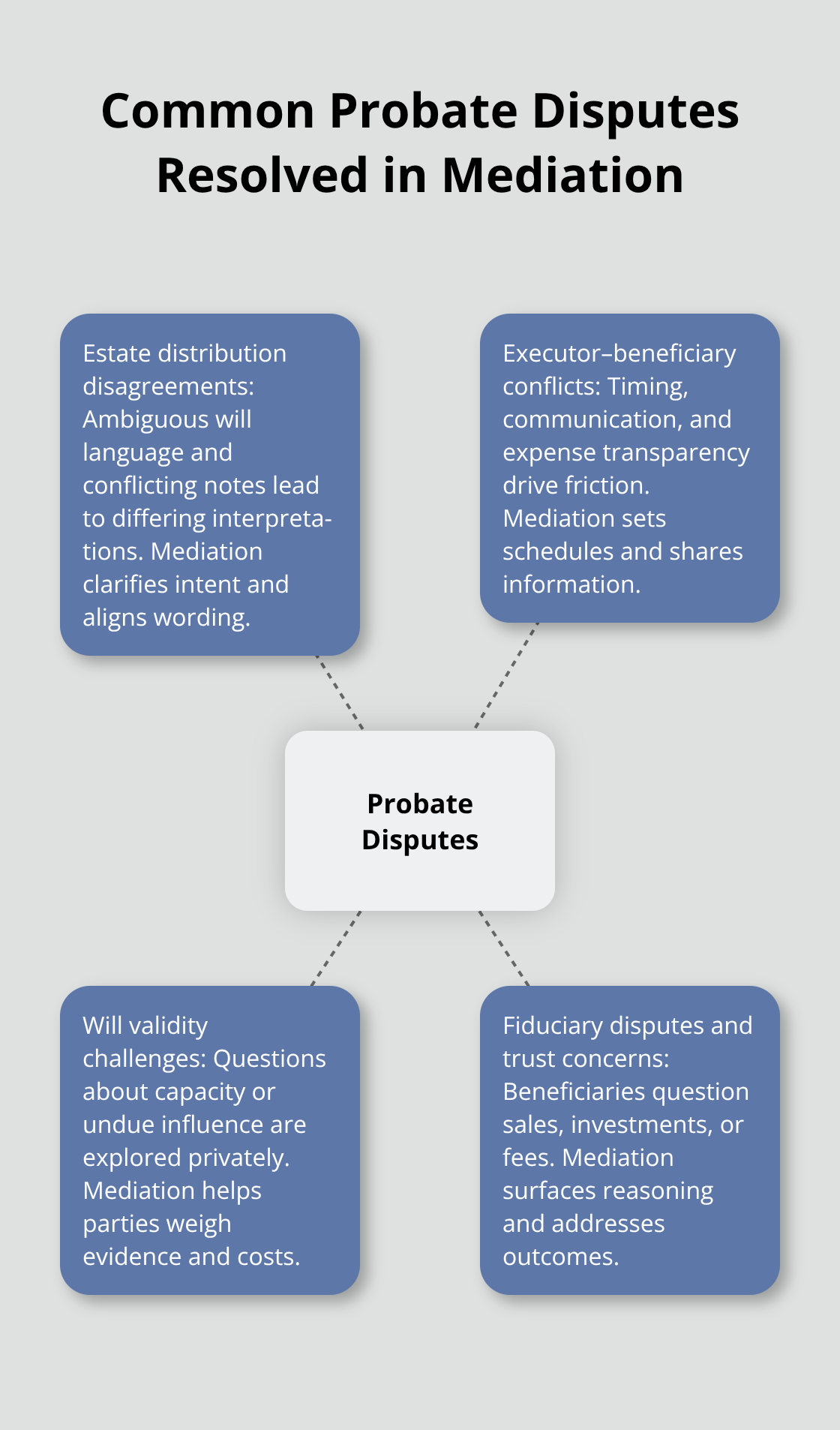
Estate distribution disagreements arise when the will’s language proves ambiguous or when beneficiaries interpret asset allocation differently than the executor intends. A parent’s handwritten note about gifting the family home to one child while the formal will lists it as part of the general estate creates genuine confusion, not malice. Mediation allows all parties to present their understanding of the decedent’s true intentions without courtroom posturing. The mediator helps families distinguish between what the document technically says and what the deceased actually wanted, then crafts language that honors both perspectives.
Executor and Beneficiary Conflicts
Executor and beneficiary conflicts often stem from poor communication rather than dishonesty. An executor who delays distributions to manage complex tax filings may appear negligent to beneficiaries desperate for their inheritance, even though the executor acts within legal bounds. Mediation surfaces these timing concerns early, establishes realistic payment schedules, and creates transparency around asset valuation and expense deductions. These tensions typically resolve in single sessions, whereas litigation stretches conflicts across months of depositions and discovery.
Will Validity Challenges
Will validity challenges represent the most contentious disputes because they question whether the decedent possessed mental capacity or faced undue influence when signing. These allegations wound surviving family members and consume substantial resources. Mediation allows parties to examine evidence collaboratively rather than through adversarial cross-examination. A mediator with probate litigation experience can identify which validity concerns have legal merit and which reflect family tension unrelated to the actual document. When both sides present evidence in private caucuses, many families recognize that settling on a compromise distribution costs far less emotionally and financially than proving capacity or influence in court.
Fiduciary Disputes and Trust Concerns
Mediation also addresses fiduciary disputes where beneficiaries question an executor’s or trustee’s decisions regarding asset sales, investment choices, or fee arrangements. Rather than filing breach of fiduciary duty claims that assume bad faith, mediation allows fiduciaries to explain their reasoning and beneficiaries to voice concerns about outcomes. Courts in Florida increasingly encourage this approach because it reduces docket pressure while preserving family relationships that inheritance disputes otherwise shatter permanently. These conversations often reveal that misunderstandings, not misconduct, created the conflict-and mediation resolves them before litigation becomes necessary.
The Probate Mediation Process at Family, Estate & Mediation Law
Initial Consultation and Case Assessment
Your first step involves a confidential consultation where we assess your specific dispute, review relevant documents like the will, trust, and any correspondence between parties, and determine whether mediation makes sense for your situation. This conversation typically happens over the phone or in person at our St. Augustine or Palatka offices and costs nothing-we charge only for mediation sessions themselves, not for initial guidance. During this call, we explain how mediation works, what outcomes are realistic given your facts, and what fees you can expect. Most probate disputes cost between two hundred and six hundred dollars per hour in mediation fees, split among parties or sometimes paid by the estate. We also ask about your priorities: do you want to preserve family relationships, resolve the dispute quickly, or minimize costs? Your answer shapes our strategy. Some families prioritize speed and agree to compromise on distribution details; others need thorough discussion of fairness before accepting any settlement. We respect these differences and tailor our approach accordingly. If you decide mediation fits your needs, we schedule the first joint session within two to four weeks, giving everyone time to gather documents and prepare positions.
Joint Sessions and Private Caucuses
When mediation sessions begin, expect structure but not rigidity. We open with a joint meeting where all parties, their attorneys if they have them, and the mediator sit together. We review confidentiality rules-everything discussed in mediation stays private and cannot be used in court if mediation fails-and establish ground rules for respectful communication. Then each side presents their perspective on the dispute without interruption, which often takes one to two hours. After this joint session, we move into private caucuses where we meet separately with each party for thirty to sixty minutes.
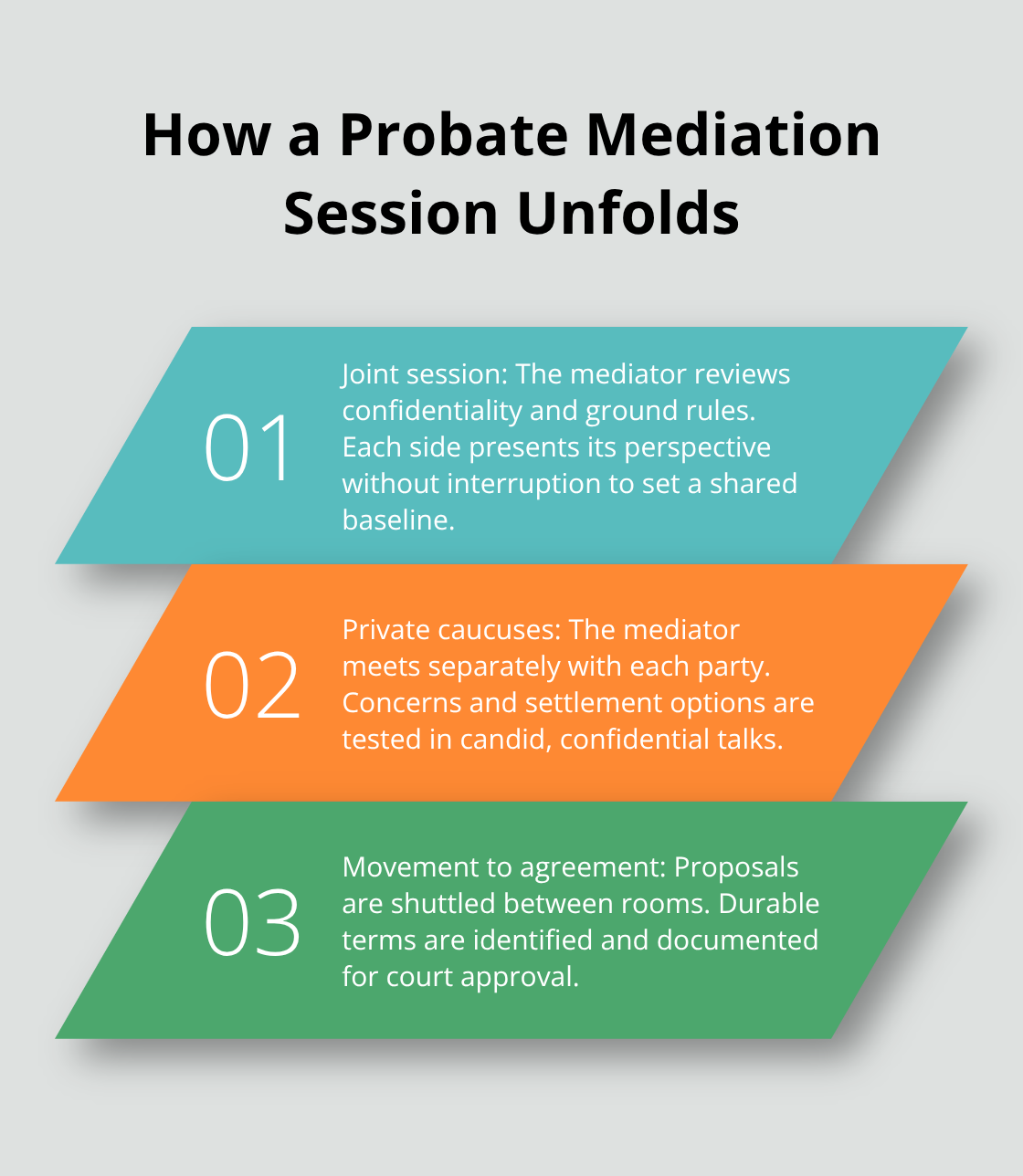
These confidential conversations allow people to share concerns they might not voice publicly, test settlement positions, and explore creative solutions. We listen carefully, ask clarifying questions, and identify what each side truly needs versus what they initially demanded. This distinction matters enormously: a beneficiary might demand the family home but actually need liquidity to pay off debt; an executor might resist early distributions but actually needs clarity on tax deadlines.
Settlement Negotiation and Agreement
Once we understand underlying interests, we shuttle between parties, proposing compromises and testing whether movement is possible. Most probate disputes settle within one to three sessions. When agreement emerges, we draft a settlement agreement that addresses all disputed issues, includes clear payment terms, and specifies any confidentiality provisions parties want. This agreement goes to the probate court for approval, and once the judge signs off, it becomes a binding court order enforceable against any party who fails to comply.
Final Thoughts
Probate mediation in Northeast Florida protects your family legacy by keeping disputes private, preserving relationships, and delivering outcomes that reflect what your loved one actually wanted rather than what a judge imposes. When families choose mediation over court, they avoid years of litigation, reduce legal costs by thousands of dollars, and maintain the connections that matter most after the estate settles. The difference is measurable: mediation typically resolves disputes in weeks or months while court cases stretch three to five years.
Contact Family, Estate & Mediation Law at our St. Augustine or Palatka offices for a confidential consultation. We assess your specific dispute, explain realistic outcomes, and discuss fees upfront so you understand costs before committing to mediation. Most probate disputes settle within one to three sessions at two hundred to six hundred dollars per hour, split among parties or paid by the estate.
Choosing mediation over court means choosing speed, privacy, and control over your family’s future. Your disagreements stay confidential instead of becoming public record, and you craft solutions tailored to your situation rather than accepting whatever a judge decides. Probate mediation in Northeast Florida protects your family legacy by resolving conflict in ways that honor both the law and the relationships that inheritance disputes otherwise destroy permanently.