
Guardianship decisions shape the future security of your family members who cannot care for themselves. Whether you’re planning for a child with special needs, an aging parent, or another loved one, Northeast Florida guardianship planning requires careful thought and legal precision.
At Family, Estate & Mediation Law, we guide families through this process with clarity and compassion. This guide walks you through what guardianship means, how to establish it in Florida, and how to create a plan that truly protects those you love most.
What Guardianship Actually Means in Florida
Guardianship in Florida is a court-supervised arrangement where a judge appoints someone to make decisions for a person who cannot do so themselves. Under Florida Statutes Chapter 744, the court determines that an individual lacks the capacity to manage property, make healthcare decisions, or meet essential needs. The guardian then steps in with legal authority to act on their behalf.
Florida law enforces one strict principle: guardianship must be the least restrictive alternative available. This means the court will only appoint a guardian if other options like a durable power of attorney, healthcare surrogate designation, or supported decision-making will not work. The state recognizes eight types of guardianship arrangements, ranging from plenary guardianship (full authority) to limited guardianship (specific powers only) to guardian advocate roles for people with developmental disabilities under Section 393.12 or mental health conditions under Section 394.4598.
The Eight Types of Guardianship in Florida
Northeast Florida families often assume guardianship is the only path forward, but Florida law pushes back against that assumption. Plenary guardianship grants full authority over the ward’s person and property. Limited guardianship restricts the guardian’s powers to specific areas, preserving the ward’s rights in other matters. Standby guardianship allows a guardian to step in only when the current caregiver dies or becomes incapacitated.
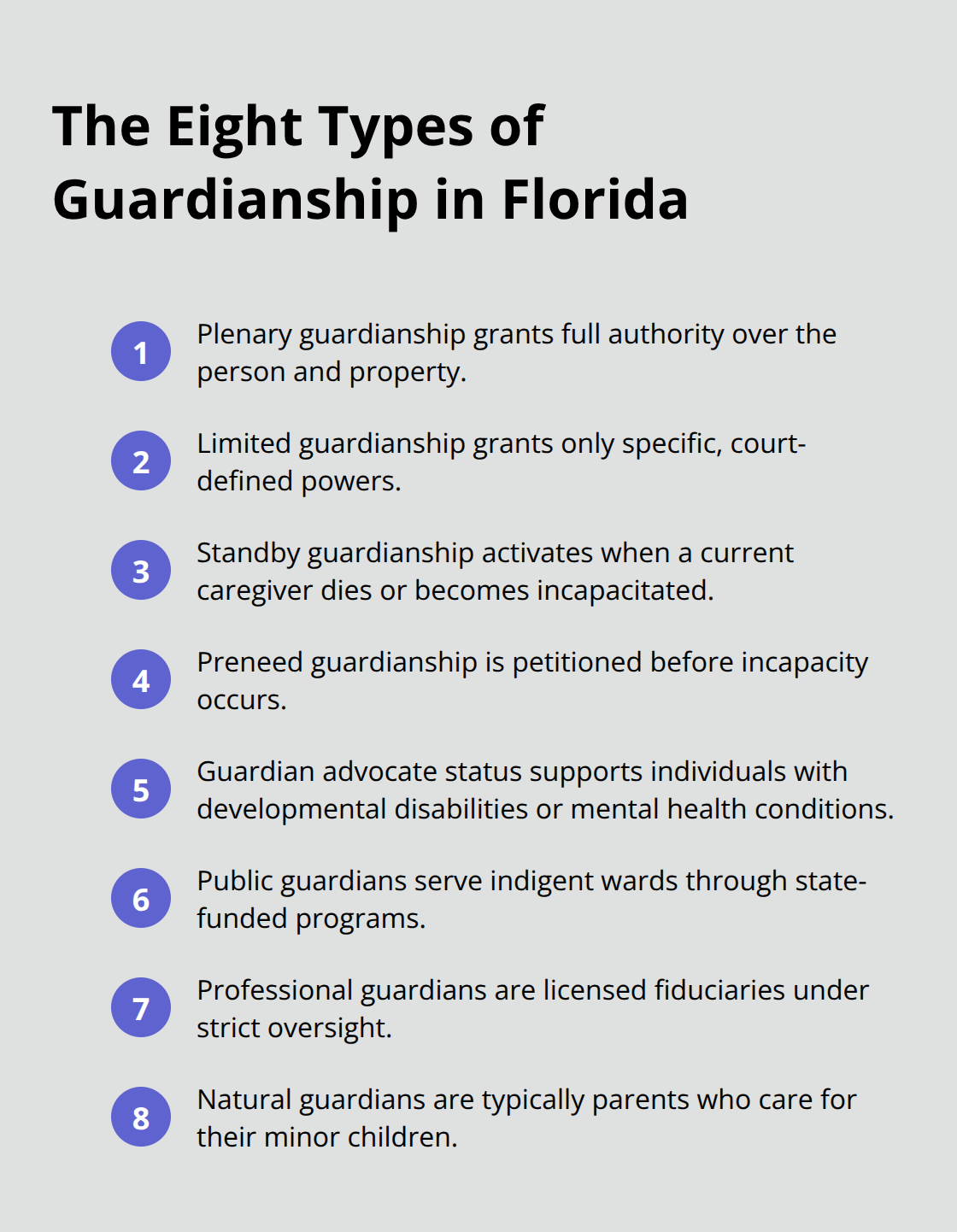
Preneed guardianship lets someone petition for guardianship before incapacity occurs. Guardian advocate status applies to individuals with developmental disabilities or mental health conditions who retain some decision-making capacity. Public guardians serve indigent wards through state-funded programs. Professional guardians operate as licensed fiduciaries under strict oversight. Natural guardians (typically parents) care for minors. The court must weigh the incapacitated person’s own wishes and rights, and can reserve certain decisions to the ward even within a guardianship order. This person-centered approach means the court tailors each guardianship to preserve as much independence as possible while protecting safety and welfare.
When Guardianship Becomes Necessary in Your Family
Guardianship typically enters the picture when someone cannot understand information, communicate decisions, or manage their affairs despite having trusted people available to help. A parent with advanced dementia who no longer recognizes family members and refuses medical care often needs guardianship because alternatives require the person’s agreement or understanding. A child born with severe intellectual disabilities who will never develop decision-making capacity may need a guardian appointed well before turning 18. An adult who suffered a catastrophic stroke and cannot communicate or understand medical options may require guardianship if no durable power of attorney exists.
The key difference between these situations and cases where alternatives work is incapacity plus unwillingness or inability to consent. If someone with capacity signs a durable power of attorney, that document avoids guardianship entirely. If someone understands information with support from trusted people and can communicate choices, supported decision-making may delay or prevent guardianship altogether. Guardianship becomes necessary when the person genuinely cannot manage, refuses to acknowledge incapacity, or when family disagreements about care require court intervention to move forward safely.
How Florida’s Oversight System Protects Wards
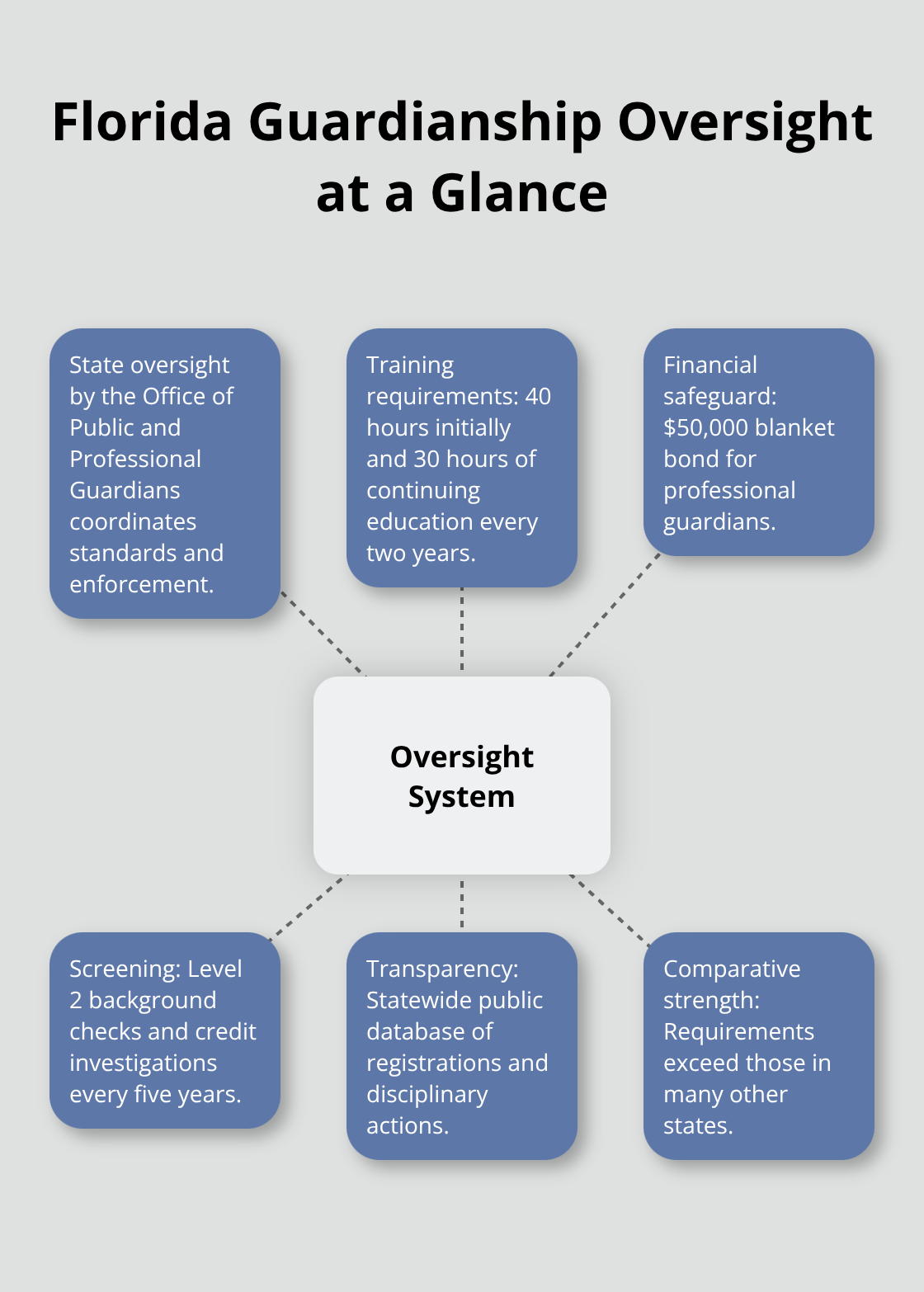
Florida’s guardianship system stands out for its emphasis on alternatives and its oversight infrastructure. The Office of Public and Professional Guardians, part of the Florida Department of Elder Affairs, oversees roughly 550 professional guardians statewide and operates 15 local Offices of Public Guardians across the state, including the North Florida Office of Public Guardian serving Northeast Florida counties like Duval and Nassau. This centralized oversight is uncommon; many states lack statewide registration or disciplinary systems for guardians.
Florida requires professional guardians to complete 40 hours of initial training, pass a competency examination, post a $50,000 blanket bond, and complete 30 hours of continuing education every two years covering ethics, abuse reporting, and fiduciary duties. Professional guardians must also undergo Level 2 background checks and credit investigations every five years. Most states do not impose such rigorous requirements. Florida also maintains a statewide, publicly accessible guardianship information database showing guardian registration and disciplinary actions, promoting transparency.
The Least-Restrictive Approach That Sets Florida Apart
The state’s statute explicitly mandates least-restrictive alternatives, meaning courts cannot default to plenary guardianship when limited guardianship, supported decision-making, or advance directives will suffice. This legal framework reflects a deliberate policy choice to protect independence and self-determination rather than simply removing rights through guardianship. For Northeast Florida families, this means the court will ask difficult questions before appointing a guardian, and it means guardians themselves face serious accountability for how they manage assets and make decisions. Understanding these protections and requirements shapes how you approach guardianship planning for your own family. The next step involves determining whether guardianship is truly the right choice for your situation or whether alternatives can better serve your loved one’s needs and preferences.
Establishing Guardianship in the 4th Judicial Circuit
Assess Whether Guardianship Is Actually Necessary
Before you file anything with the court in Northeast Florida, assess honestly whether guardianship is truly necessary or whether a durable power of attorney, healthcare surrogate designation, or supported decision-making could accomplish your goals with less legal intervention. This assessment matters because Florida courts will ask the same question, and filing a guardianship petition when alternatives exist wastes time and money while potentially straining family relationships.
Start by identifying what decisions your loved one cannot make. Can they understand medical information if you explain it clearly? Can they communicate yes or no with support? Do they retain capacity to sign documents, or has that window closed? If someone retains any ability to understand information with assistance from trusted people, supported decision-making-where a trusted circle helps them process information and communicate choices-may work without court involvement. If they lost capacity but signed a durable power of attorney before incapacity occurred, that document already grants your agent authority to handle finances and healthcare decisions, eliminating guardianship entirely.
Guardianship becomes the right choice only when incapacity is clear, no advance planning documents exist, and the person cannot or will not consent to alternatives. In the 4th Judicial Circuit serving Duval County and surrounding Northeast Florida counties, courts expect you to have explored these options before petitioning for guardianship.
File Your Petition with Required Documentation
Once you determine guardianship is necessary, the filing process in Northeast Florida requires specific documentation and follows a defined timeline. You must file a petition with the court along with an affidavit from a physician or psychologist stating the person lacks capacity to manage property or make healthcare decisions-this evaluation is non-negotiable and must be recent. Florida Statutes Section 744.331 requires the examining committee to meet with the alleged incapacitated person before any hearing; courts will not proceed without documented proof of this examination.
The petition must name the proposed guardian, describe the person’s incapacity with specifics rather than vague statements, and explain why guardianship is necessary. You will also file an inventory of the person’s assets if guardianship of property is sought. After filing, the court schedules a hearing within a defined timeframe, and Florida law requires that the alleged incapacitated person receives notification and has the right to attend and be represented by an attorney.
Understand the Timeline and Costs Involved
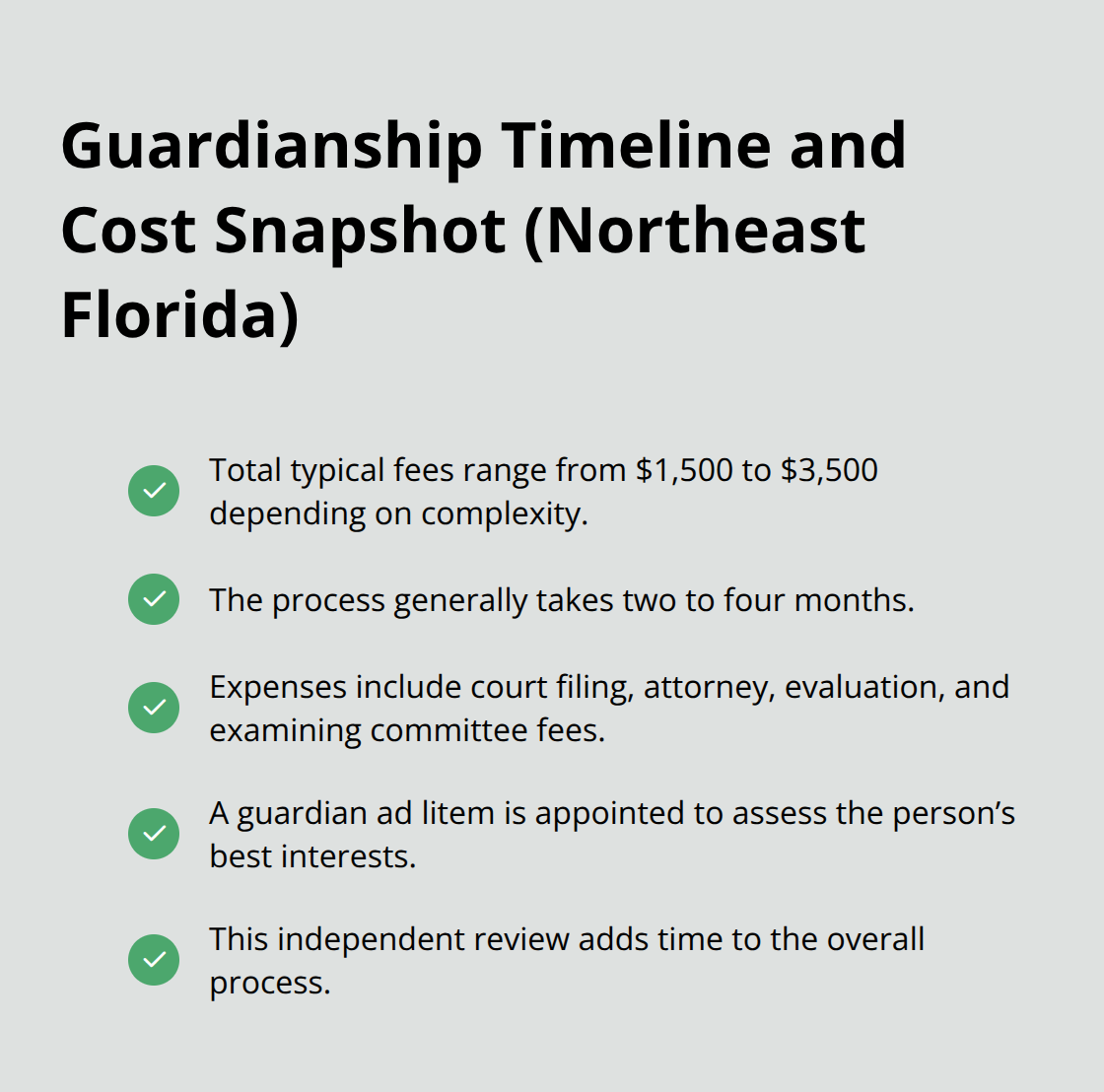
Many Northeast Florida families underestimate the cost and time involved in establishing guardianship. Court filing fees, attorney fees, evaluation fees, and the examining committee’s fees typically range from $1,500 to $3,500 depending on complexity, and the process can take two to four months. The court will also appoint a guardian ad litem to investigate whether guardianship truly serves the person’s best interests. This independent review protects your loved one but adds to the timeline.
Comply with Court Orders After Appointment
Once the judge issues a guardianship order, your role as guardian begins immediately. You must file an inventory of assets within 60 days, complete mandatory training within 90 days if you are a professional guardian, and file annual accountings showing how you managed the ward’s money and made decisions. Florida courts take guardian compliance seriously, and the Office of Public and Professional Guardians can investigate complaints about guardian misconduct.
Move Forward with Transparency and Documentation
Approach this process with complete transparency, thorough documentation, and a clear understanding that the court’s primary concern is protecting your loved one-not convenience or family preference. This mindset will move your petition forward efficiently and establish a guardianship that truly serves your family’s needs. With the guardianship order in place, your next responsibility involves selecting the right guardian and structuring financial and healthcare arrangements that reflect your family’s values and your loved one’s best interests.
Building a Guardianship Plan That Protects Your Family’s Future
A guardianship plan must reflect who your loved one actually is, not who you wish they were or who they used to be. This means starting with a brutally honest assessment of their current abilities, their preferences about decision-making, and your family’s financial and caregiving capacity. Northeast Florida families often rush into guardianship without mapping out what happens after the court order arrives. The court appoints a guardian, but the real work starts when you must manage assets, make healthcare decisions, navigate family disagreements, and file annual accountings with the judge.
Selecting the Right Guardian for Your Loved One
Your plan should name a primary guardian and at least one alternate-someone willing and able to step in if your first choice becomes ill, dies, or moves away. The primary guardian should live in Northeast Florida or be willing to relocate, since managing a guardianship from another state creates logistical nightmares with court filings, property management, and ongoing oversight. Florida courts expect guardians to stay close to their wards and the jurisdiction.
Your alternate guardian matters as much as your primary choice because naming someone unwilling or unable to serve creates chaos when you need them most. Talk to potential guardians before naming them, and make sure they understand the financial and emotional demands. A guardian managing a ward’s property must file detailed annual accountings showing every dollar spent, every asset held, and how decisions were made. This is not a casual responsibility.
Structuring Financial Arrangements Within Guardianship
Financial and healthcare arrangements demand equal attention in your plan. If your loved one has significant assets, establish whether the guardianship will manage those assets directly or whether a special needs trust can hold property while a guardian makes personal care decisions separately. A revocable living trust can protect assets and avoid probate while a limited guardianship handles only healthcare or personal decisions, reducing court oversight and preserving the ward’s dignity.
Many Northeast Florida families fail to coordinate these documents, leading to conflicts when hospitals cannot reach the guardian or when family members disagree about medical choices. Your plan should also address digital assets-usernames, passwords, and access to bank accounts and email-stored securely so your guardian can manage them without months of court delays.
Documenting Healthcare Decisions and Preferences
Designate a healthcare surrogate in writing if possible, even within a guardianship, so medical providers know exactly who decides about treatments, life support, and end-of-life care. Document your loved one’s wishes about major decisions: Would they want life-sustaining treatment? Should the guardian sell their home if care costs rise? What charities or causes did they care about? These preferences guide the guardian when tough choices arrive.
The court will tailor the guardianship order to be the least restrictive necessary, but your plan shapes what that guardianship actually looks like in daily practice. Update your plan every three to five years as circumstances change, family dynamics shift, or your loved one’s condition evolves, because static plans fail when real life happens.
Final Thoughts
Northeast Florida guardianship planning protects your loved ones by establishing clear legal authority before crisis strikes. The steps outlined in this guide-understanding guardianship types, assessing whether guardianship is truly necessary, filing with proper documentation, and building a plan that reflects your family’s values-form the foundation of effective protection. Florida’s least-restrictive framework means guardianship becomes the right choice only when other options genuinely cannot work, and courts will demand that you explore alternatives first.
Your guardianship plan must address three critical areas: selecting a guardian willing and able to serve, structuring financial arrangements that preserve assets and comply with court oversight, and documenting healthcare preferences so medical decisions align with your loved one’s wishes. The North Florida Office of Public Guardian serves Duval, Nassau, and surrounding counties at 850-487-4609 or wecare@bigbendopg.org, while the Office of Public and Professional Guardians maintains a statewide database of registered guardians and handles complaints through 1-855-305-3030. The Foundation for Indigent Guardianship supports public guardianship programs through supplemental funding when families lack resources.
Contact Family, Estate & Mediation Law for a consultation tailored to your specific situation. Your next step involves gathering financial and medical information about your loved one, identifying trusted decision-makers, and scheduling a conversation with a professional who understands Florida guardianship law and your family’s unique circumstances. Northeast Florida guardianship planning adapts as health, finances, and family dynamics change, so treat it as an ongoing process rather than a one-time event.