Guardianship isn’t always the right answer for protecting your loved ones in Florida. Many families discover that guardianship alternatives offer more flexibility, lower costs, and better ways to preserve relationships while still providing the protection they need.
At Family, Estate & Mediation Law, we help St. Augustine and Palatka residents understand their options beyond traditional guardianship. This guide walks you through practical alternatives that fit your family’s unique situation.
What Guardianship Really Costs Your Family
Guardianship in Florida strips away a person’s right to make decisions in exchange for protection. A court orders a guardian to control everything-medical choices, where someone lives, how money gets spent, who they see. The person under guardianship, called the ward, loses the ability to sign contracts, marry, or decide their own healthcare. Florida Statute §744.331 defines plenary guardianship as full authority over all personal, healthcare, living arrangements, and financial decisions. This works when someone truly cannot care for themselves, but it’s a sledgehammer solution for situations that need a scalpel.
The Hidden Price of Full Control
The guardianship process takes two to three months from filing to appointment in Florida. You’ll pay court filing fees, attorney fees for the petition and capacity evaluation, background check costs, and mandatory guardian education classes. After appointment, annual court oversight continues-you file accountings, attend reviews, and justify decisions to a judge.
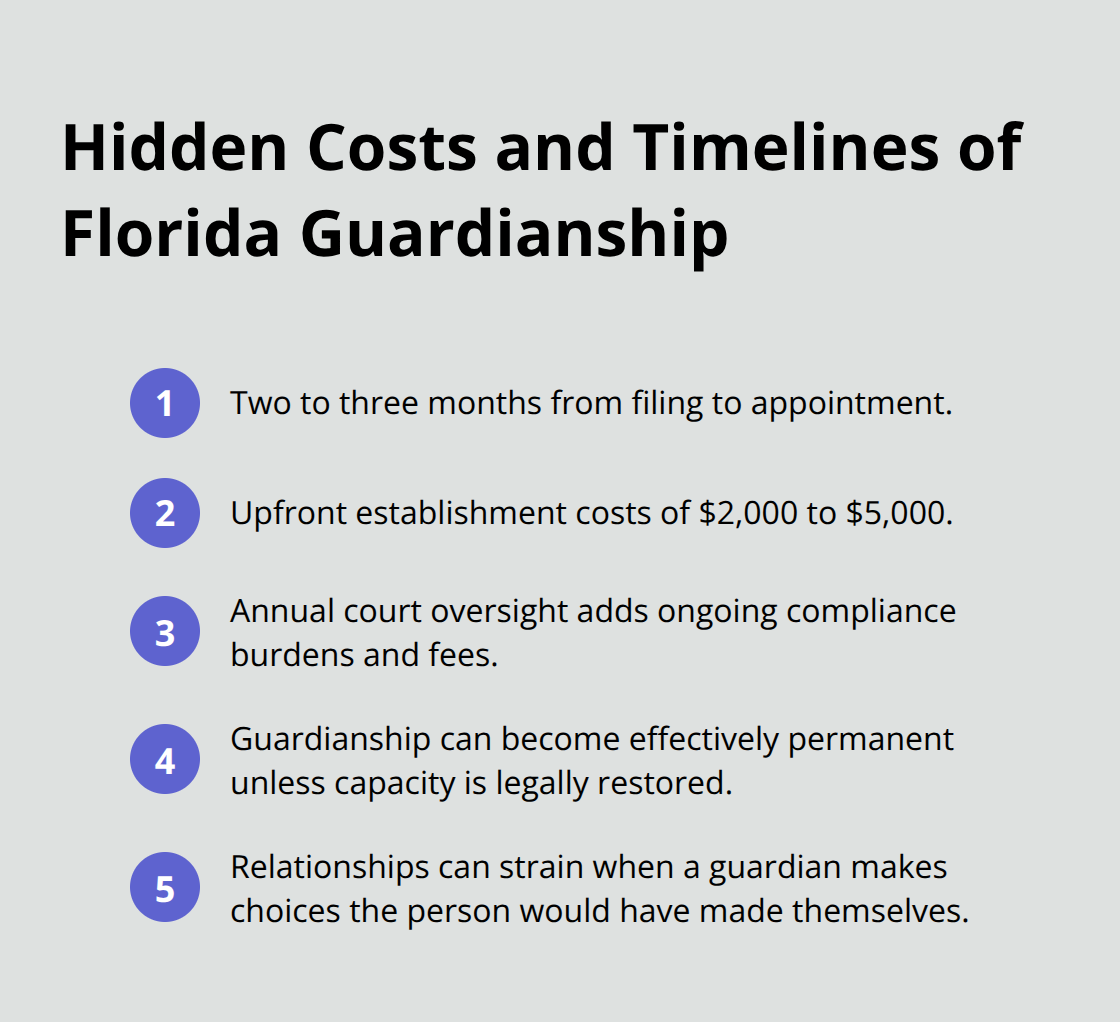
Many families spend $2,000 to $5,000 just to establish guardianship, then hundreds more yearly for compliance. Worse, guardianship remains permanent unless the ward regains capacity and petitions for termination. The ward’s independence vanishes. They cannot choose their job, their living situation, or their medical treatment. Relationships strain because the guardian makes decisions the person would have made themselves. Research from Disability Rights Florida shows that people under guardianship report feeling less valued and more isolated than those using alternatives that preserve decision-making authority.
Why St. Augustine and Palatka Families Explore Other Options
Limited guardianship exists-the court restricts only specific rights and lets the person keep control of areas the judge doesn’t limit. Guardian Advocacy streamlines the process for people with developmental disabilities and requires less court involvement. Emergency Temporary Guardianship handles crises for up to 90 days while a permanent solution develops. But even these options still remove rights.
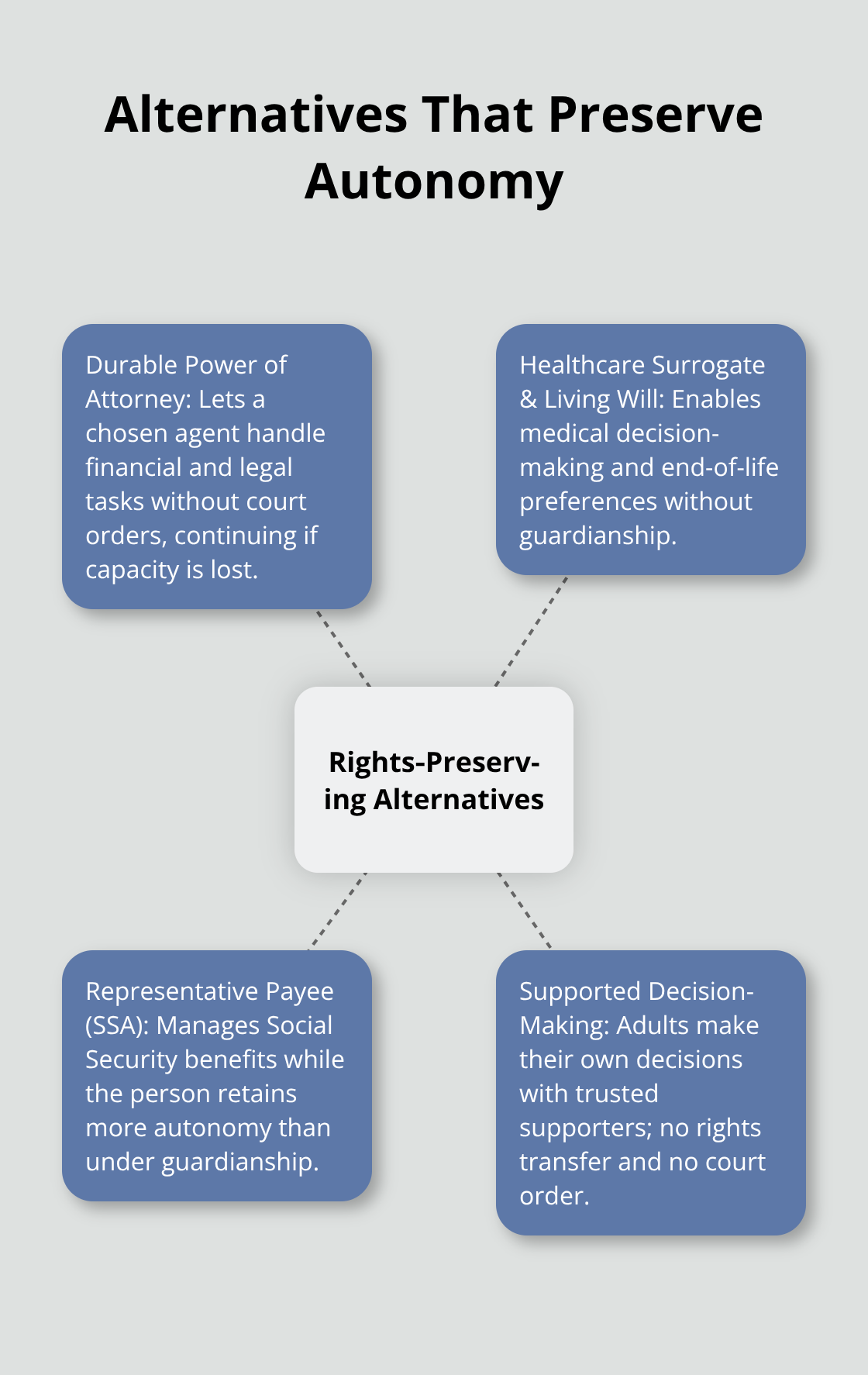
That’s why St. Augustine and Palatka families increasingly turn to tools that don’t require court orders and don’t strip away autonomy. Durable Powers of Attorney, Healthcare Surrogate designations, Representative Payee arrangements through the Social Security Administration, and Supported Decision-Making agreements let loved ones help without the legal weight of guardianship. These alternatives cost less, preserve relationships, and keep the person’s dignity intact. They’re not right for every situation-someone with severe dementia who can’t recognize family may need guardianship-but for many people, alternatives work better and faster. Understanding which option fits your family’s circumstances requires looking at what each tool actually does and how it protects your loved one.
Tools That Work Without Stripping Rights Away
Durable Powers of Attorney: Control That Lasts
A Durable Power of Attorney stands out because it works while someone has capacity and continues if they lose it later. In Florida, you sign it with two witnesses and a notary, and it lets you name an agent to handle financial, legal, or medical decisions on your behalf. The difference between a regular power of attorney and a durable one matters: a regular one stops the moment you lose capacity, but a durable one keeps working. Your agent can pay bills, manage investments, or handle property sales even if you become incapacitated. Florida Statute §709.2201 governs these documents, and they cost far less than guardianship-typically $300 to $800 to draft properly, with no ongoing court fees or annual accountings.
The catch is capacity: you must have mental ability to understand what you’re signing when you create it. If someone has already lost capacity, a durable power of attorney won’t work, and guardianship becomes necessary.
Healthcare Decisions Without Court Orders
Healthcare Surrogates and Living Wills solve a different problem. A Healthcare Surrogate designation under Florida Statute §765.203 names someone to make medical decisions when you cannot, and local healthcare providers recognize these forms without court involvement. A Living Will expresses your wishes about life-prolonging treatments in terminal or persistent vegetative states. Together, they cost under $200 to establish and give your family authority over medical choices without guardianship’s restrictions. Florida law recognizes your right to self-determination in health decisions under Florida Statute §765.102, which means these documents carry real legal weight.
Protecting Assets and Benefits
Trusts, particularly Revocable Living Trusts, handle assets and avoid probate while you retain control during your lifetime. A Supplemental Needs Trust protects eligibility for Medicaid and SSI if your beneficiary receives government benefits-important for families managing disability or long-term care costs. Representative Payees appointed by the Social Security Administration manage Social Security benefits specifically, and the SSA presumes competence unless proven otherwise, meaning your loved one keeps more autonomy than under guardianship.
Supported Decision-Making: Independence With Help
Supported Decision-Making agreements represent the newest approach: adults with disabilities make their own decisions with trusted supporters helping them understand information and explore options. No court order exists, no rights transfer, and supporters have no legal authority-the person remains ultimately responsible. Two Florida bills are pending to codify this practice, reflecting growing recognition that independence with support often works better than guardianship. The Guardian Project offers a free five-step guide and live workshops to help families determine which combination of these tools fits their situation, typically at a fraction of traditional legal fees.
Each of these alternatives creates a different balance between protection and independence. The right choice depends on your loved one’s capacity, your family’s circumstances, and what decisions matter most to protect. Knowing which tool addresses your specific concerns helps you move forward with confidence-and that’s where understanding your family’s actual needs becomes the deciding factor.
How to Choose the Right Alternative for Your Situation
Answer Three Questions About Your Circumstances
Start with three concrete questions about your situation. First, does your loved one currently have the mental capacity to understand and sign legal documents? This determines everything. If yes, a Durable Power of Attorney, Healthcare Surrogate designation, or Supported Decision-Making agreement become viable options that cost $200 to $800 and take weeks to establish. If no, guardianship or a Representative Payee through the Social Security Administration may be your only path forward.
Second, what specific decisions need protection? If medical choices matter most, an advance directive and Living Will solve that problem for under $200 without touching financial authority. If money management is the concern, a Representative Payee for Social Security benefits costs nothing to establish through your local SSA office, though it only covers Social Security income, not other assets. A Revocable Living Trust protects real estate and investments outside probate while you retain control, typically costing $800 to $1,500 to draft.
Third, does your loved one receive government benefits like SSI or Medicaid? If yes, a Supplemental Needs Trust becomes critical to preserve eligibility while protecting assets. This tool prevents guardianship from accidentally disqualifying someone from essential benefits. The Florida Developmental Disabilities Council confirms that families combining multiple tools often achieve better outcomes than relying on guardianship alone.
Compare Costs Across Your Options
Cost comparison reveals why St. Augustine and Palatka families increasingly choose alternatives. Establishing guardianship runs $2,000 to $5,000 upfront with $300 to $1,000 in annual compliance costs indefinitely. A Durable Power of Attorney costs $300 to $800 once with zero ongoing fees.
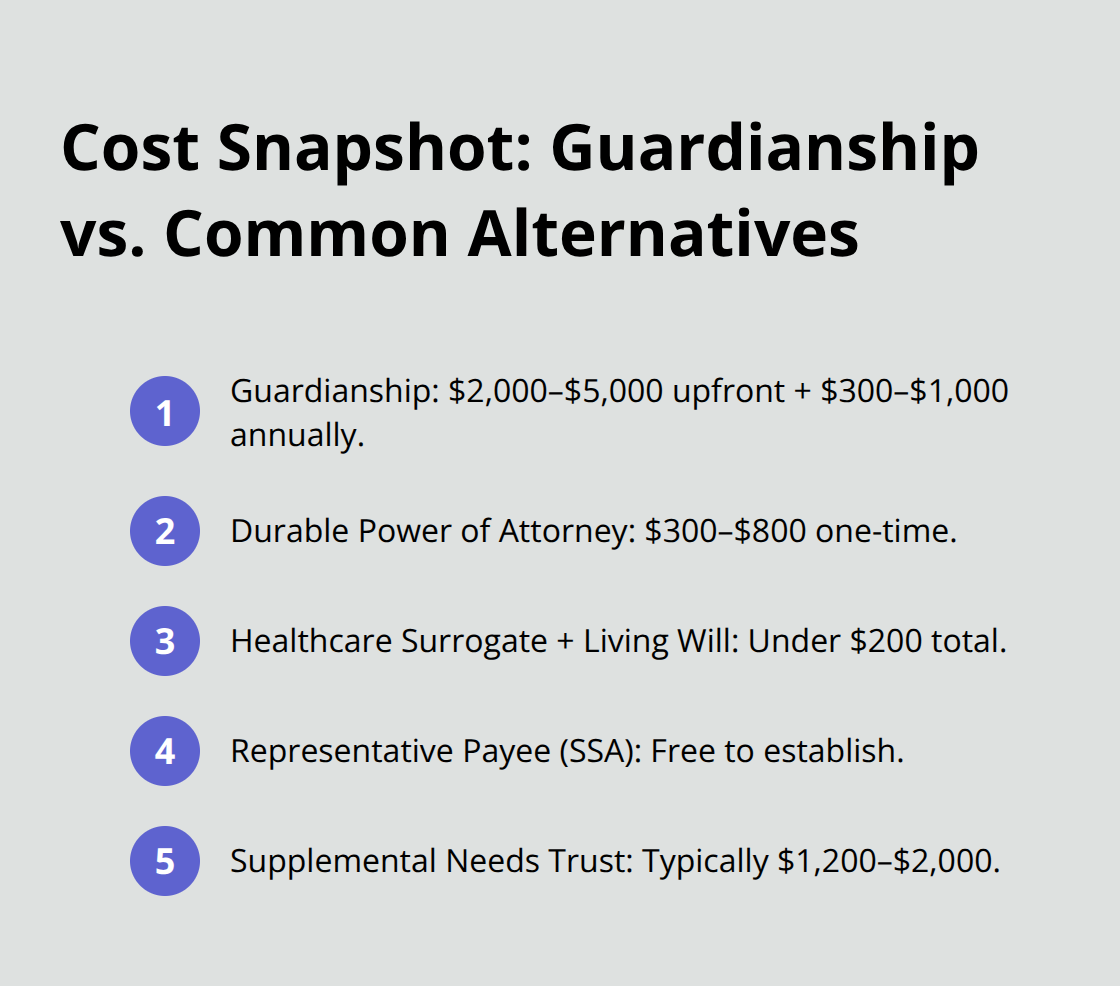
A Healthcare Surrogate designation and Living Will together cost under $200. Representative Payee designation is free. Even a Supplemental Needs Trust, typically $1,200 to $2,000, costs less than two years of guardianship oversight.
The Guardian Project’s free five-step guide walks families through this decision-making process at no cost, helping you identify which combination of tools matches your situation before paying for legal documents. This resource eliminates guesswork and lets you move forward with confidence about which path fits your family’s needs and budget.
Work With Legal Professionals to Implement Your Plan
Once you identify which tools address your family’s specific concerns, legal professionals help you establish them correctly. An attorney who understands estate planning and family law can draft Durable Powers of Attorney, Healthcare Surrogate designations, and Supplemental Needs Trusts that comply with Florida law and protect your loved one’s interests. We at Family, Estate & Mediation Law serve St. Augustine and Palatka residents with practical guidance on selecting and implementing the right combination of these tools for your family’s circumstances, drawing on over 50 years of combined experience in estate planning and family matters. Local resources also include St. Johns County Legal Aid (904-827-9921 or toll-free 877-827-9921), which offers self-help resources and civil legal assistance for families exploring guardianship alternatives, with walk-in intake available 8:30 AM–5:00 PM, Monday–Friday.
Final Thoughts
Guardianship alternatives in Florida offer your family real choices that balance protection with dignity. Tools like Durable Powers of Attorney, Healthcare Surrogates, Representative Payees, Supplemental Needs Trusts, and Supported Decision-Making agreements cost less, take less time, and preserve the relationships that matter most. For many St. Augustine and Palatka families, these alternatives accomplish what you actually need without the permanent loss of rights that guardianship demands.
Planning ahead transforms your family’s situation. When you establish these documents while your loved one has capacity, you avoid emergency decisions made under pressure and prevent the two to three month guardianship process with its $2,000 to $5,000 upfront costs plus ongoing court fees. You keep your family’s private decisions out of the courthouse and preserve your loved one’s ability to participate in choices that affect their life, even if they need support to do so. The Guardian Project’s free five-step guide helps you identify which combination of tools fits your family’s specific circumstances without paying for legal documents you don’t need.
We at Family, Estate & Mediation Law serve St. Augustine and Palatka residents with practical guidance on selecting and implementing the right guardianship alternatives for your family’s needs, drawing on over 50 years of combined experience in estate planning and family matters. St. Johns County Legal Aid also offers self-help resources and civil legal assistance at 904-827-9921 or toll-free 877-827-9921, with walk-in intake available 8:30 AM–5:00 PM, Monday through Friday. Identify which decisions need protection, determine whether your loved one has capacity to sign documents, and reach out to a legal professional who can help you implement the right combination of tools.