
Planning for your child’s care if you become unable to do so is one of the most important decisions you’ll make as a parent. Preneed guardianship steps allow you to name who will care for your children before a crisis forces the court to decide for you.
At Family, Estate & Mediation Law, we help families establish these protections with clarity and confidence. This guide walks you through the process so you can move forward with peace of mind.
What Preneed Guardianship Actually Protects
The Legal Foundation and What It Does
A preneed guardianship declaration is a written document you file with the court that names who will care for your children and manage their assets if you become incapacitated or die. Under Florida Statutes 744.3045 and 744.3046, this declaration must be signed in front of at least two witnesses and clearly identifies both you and your chosen guardian. The moment a court determines you are incapacitated, your named guardian steps in immediately without waiting weeks or months for a guardianship hearing. This differs fundamentally from hoping someone will petition the court to appoint a guardian-you actively choose now, and Florida law gives your choice significant weight through what’s called a rebuttable presumption, meaning the court must respect your selection unless it finds the guardian genuinely unqualified under Florida Statutes 744.309 and 744.312.
Why This Matters More Than You Think
Without this declaration, the court decides based on statutory priority, which typically favors a spouse, then adult children, then parents-regardless of who you would have wanted. Many families discover too late that the person they assumed would step in is not who the law prioritizes, and a contested guardianship battle then consumes time, money, and family relationships. The practical advantage of preneed guardianship over traditional guardianship is speed and certainty. When you file a preneed declaration with the clerk of court, you eliminate the uncertainty that comes with emergency guardianship petitions, which last only 90 days and require proving incapacity under pressure. You also avoid the scenario where no one files a petition at all, leaving your children without a court-appointed guardian and potentially vulnerable.
How Preneed Guardianship Fits Into Your Larger Plan
Preneed guardianship works alongside other planning tools-a durable power of attorney handles financial decisions while you are still capable, a healthcare surrogate directive specifies medical choices, and a will or trust governs what happens to your assets after death. Preneed guardianship addresses the gap that none of these alone can fill: who cares for your minor children and manages their day-to-day lives and inheritance if you cannot. This matters most for single parents, blended families where you want to prevent an ex-spouse from gaining custody, parents of children with special needs who require a specific caregiver, and anyone whose preferred guardian is not a biological relative.
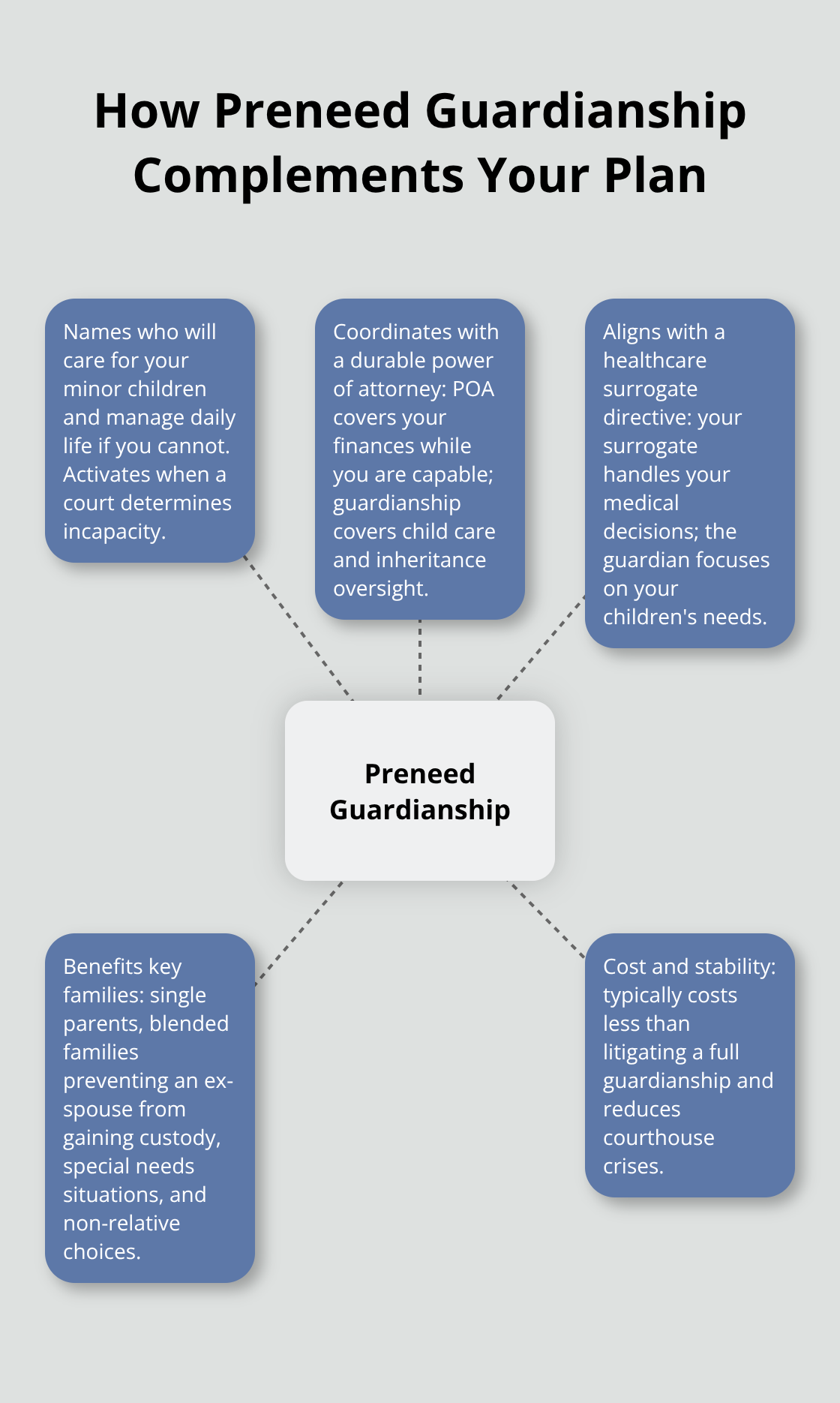
The declaration costs significantly less than litigating a full guardianship action and gives your family stability rather than leaving them to navigate a courthouse during a crisis.
Now that you understand what preneed guardianship protects, the next step is identifying who should serve as your guardian and alternate, and then documenting those choices properly.
How to Choose Your Guardian and File Your Declaration
Selecting the Right Person for Your Children’s Care
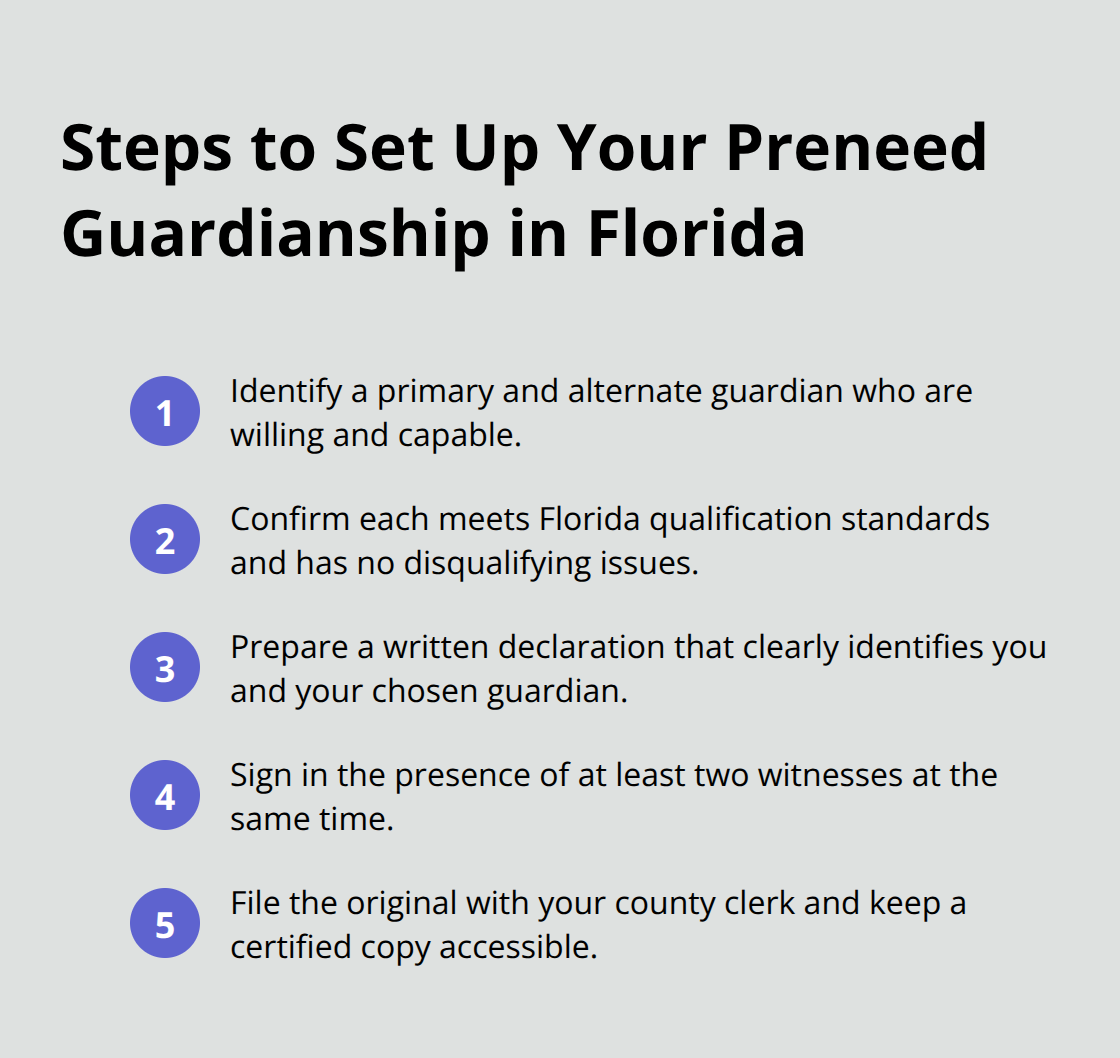
Selecting your preneed guardian is not a theoretical exercise-it demands honest conversation about who can actually step into your role. The person you choose must be willing to accept the responsibility, capable of managing your children’s daily care and finances, and able to make decisions aligned with your values. Start by listing three to five candidates and have direct conversations with each about what guardianship would mean: they would handle school decisions, medical care, inheritance management, and potentially special needs support depending on your children’s circumstances.
Understanding Florida’s Qualification Standards
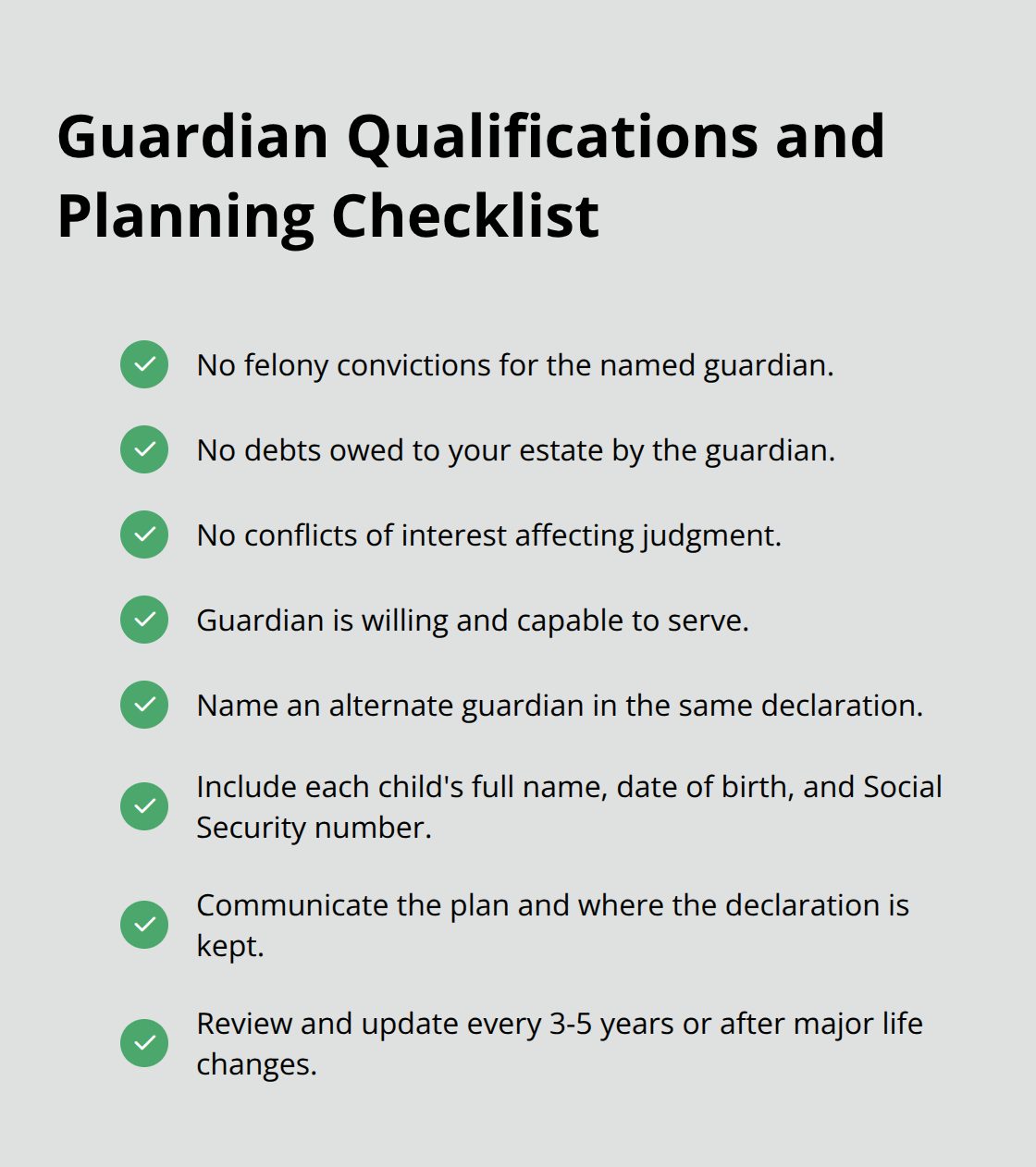
Florida Statutes 744.309 and 744.312 set the qualification standards courts will apply when your declaration reaches the courtroom. Your guardian cannot have a felony conviction, cannot owe money to your estate, and cannot have a conflict of interest that would cloud their judgment. These standards exist to protect your children, so verify that your chosen guardian meets them before you file. A person with financial troubles or legal problems may face court rejection even if you named them, which defeats the purpose of planning ahead.
Why Your Alternate Guardian Matters
Many parents overlook naming an alternate guardian, but this step is essential-if your first choice becomes ill, moves away, or simply cannot serve when the time comes, your alternate steps in without court delay. You can also name an alternate guardian in the same declaration, so if your first choice cannot serve, the law presumes your backup is entitled to the role. For each child you must include their full name, date of birth, and social security number to eliminate any confusion about who is protected.
Filing Your Declaration Correctly
Once you have identified your guardians, the actual filing process is straightforward but requires precision. The declaration must be a written document signed by you in front of at least two witnesses at the same time-Florida law does not accept electronic signatures or separate witness attestations. File the original declaration with the clerk of court in your county, and keep a certified copy in an accessible location where your family knows to find it in an emergency.
How Your Declaration Protects Your Choice
When incapacity occurs and someone petitions the court for a guardianship determination, the clerk produces your declaration, and Florida law creates a rebuttable presumption that your named guardian is entitled to serve. This presumption gives your choice substantial legal weight; the court must appoint your guardian unless it finds them genuinely unqualified under the statutory standards. The entire process from declaration to confirmed appointment typically takes weeks rather than months, and your children transition to their guardian’s care without the uncertainty and expense of a contested guardianship battle. An attorney can prepare your declaration correctly because even small defects can weaken the presumption or delay appointment when your family needs certainty most.
With your guardians named and your declaration filed, the next critical step is communicating these plans to the people who matter most-your family and your chosen guardian themselves.
Protecting Your Wishes and Avoiding Common Mistakes
Meet Florida’s Strict Signature Requirements
The moment you sign your preneed guardianship declaration, Florida law demands strict compliance with specific rules or your document loses its legal power. Florida Statutes 744.3045 requires that you sign in the presence of at least two witnesses at the same time-not separate occasions, not electronic signatures, not notarization alone. The declaration must clearly identify you and your chosen guardian by name. Many parents prepare a declaration at home, have witnesses sign at different times, or fail to file it with the clerk of court, which means the court has no record when incapacity occurs and your family faces the exact crisis you tried to prevent.
Why Attorney Review Protects Your Declaration
An attorney who prepares your declaration catches defects before filing and verifies the document meets every statutory requirement so the court recognizes your choice without question. The cost of having an attorney prepare this correctly is far less than fighting a guardianship dispute or watching the court appoint someone you did not choose. Small errors-a missing witness signature, unclear identification of the guardian, or improper filing-can weaken the presumption or delay appointment when your family needs certainty most.
Communicate Your Plan to Your Guardian and Family
Direct conversations with your chosen guardian and your family about what you have done and where they can find your declaration are equally important. Many guardians accept the role without understanding what it means-they assume it applies only after death, when in fact preneed guardianship activates the moment a court determines you are incapacitated (which could happen from a stroke, accident, or progressive illness while you are still alive). Your family needs to know the declaration exists, where it is filed, and how to access it during a medical crisis.
Parents in blended families should discuss this plan with their current spouse or partner to avoid surprises and conflict when the declaration becomes active. If your choice is someone outside the family, explain your reasoning so relatives understand this is your deliberate decision, not an oversight. This conversation prevents the painful scenario where a family member contests your guardian’s appointment and delays care for your children while the court holds hearings.
Update Your Declaration as Life Changes
Update your declaration every three to five years or whenever major life changes occur-remarriage, relocation, a guardian’s health decline, or a child’s special needs diagnosis. Florida law allows you to revoke or amend your declaration at any time, so circumstances that made sense five years ago may no longer fit your family’s reality. A declaration that no longer reflects your wishes creates confusion and potential conflict when your family needs clarity most. We at Family, Estate & Mediation Law help families coordinate these conversations and verify that your declaration aligns with your overall estate plan so your will, trusts, and guardianship designations work together rather than creating conflict.
Final Thoughts
Preneed guardianship steps give you control over one of the most important decisions affecting your family’s future. Naming your guardian and alternate now, filing your declaration with the court, and communicating your plan to the people who matter most eliminates the uncertainty that comes with crisis guardianship. Your children transition to their guardian’s care without months of court delays, and your family avoids the conflict that arises when the court appoints someone you would not have chosen.
The three core actions are straightforward: identify guardians who meet Florida’s qualification standards and are willing to serve, document your choice in a properly signed and witnessed declaration, and file it with your county clerk. You should update your declaration every few years as your family circumstances change. These steps cost far less than litigating a guardianship dispute and provide the certainty that no other planning tool can match.
We at Family, Estate & Mediation Law help families across Northeast Florida prepare these declarations correctly and integrate them with wills, trusts, and powers of attorney so your entire plan works together. Contact Family, Estate & Mediation Law to schedule a consultation and start preparing your preneed guardianship declaration today. We have offices in St. Augustine and Palatka and can walk you through the entire process so your family has the protection and clarity you deserve.