
Planning ahead for potential incapacity is one of the smartest decisions Florida families can make. A preneed guardianship lets you choose who will care for you if you become unable to make decisions, rather than leaving it to the courts.
At Family, Estate & Mediation Law, we help St. Augustine and Palatka residents understand how preneed guardianships work and fit into their broader estate plans. This guide walks you through the process, clears up common misconceptions, and shows you what comes next.
What a Preneed Guardianship Actually Does
A preneed guardianship is a written declaration you create while fully capable, naming someone to manage your personal and financial affairs if you later become incapacitated. Under Florida Statutes 744.3045, this declaration must identify both you and your chosen guardian, be signed in front of at least two witnesses, and can be filed with the clerk of the circuit court. The moment a court finds you incapacitated, your named guardian steps into their role immediately, without the delays that plague traditional guardianship court battles. This matters because standard guardianship proceedings in Florida require publishing notices, gathering medical evidence, scheduling hearings, and waiting for judicial approval-a process that can stretch weeks or months while decisions about your care hang in limbo. With a preneed declaration on file, the court already has a presumption that your chosen guardian is entitled to serve, provided they meet Florida’s qualification standards. That presumption cuts through red tape and gets the right person making decisions for you faster.
Why Preneed Beats the Traditional Route
Traditional guardianships begin only after someone petitions the court, typically a family member or concerned party. The court then appoints a guardian, often a stranger if family members disagree or cannot serve. Preneed guardianships flip this entirely: you decide in advance, while you are competent and clear-headed. Florida law recognizes this preference by creating a rebuttable presumption favoring your named guardian once incapacity is established. You can also name alternate guardians, so if your first choice cannot or will not serve, your second choice steps in with the same legal presumption. This structure eliminates the family conflicts that erupt when multiple relatives fight over who should control a parent’s or sibling’s care and finances. St. Augustine and Palatka residents dealing with aging parents or planning for health uncertainties gain enormous clarity from this approach-your wishes are on paper, filed with the court, and legally binding.
Practical Reasons to Set This Up Now
The World Health Organization reports that approximately 47.5 million people worldwide live with dementia, with 7.7 million new cases diagnosed each year. That trend is hitting Florida hard, particularly in communities with retirees and aging populations. Preneed planning is not about pessimism; it is about responsibility. If you become incapacitated without a preneed declaration, Florida courts will appoint someone based on a statutory hierarchy-often a spouse or adult child, but not necessarily the person you would choose. Medical crises happen without warning. Accidents, strokes, and cognitive decline strike without announcement. A preneed guardianship declaration that is already signed, witnessed, and filed means your family avoids emergency court petitions, rushed decisions, and the stress of proving incapacity while you need immediate care.
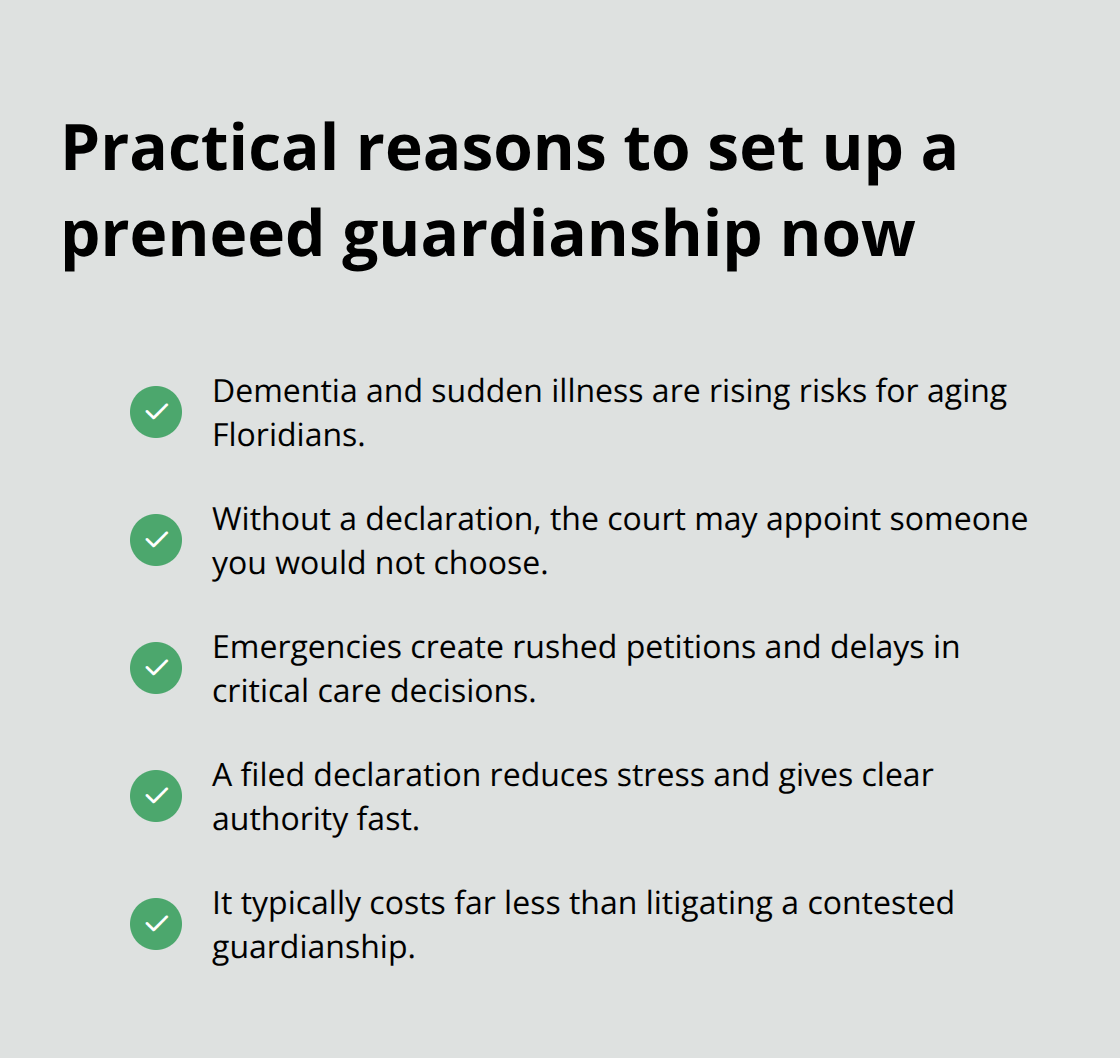
The cost of setting up a preneed declaration is far lower than litigating a contested guardianship after the fact.
What Happens When You File Your Declaration
Filing your preneed declaration with the circuit court clerk creates an official record that the court can access immediately when incapacity proceedings begin. This public filing (with appropriate privacy protections) gives your declaration legal weight and ensures no one can claim they never knew your wishes. Your named guardian does not gain authority until a court actually finds you incapacitated-your autonomy remains fully intact until that formal determination. Once the court makes that finding, your guardian assumes duties right away and must petition for confirmation within 20 days. The court then confirms the appointment if your guardian meets Florida’s qualification standards, after which the guardian takes an oath and receives letters of guardianship that authorize them to act on your behalf.
Integrating Preneed Guardianship Into Your Complete Plan
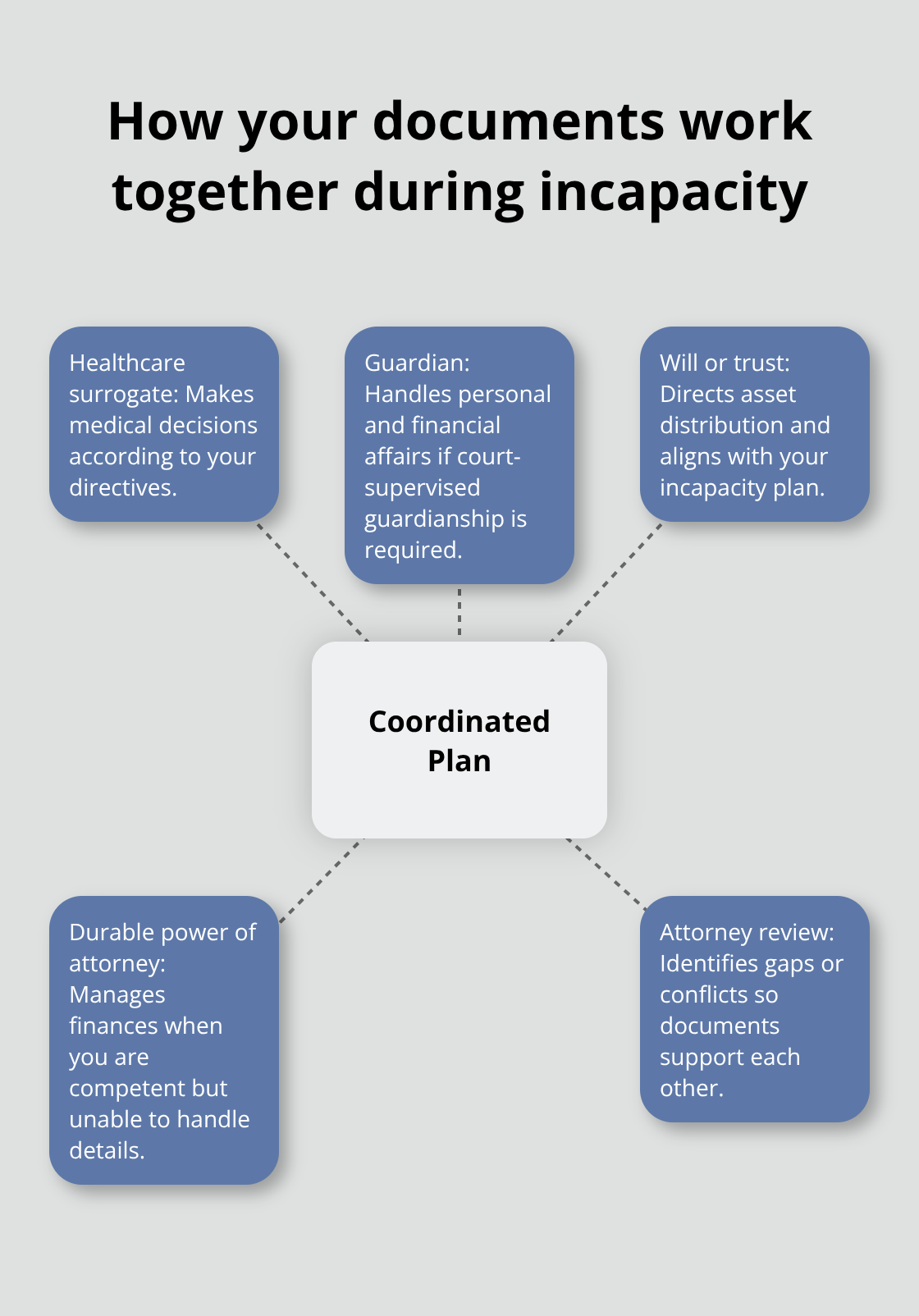
A preneed declaration works best when it aligns with your will, trust, and healthcare directives. These documents together create a comprehensive incapacity and estate plan that covers medical decisions, financial management, and asset distribution. Your healthcare surrogate handles medical choices, your guardian manages personal and financial affairs, and your will or trust directs what happens to your assets. When these pieces fit together, your family knows exactly what you want and how to carry it out. St. Augustine and Palatka residents who want to coordinate these elements should consult with an attorney who can review how each document supports the others and identify any gaps or conflicts.
Setting Up Your Preneed Guardianship
Choose Your Guardian Thoughtfully
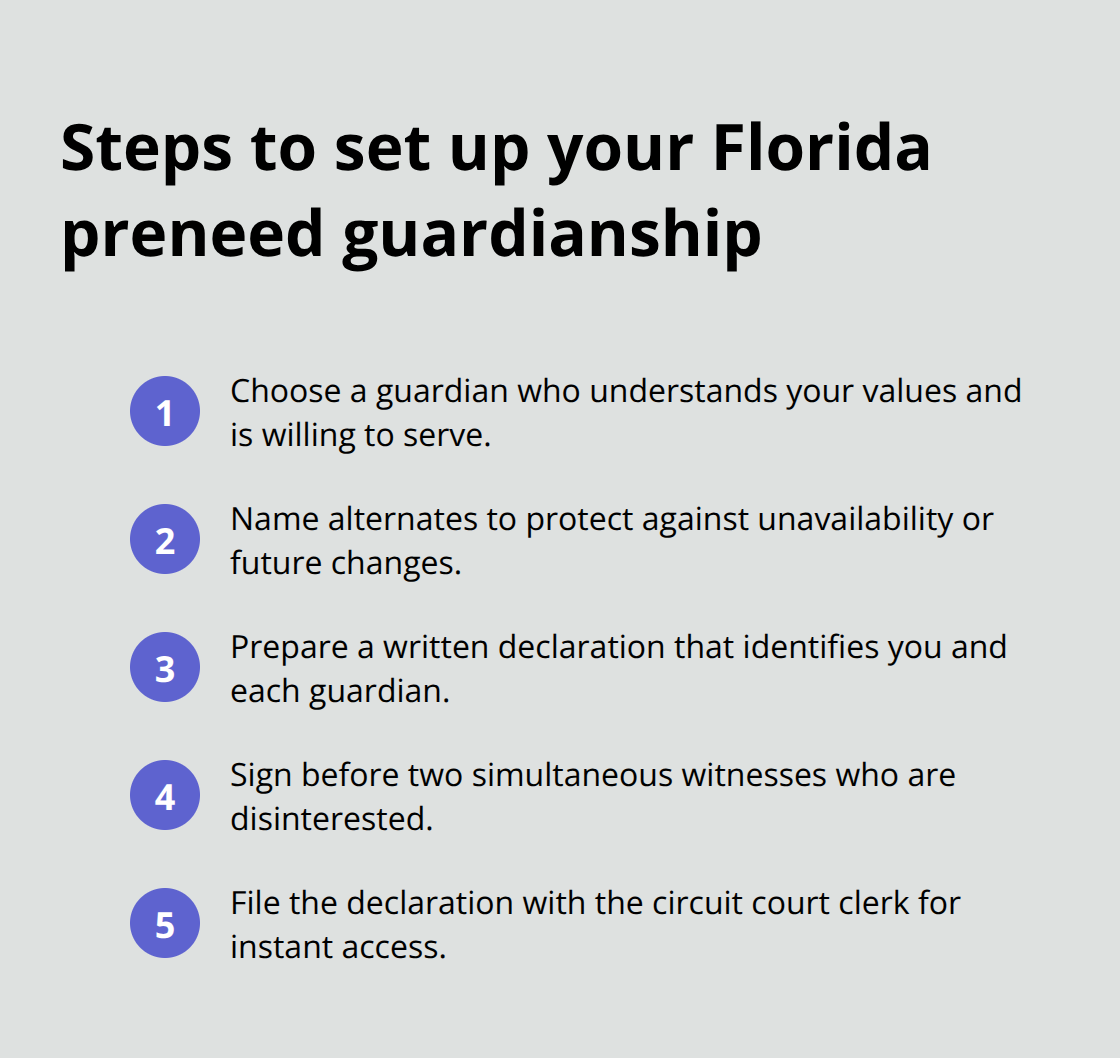
The first step is selecting your guardian carefully. This person should understand your values, be willing to take on the responsibility, and ideally live close enough to manage your affairs if needed. Many St. Augustine and Palatka residents choose a trusted family member, but some select a professional fiduciary or corporate guardian if family dynamics are complicated or no suitable relative is available. Talk with your chosen guardian before putting anything in writing-confirm they actually want the role and understand what it entails. Florida law allows you to name alternate guardians in order of preference, which protects against situations where your first choice becomes unavailable, moves away, or passes away before you do.
Prepare Your Written Declaration
Once you have identified your guardian or guardians, you need a written declaration that identifies you by name, identifies each guardian by name, and clearly states your wish for them to serve. Florida Statutes 744.3045 requires this declaration to be signed in front of at least two witnesses who are present at the same time. The witnesses cannot be the person you are naming as guardian, and it is wise to use disinterested witnesses who have no financial stake in your estate. An attorney will prepare the declaration to comply with Florida law and avoid technical defects that could render it unenforceable later.
File Your Declaration With the Court
Some people file the declaration with the circuit court clerk immediately after signing, while others keep it in a safe place and inform their family where it is located. Filing with the clerk creates an official record that the court can access instantly when incapacity proceedings begin, which we recommend for maximum clarity and legal weight. The filing fee is typically modest-usually under $50 in most Florida counties-and the clerk will issue a stamped copy confirming receipt.
Understand What Happens After Filing
After your declaration is signed and filed, nothing happens until a court actually determines you are incapacitated. Your legal authority and autonomy remain completely intact. If incapacity does occur, whoever initiates guardianship proceedings will file a petition with the court, and the clerk will produce your preneed declaration. Florida courts give significant weight to your advance naming, creating a rebuttable presumption that your chosen guardian should serve. The court will still verify that your guardian meets qualification standards under Florida Statutes 744.309 and 744.312, checking for disqualifications like felony convictions, substance abuse issues, or prior findings of abuse or neglect.
Your Guardian’s Duties and Court Oversight
Once the court finds you incapacitated and approves your guardian, that person must petition for confirmation within 20 days, take an oath swearing to fulfill their duties, and receive letters of guardianship from the court. These letters are the official document that banks, healthcare providers, and other institutions recognize as proof of authority. Your guardian then manages your personal care decisions and financial affairs under court supervision. Florida law requires guardians to file annual accountings showing how they spent your money, maintain detailed records, and report to the court about your condition and care. The court retains power to remove or modify a guardian if circumstances change or if the guardian abuses their position. This ongoing supervision protects you from exploitation and ensures your guardian acts in your best interest, not their own. Coordinating your preneed declaration with your durable power of attorney and healthcare directives creates a seamless plan that covers every scenario-medical decisions, financial management, and asset distribution all working in harmony. Understanding how these pieces fit together is essential before you move forward, which is why many St. Augustine and Palatka residents consult with an attorney to review their complete incapacity and estate plan.
Common Misconceptions About Preneed Guardianships
Many St. Augustine and Palatka residents hesitate to set up a preneed guardianship because they believe misconceptions that simply do not hold water. The most damaging myth is that naming a guardian in advance somehow strips you of your rights or hands over control immediately. This is false. Your declaration sits dormant until a court actually determines you are incapacitated, which means your legal authority stays completely yours until that formal court finding happens.
The Cost and Oversight Myth
Another widespread belief is that a preneed guardianship costs thousands of dollars and requires constant legal oversight. In reality, setting up the declaration itself costs far less than fighting a contested guardianship battle after incapacity strikes. The annual accounting and court oversight do involve some administrative work and modest filing fees, but these are negligible compared to the chaos and legal expenses of emergency guardianship proceedings.
Why Planning Does Not Cause Incapacity
Some people worry that naming a guardian means they are admitting they might become incapacitated, as if planning somehow causes the problem. This thinking ignores the hard facts: according to the World Health Organization, dementia cases are rising dramatically, and strokes, accidents, and unexpected illness strike without regard to whether you have planned for them. Refusing to plan does not prevent incapacity; it only ensures your family faces a crisis without your guidance.
How Your Declaration Fits Into Your Complete Plan
The real barrier for most people is simply not understanding how a preneed declaration fits into their overall financial and legal life. You need this document to work alongside your durable power of attorney, which handles financial decisions while you are still competent but perhaps unable to manage details. Your healthcare surrogate designation covers medical choices. Your will or trust directs asset distribution after death. Your preneed guardianship covers personal and financial management if you become incapacitated and no power of attorney is in place, or if circumstances require court-supervised guardianship. These instruments overlap in intentional ways, and that overlap creates protection, not confusion.
Questions to Answer Before Moving Forward
Before moving forward, ask yourself whether you have named someone you genuinely trust to make decisions aligned with your values, not their own interests. Ask whether that person has confirmed willingness to serve and understands what the role demands. Ask whether your family knows where your declaration is filed and how to access it if needed. Ask your attorney whether your preneed declaration coordinates properly with your other estate planning documents or whether gaps exist. St. Augustine and Palatka residents who take time to answer these questions before signing anything end up with plans that actually work when they are needed most.
Final Thoughts
A preneed guardianship declaration protects you and your family from uncertainty when incapacity strikes without warning. You eliminate the guesswork courts face, avoid family conflict over decisions, and reduce legal costs that plague emergency proceedings. Most importantly, you maintain control over your own future by deciding now, while you are fully capable, rather than leaving those choices to strangers or to whoever petitions the court first.
The process is straightforward: choose a trusted guardian, prepare a written declaration with proper witnesses, and file it with the circuit court clerk. This single step creates a legal presumption favoring your choice and gives your family a clear roadmap if incapacity ever occurs. Coordinate your preneed declaration with your durable power of attorney, healthcare directives, and estate plan so every piece of your incapacity planning works together seamlessly.
The team at Family, Estate & Mediation Law Group can guide you through how preneed guardianships work and fit into your complete estate plans. We help St. Augustine and Palatka families understand this process and develop practical strategies that protect your rights and preserve your legacy. Contact us for a free consultation to discuss your situation and determine whether a preneed guardianship makes sense for you and your family.