
Planning ahead for guardianship is one of the most protective steps you can take for vulnerable family members. Many families in St. Augustine and Palatka wait until a crisis forces their hand, leaving them scrambling to make decisions under pressure.
Pre-guardianship planning lets you make thoughtful choices now, on your own timeline. We at Family, Estate & Mediation Law help families establish clear plans that reflect their values and protect those who need it most.
What Pre-Guardianship Planning Actually Does
Pre-guardianship planning identifies potential guardians, documents your wishes, and organizes financial and medical records before a crisis forces the issue. The fundamental difference between pre-guardianship planning and traditional guardianship lies in timing and control. Traditional guardianship happens reactively, after someone loses capacity. A court appoints a guardian based on what the judge believes is in the ward’s best interest, which may not align with your preferences. Pre-guardianship planning lets you make these decisions proactively while you still have capacity.
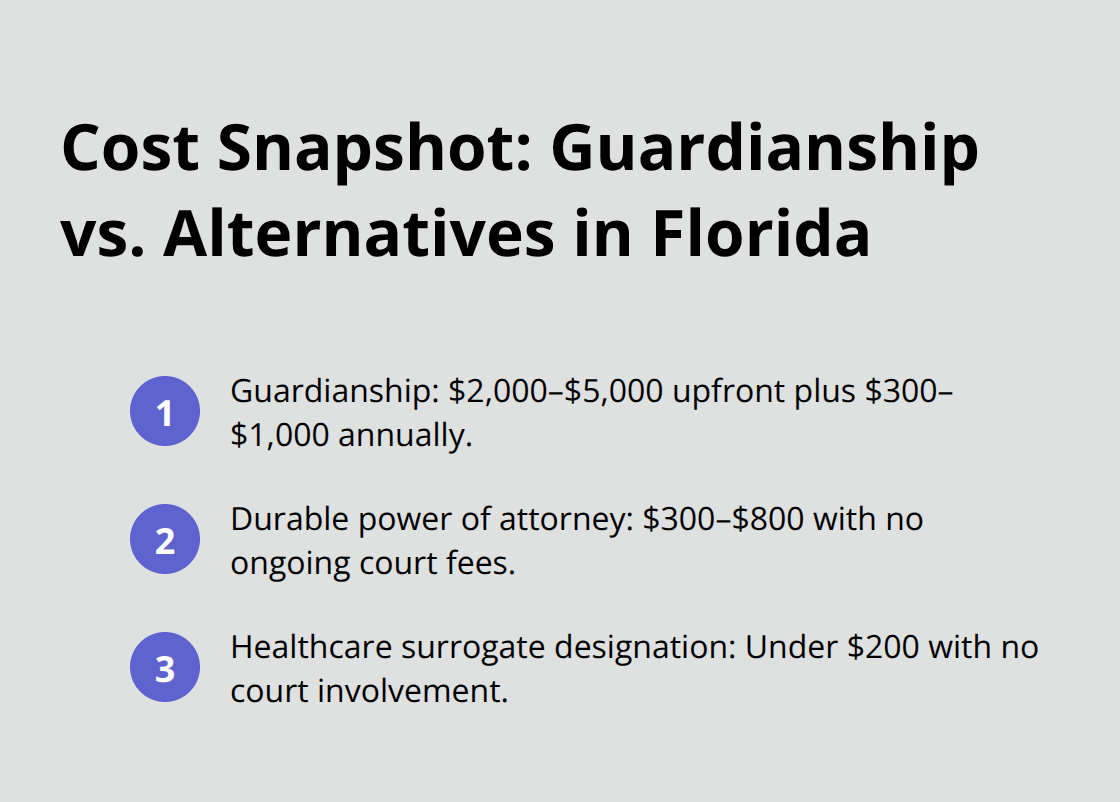
Florida Statute §744.331 defines plenary guardianship as a full transfer of decision-making authority over personal, healthcare, living arrangements, and finances. Once appointed, a guardian controls nearly every aspect of the ward’s life. The typical guardianship process takes two to three months from filing to appointment, creating a dangerous gap where urgent decisions may need to be made by someone you did not choose. Guardianship also carries real financial costs-upfront costs typically range from $2,000 to $5,000, with ongoing annual oversight fees between $300 and $1,000.
Why Alternatives Cost Less and Preserve More Control
Pre-guardianship planning avoids many of these expenses by using alternatives like durable powers of attorney, which cost $300 to $800 and require no ongoing court fees or annual accountings. A durable power of attorney lets your chosen agent handle financial or medical decisions while you retain autonomy and dignity. A healthcare surrogate designation under Florida Statute §765.203 costs under $200 and allows someone to make medical decisions without court involvement. Supplemental needs trusts protect assets for beneficiaries receiving government benefits while safeguarding their financial security.
Situations That Demand Pre-Guardianship Planning
Families in St. Augustine and Palatka need pre-guardianship planning in several concrete situations. A child with an intellectual or developmental disability will eventually need someone to manage finances and healthcare decisions as an adult. A parent with early-onset dementia or Alzheimer’s disease may lose capacity gradually, making it important to name guardians before that capacity disappears. An adult with a serious mental health condition that affects decision-making ability creates ongoing vulnerability. Aging parents facing declining health want to ensure their preferences guide future care decisions. After a stroke or serious illness, someone may recover partially, leaving unclear decision-making capacity.
The Human Cost of Full Guardianship
Disability Rights Florida reports that people under full guardianship often feel less valued and more isolated than those using alternatives that preserve decision-making authority. Pre-guardianship planning addresses this reality by allowing you to choose less restrictive alternatives when appropriate. These tools often accomplish protective goals more effectively and affordably than guardianship alone, while maintaining the dignity and autonomy of the person you’re protecting.
Understanding what pre-guardianship planning can do sets the stage for the practical work ahead. The next step involves identifying the specific documents and information you need to gather to make your plan solid and actionable.
Building Your Pre-Guardianship Plan in St. Augustine and Palatka
Document Your Values and Wishes First
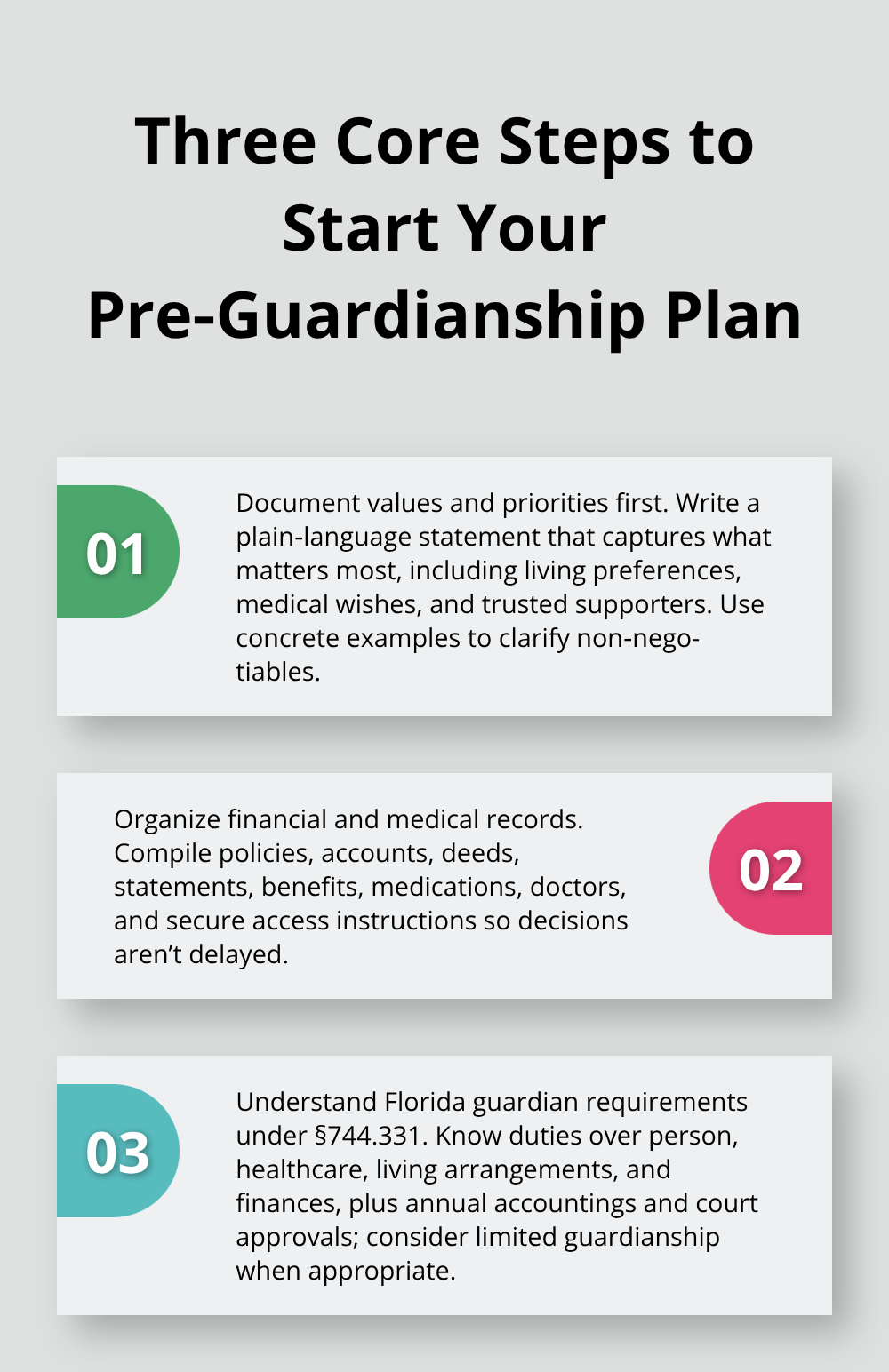
Creating a workable pre-guardianship plan requires three concrete steps that most families overlook until crisis strikes. Start by writing down what matters most to you and the person you’re protecting. This is not a formal legal document-it’s a values statement that clarifies your priorities. If your adult child has autism and lives semi-independently, note that maintaining their current living situation and job are non-negotiable, or that they respond better to gentle corrections than strict authority. If your aging parent has early dementia, document whether they prefer to stay at home as long as possible, what medical interventions they want or reject, and who they trust most.
These written wishes guide any future guardian and prevent costly court battles over interpretation. Keep this document accessible to whoever you name as guardian, not locked in a safe deposit box they cannot access during an emergency. Florida Statute §744 requires courts to consider the ward’s preferences and values when appointing guardians, so your documentation strengthens the case for your chosen guardian if a court proceeding becomes necessary.
Organize Financial and Medical Records
Next, gather and organize the financial and medical records that a guardian will actually need to manage. Create a physical or digital file containing insurance policies, bank account numbers and institutions, property deeds, investment statements, Social Security information, Medicare details, medications and prescribing physicians, past medical diagnoses, and contact information for relevant doctors and therapists. Include passwords or instructions for accessing digital accounts-a guardian cannot pay bills or manage investments without knowing where the money is.
The Florida Bar recommends organizing this information in a single location with clear instructions on how to access it. Many families spend weeks after a guardianship appointment simply trying to locate financial accounts or understand medical history, delaying necessary decisions. If you’re planning for a minor who receives a significant settlement or inheritance of $50,000 or more, a guardian will need clear documentation of those assets and any restrictions on their use. For someone with disabilities who receives Supplemental Security Income or Medicaid, document all current benefits and income limits so a guardian understands what financial decisions could jeopardize government assistance.
Understand Florida’s Guardian Requirements
Third, understand what Florida actually requires from a guardian so you can assess whether your chosen candidate is truly prepared for the role. Under Florida Statute §744.331, a plenary guardian must manage the ward’s person, healthcare, living arrangements, and finances, filing detailed annual accountings with the court and obtaining court approval for major financial transactions. The examining committee that determines incapacity includes three professionals-typically a physician, a mental health provider, and a third qualified professional-who assess physical and mental capacity, functional limitations, and decision-making ability.
If you’re planning for someone with a condition that might worsen unpredictably, understand that Florida recognizes limited guardianship under §744.331, which restricts the guardian’s authority only to the rights the ward genuinely cannot exercise. This is far less restrictive than plenary guardianship and often aligns better with what families actually need. Your candidate guardian should understand these legal obligations before you name them, including the time commitment for annual reporting, the potential need for attorney representation, and the fiduciary duty to act in the ward’s best interest, not their own.
Moving Forward With Your Plan
Once you’ve documented your values, organized your records, and assessed your candidate guardian’s readiness, you’re positioned to make informed decisions about who should step into this role. The next step involves identifying the specific qualities that matter most in a guardian and preparing for the conversations that will determine whether your chosen person can truly handle the responsibility.
Selecting the Right Guardian and Creating a Support Plan
Naming a guardian is not about finding someone perfect-it’s about finding someone willing and able to prioritize the ward’s interests over their own preferences, which narrows the field considerably. Florida law under Chapter 744 sets basic eligibility: any adult Florida resident, or an out-of-state relative, can serve as guardian if they have no felony convictions and are not themselves incapacitated. That legal baseline misses the point entirely.
Qualities That Actually Matter in a Guardian
The person you choose needs emotional resilience to handle medical crises, financial discipline to manage assets responsibly, willingness to file annual court accountings without complaint, and the interpersonal skill to advocate for someone who cannot advocate for themselves. They also need to live close enough to your family to be genuinely present, not just nominally appointed. A distant relative who sounds willing during a phone call often becomes unavailable when a guardian actually needs to attend doctor appointments, manage property repairs, or appear in court.
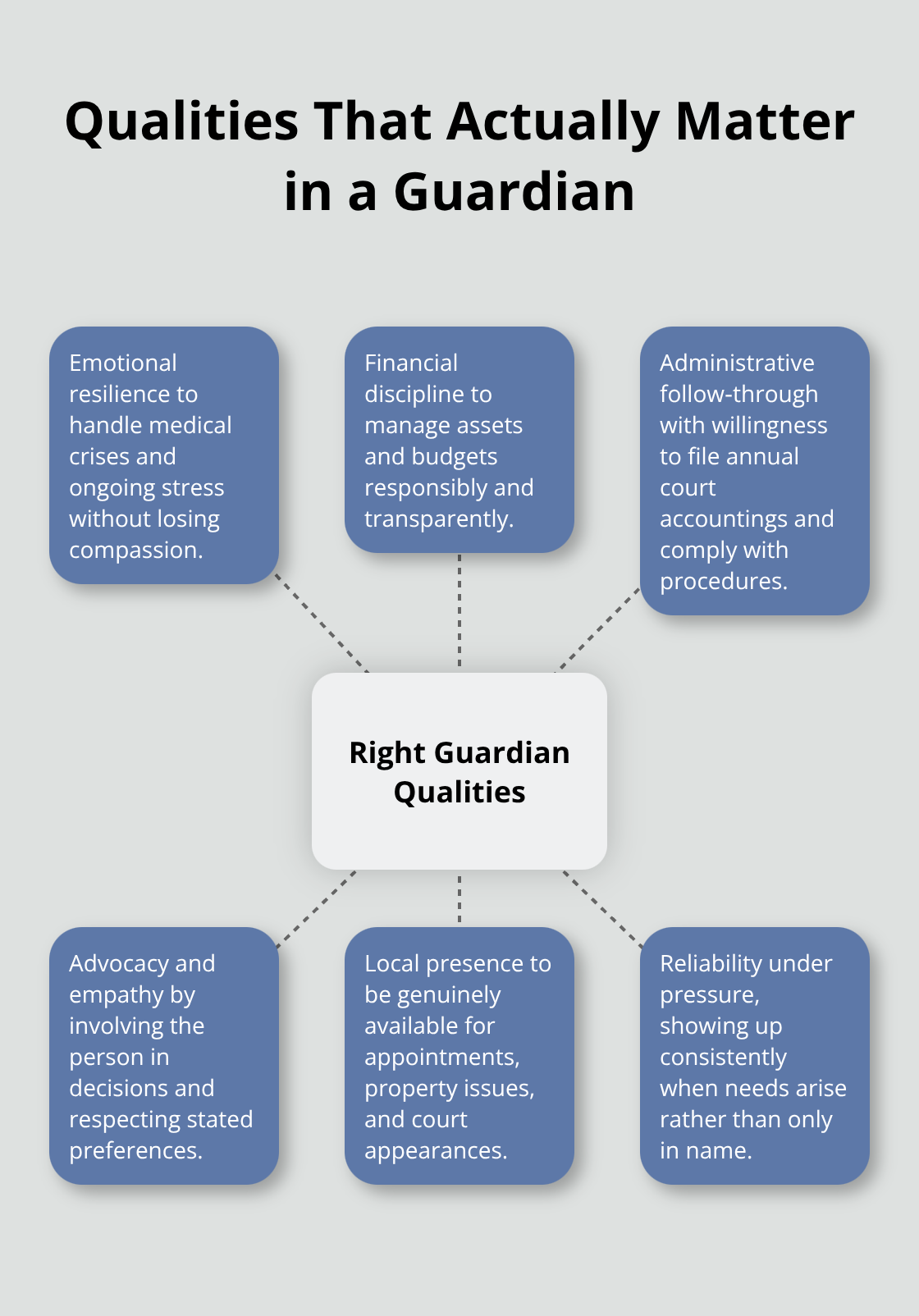
Disability Rights Florida found that people under guardianship feel most valued when their guardian actively involves them in decisions and respects their stated preferences, even when the guardian ultimately makes the final choice. This means your candidate needs to view guardianship as service, not control. Many families choose based on who has the most money or the highest status, then discover that person treats the guardianship as a burden and makes decisions quickly rather than thoughtfully.
Try to look for someone who has already shown they can listen without judgment, follow through on commitments, and admit when they do not know something rather than guessing. If you cannot identify someone with these qualities among your immediate family, consider whether a professional guardian or corporate trustee might better serve the ward’s interests, even if that feels less personal.
Having the Conversation With Your Chosen Guardian
The conversation with your chosen guardian is where most plans fall apart, because families avoid it or conduct it poorly. Tell your candidate specifically what you are asking them to do, not in vague terms like being there for your child, but in concrete language: manage a monthly budget of $2,400 in Social Security benefits, coordinate with three different doctors, arrange housing, and file annual court reports.
Describe the ward’s actual personality-their sense of humor, what frightens them, what motivates them, whether they respond to direct instruction or need gentleness. Share your written values statement and ask whether your candidate genuinely agrees with your priorities or would handle things differently. If your candidate hesitates or suggests they would make different choices, that is valuable information, not an objection to overcome. Better to learn now that they would move your aging parent into assisted living immediately, when you believe she should remain home as long as possible, than to discover this conflict after they become guardian.
Planning for Backup Guardians and Financial Details
Establish backup guardians in writing-typically a second choice and even a third choice-because life circumstances change and your first choice may become unable or unwilling to serve. Florida law allows you to name a preneed guardian in advance, which guides the court heavily toward your preference if guardianship becomes necessary.
Create a financial plan that shows your candidate exactly what assets exist, what income is available, what ongoing expenses will be, and what restrictions apply to how money can be spent. For someone receiving Supplemental Security Income or Medicaid, make crystal clear that certain financial decisions or asset transfers could disqualify them from benefits, potentially costing them far more than whatever short-term advantage the decision seemed to offer. Put this plan in writing so your chosen guardian has a reference document, not just your memory of a conversation from years ago.
Final Thoughts
Pre-guardianship planning done now prevents chaos later. Families who wait until crisis strikes face rushed decisions, higher costs, and outcomes that rarely reflect what the person needing protection would have wanted. Starting this work while you still have time and capacity means you control the process, not a judge or a court-appointed examiner.
Write down your values and what matters most to the person you’re protecting. Gather your financial and medical records into one accessible location. Identify someone willing to serve as guardian and have an honest conversation about what that role actually requires, then name backup guardians in case your first choice cannot serve.
If you are in St. Augustine or Palatka and feel uncertain about where to start, we at Family, Estate & Mediation Law Group can walk you through this process. Contact us to discuss your family’s specific situation and begin building the protection your loved ones deserve.