
Most people put off estate planning because they’re unsure where to start. Wills and trusts are the two main tools that shape how your assets transfer after you’re gone, but they work very differently.
At Family, Estate & Mediation Law, we’ve seen firsthand how the right choice between these options saves families thousands in taxes and legal fees. This wills and trusts overview breaks down what each tool does, when to use it, and how to build a plan that actually protects what matters to you.
What a Will Actually Does
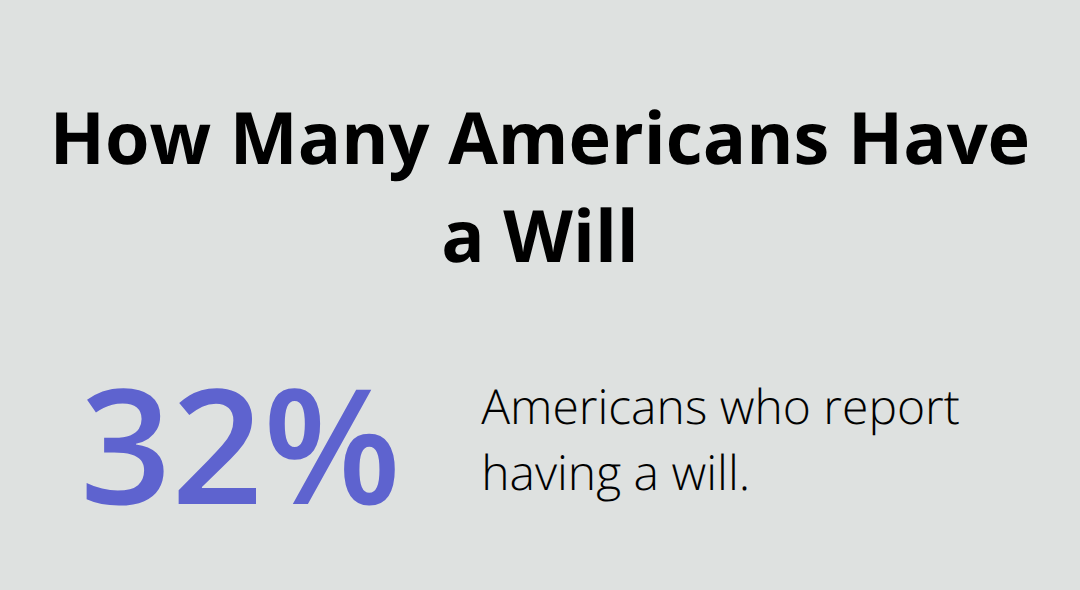
A will is a legal document that tells the court exactly who gets your assets after you die and who manages the process. That’s it. A will doesn’t avoid probate, doesn’t reduce taxes, and doesn’t protect assets from creditors. What it does is give you control over distribution when you have no other mechanism in place. According to the American Bar Association, only about 32% of Americans have a will, which means two-thirds of people leave their estate distribution entirely to state law. If you die without a will, your state’s intestacy laws determine who inherits what, and that order rarely matches what families actually want.
The Components That Make a Will Legally Valid
Your will needs specific elements to hold up in court. First, you must be at least 18 years old and of sound mind-meaning you understand what you own and who your relatives are. The document must clearly state your intent to create a will and name an executor, the person who will handle your estate. Florida requires your will to be in writing, signed by you in front of two witnesses who watch you sign and then sign themselves. The witnesses cannot be beneficiaries or related to beneficiaries, which eliminates conflicts of interest. Many people miss this detail and end up with an invalid will. You should also name an alternate executor in case your first choice dies or can’t serve. Your will should specify who gets which assets-real estate, bank accounts, vehicles, personal items. Vague language like leaving everything to your children equally creates problems if one child predeceases you.
Probate Takes Time and Costs Money
Once you die, your will goes through probate, a court process that typically lasts 6 to 12 months in Florida, though complex estates can take longer. The executor files your will with the court, publishes a notice to creditors, pays any valid claims against the estate, settles taxes, and distributes remaining assets according to your instructions. Probate costs 3% to 7% of your estate’s total value in legal fees and court costs, according to the American Academy of Estate Planners and Councils. For a $500,000 estate, that’s $15,000 to $35,000 gone before your heirs see anything. The process is also public-anyone can walk into the courthouse and see your will, your assets, and who you’re leaving money to. That transparency matters to families who value privacy. The probate court also requires your executor to file detailed accountings and get court approval for major decisions, adding delays and legal expenses.
Why Trusts Offer a Different Path
These limitations explain why many people turn to trusts as an alternative. A trust transfers your assets outside the probate system entirely, which means your heirs receive their inheritance faster and with far less public exposure. Trusts also provide more flexibility than wills when it comes to managing assets and controlling how and when beneficiaries receive money. The question isn’t whether a will or trust is universally better-it’s which tool (or combination of tools) fits your specific circumstances, your asset level, and your family’s needs.
How Trusts Work and Why They Matter
A trust is a legal arrangement where you transfer ownership of your assets to a trustee, who then manages and distributes those assets according to your written instructions. Unlike a will, which only takes effect after you die and goes through probate, a trust operates immediately and completely outside the court system. The two main categories are revocable trusts, which you can change or cancel during your lifetime, and irrevocable trusts, which you typically cannot modify once established but offer stronger asset protection and tax advantages. A revocable living trust is the most common type-you create it, transfer your assets into it, serve as trustee during your life, and name a successor trustee to take over when you die or become incapacitated. This approach gives you complete control now while ensuring seamless management later. Irrevocable trusts remove assets from your taxable estate permanently, which matters significantly for high-net-worth families. Florida residents with estates exceeding $1 million should seriously consider irrevocable trusts because federal estate taxes can consume 40% of assets above the current exemption threshold.
Probate Elimination Changes Everything
When assets sit in a revocable trust, they skip probate entirely because the trust, not your will, controls them. Your successor trustee follows your instructions and distributes assets to beneficiaries without court involvement, without publishing notices to creditors, and without public disclosure. This process typically completes in 4 to 8 weeks rather than the 6 to 12 months probate takes in Florida. The cost difference is dramatic-trust administration runs roughly 1% to 2% of estate value compared to probate’s 3% to 7%. For a $750,000 estate, that means saving $15,000 to $45,000 in legal and court costs. Privacy becomes the secondary but equally important benefit.
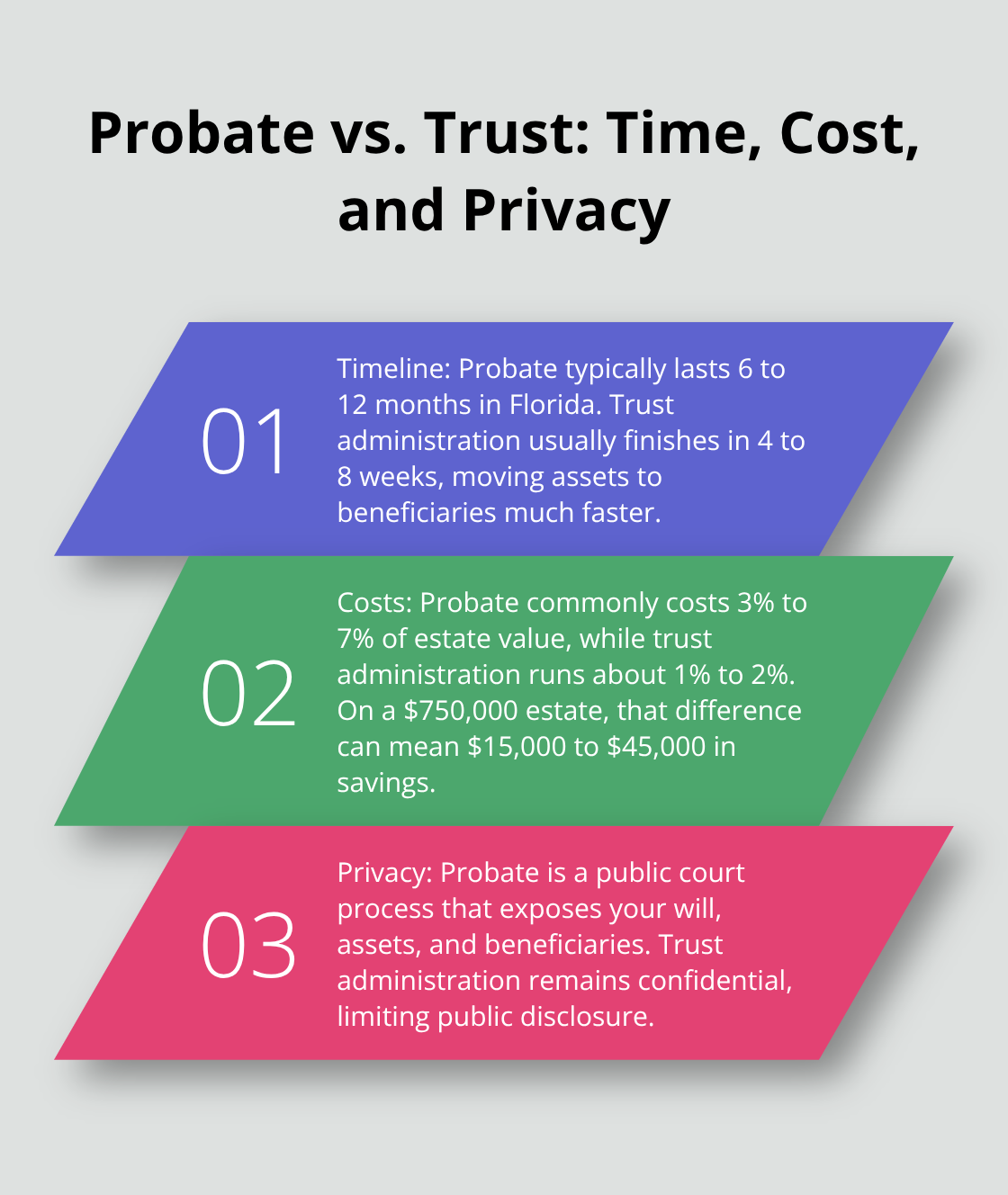
Trust documents remain confidential; your beneficiaries, asset amounts, and distribution terms stay private. This matters to families who prefer discretion and to those concerned about attracting unwanted attention from distant relatives or creditors.
Asset Protection Through Trust Structure
Trusts excel at controlling how and when beneficiaries receive money, which wills cannot accomplish effectively. You can structure a trust to hold assets for a spendthrift beneficiary, releasing funds only for education, medical care, or housing while preventing them from squandering an inheritance. Trusts also protect assets if a beneficiary faces creditors, divorce proceedings, or lawsuits. Once assets transfer into an irrevocable trust, creditors generally cannot reach them to satisfy judgments. This protection is particularly valuable for business owners, medical professionals, and anyone in high-liability occupations.
Incapacity Planning and Special Circumstances
If you become incapacitated before death, a revocable trust avoids the need for a costly and invasive guardianship proceeding-your successor trustee simply takes over managing assets according to your terms. Your family avoids court involvement, maintains privacy, and sidesteps the $2,000 to $5,000 in attorney fees and court costs that guardianship typically requires. For families with special needs beneficiaries, a trust structure allows you to provide support without disqualifying them from government benefits like Medicaid or SSI, something a direct inheritance would destroy. These protections demonstrate why trusts accomplish what wills simply cannot, setting the stage for understanding how to choose between these tools based on your specific situation.
Wills vs Trusts: Key Differences and When to Use Each
Cost and Complexity Comparison
The financial difference between probate and trust administration makes this decision straightforward for most families. Probate costs 3% to 7% of your estate’s value according to the American Academy of Estate Planners and Councils, while trust administration runs 1% to 2%. On a $500,000 estate, that difference equals $10,000 to $30,000 staying in your family’s hands instead of going to lawyers and courts. Complexity doesn’t favor wills either-probate requires court filings, creditor notices, judicial oversight of distributions, and detailed accountings that stretch the process across 6 to 12 months in Florida. A trust bypasses these requirements entirely, typically completing administration in 4 to 8 weeks.
Privacy and Control Considerations
The probate court makes your estate public record, which means anyone can access details about your assets, beneficiaries, and distribution amounts. Trusts keep this information confidential between you, your trustee, and your beneficiaries. For families concerned about privacy or those with substantial assets, the trust advantage is decisive. Revocable trusts also provide incapacity protection that wills cannot-if you become unable to manage your affairs, your successor trustee takes over without court involvement, avoiding the $2,000 to $5,000 guardianship process costs that many families face unnecessarily.
Tax Implications and Planning Strategies
Tax planning shifts the equation for high-net-worth families. Federal estate taxes consume 40% of estates exceeding the current exemption threshold, which stands at approximately $13.61 million per person in 2026 but will drop significantly in 2026 unless Congress acts. Irrevocable trusts remove assets from your taxable estate permanently, reducing what the IRS can claim. This matters intensely for Florida residents with estates over $1 million who want to preserve wealth across generations. Wills offer no tax reduction whatsoever-they simply direct how probate distributes a fully taxable estate.
Revocable trusts provide no tax savings during your lifetime, but they position your estate for tax planning through irrevocable trusts and other strategies that work alongside your trust structure. Many families benefit most from a combined approach: a revocable living trust that handles 85% to 95% of assets and avoids probate, paired with a simple pour-over will that catches any assets left outside the trust and names guardians for minor children. This hybrid strategy gives you probate avoidance, tax flexibility, privacy, and the guardianship protections a will provides.
Selecting the Right Strategy for Your Situation
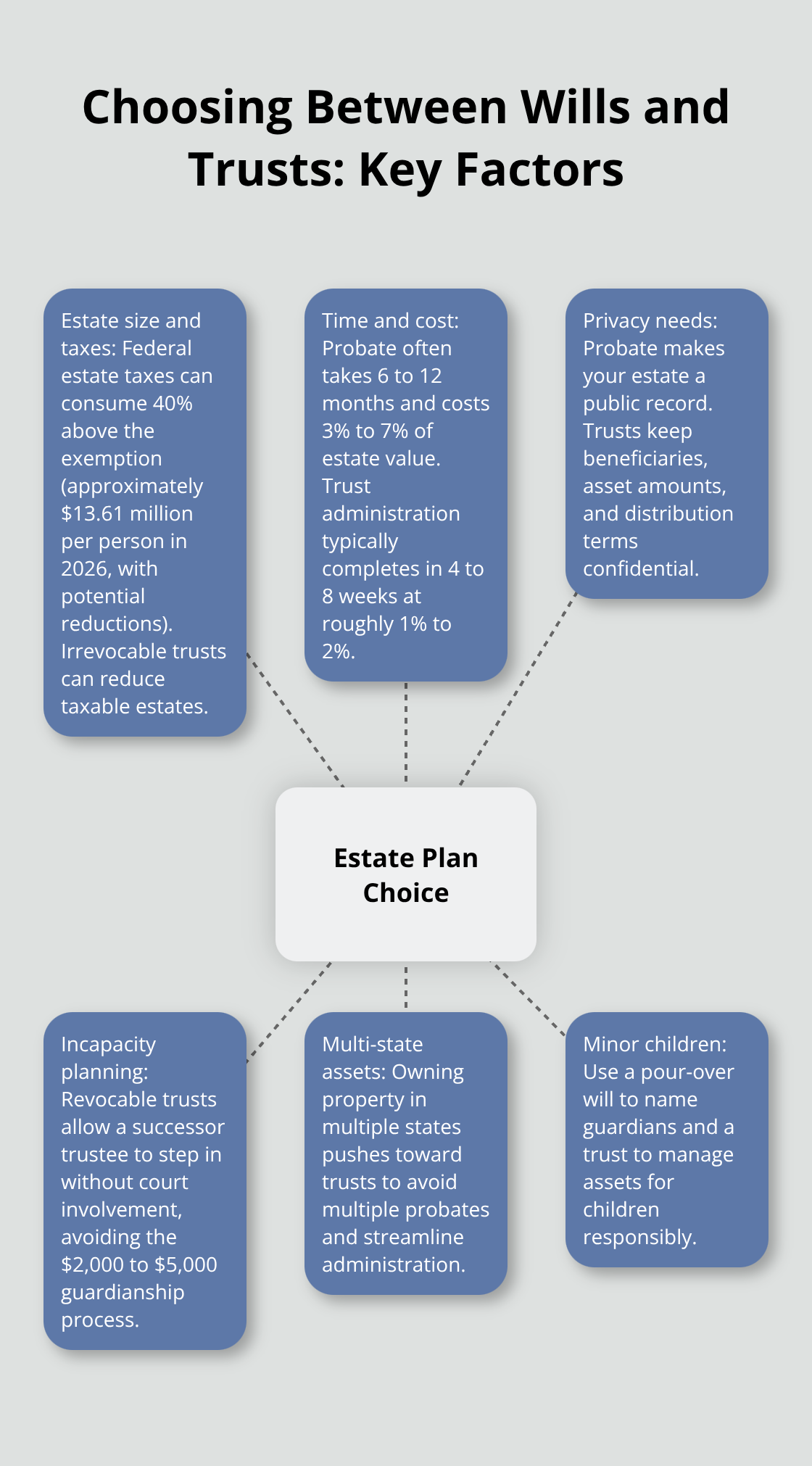
The choice between these tools ultimately depends on your estate size, whether you have minor children, your family’s privacy preferences, and whether you own assets in multiple states-each factor pushes the decision toward trusts for most situations.
Final Thoughts
Wills and trusts serve fundamentally different purposes, and this wills and trusts overview reveals that most families benefit from combining both tools. A will directs how probate distributes your assets after you die and names guardians for minor children, but it costs 3% to 7% of your estate in legal fees and court expenses while exposing your financial details to public record. A trust transfers assets outside probate entirely, typically completing administration in 4 to 8 weeks instead of 6 to 12 months, and costs roughly 1% to 2% of estate value while keeping your affairs confidential.
The real cost of avoiding estate planning far exceeds the cost of creating one. Without a plan, your state’s intestacy laws decide who inherits what, your family faces months of probate delays, your estate pays thousands in unnecessary fees, and your wishes remain unknown. With a plan in place, your family knows exactly what you wanted, receives their inheritance faster, pays significantly less in legal costs, and maintains privacy throughout the process.
Stop waiting for the perfect moment and start the conversation with someone who understands your specific situation. At Family, Estate & Mediation Law Group, we help individuals and families across Northeast Florida build estate plans that actually protect what matters to you. Contact us to schedule a consultation and move your estate planning from someday to done.