
Most families put off estate planning because they’re unsure where to start. The difference between wills and trusts basics can feel overwhelming, but it doesn’t have to be.
At Family, Estate & Mediation Law, we’ve helped hundreds of families protect their assets and clarify their wishes. This guide breaks down what you need to know to move forward with confidence.
Wills and Trusts Serve Different Purposes
How Wills and Trusts Work Differently
A will and a trust operate in fundamentally different ways, and most families need both. A will is a legal document that takes effect only after you die. It tells a court how you want your assets divided and who should care for your minor children. The problem is that a will must go through probate, which is a court process that typically takes six months to two years and costs between 3% and 7% of your estate’s value according to data from the American College of Trust and Estate Counsel. During probate, your will becomes public record, meaning anyone can see what you owned and who inherited it.
A trust works entirely differently. You create a trust while you’re alive, transfer your assets into it, and designate a trustee to manage those assets for your beneficiaries. When you die, the trust assets pass directly to your beneficiaries without court involvement, no probate delays, and no public disclosure. This is why families with significant assets or privacy concerns often choose trusts as their primary planning tool.
Why Wills Still Matter
A will remains important even if you have a trust because it catches assets you forgot to transfer or acquire after creating the trust. Wills also let you name a guardian for minor children, something a trust cannot do. If you die without a will, state law decides who raises your kids and manages their inheritance until they turn 18 or 21, which is rarely what you would have chosen.
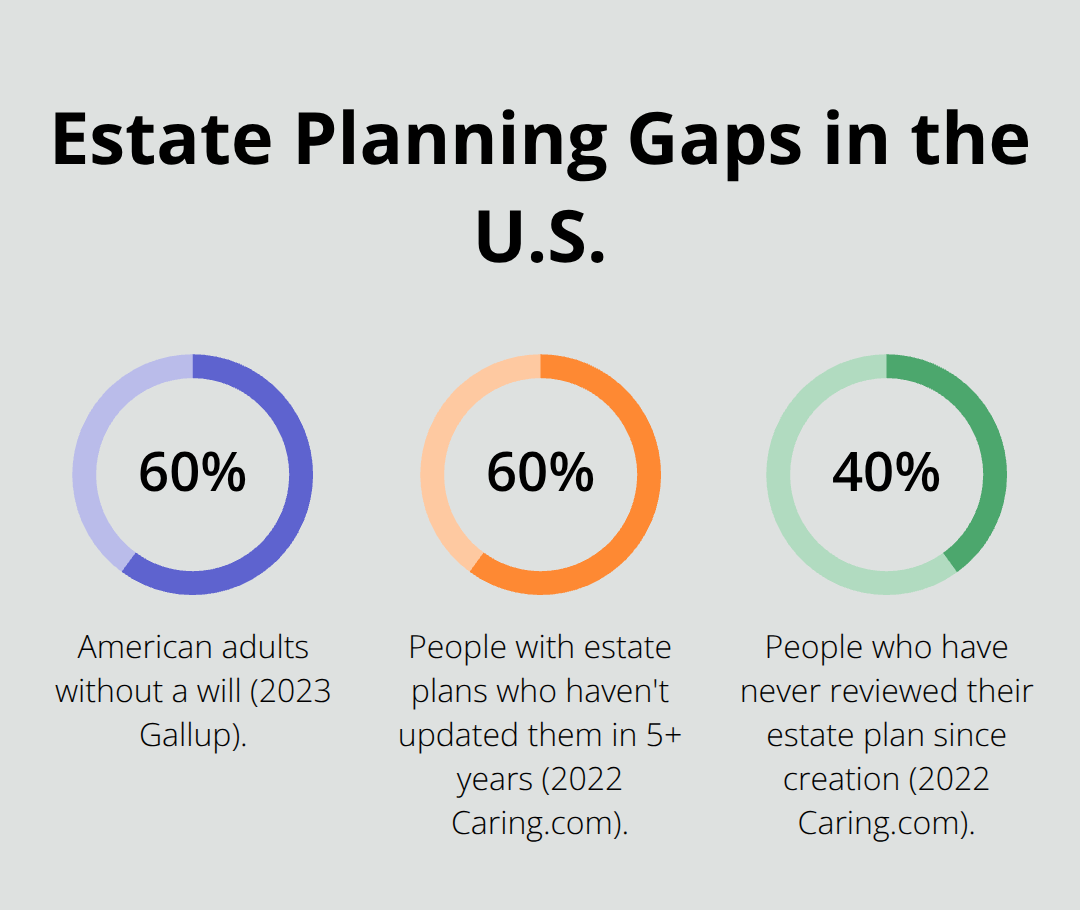
Most families should have both documents working together: a trust handles the bulk of your assets and avoids probate, while a will covers guardianship and any remaining property. The reality is that 60% of American adults don’t have a will according to a 2023 Gallup survey, and even fewer have a trust. This creates massive problems for surviving families who face court battles, delays, and unexpected costs when the original person didn’t plan ahead.
What Happens Next in Your Planning
The gap between having one document and having both is where most families run into trouble. Understanding which assets belong in your trust and which require a will is the first step toward building a complete plan.
Common Mistakes Families Make With Estate Planning
Outdated Documents Create Real Problems
Most families create a will or trust and then never touch it again. Life changes constantly-marriages, divorces, children born, significant asset purchases, relocations-yet the documents stay frozen in time. A 2022 study by Caring.com found that 60% of people with estate plans haven’t updated them in over five years, and 40% have never reviewed them at all since creation.
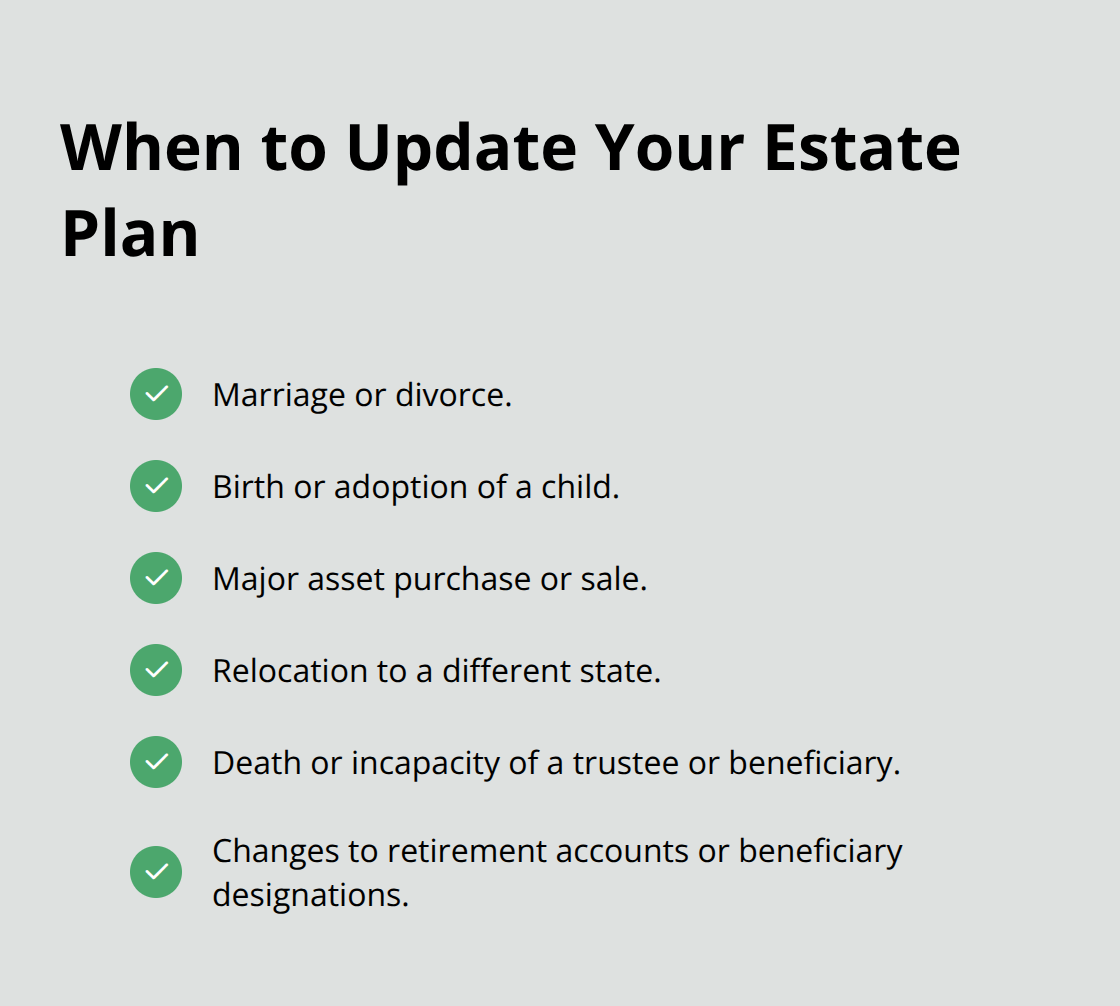
When you fail to update after a major life change, your outdated documents may contradict your actual wishes.
If you got married but never added your spouse to your trust, they inherit nothing despite being your primary partner. If you had children after drafting your will, state law might give them rights you never intended to grant. If you moved from one state to another, your trust might reference local laws that no longer apply, creating confusion and potential legal challenges that cost your family thousands in court fees.
Wrong Trustees Lead to Costly Mistakes
Naming the wrong person as trustee ranks among the most damaging errors families make. Many people name the first person who comes to mind without thinking through whether that person actually has the financial knowledge, time availability, or emotional stability to handle the job. A trustee must manage investments, file tax returns, distribute assets fairly among multiple beneficiaries, and potentially deal with conflict. If you name your grieving spouse or your least organized sibling to this position, they’ll struggle and make costly errors.
The financial burden falls on your beneficiaries, who may need to hire an attorney to fix trustee mistakes or petition the court for removal. This process drains estate assets and creates family tension that could have been prevented with honest conversation about who can actually do the work.
Beneficiary Designation Errors Trigger Disputes
Equally damaging is listing incorrect beneficiary names or outdated information. Misspelling a child’s legal name, forgetting to remove an ex-spouse after divorce, or listing a deceased person as beneficiary creates serious problems. These errors don’t just create awkwardness; they trigger probate disputes that drag on for years and cost thousands in legal fees.
Many families also leave significant assets completely unprotected from probate by failing to retitle property into trusts or establish proper beneficiary designations on retirement accounts and insurance policies. A bank account titled only in your individual name must go through probate, defeating the entire purpose of having a trust. Each asset requires specific action to move it outside the probate system.
Taking Action Before Problems Emerge
Schedule a review every three to five years, and immediately after any major life event, work with an attorney to confirm that your trustee selection actually matches the person’s capabilities. Verify that all assets are properly titled and designated according to your plan. This preventive approach costs far less than fixing problems after they occur and protects your family from unnecessary conflict and expense.
The next step involves understanding how to build your estate plan from the ground up, starting with the information and decisions that form its foundation.
Building Your Estate Plan From Scratch
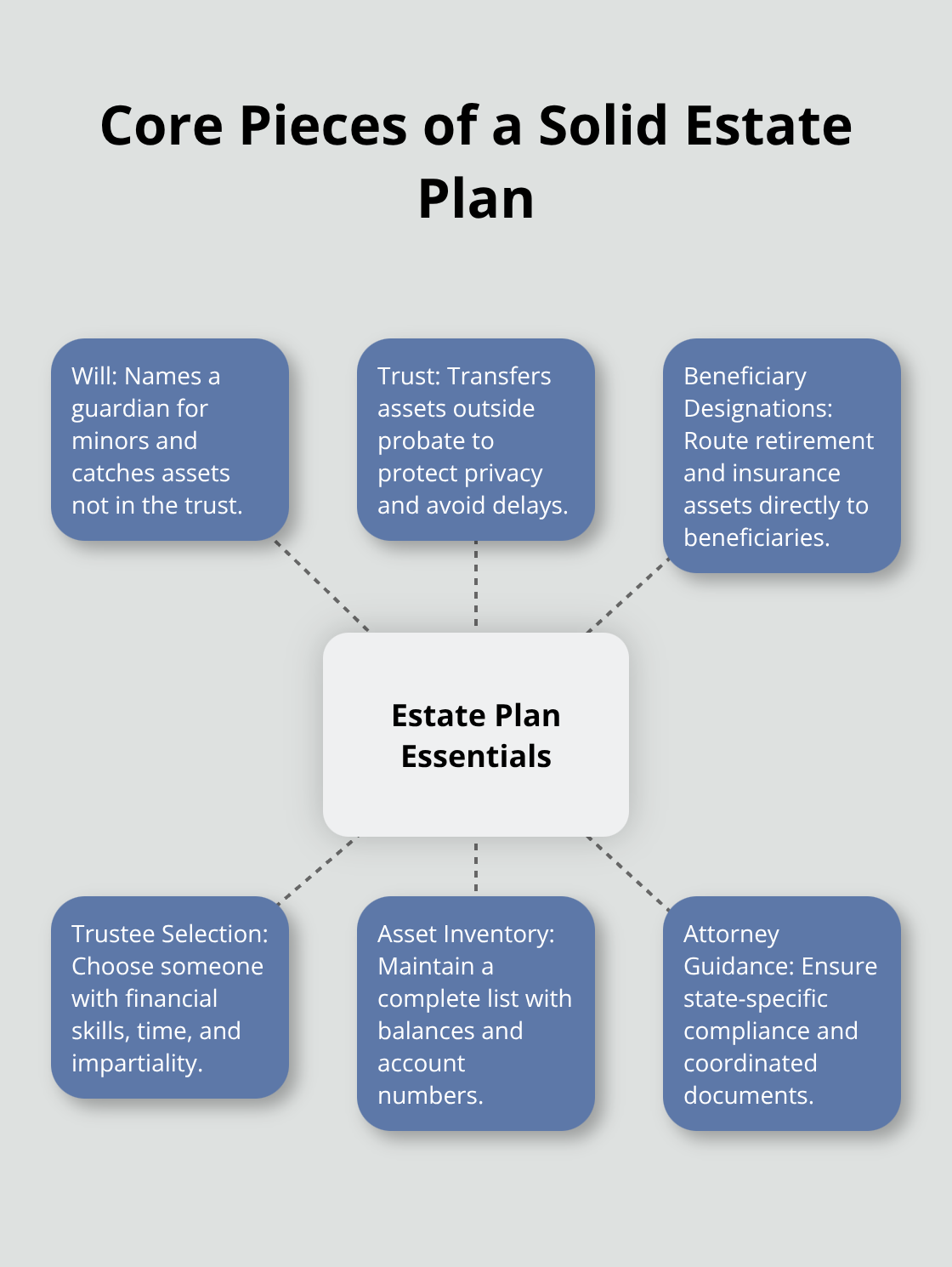
Start your estate plan by gathering concrete financial information before meeting with an attorney. Create a spreadsheet listing every asset you own: bank accounts with current balances, investment accounts, real estate with estimated values, vehicles, life insurance policies with death benefit amounts, and retirement accounts like 401(k)s and IRAs. Include account numbers and institutions where these assets are held. Most families underestimate their net worth during this process, so be thorough. This matters because you need to know which assets belong in a trust versus which require separate beneficiary designations. A bank account titled in your name alone goes through probate unless you transfer it to your trust. A life insurance policy with named beneficiaries bypasses probate entirely if the beneficiary designation is current. This distinction determines your actual probate exposure and shapes your entire strategy.
Selecting Trustees Who Can Handle the Responsibility
Choosing a trustee requires brutal honesty about people’s capabilities and relationships. Your trustee must handle financial management, tax filings, and potentially difficult conversations with beneficiaries about distributions. Many families choose their oldest child out of tradition without considering whether that person has accounting skills, time availability, or the emotional stability to manage conflict between siblings. Ask yourself who has successfully managed money in their own life, who stays organized under pressure, and who can remain impartial if multiple family members depend on distributions. If no family member fits these criteria, professional corporate trustees exist specifically for this purpose. They charge fees typically ranging from 0.5% to 1.5% of trust assets annually, but they eliminate family conflict and provide competent management.
Naming Beneficiaries With Precision
Verify the exact legal names of each beneficiary, confirm they’re still alive, and remove anyone like ex-spouses who should no longer inherit. Cross-check these names against your trust document to confirm consistency. Misspelling a child’s legal name or listing a deceased person as beneficiary creates serious problems that trigger probate disputes lasting years and costing thousands in legal fees. Each asset requires specific action to move it outside the probate system, so coordinate beneficiary designations across all accounts and policies.
Working With an Attorney to Protect Your Family
Drafting your documents without professional guidance almost always costs more in the long run than hiring an attorney upfront. DIY templates miss state-specific requirements, create ambiguous language that triggers disputes, and fail to coordinate your will and trust properly. An attorney identifies which assets need retitling, explains tax implications you might not anticipate, and catches errors that would otherwise create problems for your family years later. The investment in professional guidance typically ranges from $1,500 to $3,500 for a basic estate plan with a will and trust, minimal compared to the thousands families spend fixing mistakes or fighting in probate court. With over 50 years of combined experience, Family, Estate & Mediation Law Group helps families across Northeast Florida structure their plans so assets transfer smoothly and beneficiaries avoid unnecessary court involvement.
Final Thoughts
Wills and trusts basics matter because they determine whether your family faces court delays, public disclosure, and unnecessary costs after you’re gone. Without proper planning, state law makes decisions about your assets and your children’s guardianship that you would never have chosen. The 60% of American adults without a will face even worse outcomes, leaving their families to navigate probate battles and uncertainty during an already difficult time.
Your legacy extends beyond money-it includes the values you want to pass down, the relationships you want to protect, and the burden you do or don’t place on the people you love most. A complete estate plan with both a will and trust removes guesswork from the equation. Your trustee knows exactly what to do, your beneficiaries receive their inheritance without court involvement, and your minor children have a guardian you selected rather than one a judge assigns.
Gather your financial information, identify who you trust to manage your affairs, and schedule a conversation with an attorney who understands your family’s specific situation. Family, Estate & Mediation Law Group helps families across Northeast Florida build estate plans that actually work. Contact us to schedule your consultation and take control of your family’s future.