Most Florida business owners build something valuable but never plan what happens next. Without a clear small business succession strategy, your enterprise could face serious complications when it’s time to transition ownership.
At Family, Estate & Mediation Law, we help business owners protect what they’ve built by creating succession plans that work. This guide walks you through the essential steps to secure your legacy.
Understanding Small Business Succession Planning
Why Your Succession Plan Can’t Wait
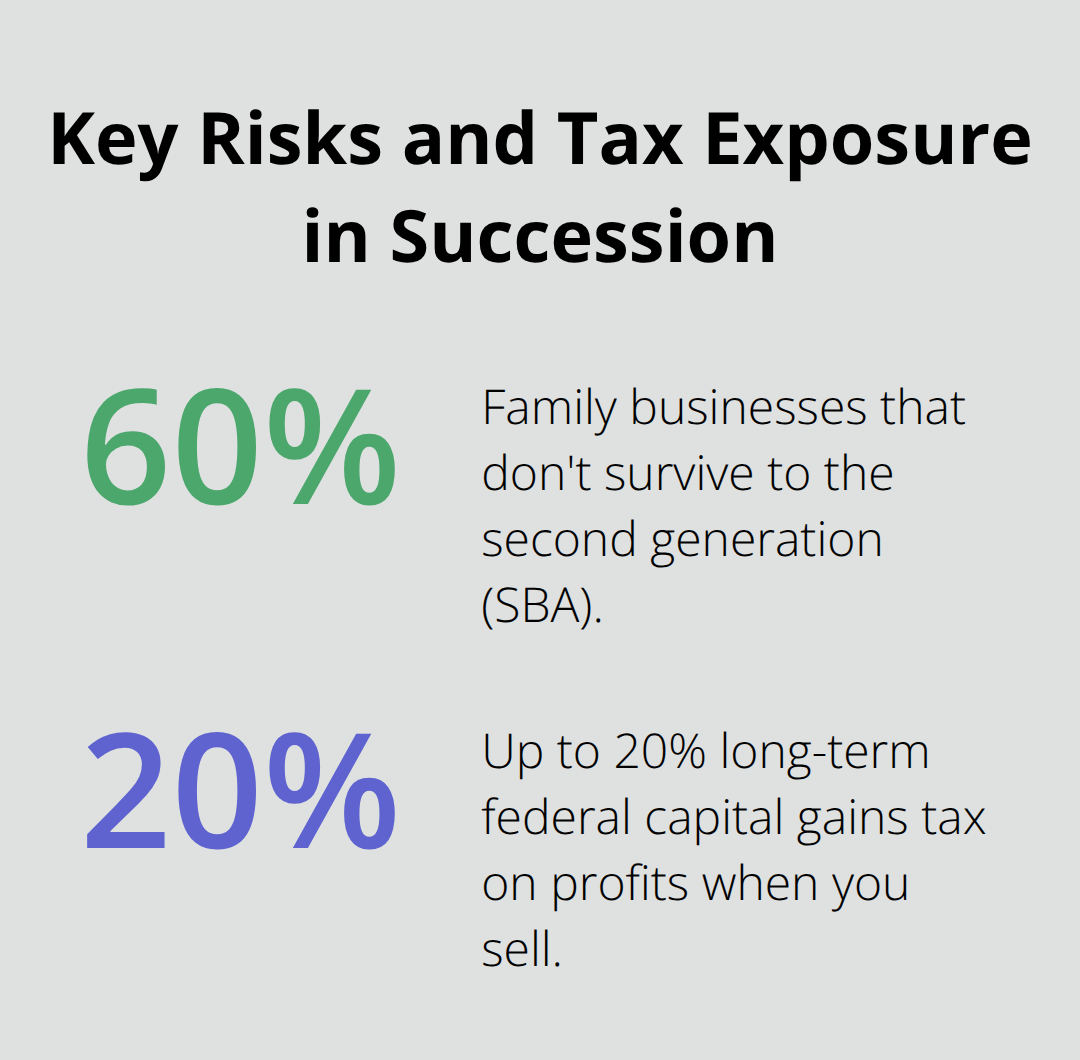
Most Florida business owners operate with a false sense of security. They believe they have time to plan succession later, but statistics tell a different story. According to the U.S. Small Business Administration, about 60% of family businesses don’t survive to the second generation, and poor succession planning is a primary culprit. When you lack a documented plan, your business becomes vulnerable to internal conflict, tax complications, and potential dissolution. The longer you wait, the harder it becomes to transfer knowledge, maintain client relationships, and preserve the value you’ve built.
Starting Before You Think You’re Ready
The ideal time to begin succession planning is when your business is thriving, not when you’re facing a health crisis or unexpected retirement. Starting early gives you flexibility to test your chosen successor in leadership roles, adjust your business structure for tax efficiency, and address family dynamics before they become crisis-driven conflicts. Business owners who begin planning five to ten years before their intended exit typically see smoother transitions and higher business valuations. This timeline allows for gradual knowledge transfer, refinement of processes, and adjustments to your legal documents without pressure.
The Mistakes That Cost You the Most
Many business owners make one critical error: they assume a family member’s willingness to run the business equals readiness to run it. Without formal training, mentorship, and gradual responsibility increases, even talented family members struggle with the transition. Another costly mistake is failing to separate personal assets from business assets (which creates tax nightmares and makes valuation nearly impossible). Florida business owners also frequently overlook buy-sell agreements, leaving surviving partners and heirs in legal limbo when an owner passes away or becomes incapacitated. Finally, some owners keep succession plans entirely in their heads rather than documenting them in formal agreements. When illness or death strikes unexpectedly, no one knows your intentions, and the business suffers accordingly.
Moving Forward With Your Plan
The foundation you build now determines whether your business thrives or falters during transition. Addressing these mistakes head-on and starting your planning process positions you to move into the next critical phase: identifying the specific elements that make a succession plan actually work.
Key Elements of a Solid Succession Plan
Developing Your Successor Takes Years, Not Months
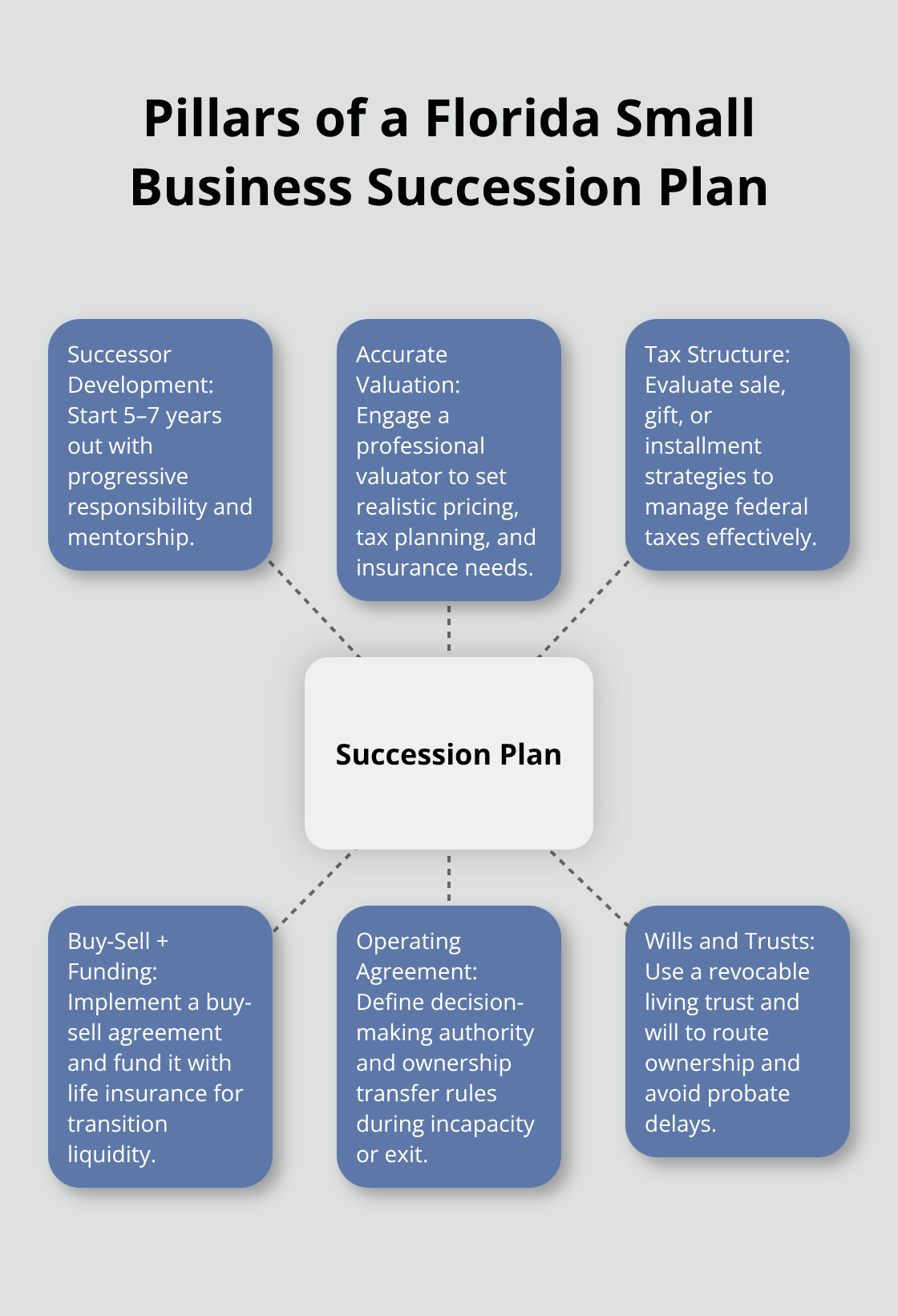
Choosing the right successor ranks as your most consequential decision in succession planning, yet most Florida business owners approach it backwards. They wait until retirement looms, then promote whoever seems available rather than systematically developing leadership talent over years. This pattern consistently leads to failed transitions. The successor needs hands-on experience running actual operations, managing staff, handling client relationships, and making financial decisions while you’re still present to guide them. Start their development five to seven years before your planned exit, not five to seven months. If you’re grooming a family member, give them progressively larger responsibilities: first leading a department, then managing multiple departments, then handling strategic decisions alongside you. Outside successors require similar depth-they need to understand your client base, your operational quirks, and your company culture from the inside. A successor who hasn’t proven they can handle your business under your watch will almost certainly struggle when they’re fully in charge.
Getting an Accurate Business Valuation
Valuing your business accurately shapes everything that follows, yet most owners guess. They assume their business is worth what a competitor sold for or what someone casually mentioned at a networking event. Professional business valuators in Florida typically charge between three thousand and fifteen thousand dollars depending on complexity, and they’re worth every penny. Valuators examine your revenue trends, profit margins, client concentration, employee retention, and market position to determine what a willing buyer would actually pay. This valuation drives your exit strategy, tax planning, and insurance needs. Overvaluing your business sets unrealistic expectations and makes finding buyers at your price nearly impossible. Undervaluing it leaves money on the table and potentially creates tax complications.
Navigating Tax Implications and Structures
Tax implications deserve serious attention throughout this process. Florida has no state income tax, which is an advantage, but federal capital gains taxes still apply when you sell. A sale structure exposes you to long-term capital gains taxes of up to twenty percent on profits. A gift structure to family members might trigger federal gift taxes depending on your estate size. The right structure-whether that’s an installment sale to a family member, a management buyout, or a sale to an outside party-can reduce your tax burden significantly. Working with professionals who understand Florida business law becomes essential rather than optional. These decisions interact with your overall estate plan, making coordination across all your legal documents necessary to avoid costly mistakes.
Legal Structures and Documents for Business Succession
Buy-Sell Agreements Prevent Chaos When Transition Happens
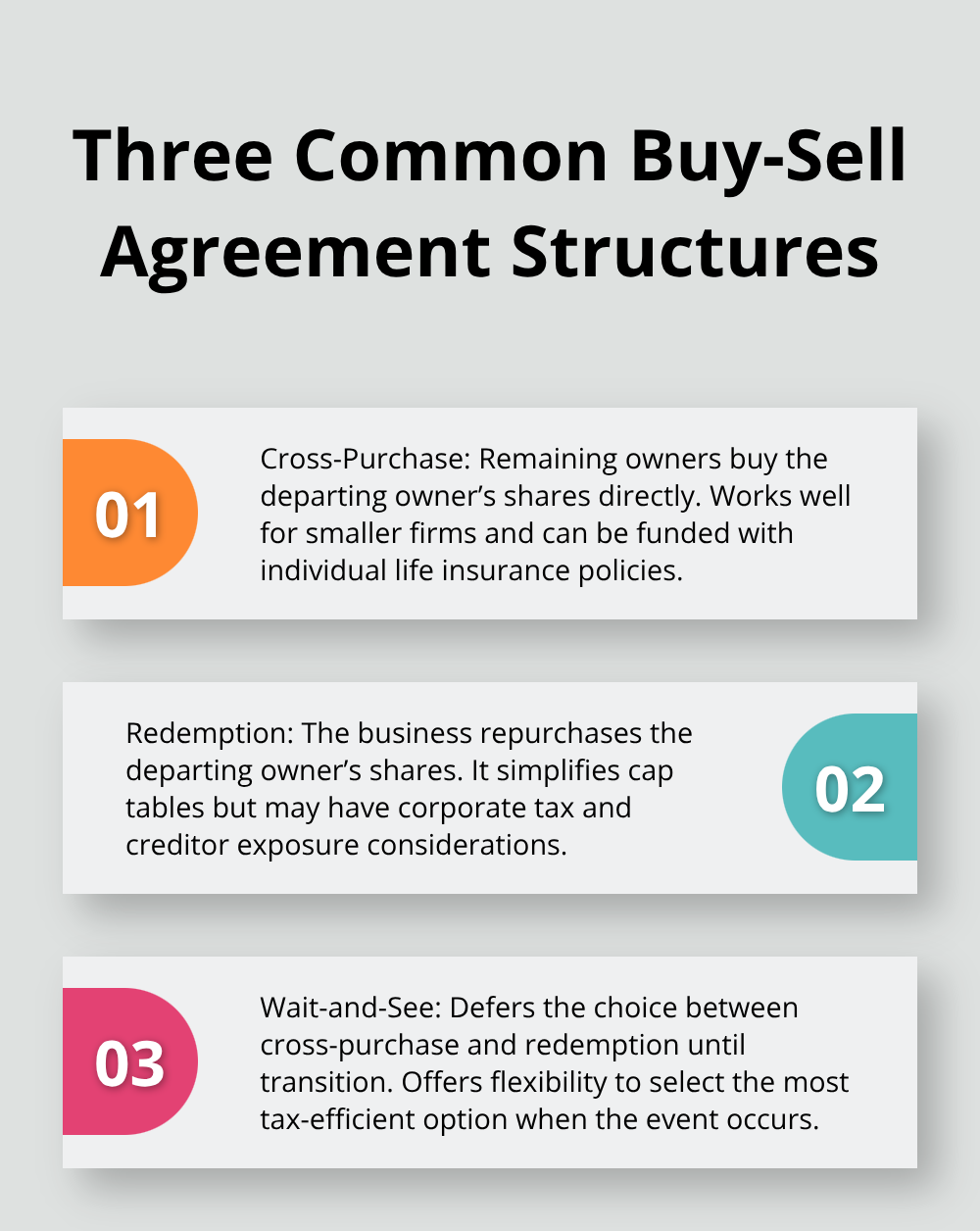
A buy-sell agreement isn’t optional if you want your business to survive transition-it’s the document that prevents chaos when an owner dies, becomes disabled, or wants out. Business owners who skip this step face predictable consequences: surviving owners end up in litigation with the deceased owner’s heirs, clients leave because no one’s in charge, and the business value collapses. A buy-sell agreement sets the price for the business in advance, specifies who can buy the departing owner’s stake, and determines how the purchase gets funded. The three common structures are cross-purchase agreements where remaining owners buy the departing owner’s share, redemption agreements where the business itself buys back the share, or wait-and-see agreements that combine both methods. In Florida, most small businesses use cross-purchase agreements because they’re straightforward and avoid complications with corporate redemptions.
Without this document, your business enters a legal vacuum when transition happens.
Funding Your Buyout With Life Insurance
The agreement typically includes a business valuation formula, funding mechanisms through life insurance, and buyout timelines that prevent disputes. Life insurance often funds the purchase because it provides immediate cash when you need it most-the policy death benefit pays the departing owner’s heirs while keeping the business solvent and operational. This approach protects both your family’s financial interests and your business’s continuity. The insurance proceeds arrive quickly, eliminating the need for surviving owners to scramble for cash or take on debt to complete the buyout.
Operating Agreements Control Your Business During Transition
Your operating agreement controls how your business actually functions and who makes decisions when you’re gone or incapacitated. Many Florida business owners treat the operating agreement as a one-time filing document, then ignore it for years. Instead, your operating agreement should specify succession rules, management authority during your absence, and exactly how ownership transfers. This document becomes your business’s instruction manual during uncertain times, preventing power vacuums and internal conflict.
Wills and Trusts Protect Your Personal and Business Assets
Your personal will and revocable living trust handle your individual assets and direct how your business interest passes to heirs or successors, separate from the business’s own governance structure. This separation matters tremendously because it keeps personal estate planning distinct from business operations, reducing tax complications and preventing family disputes from derailing the company. A revocable living trust avoids probate for your business interest and other assets, saving your family months of court delays and thousands in legal fees. Operating agreements and trusts work together-the trust can own your business interest, and the operating agreement controls what happens to that interest when circumstances change.
Asset Protection and Tax Efficiency Through Proper Structuring
During transition, your assets remain protected because the trust structure keeps them outside the reach of business creditors and provides privacy that a will cannot offer. Florida’s lack of state income tax is an advantage, but federal estate taxes still apply if your business and personal assets exceed the current federal exemption of thirteen point sixty-one million dollars in 2024. Structuring ownership through a trust with proper funding mechanisms reduces your taxable estate and prevents your heirs from inheriting a business burdened with unexpected tax bills they can’t pay. The right legal framework transforms a vulnerable transition into a protected transfer of wealth and control.
Conclusion
Your small business succession Florida plan protects everything you’ve built while securing your family’s financial future. The documents, valuations, and strategies we’ve covered work together to prevent the costly mistakes that derail unprepared transitions. Without them, your business becomes vulnerable to tax complications, family conflict, and potential collapse when you’re no longer running day-to-day operations.
The time to act is now, not when retirement is months away or health forces your hand. Starting your succession planning while your business thrives gives you the flexibility to test your successor, refine your legal documents, and adjust your tax strategy without pressure. Every year you delay costs you in lost opportunities to transfer knowledge, strengthen your chosen successor, and optimize your business structure for efficiency.
We at Family, Estate & Mediation Law help Northeast Florida business owners build succession plans that actually work. Our team understands the specific challenges Florida businesses face, from tax implications to family dynamics to legal documentation. Schedule a consultation with us today and take the first step toward securing what you’ve built.