
Most people in St. Augustine and Palatka don’t realize how much time and money their families lose to probate. A revocable trust offers real advantages that keep your estate moving forward smoothly.
At Family, Estate & Mediation Law, we’ve seen firsthand how the right trust structure protects what matters most. This guide walks you through why a revocable trust belongs in your plan.
How a Revocable Trust Actually Works
A revocable trust is a legal document that holds your assets during your lifetime and directs how they pass to your family after you’re gone. Unlike a will, which only takes effect after you die, a revocable trust operates immediately once you create and fund it. You maintain complete control over everything in the trust while you’re alive-you can add assets, remove them, change beneficiaries, or even dissolve the trust entirely.
This flexibility is what makes it revocable. When you pass away, the successor trustee you named takes over and distributes your assets according to your instructions, without needing court involvement. In Florida, this process typically takes four to six months instead of the eighteen months to two years probate often requires.
Moving Your Assets Into the Trust
Getting assets into your trust requires specific steps that many people overlook. You cannot simply name the trust in your will and hope for the best-that leaves those assets subject to probate anyway. Instead, you must retitle deeds, bank accounts, investment accounts, and other property in the trust’s name during your lifetime.
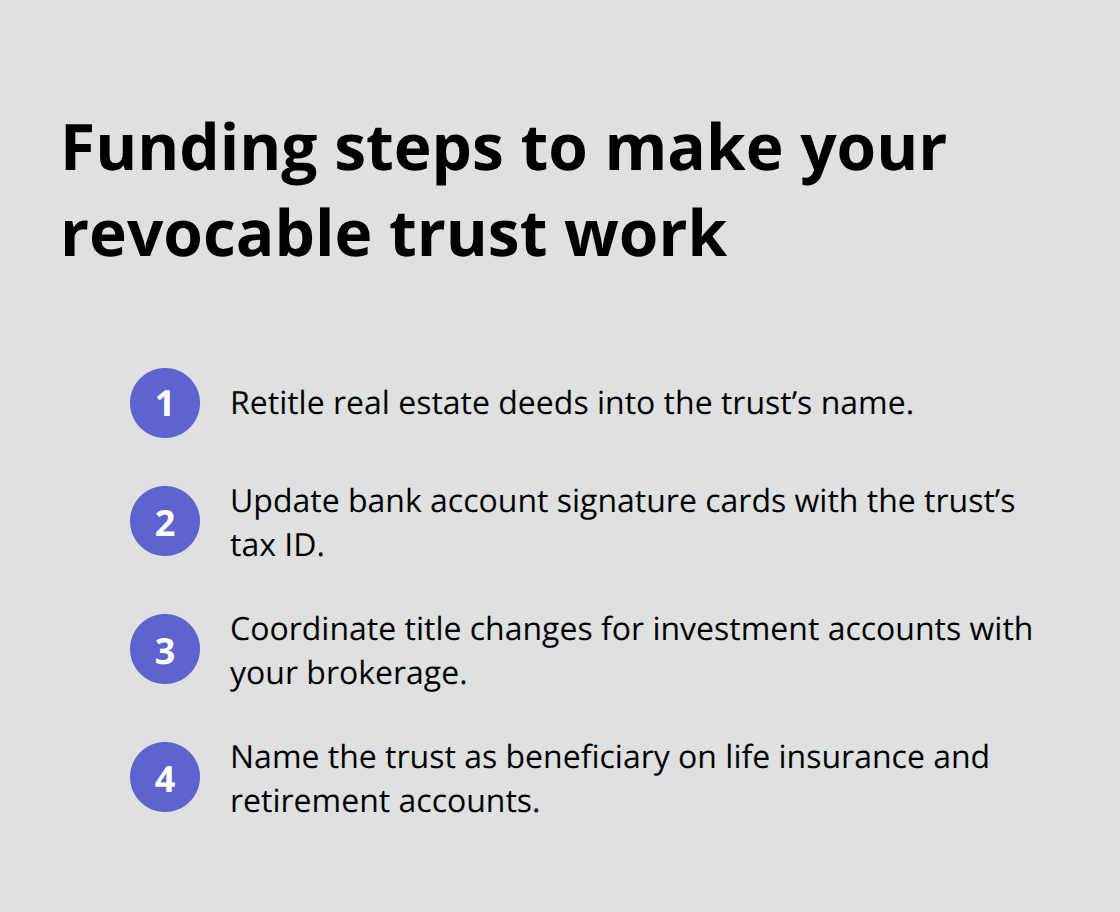
For real estate in St. Augustine and Palatka, this means recording a new deed with the county clerk showing the trust as owner. Bank accounts need signature cards updated with the trust’s tax identification number. Investment accounts require contacting your brokerage directly. Life insurance policies and retirement accounts like IRAs and 401(k)s typically stay in your personal name but list the trust as beneficiary, since transferring them could trigger unwanted tax consequences.
This funding process is not optional-it’s what actually makes the trust work. Without it, you simply have a document that sits in a drawer while your probate problems remain unchanged.
Your Control as Trustee During Life
While you’re living and able to manage your affairs, you serve as trustee of your own trust. This means you maintain the same access and control you had before creating the trust-you write checks, buy and sell property, manage investments, and make all financial decisions. Nothing changes about how you live or operate financially.
The trust simply becomes the legal owner of your assets in the background. This is fundamentally different from other arrangements like power of attorney or joint ownership. You keep the reins completely. If your circumstances change and you need to modify beneficiaries, add new assets, or adjust distribution amounts, you can do so without court approval or anyone else’s permission.
The trust document remains private-neighbors, creditors, and the public never see what’s inside it. This privacy benefit extends through your lifetime and continues after death, since trust distributions happen outside the probate system where court records would otherwise become public information. Once you understand how the trust operates during your life, the real advantages become clear when you examine what happens to your family after you’re gone.
What a Revocable Trust Actually Saves Your Family
The Real Cost of Probate
Probate in Florida costs money and time your family cannot afford to waste. According to the American College of Trust and Estate Counsel, probate typically consumes 3 to 7 percent of an estate’s value in court fees, attorney fees, and administrative costs.
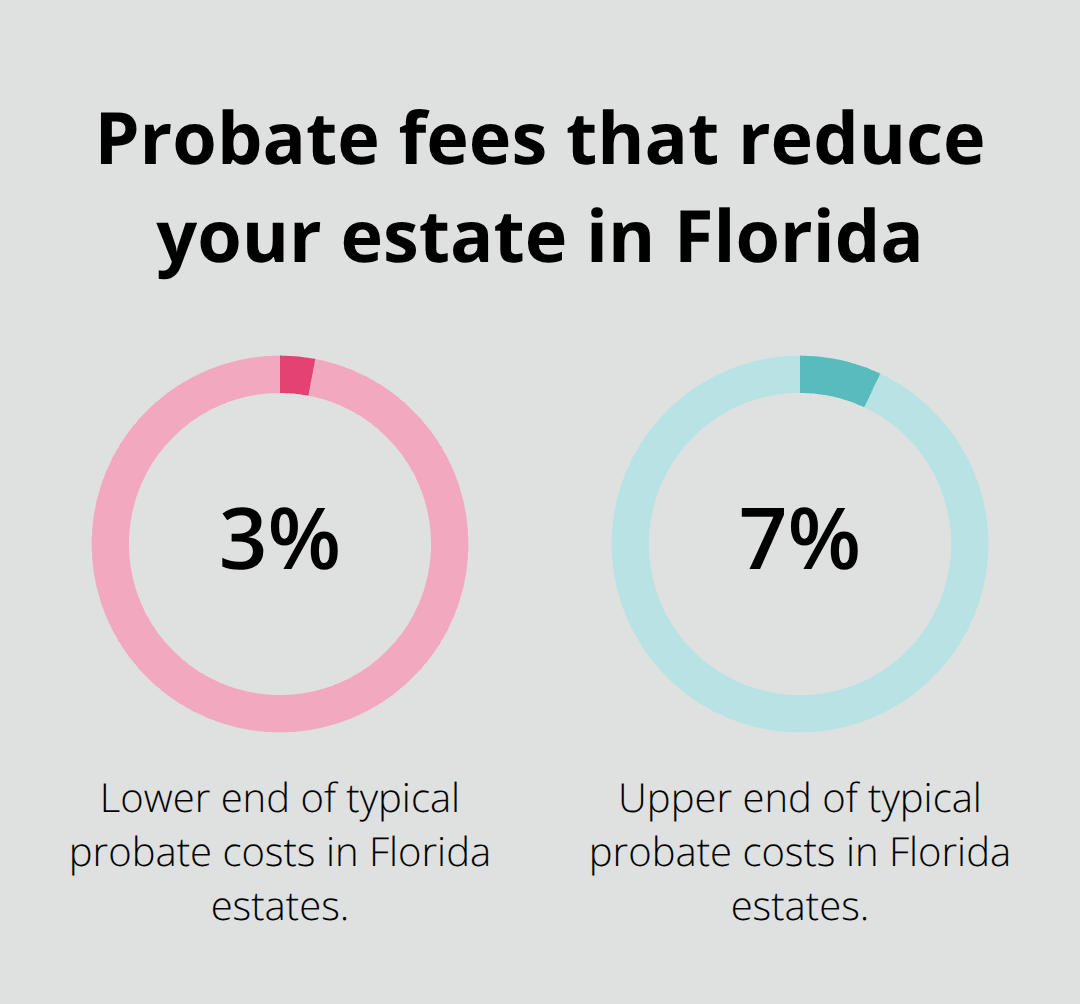
For a $500,000 estate in St. Augustine or Palatka, that means $15,000 to $35,000 disappears before your family receives a single dollar. A revocable trust bypasses probate entirely, keeping those funds in your family’s hands where they belong.
The successor trustee you name can begin distributing assets within weeks of your death, not months. Your family avoids the stress of court appearances, public hearings, and the emotional burden of watching their inheritance get consumed by the legal system.
Immediate Access to Funds When Your Family Needs Them Most
A revocable trust gives your family immediate access to liquid funds during their most difficult moments. During probate, families often cannot access bank accounts or sell property without court permission, leaving them unable to pay funeral expenses, medical bills, or mortgage payments. With a trust, the successor trustee has authority to pay these obligations immediately, providing the financial breathing room your loved ones desperately need during grief.
This speed matters more than most people realize. Your family faces real expenses within days of your death, and probate delays create genuine hardship when funds remain locked away.
Privacy That Protects Your Family’s Financial Information
Privacy separates a trust from probate in ways that matter deeply to most families in your community. When you use a will, your entire estate plan becomes public record once it enters probate court. Anyone can walk into the courthouse and read exactly what you owned, who you left it to, and how much your family inherited. This information stays permanently accessible online and in county records.
A revocable trust keeps your financial affairs completely confidential. Your family’s inheritance details never appear in public records, protecting them from unwanted solicitation, liability claims, or family disputes that might arise from knowing your net worth.
Clear Instructions That Prevent Family Conflict
A trust provides crystal-clear instructions for how your assets should be distributed, reducing confusion and conflict among beneficiaries. Unlike a will that might be ambiguous about your wishes, your trust document contains detailed provisions about when and how each person receives their inheritance. Some families choose to distribute assets outright to adult children, while others prefer staggered distributions over time or conditional distributions tied to specific milestones (education completion, home purchase, or age thresholds).
You control every detail, and your successor trustee has written guidance that prevents misinterpretation or family arguments about what you would have wanted. These specific instructions transform a vague intention into actionable direction that your trustee can follow with confidence. When beneficiaries understand exactly why they received distributions on a particular schedule, resentment and conflict fade away.
What a Revocable Trust Won’t Do For Your Taxes
Many people in St. Augustine and Palatka assume that a revocable trust automatically reduces their tax burden. This misconception costs families time and money because they postpone other critical planning steps while waiting for tax savings that never materialize. A revocable trust provides zero federal income tax benefits, zero estate tax reduction, and zero gift tax advantages during your lifetime or after your death. The IRS treats a revocable trust as transparent for tax purposes, meaning you report all trust income on your personal tax return using your Social Security number, just as if the trust didn’t exist. Your taxable estate includes the full value of everything in the trust when you die, which means a revocable trust alone cannot protect your assets from federal estate taxes if your estate exceeds $13.61 million in 2024 (the current federal exemption).
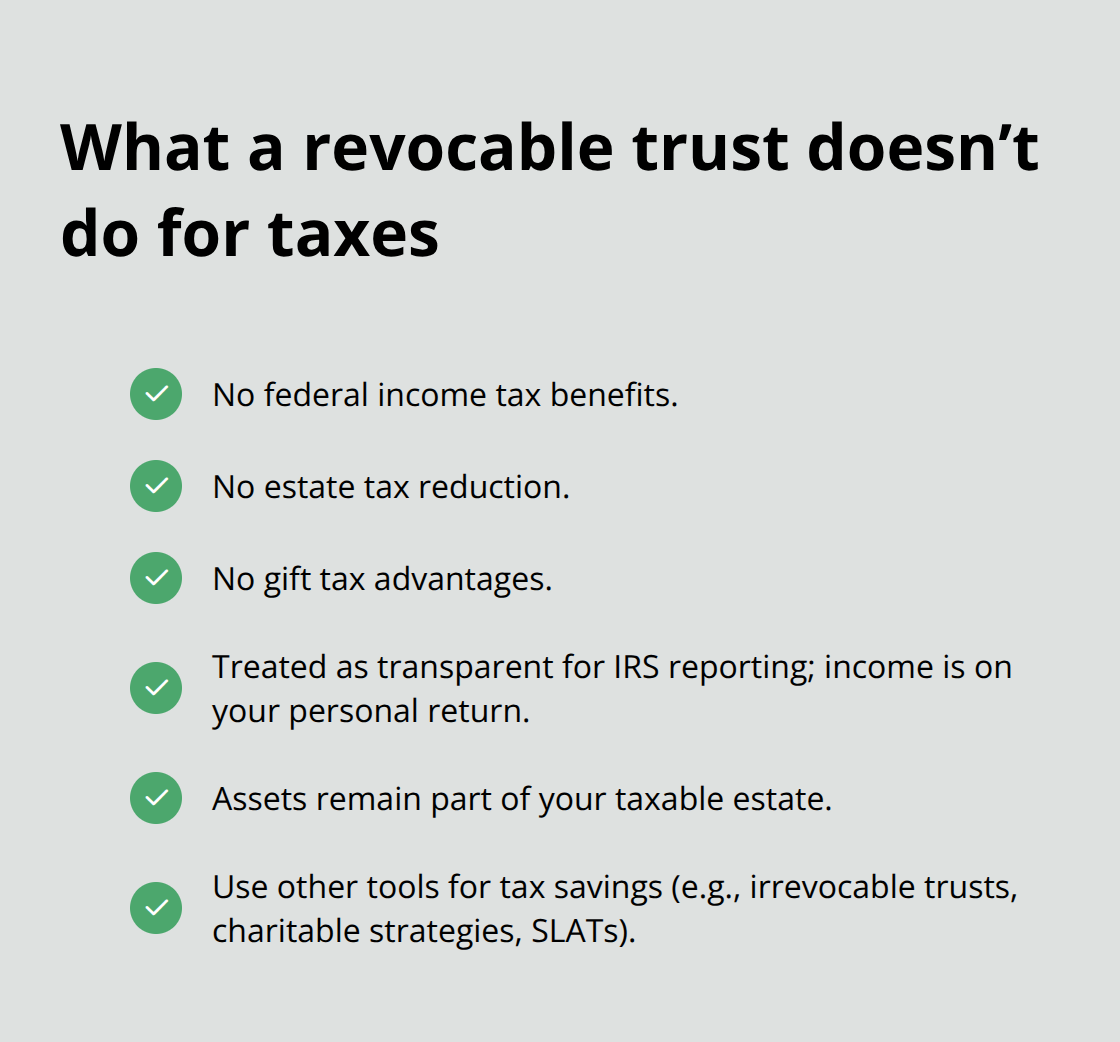
If tax reduction is your goal, you need different planning tools entirely-strategies like irrevocable trusts, charitable giving plans, or spousal lifetime access trusts that actually accomplish what a revocable trust cannot.
A Trust and a Will Serve Different Purposes
A revocable trust and a will serve fundamentally different functions, yet you need both documents working together in your estate plan. A will handles assets that never made it into your trust-property you forgot to retitle, accounts you overlooked, or items acquired shortly before death. A will also names a guardian for minor children, which a trust cannot do. Florida law requires this guardian designation to appear in your will specifically, making the will an irreplaceable part of your estate plan regardless of how comprehensive your trust might be. Families sometimes create excellent trusts but skip the will, leaving their minor children’s guardianship to a judge’s decision if both parents die simultaneously. The will also serves as a backup mechanism-if assets somehow avoid trust funding, the will catches them and directs them into your trust through what’s called a pour-over will provision. This two-document approach (trust plus will) ensures nothing falls through the cracks, whether due to oversight or unexpected circumstances. Skipping the will because you have a trust creates genuine legal gaps that can derail your entire plan.
The Maintenance Reality That Catches People Off Guard
A revocable trust requires updates only when your circumstances genuinely change-you remarry, have children, acquire significant new assets, move to another state, or your beneficiaries’ situations shift dramatically. These events happen infrequently for most families, not annually or quarterly. Florida law does not impose maintenance requirements, filing fees, or reporting obligations for revocable trusts during your lifetime. You do not file separate tax returns, pay annual trustee fees to the court, or submit paperwork to any government agency. The only real task involves funding new assets into the trust when you acquire them, which takes minutes per transaction and costs nothing. Many people confuse revocable trusts with irrevocable trusts, which do require annual accountings and professional management. A revocable trust remains simple and inexpensive to maintain because you control everything and the government leaves you alone. The misconception persists because some attorneys recommend unnecessary updates to generate billing hours, but the actual legal requirement stays minimal. You can update your trust whenever you want (no restrictions apply), yet you only need to update it when life circumstances actually warrant the change.
Final Thoughts
A revocable trust stops your family from losing months and thousands of dollars to probate delays. When you pass away, your successor trustee accesses funds within weeks, pays immediate expenses, and distributes assets according to your exact wishes. Your family avoids court hearings, public records exposure, and the emotional toll of watching the legal system consume their inheritance.
Beyond the practical benefits, a trust gives your family something equally valuable: peace of mind. They know exactly what you wanted, when distributions happen, and why you structured things the way you did. No ambiguity exists, and no family arguments erupt over misinterpreted intentions. Your successor trustee has clear written guidance that removes guesswork and prevents conflict during their most vulnerable moments.
The revocable trust advantages we’ve covered-probate avoidance, privacy, immediate access to funds, and clear distribution instructions-address the real concerns that Northeast Florida families face. At Family, Estate & Mediation Law, we help families across St. Augustine and Palatka create estate plans that fit their actual lives and protect what matters most. Contact us at Family, Estate & Mediation Law to discuss how a revocable trust fits into your plan.