Real estate is often the largest asset families own, yet most people have no plan for what happens to it. We at Family, Estate & Mediation Law see families in St. Augustine and Palatka, FL struggle with property transfer decisions that cost them thousands in taxes and legal fees.
Real estate inheritance planning isn’t optional if you want to protect your family’s financial future. The right strategy now prevents conflict, reduces taxes, and gets your property to your heirs smoothly.
Real Estate Inheritance Planning in St. Augustine and Palatka, FL: How Ownership Structure Determines Your Outcome
The Way You Hold Title Controls Everything
The way you hold title to your property in St. Augustine and Palatka, FL directly controls who receives it and how much your heirs pay in taxes and legal fees. Joint tenancy with rights of survivorship bypasses probate entirely-the property transfers automatically to the surviving owner outside the court system.
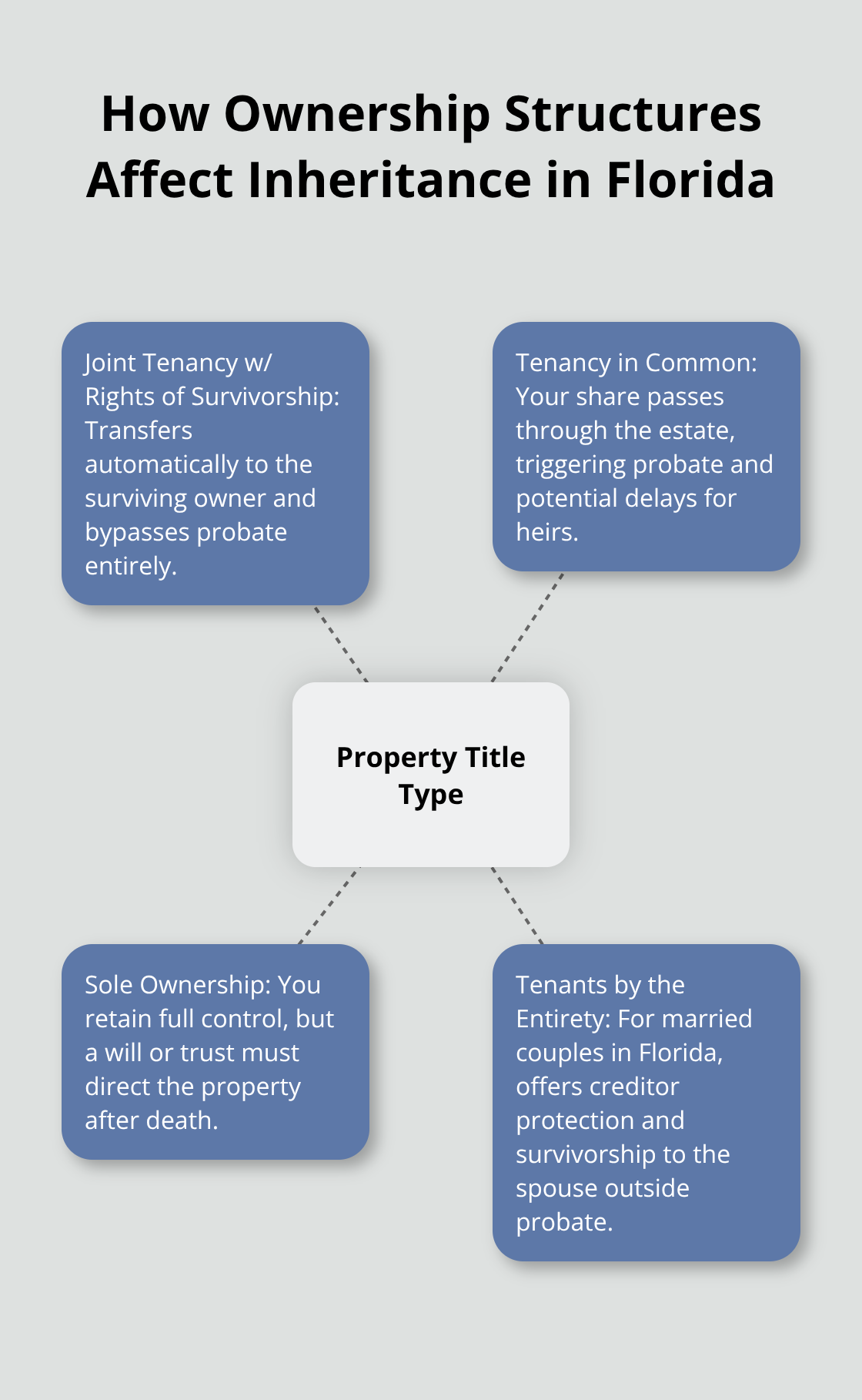
Tenancy in common, by contrast, allows your share to pass through your estate, which means probate proceedings and potential delays follow. Sole ownership gives you complete control but requires your will or trust to direct the property after your death.
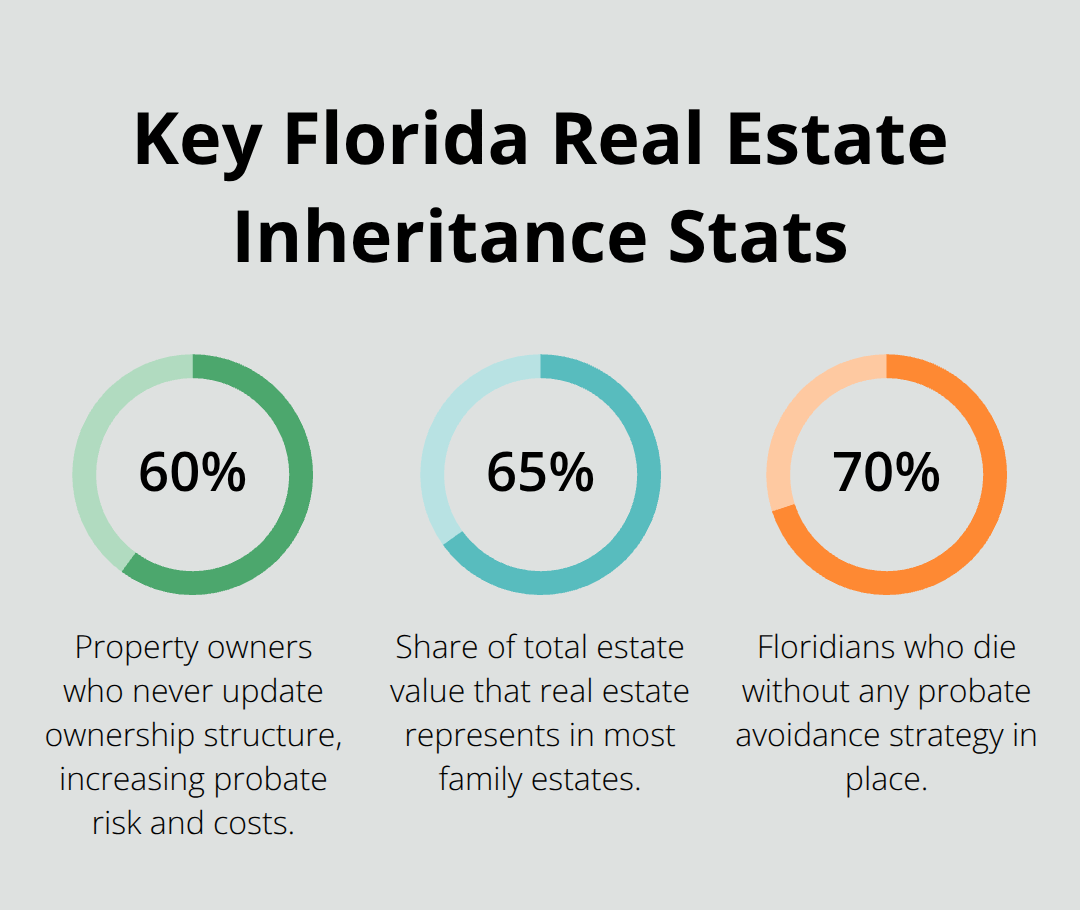
According to the American College of Trust and Estate Counsel, approximately 60% of property owners never update their ownership structure as their family circumstances change, leaving heirs vulnerable to unnecessary probate costs that average between $3,000 and $7,000 in Florida depending on the property value. The Florida Department of State data shows that real estate accounts for roughly 65% of total estate value in most family estates, making the ownership structure decision far more consequential than many people realize. Verify your deed immediately to confirm which ownership type you actually have, as many people assume they have survivorship rights when their deed reflects tenancy in common.
The Step-Up in Basis Rule Saves Your Heirs Thousands
The step-up in basis rule provides significant tax advantages for heirs who inherit property after a death. When you pass away, the IRS resets the property’s tax basis to its fair market value on the date of death, not what you originally paid for it. If you purchased a home in St. Augustine for $250,000 and it’s worth $450,000 when you die, your heirs inherit it at the $450,000 value with no capital gains tax on the $200,000 appreciation.
This benefit disappears if property transfers during your lifetime through certain strategies, which is why timing matters enormously. Federal estate tax applies only to estates exceeding $13.61 million in 2024, but Florida’s lack of state estate tax means your primary concern is the federal threshold and potential income tax consequences for your heirs. Properties held in revocable living trusts still receive the step-up in basis, making trusts an attractive option for larger estates. Work with someone who understands Florida property law and federal tax implications, as the difference between a poorly structured transfer and a properly planned one can cost your heirs tens of thousands of dollars.
Common Mistakes That Drain Estate Value
Naming your estate as beneficiary on a property deed instead of specific heirs creates probate for that asset, adding months to transfer timelines and thousands in court costs. Failing to update beneficiary designations after major life events like divorce or remarriage means your property may go to someone you no longer intend to benefit. Many families in Northeast Florida hold property in only one spouse’s name, which creates complications if that spouse becomes incapacitated or dies first.
Taking on debt against the property without updating your estate plan can leave heirs inheriting a mortgaged asset they cannot afford to keep. The most damaging mistake is postponing any planning at all, assuming there’s time to address it later. Starting the conversation now, even if you’re uncertain about the best approach, prevents your family from facing rushed decisions during grief or financial pressure.
Understanding your current ownership structure and tax implications sets the foundation for the strategies that actually transfer your property efficiently. The next section explores how trusts and beneficiary deeds work to move your real estate to your heirs without the delays and costs that derail unprepared families.
How Trusts and Beneficiary Deeds Move Your Real Estate Without Probate
Revocable Living Trusts Keep Property Out of Court
A revocable living trust stands as the most effective tool for property owners in St. Augustine and Palatka, FL who want to avoid probate entirely. You transfer your real estate into a trust during your lifetime, and the trust becomes the owner while you retain complete control as trustee. Upon your death, your successor trustee distributes the property to your beneficiaries according to your instructions, bypassing probate courts completely. This approach eliminates the 6 to 12 month probate timeline and the associated costs that drain estate value.
Families using trusts for real estate transfer experienced an average savings of $5,000 to $15,000 compared to probate-dependent transfers, with larger estates seeing substantially greater savings. Unlike wills, trusts remain private documents, so your property distribution details never become public record. You can modify or revoke a revocable trust at any time, giving you flexibility as circumstances change.
Funding Your Trust Requires Action
Creating a trust accomplishes nothing if you never transfer your property into it. You must transfer the deed into the trust’s name immediately after creation, which requires a quit claim deed or warranty deed depending on your lender’s requirements. Many property owners create trusts but leave assets outside them, leaving those assets vulnerable to probate anyway.
Verify with your mortgage lender that transferring property into a trust won’t trigger a due-on-sale clause, though most Florida lenders permit this transfer without penalty. This single step separates successful estate plans from failed ones that leave families facing the exact probate delays they tried to prevent.
Beneficiary Deeds Offer Simplicity for Straightforward Situations
Beneficiary deeds provide a simpler alternative for straightforward situations where you have one or two heirs and no complex tax concerns. Florida allows transfer-on-death deeds, which let you name a beneficiary who automatically receives the property upon your death without probate involvement. Unlike a revocable trust, beneficiary deeds cost nothing to create and require no ongoing administration.
However, they lack the flexibility of trusts because you cannot easily change beneficiaries without creating a new deed, and they provide no incapacity protection if you become unable to manage your affairs. For property in St. Augustine and Palatka, FL worth under $100,000 with straightforward ownership, a beneficiary deed may suffice. For larger estates, multiple properties, or situations involving blended families, a revocable living trust provides superior control and protection.
Tax Strategies Multiply Your Heirs’ Inheritance
Minimizing estate taxes through proper planning means structuring ownership to take advantage of Florida’s lack of state estate tax while positioning your heirs to receive the step-up in basis. Married couples should consider holding property as tenants by the entirety in Florida, which provides creditor protection and automatic transfer to the surviving spouse outside probate. Portability elections allow a surviving spouse to use the deceased spouse’s unused federal estate tax exemption, potentially doubling the tax-free threshold to $27.22 million in 2024.
These strategies require coordination with your overall estate plan, which is why consulting with someone experienced in Florida property law and federal tax implications produces substantially better outcomes than generic online templates. The specific structure you choose determines whether your heirs inherit maximum value or watch thousands disappear to unnecessary taxes and court fees. Your next decision involves understanding which transfer method actually works best for your situation-and that depends on whether probate or non-probate transfer makes sense for your particular circumstances.
Probate Costs and Timeline in St. Augustine and Palatka, FL
What Probate Actually Costs Your Family
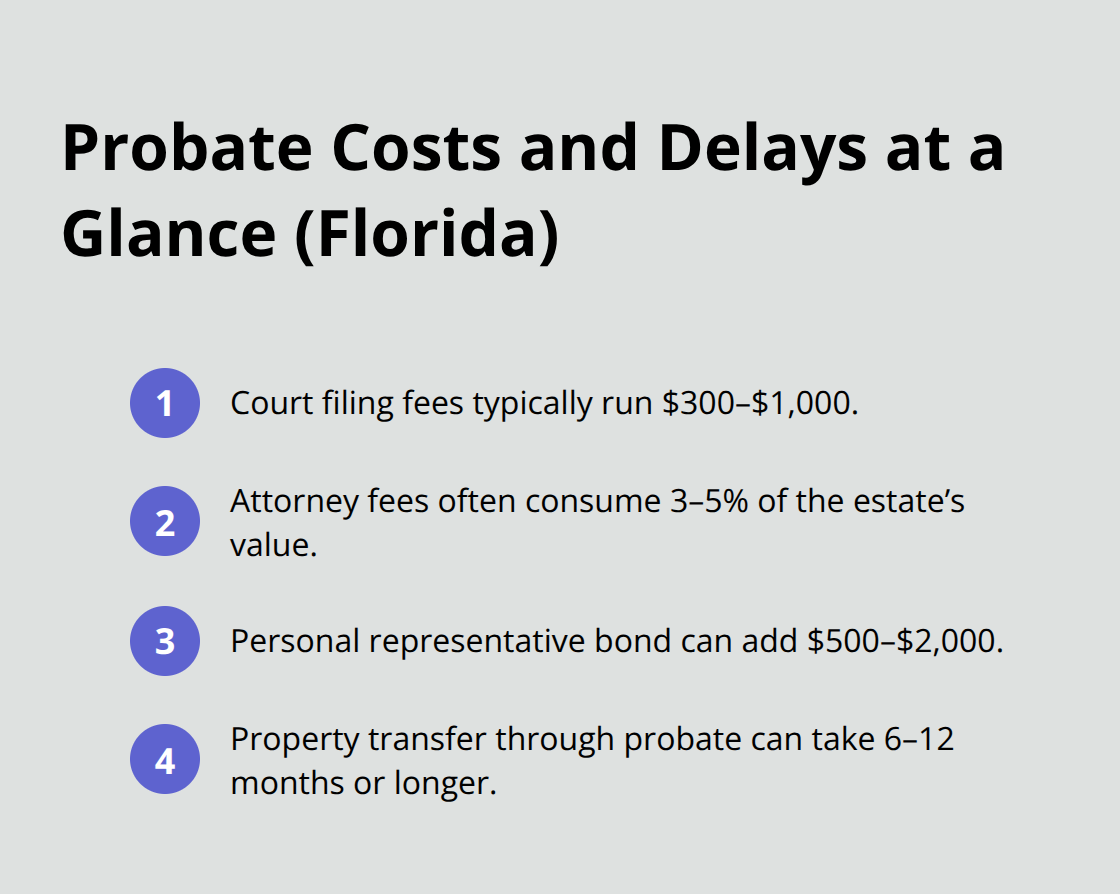
Real estate entering probate in Florida triggers a mandatory court process that costs your heirs thousands and delays property transfer by six to twelve months or longer. When property passes through probate, the court requires formal notice to all heirs and creditors, inventory documentation, tax filings, and judicial approval before your successor can distribute anything. The Florida Supreme Court’s probate rules mandate this timeline regardless of whether your estate is simple or complex, meaning even straightforward property transfers face months of waiting.
Court filing fees alone run $300 to $1,000 depending on property value, but attorney fees typically consume 3 to 5 percent of the estate’s total value according to data from the Florida Bar Association. A $300,000 home in St. Augustine means your family pays $9,000 to $15,000 in legal and court costs before receiving the property, and that’s assuming no complications arise. Personal representatives must post a bond to guarantee faithful performance, adding another $500 to $2,000 in non-recoverable expenses.
These costs come directly from estate assets, reducing what your heirs actually inherit.
How Non-Probate Transfers Eliminate These Expenses
Non-probate transfers through trusts or beneficiary deeds eliminate every single one of these expenses and delays. When your real estate sits in a revocable living trust at death, your successor trustee distributes it to beneficiaries within weeks, not months, without court involvement or public disclosure of your property details. A beneficiary deed in Florida transfers property instantly upon death with zero court costs and zero attorney involvement if you execute it properly during your lifetime.
The Federal Reserve’s Survey of Consumer Finances found that families who used trusts for real estate avoided an average of $8,500 in probate costs compared to those who left property to pass through wills. Your heirs in Palatka or St. Augustine face a stark choice: spend thousands fighting the probate system or spend a modest amount now to structure your property correctly and avoid probate entirely.
Why Most Floridians Still Choose Probate
The math overwhelmingly favors non-probate transfers, yet approximately 70 percent of Floridians still die without any probate avoidance strategy in place, according to research from the American College of Trust and Estate Counsel. This gap between what works and what people actually do reflects a combination of procrastination, confusion about available options, and underestimating how expensive probate becomes. Many property owners assume their situation is too simple to warrant planning, only to watch their heirs navigate court systems and mounting legal bills.
Non-probate transfers aren’t luxuries reserved for the wealthy-they’re essential protections for anyone who owns real estate and wants their family to inherit efficiently and affordably. The difference between a properly structured transfer and an unplanned one determines whether your heirs receive maximum value or watch thousands disappear to unnecessary taxes and court fees.
Final Thoughts on Real Estate Inheritance Planning in St. Augustine and Palatka, FL
Your real estate represents your family’s financial foundation, and how you structure its transfer determines whether your heirs inherit maximum value or watch thousands disappear to probate costs and unnecessary taxes. The ownership structure you hold today, the tools you choose now, and the decisions you make this year will shape your family’s financial security for decades. Revocable living trusts eliminate probate delays and court expenses while preserving privacy, and beneficiary deeds offer simplicity for straightforward situations.
Procrastination destroys effective real estate inheritance planning. Every month you delay increases the risk that your family will face rushed decisions during grief or financial pressure, forced to navigate probate courts and mounting legal bills when they should be mourning and healing. The gap between what works and what people actually do reflects confusion about available options and underestimating how expensive probate becomes.
We at Family, Estate & Mediation Law help families across Northeast Florida structure their real estate transfers efficiently and affordably. Whether your situation involves a single property in St. Augustine, multiple assets in Palatka, or complex family circumstances, we provide strategies tailored to your specific needs and goals. Contact Family, Estate & Mediation Law to review your current ownership structure and explore which transfer method protects your property and legacy most effectively.