
Probate disputes can tear families apart and drain resources faster than anyone expects. When a will is contested or beneficiaries disagree about asset distribution, the emotional and financial toll becomes real.
At Family, Estate & Mediation Law, we’ve seen how probate mediation in Jacksonville offers families a way forward that courts simply cannot match. This path keeps disputes quieter, faster, and far less damaging to relationships that matter most.
How Probate Mediation Actually Works
The Structure of Probate Mediation
Probate mediation is a structured process where a neutral third party helps families resolve disagreements about estates without going to court. The mediator does not decide who wins or loses. Instead, they facilitate conversations between disputing parties, identify common ground, and help craft solutions that all sides can live with. This approach works because it puts control back in the hands of the family rather than leaving decisions to a judge who knows nothing about your relationships or circumstances.
The process unfolds in distinct phases. Initial joint meetings allow each party to explain their position. Separate caucuses follow, where the mediator meets privately with each side to understand underlying interests. Negotiation sessions then focus on reaching agreement.
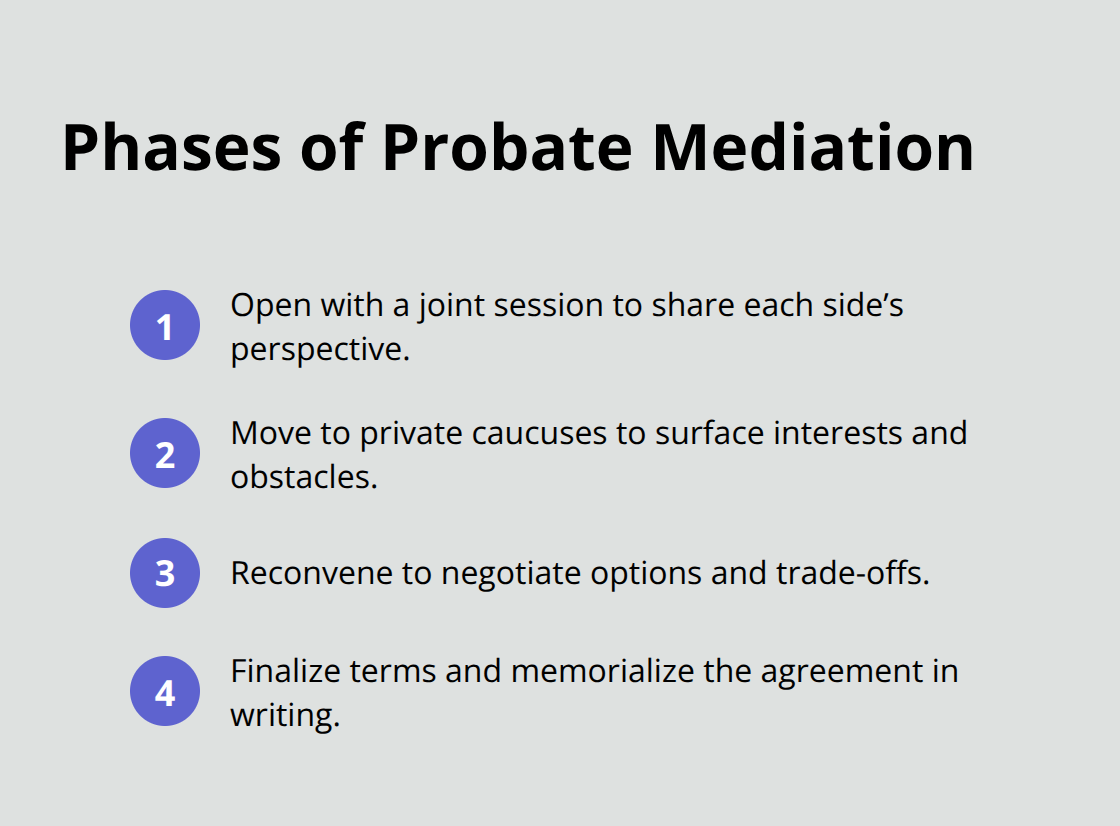
Most probate mediations in Jacksonville resolve within two to four sessions, compared to litigation timelines that stretch across months or years.
Mediation Versus Court Battles
The difference between mediation and court battles comes down to cost, speed, and outcomes. Court litigation for probate disputes averages $10,000 to $50,000 in attorney fees alone, according to the American Bar Association, and takes 18 to 36 months to resolve. Mediation typically costs $2,000 to $8,000 total and concludes within weeks.
More importantly, mediation produces agreements that families actually want rather than court orders that leave everyone unhappy. Families walk away with solutions they helped create, not decisions imposed by someone unfamiliar with their circumstances.
What the Mediator Actually Does
The mediator’s role differs fundamentally from a judge’s role. They never impose decisions or determine fault. Instead, they ask tough questions, reality-test proposals, explain legal standards without giving legal advice, and keep conversations focused on solving problems rather than winning arguments.
This neutrality matters enormously because it allows families to preserve relationships that will continue long after the estate is settled. A mediator who understands probate issues can also identify creative solutions that courts cannot order-flexible payment arrangements, shared asset management, or ongoing family governance structures that prevent future conflicts. These options remain unavailable in traditional litigation, where judges apply rigid legal rules to reach binary outcomes.
Understanding how mediation actually functions reveals why families in Jacksonville increasingly turn to this path. The next section examines the specific disputes that mediation resolves most effectively.
Common Probate Disputes That Mediation Can Resolve
Will Interpretation Disagreements
Will interpretation disagreements create some of the messiest probate conflicts in Jacksonville. When a testator uses vague language like leaving assets to someone “as they see fit” or names multiple executors without clarifying their powers, family members interpret the same words completely differently. One sibling reads the will as giving the executor complete discretion while another believes specific instructions were implied.
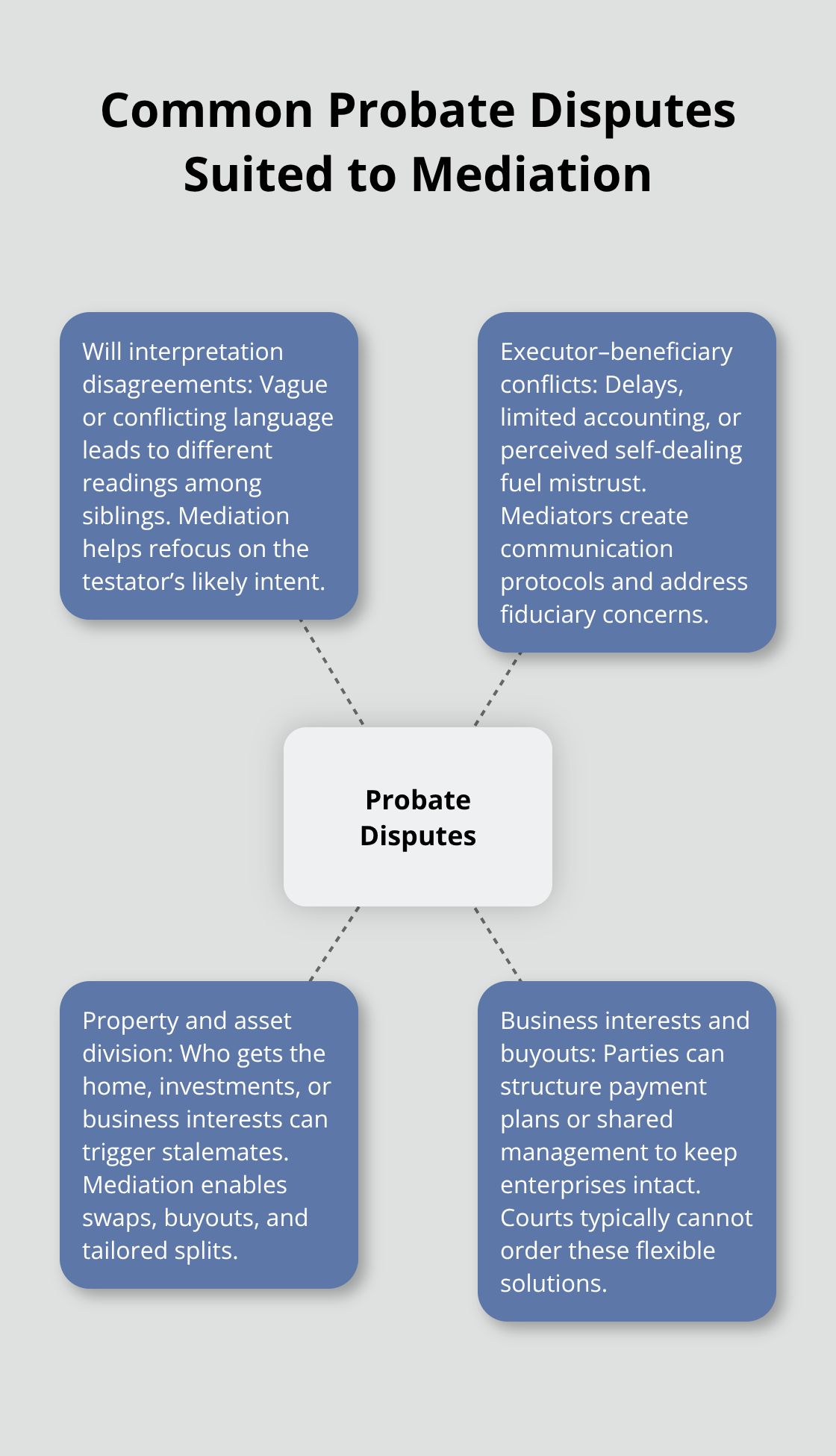
Mediation works here because the mediator helps parties move past rigid interpretations and focus on what the testator likely intended based on family history and circumstances. Rather than fighting over dictionary definitions in court, families discuss what mom or dad actually wanted and reach solutions that honor that intent. The cost difference matters too-litigation over will interpretation runs $15,000 to $40,000 in legal fees while mediation typically resolves these disputes for $3,000 to $6,000.
Executor and Beneficiary Conflicts
Executor and beneficiary conflicts represent another category where mediation outperforms court battles significantly. An executor might distribute assets slowly, refuse to provide accounting statements, or make decisions that beneficiaries view as self-serving. Beneficiaries then consider suing for breach of fiduciary duty, which costs both sides substantial money and creates permanent family fractures. Mediation allows these parties to establish clear communication protocols, agree on accounting schedules, and address concerns before they escalate to litigation. Mediators help executors understand beneficiary frustrations while helping beneficiaries recognize legitimate executor challenges like managing complex assets or navigating tax implications. These conversations rarely happen in litigation because attorneys naturally position clients for battle rather than understanding.
Property Division and Asset Distribution
Property division and asset distribution disputes similarly benefit from probate mediation when siblings disagree about who should receive the family home, investment accounts, or business interests. Rather than forcing a judge to order asset sales or divisions that satisfy no one, mediation allows families to explore swaps, buyouts, or creative arrangements. One family might trade the home for business assets while another arranges a payment plan where one sibling buys out another’s interest over time. These flexible solutions simply cannot emerge from court proceedings where judges apply standardized legal rules to reach predetermined outcomes. The ability to craft personalized arrangements (rather than accept court-imposed divisions) often determines whether families maintain relationships after probate concludes. Understanding these specific disputes reveals why mediation resolves them more effectively than litigation-and sets the stage for examining the concrete advantages families gain when they choose this path.
Why Mediation Costs Far Less and Moves Faster
The True Cost of Probate Litigation
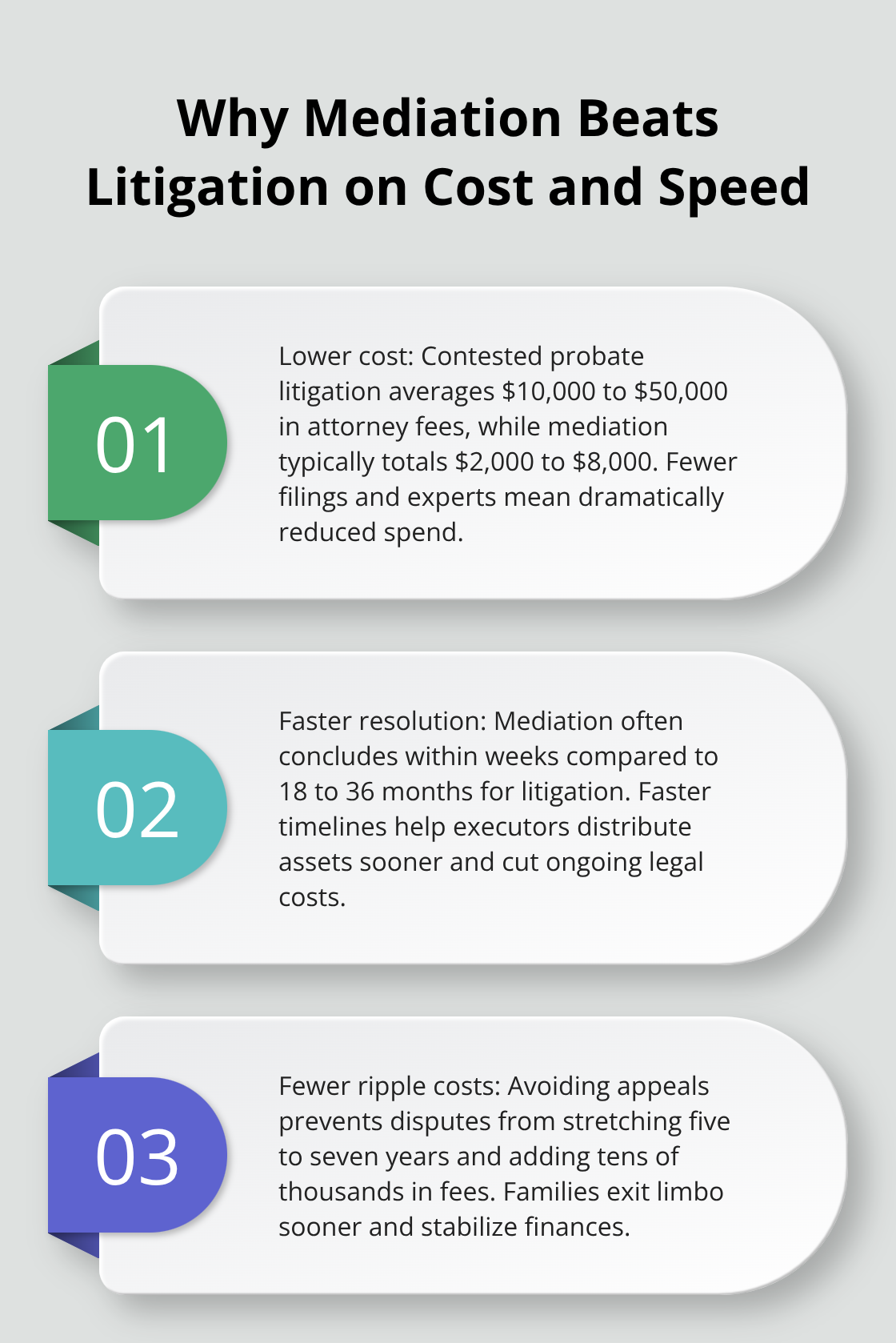
Probate litigation in Florida drains wallets at alarming rates. The American Bar Association reports that contested probate cases average $10,000 to $50,000 in attorney fees alone, with some complex disputes reaching six figures. Court filing fees, expert witness expenses, and lost time managing the estate compound these costs further. Families watch their inheritance shrink while lawyers accumulate billable hours across months and years.
Mediation flips this equation entirely. Most probate mediations in Jacksonville resolve for $2,000 to $8,000 total, and they conclude within weeks rather than the 18 to 36 months litigation typically requires. This speed matters practically because it allows executors to distribute assets faster, prevents the estate from bleeding money into legal fees, and lets families stop living in limbo.
How Speed Translates to Real Savings
The financial difference becomes especially stark when multiple siblings are involved, since litigation attorney fees multiply across each party’s representation. Mediation also avoids the compounding costs of appeals, which can stretch litigation timelines to five or seven years while adding tens of thousands in additional legal expenses. Families who initially spent $15,000 fighting over will interpretation in court realize they could have resolved the same dispute through mediation for one-tenth the cost.
Breaking Free from Years of Conflict
When litigation drags across years, family members remain stuck in conflict mode, unable to settle relationships or move past resentment. Properties sit unmanaged or generate ongoing expenses. Investment accounts remain frozen or poorly managed. Executors operate under constant scrutiny and second-guessing from beneficiaries. Mediation eliminates this limbo by creating resolution timelines measured in weeks.
Families who mediate their disputes report closing the estate, distributing assets, and beginning to heal their relationships within a single season rather than across multiple years. This practical benefit compounds when you consider the emotional cost of prolonged conflict, which damages family bonds far more severely than the initial disagreement ever did.
Protecting Privacy Through Confidential Resolution
Jacksonville families who choose mediation maintain complete confidentiality throughout the process, meaning settlement terms remain private rather than becoming public court records. Litigation creates permanent public records of every accusation, every financial detail, and every harsh statement made about family members (records that relatives and community members can access freely). Mediation allows families to resolve disputes while keeping their private matters private, protecting both their reputation and their ability to function as a family unit after the estate closes.
Final Thoughts
Probate mediation in Jacksonville protects far more than assets-it preserves the relationships that define your family long after the estate settles. When siblings, spouses, and extended family members work through a mediator rather than fighting in court, they emerge with solutions they created together instead of wounds inflicted by litigation. This matters because family bonds fractured during probate disputes rarely heal completely, even after the legal battle ends.
The financial protection is real, saving $8,000 to $42,000 in legal fees compared to court battles, and the timeline protection is equally real, resolving disputes in weeks instead of years. But the relationship protection matters most because money can be rebuilt while family trust cannot. Mediation works best when all parties recognize that fighting will cost more than compromising and when preserving family function matters more than winning every argument.
If probate disputes are affecting your family right now, contact Family, Estate & Mediation Law to discuss whether mediation fits your situation. Our team helps Northeast Florida families resolve estate conflicts while protecting relationships and legacies.