
Most parents never think about what happens to their children if something unexpected occurs. The preneed guardianship process gives you control over who raises your minor children, rather than leaving that decision to a court.
We at Family, Estate & Mediation Law help families in St. Augustine and Palatka, FL establish guardianship plans that reflect their values and priorities. This guide walks you through the steps, considerations, and practical decisions you’ll need to make.
What Preneed Guardianship Actually Protects
The Legal Foundation of Preneed Guardianship
Preneed guardianship is a legal document you create while you’re alive and healthy, naming who will care for your minor children if you die or become incapacitated. It’s not a guess or a suggestion-it’s a binding court order that supersedes what any relative might assume or what a judge might decide. Without it, Florida courts step in and make the decision for you, which often means your children go to whoever files first or whoever the judge thinks is best, not necessarily who you would choose.
The legal purpose is straightforward: you maintain control over your children’s future by documenting your preferences before a crisis happens. This matters because according to data from the American Academy of Pediatrics, roughly 2.7 million children in the United States are being raised by grandparents or other relatives, often without formal guardianship arrangements that could have prevented family conflict or court delays.
How Preneed Guardianship Differs from Traditional Guardianship
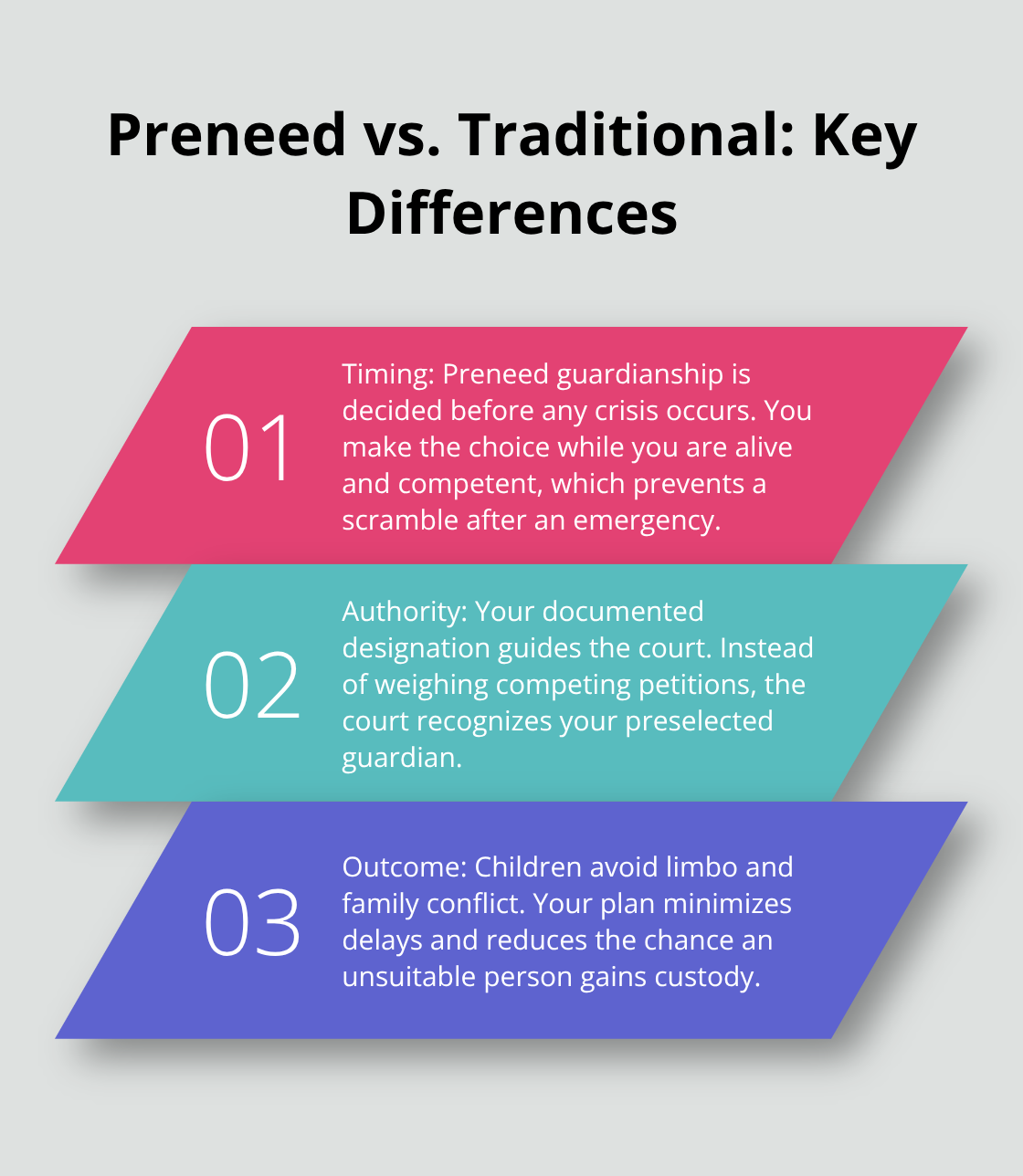
The difference between preneed guardianship and traditional guardianship is timing and authority. Traditional guardianship happens after someone dies or becomes unable to care for their children-a court then appoints a guardian based on available information and whoever petitions first. Preneed guardianship flips this entirely: you name your guardian before any crisis occurs, and Florida courts recognize your documented choice.
This means no delays waiting for court hearings while your children’s status remains unclear, no fighting between family members about who should raise them, and no risk that someone unsuitable gains custody. The proactive approach eliminates uncertainty during the most vulnerable moments for your family.
When Preneed Guardianship Becomes Essential
Families in St. Augustine and Palatka need preneed guardianship when they have young children and no surviving spouse, when they want to name someone other than the obvious family member, or when they’re facing serious health issues. Single parents, couples with significant age gaps between partners, families with special needs children, and parents in high-risk occupations all benefit from naming a guardian now rather than hoping courts make the right call later.
The decision to plan ahead protects your children and gives your chosen guardian clear legal authority from day one. With this foundation in place, you’re ready to move forward with the specific steps required to establish your guardianship plan in Florida.
How to Complete the Preneed Guardianship Process in St. Augustine and Palatka, FL
The path from deciding you need preneed guardianship to having a court-approved plan involves three distinct phases, each with specific requirements that Florida law mandates. Moving through these phases quickly matters because life circumstances change, and the sooner your guardianship plan is official, the sooner your children have legal protection.
Selecting the Right Person to Raise Your Children
This decision shapes your entire guardianship plan, so it demands serious thought rather than defaulting to the most obvious family member. The person you name must be willing to accept the responsibility, capable of providing stable care, and aligned with your values regarding how your children should be raised.
Many parents name someone without actually discussing the role with them first. That conversation is non-negotiable-your chosen guardian needs to understand the financial obligations, emotional demands, and long-term commitment involved. During this discussion, clarify whether they’re willing to maintain your family’s religious traditions, educational priorities, and cultural practices. Ask directly if they have the physical health and financial stability to raise your children for the next 10 to 15 years.
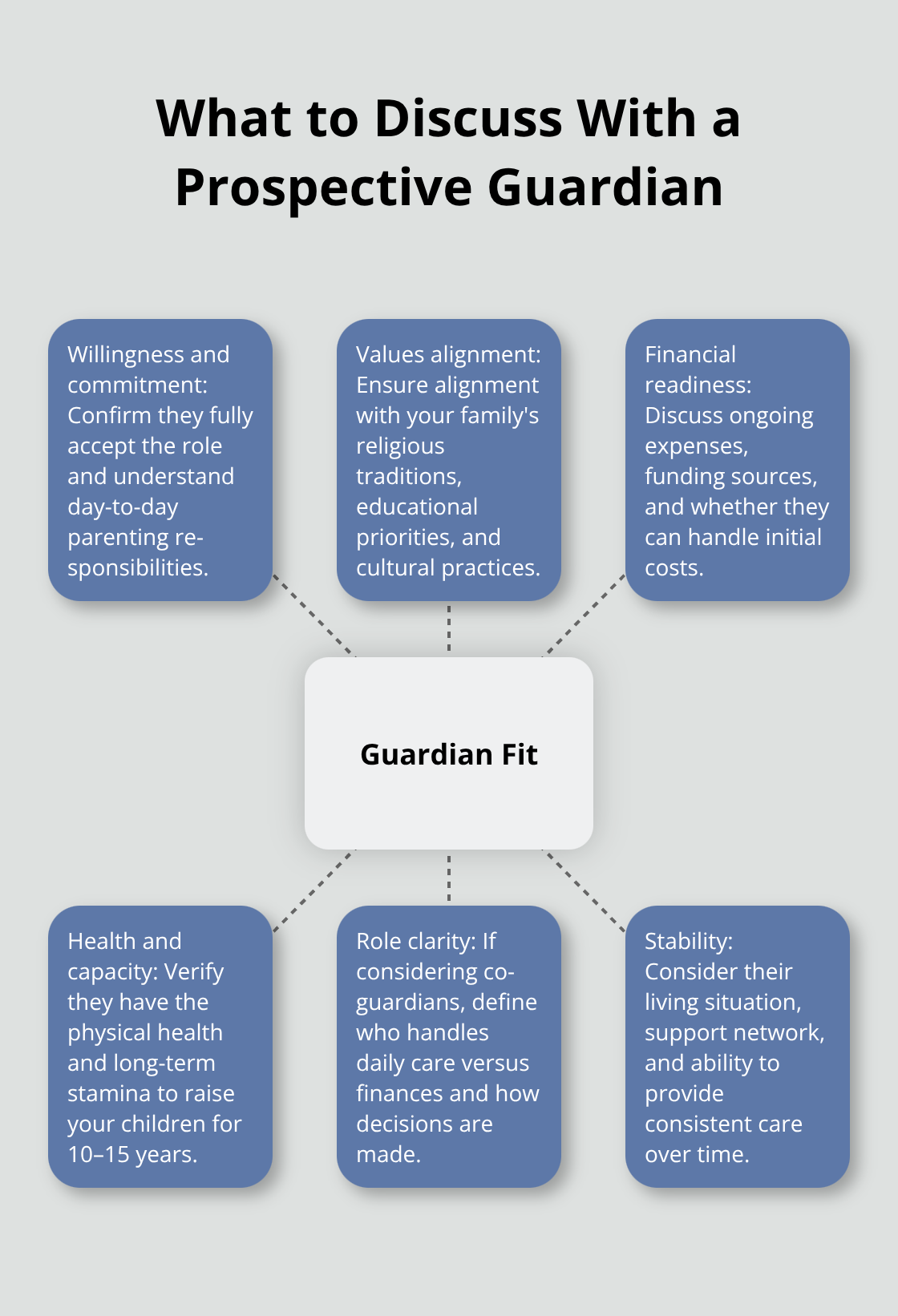
Some parents name co-guardians (one person to handle day-to-day parenting and another to manage finances), which can work well if both parties agree to this arrangement and understand their specific roles. Florida law allows flexibility here, so you’re not locked into a single guardian if circumstances warrant a different approach. The person you select will have significant authority over your children’s upbringing, so this choice deserves more consideration than most parents initially give it.
Filing Your Petition and Required Documentation
Once you’ve identified your guardian and confirmed their willingness, the legal filing begins with a petition for preneed guardianship, along with supporting documents that Florida courts require. The petition names your children, identifies your chosen guardian, and explains why you’re establishing this arrangement now rather than waiting for a crisis.
You’ll also need a notarized affidavit expressing your preferences and the reasons behind them. Florida Statute 744.331 governs preneed guardianship, and the court will verify that your chosen guardian meets statutory qualifications-primarily that they have no disqualifying criminal history and haven’t been removed from guardianship in another case.
Understanding the Court Approval Timeline
The entire court approval process typically takes 30 to 45 days from filing to final order, though this timeline varies depending on court workload in your county. Some families experience delays if the court requests additional information or if your chosen guardian’s background check requires clarification.
Once the judge signs the order, your preneed guardianship becomes legally binding, and your named guardian gains immediate authority if you die or become incapacitated. This order remains valid unless you formally modify or revoke it, which you can do at any time if your circumstances or preferences change. With your guardianship plan now in place, the next critical step involves addressing the financial and practical support your children will need during this transition.
Important Considerations When Planning Preneed Guardianship
Financial Support Your Guardian Will Need
Naming a guardian solves the custody question, but it creates an entirely separate financial reality that most parents overlook until it’s too late. Your chosen guardian will inherit not just your children but also the responsibility of covering their living expenses, education, healthcare, and daily needs without your income. This is where preneed guardianship planning stops and financial planning starts. A guardianship plan without financial support is incomplete planning that forces your guardian into impossible choices.
According to the U.S. Census Bureau, the average cost of raising a child to age 18 reached approximately $233,610 as of 2023, and that figure excludes college expenses. Your guardian will face this reality immediately after your death, so you need concrete funding mechanisms in place before that happens.
Life Insurance and Estate Funding Strategies
Life insurance stands as the most practical tool for protecting your children’s financial future. A term life policy of $500,000 to $1,000,000 (depending on your children’s ages and your family’s lifestyle) transfers directly to a designated beneficiary outside your estate and avoids probate delays. Alternatively, you can name your estate as beneficiary with instructions in your will that proceeds fund a trust for your children’s care.
Discuss with your guardian whether they can absorb initial expenses while waiting for insurance payouts or if they need immediate access to funds. Some families establish a dedicated savings account or money market fund specifically for guardianship expenses, allowing your guardian to cover immediate costs without depleting their own resources. The conversation with your chosen guardian must include specific numbers-tell them exactly how much monthly support they can expect, what educational expenses you’re covering, and what decisions require them to spend personal funds.
Updating Your Guardianship Plan as Life Changes
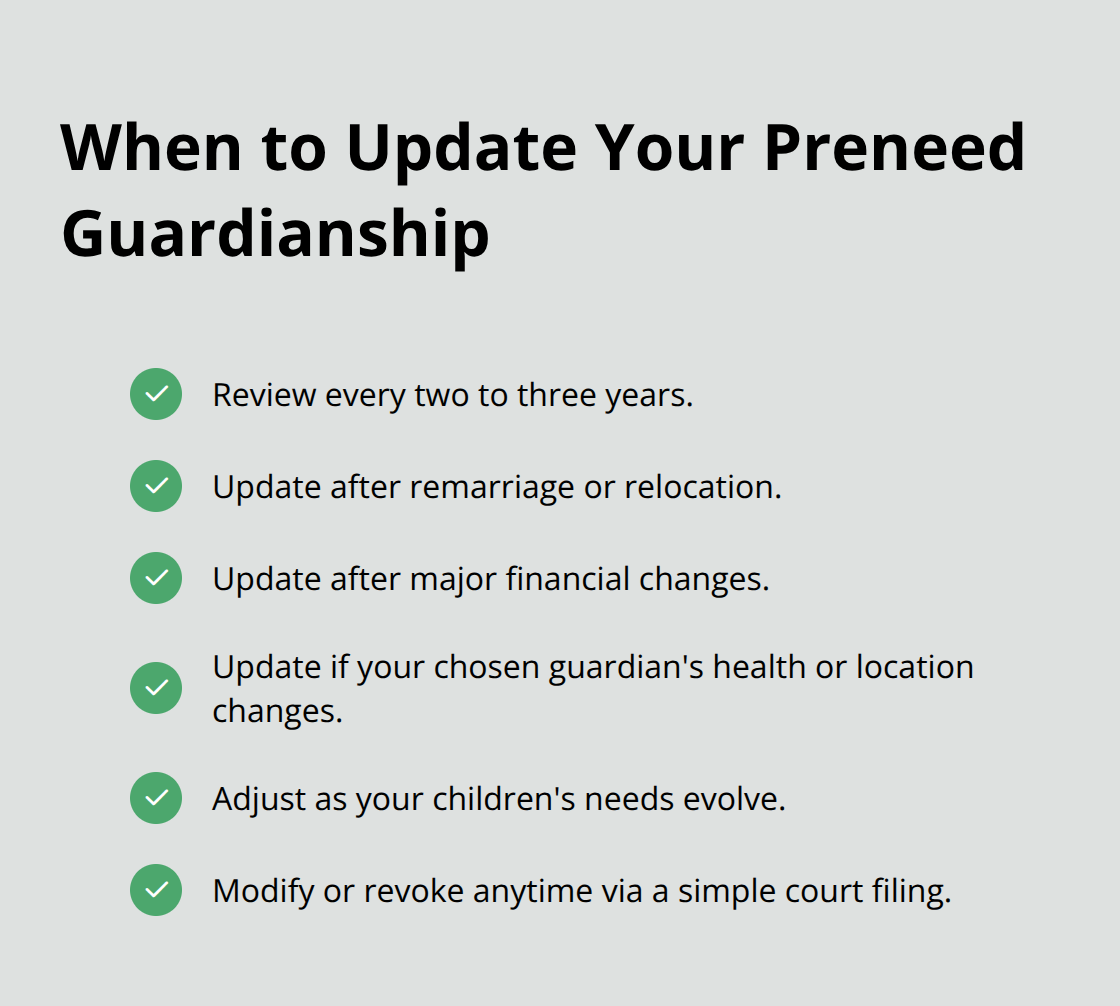
Your preneed guardianship plan needs regular updates because your family’s circumstances shift, your chosen guardian’s situation may change, and Florida law occasionally evolves. Many parents create a guardianship plan and never revisit it for five or ten years, which means their plan reflects outdated preferences and financial realities that no longer exist.
Review your arrangement every two to three years or immediately after major life events like remarriage, relocation, significant financial changes, or if your chosen guardian experiences health problems or moves away. If you’ve accumulated additional assets, increased life insurance, or your children’s needs have changed substantially, these developments warrant updating your guardianship documentation. Florida law allows you to modify or revoke your preneed guardianship at any time through a simple court filing, so there’s no penalty for keeping your plan current.
Naming Backup Guardians and Safeguards
Some families name alternate guardians as backup options in case their first choice becomes unavailable. This practical safeguard prevents your guardianship plan from collapsing if your primary guardian dies or becomes incapacitated before you do. Your guardianship documentation should reflect these contingencies so that your children’s care remains protected regardless of unexpected circumstances.
Treat preneed guardianship as a living document that evolves with your family rather than a one-time legal transaction you complete and forget. Your plan’s effectiveness depends on keeping it current and ensuring that all parties understand their roles and financial responsibilities.
Final Thoughts
Preneed guardianship planning protects your children by giving you control over their future rather than leaving that decision to Florida courts. The preneed guardianship process requires naming a suitable guardian, filing legal documents, and obtaining court approval, but this effort eliminates uncertainty during your family’s most vulnerable moments. Your plan must include financial support mechanisms so your chosen guardian doesn’t cover living expenses, education, and healthcare from personal funds.
We at Family, Estate & Mediation Law help families in St. Augustine and Palatka establish guardianship plans that actually work. Our approach focuses on practical strategies that protect your children’s rights while preserving family relationships and your legacy. We handle the legal complexity so you can focus on making the right decisions about your children’s future.
The next step is straightforward: contact us to schedule a consultation about your family’s guardianship needs. During that conversation, we’ll discuss your situation, answer questions about Florida’s requirements, and outline exactly what your preneed guardianship plan should include. Families in St. Augustine and Palatka who act now gain peace of mind knowing their children’s future rests on their own choices, not on chance or court decisions made without understanding their family’s values.