
Your pet depends on you for everything today. But what happens to them if you’re no longer here to provide that care?
Pet trusts planning gives you a way to protect your pet’s future with legal certainty. Here at Family, Estate & Mediation Law, we help St. Augustine and Palatka pet owners create plans that actually work.
What a Pet Trust Actually Does
How a Pet Trust Protects Your Pet
A pet trust is a legal document that sets aside money and instructions specifically for your pet’s care if you pass away or become unable to care for them. Unlike leaving money to someone in a will and hoping they use it for your pet, a trust creates a binding obligation. Florida law recognizes pet trusts under Chapter 736 of the Florida Statutes, which means the court can enforce the document if needed. The trust names a trustee to manage the funds and a caregiver to handle daily responsibilities, with clear rules about how money gets spent.
The Reality of Pet Ownership in Our Community
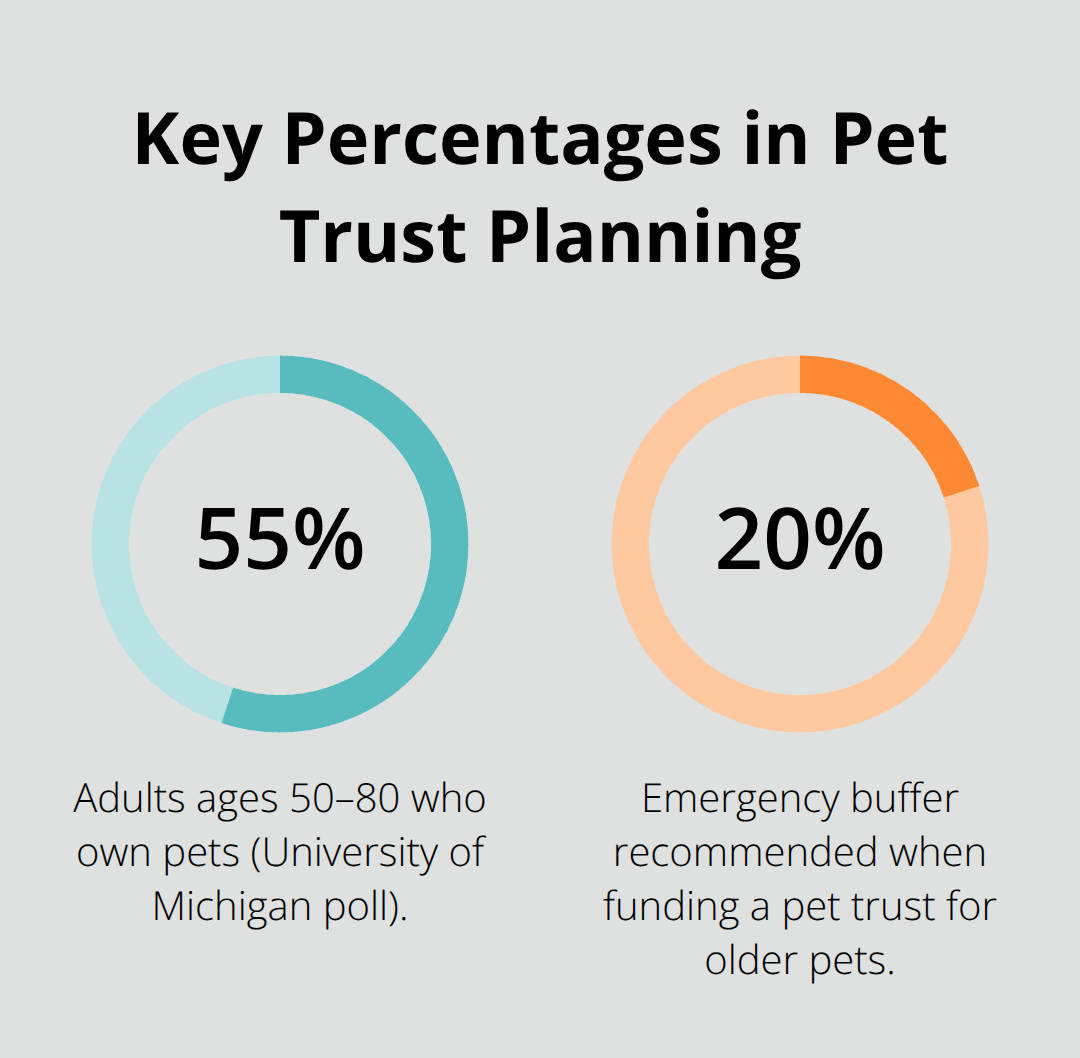
The American Pet Products Association’s 2023-2024 survey shows that 86.9 million U.S. households own pets, yet most pet owners never create a plan for what happens to their animals. A University of Michigan poll found that 55 percent of adults aged 50 to 80 own pets, making this especially relevant for St. Augustine and Palatka residents planning their estates. Without a pet trust, your beloved dog, cat, or other animal could end up in a shelter or with someone unprepared to meet their needs.
Why Wills Fall Short for Pet Care
A traditional will simply cannot handle ongoing pet care the way a trust can. Wills go through probate, which takes months or even longer, leaving your pet in limbo during that time. A will also cannot appoint someone to manage money for your pet’s long-term care-it can only leave a lump sum to a person and hope they spend it correctly. A pet trust, by contrast, operates immediately and continues functioning for your pet’s entire lifetime.
Taking Control of Costs and Care
You control exactly how much money goes into the trust, what the caregiver receives for expenses, and what happens to any leftover funds after your pet passes. The trust also allows you to name successor caregivers if your first choice becomes unable or unwilling to help. Many pet owners underestimate costs: veterinary care, quality food, grooming, and unexpected medical emergencies can easily exceed several thousand dollars over a pet’s lifetime. A pet trust forces you to calculate these real expenses upfront and set aside sufficient resources.
Managing Multiple Pets and Enforcing Standards
If you have multiple pets, one trust can allocate separate care instructions and funds for each animal, ensuring each receives the specific attention they need. The court can enforce the trustee’s duties if funds are misused or care standards are ignored, giving you legal recourse that a simple will arrangement cannot provide. This legal framework transforms pet care from a hopeful arrangement into a guaranteed plan that protects what matters most to you.
Building Your Pet Trust in Florida
Select a Trustee Who Manages Money Separately from Daily Care
Setting up a pet trust in Florida requires three concrete decisions that directly impact whether your plan actually protects your pet. The first decision is selecting a trustee-the person or entity responsible for managing the money set aside for your pet’s care. This role demands financial competence and reliability, not just a willingness to help. Many pet owners make the mistake of naming their chosen caregiver as the trustee, but these should be separate roles whenever possible. The caregiver handles daily feeding, exercise, and companionship, while the trustee manages disbursements and tracks expenses. A professional trustee like a bank or trust company provides continuity if your first choice dies or becomes incapacitated, though this costs more. If you choose an individual, name at least one successor trustee in writing so the trust does not collapse if that person cannot serve.
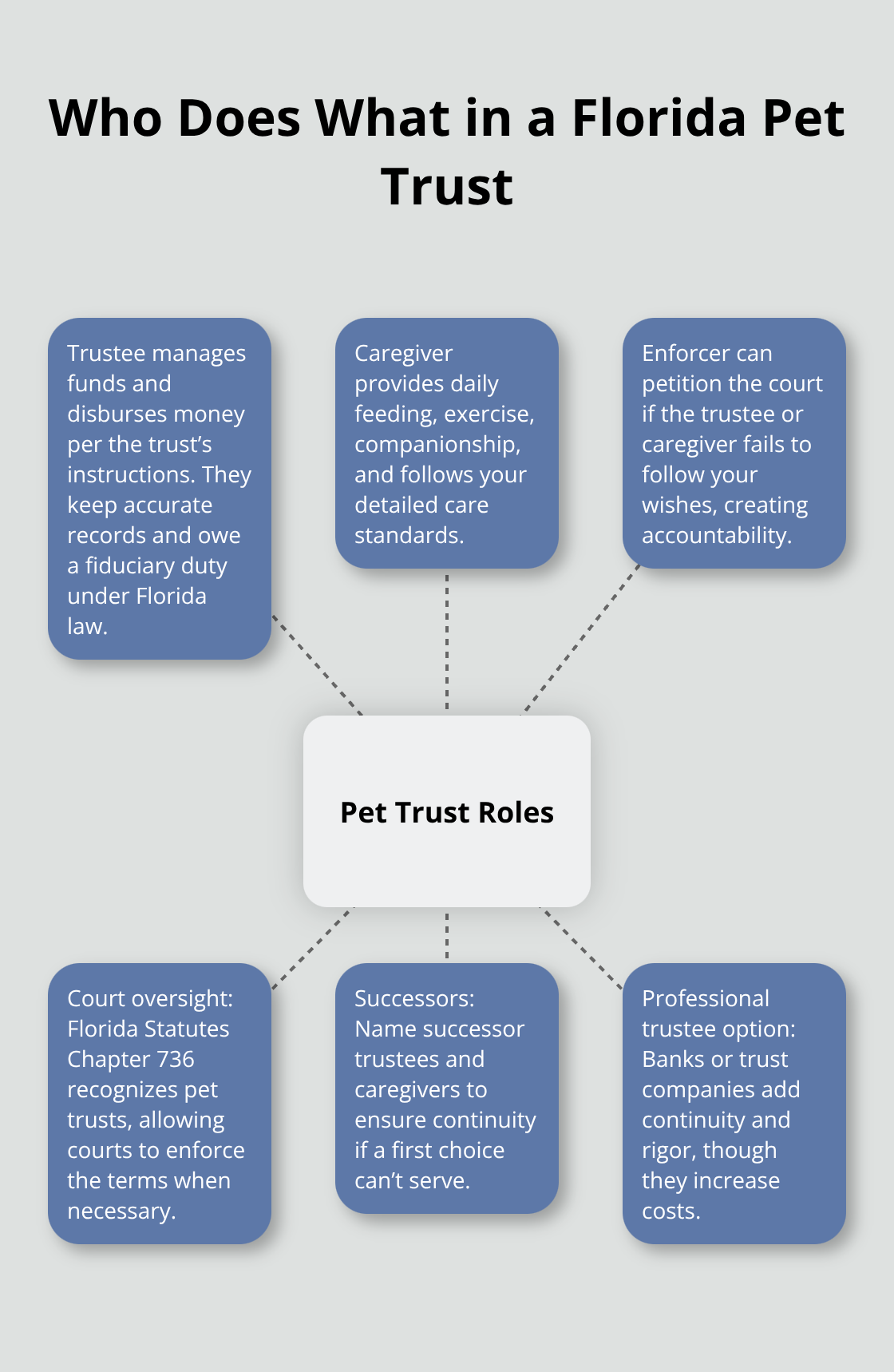
The trustee must understand they have a fiduciary duty under Florida law to act in your pet’s best interests and keep accurate records of all spending.
Calculate Real Lifetime Costs and Fund Accordingly
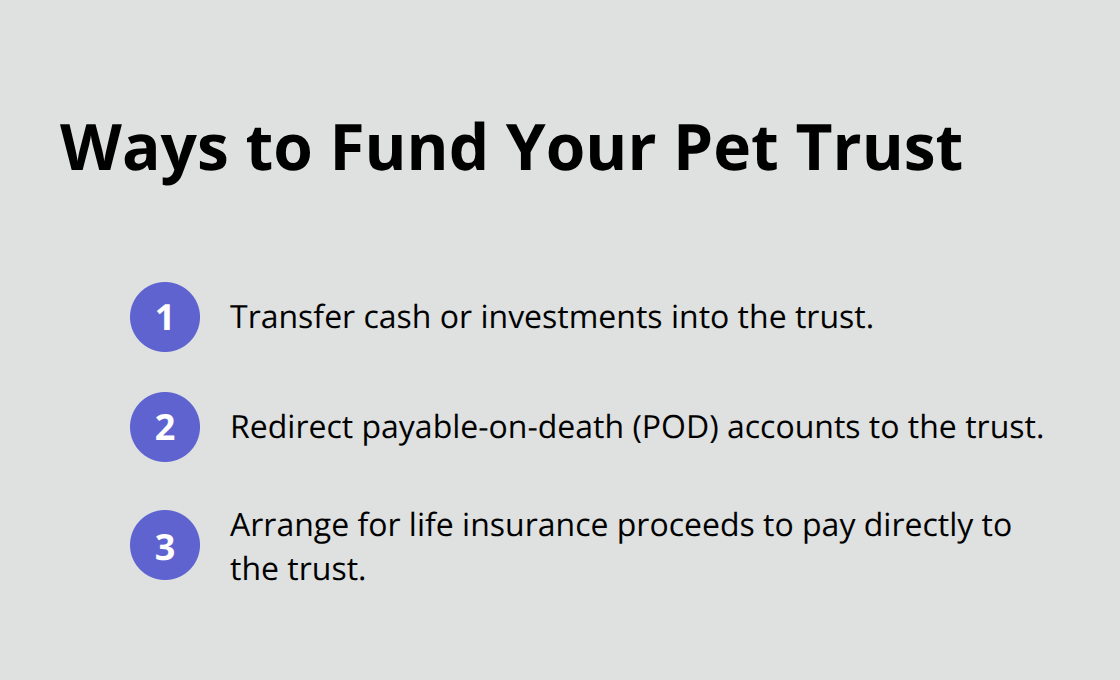
Funding your pet trust requires honest math about lifetime costs. Veterinary care alone averages between $1,500 and $3,000 annually for routine checkups, vaccines, and dental work, according to the American Veterinary Medical Association. Add quality food, grooming, boarding, medications, and emergency reserves, and a medium-sized dog easily costs $5,000 to $8,000 per year. For a ten-year-old dog with five years of life remaining, you should fund the trust with at least $25,000 to $40,000, plus a buffer for unexpected illness. You can transfer cash or investments into the trust, redirect payable-on-death accounts to the trust, or arrange for life insurance proceeds to flow directly to it. Each funding method requires correct beneficiary designations and title changes to work properly.
Document Medical History and Care Standards in Detail
Document your pet’s complete medical history, current medications, dietary restrictions, behavioral quirks, and preferred veterinary providers in a contemporaneous care memorandum attached to the trust. Include vaccination records, microchip numbers, and emergency contact information. Specify exact care standards: does your dog need daily walks, specialized arthritis medication, a particular brand of food, or visits to a specific vet? The more detailed your instructions, the less room for dispute or neglect.
Name an Enforcer to Protect Your Pet’s Interests
Florida law permits you to name an enforcer-a trusted person who can petition the court if the trustee or caregiver fails to follow your wishes. This enforcement mechanism transforms a trust from a hopeful arrangement into a legally binding commitment that a court can supervise and correct if needed. The enforcer acts as a watchdog, stepping in only when problems arise, which keeps costs down while maintaining accountability. With these three decisions made and documented, your pet trust moves from concept to reality. The next step involves understanding the mistakes that derail many pet owners’ plans-and how to avoid them.
Where Pet Owners Go Wrong With Their Plans
The Caregiver Conversation You Cannot Skip
Most pet owners who start thinking about a pet trust never finish the job, and the ones who do often make critical errors that undermine the entire plan. The biggest mistake happens before any document gets drafted: naming a caregiver without actually having a serious conversation about whether they want the responsibility. You might assume your sister or best friend will take your dog, but they may have different ideas about their capacity, lifestyle, or financial situation five years from now.
A conversation about pet care is not casual. It requires discussing daily time commitments, veterinary expenses they might need to cover upfront before reimbursement, travel restrictions, and what happens if their circumstances change. Many caregivers accept out of guilt or emotion, then resent the arrangement once they realize the actual work involved. Ask directly, listen to hesitation, and get their agreement in writing within the trust itself. If they say no or seem uncertain, move to your second choice immediately. Do not proceed with a plan based on an assumption.
Funding Your Trust With Realistic Numbers
The second mistake involves funding the trust with insufficient money, which happens because pet owners refuse to do honest math about lifetime costs. Veterinary expenses alone average $1,500 to $3,000 annually according to the American Veterinary Medical Association, and that covers only routine care-not emergencies, dental work, or chronic illness treatment. A senior dog with arthritis or heart disease can cost $400 to $800 monthly in medications and specialized care.
If you have a ten-year-old pet with a five-year life expectancy, funding your trust with $15,000 is grossly inadequate; you need at least $25,000 to $40,000 plus a 20 percent emergency buffer. Transfer cash or investments into the trust, redirect payable-on-death accounts to the trust, or arrange for life insurance proceeds to flow directly to it. Each funding method requires correct beneficiary designations and title changes to work properly.
Updating Your Plan as Life Changes
The third critical error is treating a pet trust as a set-it-and-forget-it document. Your pet’s needs change as they age, your financial situation shifts, your caregiver’s life circumstances evolve, and veterinary costs inflate. A trust drafted five years ago may not reflect your current pet’s medications, mobility limitations, or behavior changes.
Florida law allows you to amend or revoke a pet trust, so review it every two to three years or whenever something significant happens-a new diagnosis, a caregiver relocation, a major life event. Without these updates, your carefully crafted plan becomes outdated and potentially unworkable when it matters most.
Final Thoughts
A pet trust planning strategy transforms your pet’s future from uncertain to protected. Without one, your beloved companion faces the real possibility of ending up in a shelter or with someone unprepared for their needs. With a properly structured pet trust, you guarantee that your pet receives the exact care, resources, and attention you would provide yourself, even when you cannot be there.
The three decisions you make today-selecting a trustee, funding realistically, and documenting care instructions-create a legal framework that Florida courts can enforce. This matters because it moves pet care from hope into certainty. Your pet does not understand wills or probate delays; they need someone ready to feed them, take them to the vet, and provide the life they deserve.
Start by having honest conversations with your chosen caregiver about their willingness and capacity to care for your pet long-term. Calculate your pet’s realistic lifetime costs based on their age, health, and breed. Then contact an estate planning attorney who understands Florida’s pet trust laws and can draft a document tailored to your specific situation, or reach out to Family, Estate & Mediation Law to schedule a consultation and begin securing your pet’s future today.