
Medical decisions happen fast, and without a designated healthcare proxy, hospitals may turn to family members who don’t know your wishes. We at Family, Estate & Mediation Law see firsthand how the right healthcare proxy options prevent confusion and conflict when it matters most.
This guide walks you through your choices, from durable powers of attorney to state-specific forms, so you can pick the person and approach that fits your situation.
What a Healthcare Proxy Actually Does
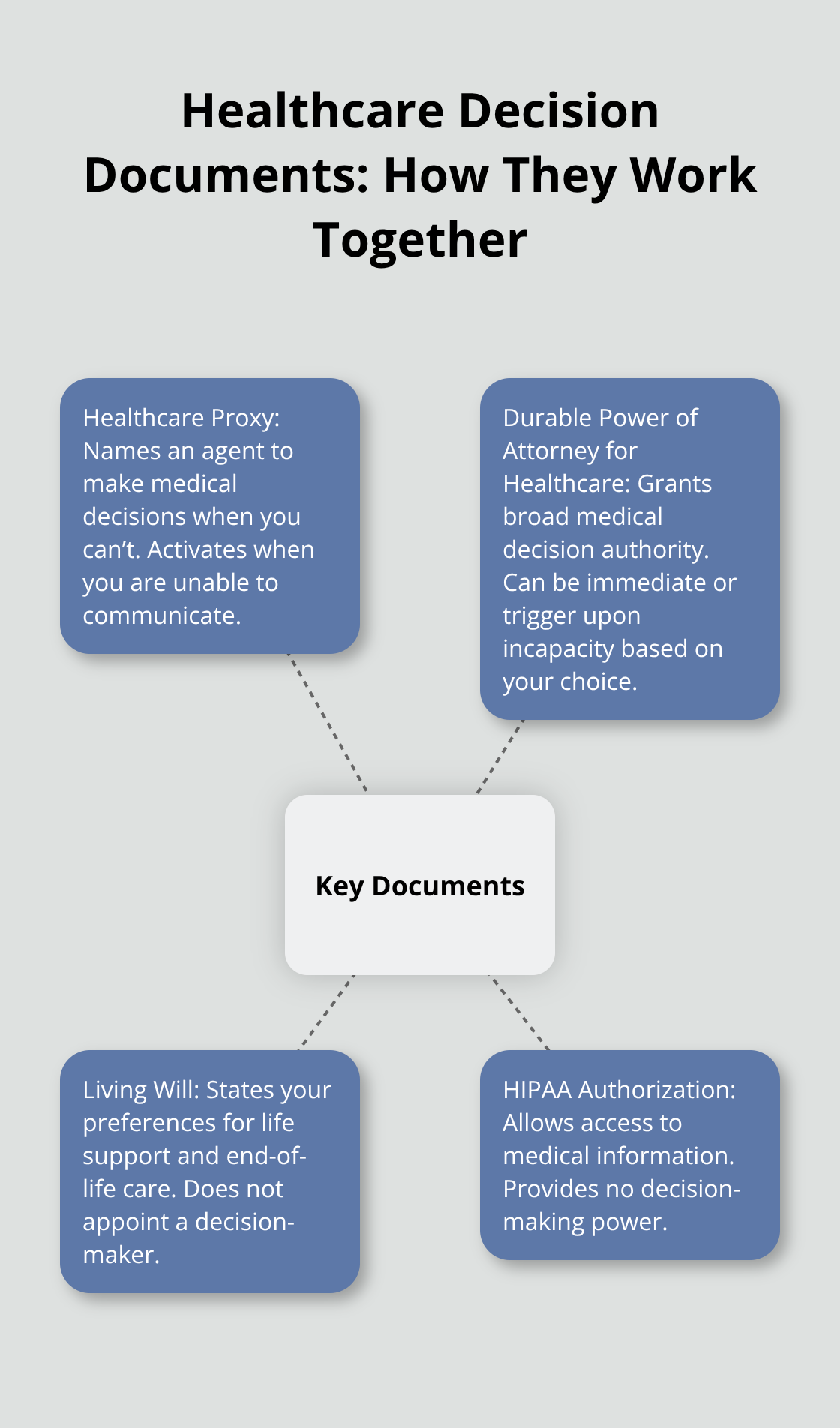
A healthcare proxy is a person you legally authorize to make medical decisions on your behalf when you cannot do so yourself. This person holds significant power-they can approve or refuse treatments, choose hospitals, access your medical records, and make end-of-life decisions. The authority activates only when you cannot communicate your wishes, whether due to surgery, accident, illness, or cognitive decline.
Without this designation, hospitals face a legal vacuum. They cannot simply ask your spouse or adult children what you would want; instead, state law dictates a hierarchy of decision-makers, often leading to conflicts between family members who disagree about your care. Quick medical crises demand immediate action, yet families without a named proxy spend that critical time arguing about who has the right to decide rather than focusing on your recovery.
How Healthcare Proxy Differs From Other Documents
A healthcare proxy is not the same as a general power of attorney, a living will, or a HIPAA authorization, though people frequently confuse them. A general power of attorney typically handles financial and legal matters like managing bank accounts or selling property, while a healthcare proxy addresses only medical decisions. A living will outlines your specific wishes about life support and end-of-life care, but it names no one to interpret those wishes or handle unexpected medical situations.
A HIPAA authorization simply allows someone to access your medical information; it grants no decision-making authority whatsoever. Many people think signing one document covers everything, but gaps between these tools create real problems. Your living will might state you don’t want life support, but if you name no proxy, hospitals may struggle to implement that wish if family members object. A healthcare proxy works alongside these documents, not in place of them.
The Cost of Medical Decisions Without a Proxy
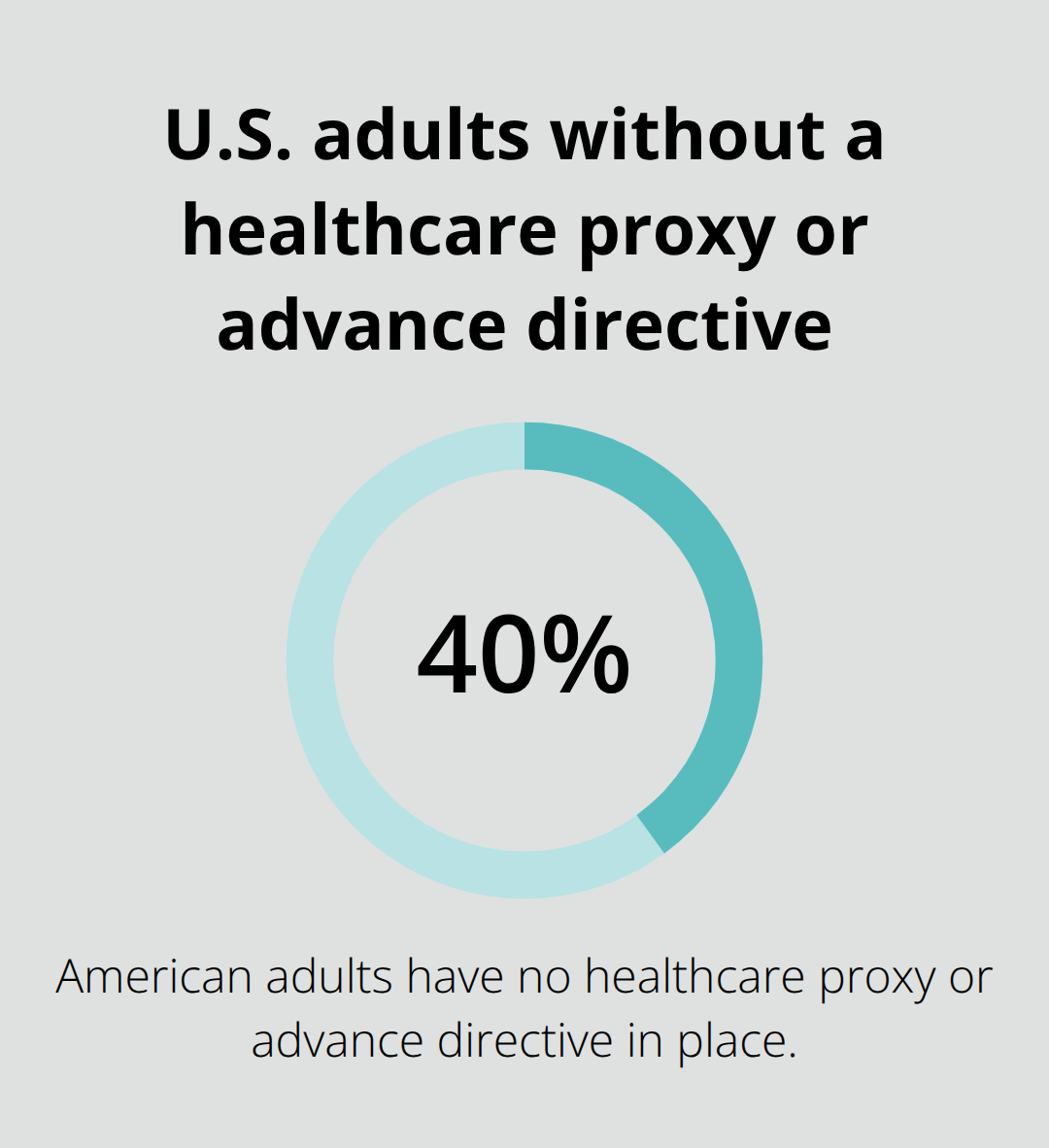
Approximately 40 percent of American adults have no healthcare proxy or advance directive in place, according to research from The Conversation and analysis of state probate systems. When someone cannot communicate and no proxy exists, courts appoint a guardian through an expensive, time-consuming process that costs $5,000 to $15,000 and takes months to complete. During that period, hospitals make decisions based on state default hierarchies, which often prioritize spouses over adult children or other family members you would have chosen.
Family disagreement about medical care occurs in roughly 25 to 35 percent of cases where no advance planning happened, according to data from the American Hospital Association. These conflicts delay treatment, strain relationships, and sometimes result in care that contradicts what you would have wanted. The financial and emotional toll extends beyond the medical crisis itself; families often experience lasting resentment and guilt.
Naming a healthcare proxy upfront eliminates this chaos and gives your chosen person the legal standing to act immediately, without court involvement or family disputes. The next step involves understanding what options you actually have when you select this person and the legal form that best fits your situation.
Which Legal Document Actually Gives Your Proxy Decision-Making Power
Durable Power of Attorney for Healthcare vs. Standard Proxy Forms
The difference between a durable power of attorney for healthcare and a standard healthcare proxy designation form matters far more than most people realize, and it directly affects how quickly your chosen person can act. A durable power of attorney for healthcare grants your designated agent authority to make medical decisions immediately upon signing, or it can specify that authority activates only when you become incapacitated, depending on what you choose. This durability means the power continues even if you become mentally incompetent, which is precisely when you need it most. In contrast, a healthcare proxy designation form varies significantly by state; some states recognize a simple one-page form while others require specific language, notarization, or witness signatures.
Why HIPAA Authorization Alone Falls Short
Many people mistakenly believe that a HIPAA authorization gives their proxy decision-making power, when in reality it only permits access to medical records and information. Your proxy needs both the HIPAA authorization to actually see your medical records and the durable power of attorney or state-recognized proxy form to make decisions based on that information. Without the HIPAA authorization, your proxy cannot obtain the medical details necessary to make informed choices on your behalf. This gap between access and authority creates confusion that hospitals must resolve during medical emergencies, wasting precious time.
State Requirements Create Substantial Variation
Florida recognizes a specific statutory form for healthcare proxies that differs from New York’s requirements, and some states like California require the proxy document to be signed in front of witnesses or notarized. If you move between states or own property in multiple states, your healthcare proxy document may not transfer automatically, potentially leaving you unprotected. Families frequently encounter situations where a proxy designation form from another state gets rejected by hospitals during a medical emergency because it fails to meet local statutory requirements.
Building a Compliant Healthcare Proxy Strategy
The safest approach involves creating a durable power of attorney for healthcare that explicitly complies with your state’s requirements, paired with a separate HIPAA authorization to eliminate any ambiguity about medical record access. This combination (durable power of attorney plus HIPAA authorization) protects you across multiple scenarios and state jurisdictions. Starting this process immediately prevents the common scenario where a family member holds a proxy designation form from another state that hospitals refuse to recognize during a medical emergency. Once you understand which documents your state requires, the next critical step involves selecting the right person to hold this authority and having the conversations that align your proxy with your actual medical wishes.
Who Should You Name as Your Healthcare Proxy
Selecting your healthcare proxy ranks among the most consequential decisions you will make about your medical future, yet most people approach it casually by naming whoever comes to mind first. The person you choose must possess three specific qualities: they must understand your core values about medical treatment, they must have the emotional fortitude to make difficult decisions even when family members disagree, and they must be willing to prioritize your wishes over their own preferences or guilt. This is not a role for someone you like or someone who is conveniently available; it is a role for someone who will advocate fiercely for what you actually want, not what makes others comfortable.
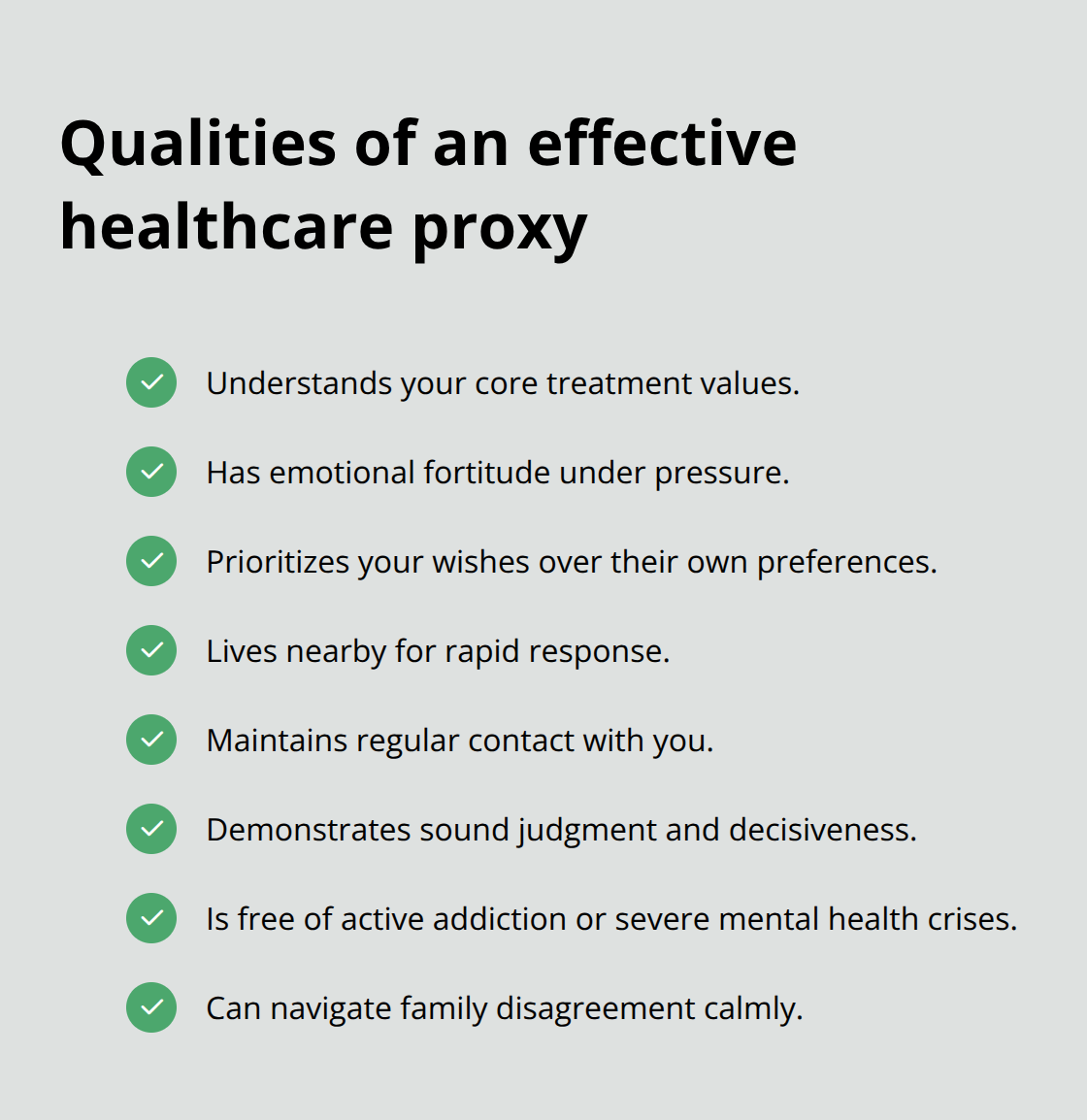
Research from the American Medical Association shows that family conflicts over medical decisions increase significantly when the proxy has not had explicit conversations with the patient about their values beforehand. The ideal proxy is someone between ages 35 and 65 who lives nearby, maintains regular contact with you, and has demonstrated good judgment in previous situations. Avoid naming someone who tends toward indecision, someone dealing with active addiction or severe mental health crises, or someone geographically distant who cannot respond quickly during emergencies. If your closest family member lacks these qualities, do not hesitate to name a trusted friend, sibling, or adult child instead of your spouse; the proxy’s character matters infinitely more than their family relationship to you.
The Specific Conversations Your Proxy Needs to Hear
You must have a specific conversation with your chosen proxy that goes far beyond vague statements like “I want everything done” or “let nature take its course.” Instead, discuss concrete scenarios: if you suffer a severe stroke and cannot eat or speak, do you want a feeding tube inserted, and if so, for how long would you tolerate it? If you develop advanced dementia and no longer recognize family members, should doctors pursue aggressive treatment of infections with antibiotics or allow natural death? If you experience sudden cardiac arrest, do you want CPR performed even if it might break your ribs or leave you severely brain-damaged?
Many people discover during these conversations that their proxy holds religious or personal beliefs that conflict with the patient’s wishes, creating an untenable situation that surfaces only during a medical crisis. Write down your answers to these specific scenarios and give copies to your proxy, your primary care physician, and keep one with your important documents. The National Hospice and Palliative Care Organization found that patients who completed written conversations about end-of-life preferences experienced significantly less aggressive end-of-life care and higher satisfaction among family members. Your proxy also needs to understand that their role is to interpret and implement your wishes, not to make decisions based on what they think is best for you or what other family members want.
Completing the Legal Documents Your State Requires
Once you have selected your proxy and had these conversations, you must complete the proper legal documents for your state immediately rather than postponing this task. Contact a healthcare attorney in your state to confirm whether your jurisdiction requires a durable power of attorney for healthcare, a healthcare proxy designation form, or both; do not rely on templates from websites that may not comply with your state’s specific statutory requirements. Your documents must be signed in front of witnesses or notarized depending on your state’s law, and you must provide signed copies to your proxy, your primary care physician, your hospital, and any specialists you see regularly.
Many hospitals will not honor a proxy designation unless they have received an original signed copy in advance, so do not wait until a medical emergency to present the document for the first time. If you own property in multiple states or spend significant time in another state, create healthcare proxy documents that comply with both states’ requirements; a document valid in one state may be rejected in another during an actual medical emergency. Store your original documents in a secure location that your proxy can access quickly, not in a safe deposit box that requires bank hours to open during a weekend emergency.
Final Thoughts
Selecting a healthcare proxy demands careful thought about who truly understands your values and will advocate for your wishes when you cannot speak for yourself. The healthcare proxy options available to you depend on your state’s requirements, but the core principle remains constant: you need a durable power of attorney for healthcare, a HIPAA authorization, and explicit conversations with your chosen proxy about specific medical scenarios. Start by identifying someone between ages 35 and 65 who lives nearby, maintains regular contact with you, and has demonstrated sound judgment.
Have concrete conversations about feeding tubes, CPR, aggressive treatment during dementia, and other scenarios that matter to you. Write down your answers and share them with your proxy, your doctors, and your hospital. Then complete the legal documents your state requires without delay-do not use generic templates from the internet, as your documents must comply with your specific state’s statutory requirements or hospitals will reject them during a medical emergency.
We at Family, Estate & Mediation Law help individuals and families across Northeast Florida navigate healthcare decisions with practical strategies that protect your rights. Contact us at https://femlg.com to schedule a consultation and take this essential step today.