
A healthcare directives overview shows you how to communicate your medical wishes before you can’t speak for yourself. Without one in place, your family faces uncertainty and potential conflict during critical moments.
We at Family, Estate & Mediation Law help St. Augustine and Palatka residents create directives that actually reflect their values. This guide walks you through what you need to know and how to get started.
What Healthcare Directives Actually Do
The Legal Foundation of Your Medical Wishes
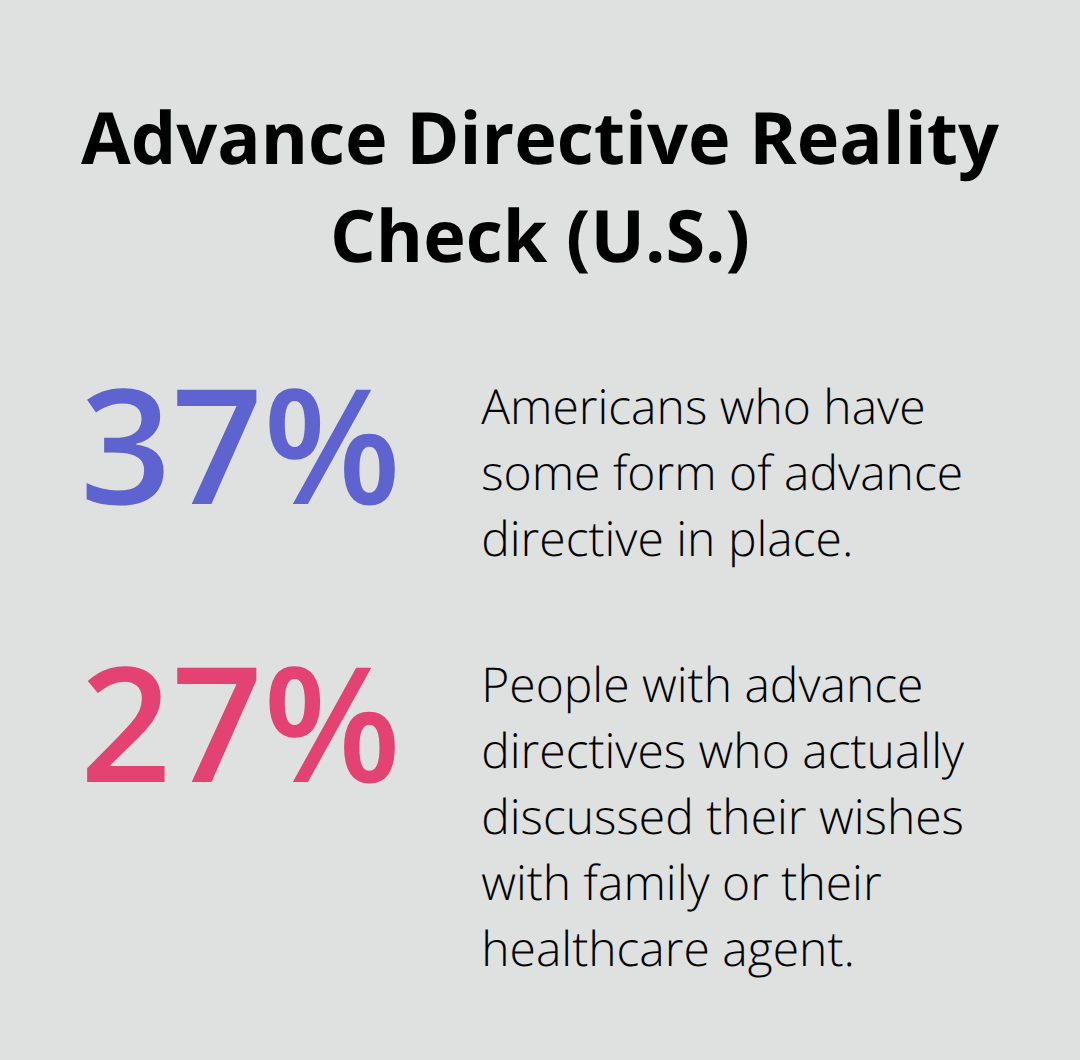
A healthcare directive is a legal document that tells doctors and hospitals exactly what medical treatment you want if you cannot communicate your wishes yourself. Florida law recognizes three main types: a living will, which specifies whether you want life-sustaining treatment in terminal conditions; a healthcare power of attorney, which names someone to make medical decisions on your behalf; and a Do Not Resuscitate order, which tells paramedics and medical staff not to perform CPR if your heart stops. According to the American Hospital Association, approximately 37% of Americans have some form of advance directive in place, but many of those documents are vague or outdated.
The difference between a clear directive and a weak one often determines whether your actual preferences get followed or whether hospitals default to aggressive treatment you never wanted. In Florida specifically, your healthcare directive must be signed in front of two witnesses or a notary public to be legally valid, and those witnesses cannot be your spouse, blood relative, or healthcare provider. This requirement exists because courts need to confirm that you made your wishes knowingly and without pressure from anyone who stands to benefit.
Why Your Directive Matters More Than You Think
Without a healthcare directive, Florida law gives your medical decisions to a priority list of family members-spouse first, then adult children, then parents, then siblings. This hierarchy creates real problems when family members disagree about your care or when no one knows what you actually wanted. Families experience genuine conflict during these moments, with siblings fighting in hospital hallways while their parent lies in an ICU bed.
A healthcare directive prevents that conflict entirely because your voice stays in the room even when you cannot speak. You control the conversation, not whoever happens to be available or most vocal. For St. Augustine and Palatka residents, this document is especially important given that many families have members scattered across different states, making it impossible for everyone to participate in urgent medical decisions.
Protecting Your Healthcare Agent and Your Legacy
Your directive also protects your chosen healthcare agent from the emotional and legal burden of guessing what you would have wanted. That person knows they follow your explicit instructions, not a life-or-death choice made in isolation. This clarity strengthens your relationship with that person and removes doubt from an already difficult situation.
The next step involves understanding the specific mistakes that undermine these documents and how to avoid them.
Three Mistakes That Undermine Your Healthcare Directive
Silence Kills Your Directive’s Purpose
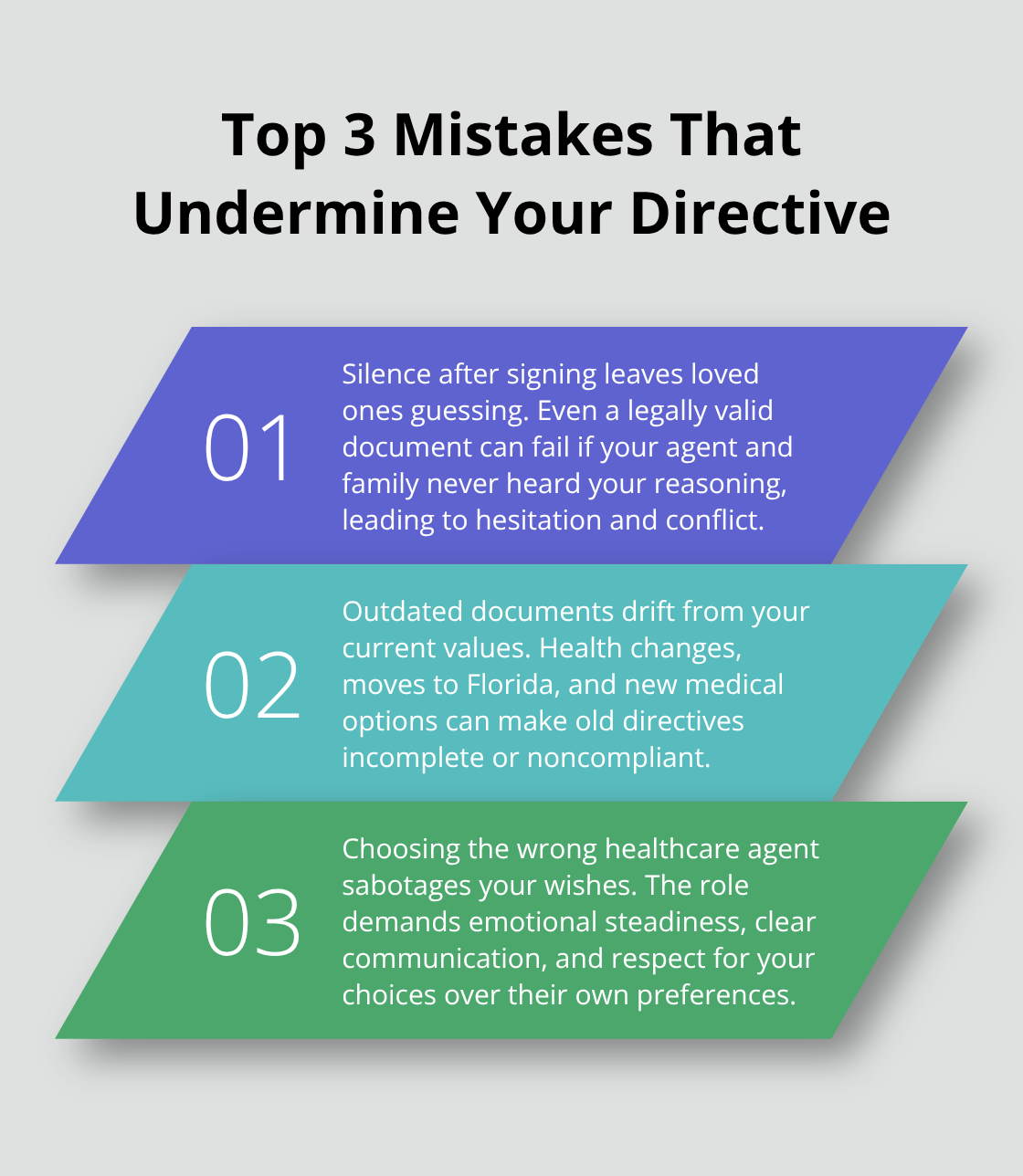
Most healthcare directives fail not because they lack legal validity but because families never discuss them. A 2023 survey by The Conversation Project found that only 27% of people who completed advance directives actually talked about their wishes with family members or their chosen healthcare agent. This silence creates a dangerous gap: your document sits in a drawer while the people who need to act on it have no idea what you want. When a crisis hits, family members default to guessing, often choosing aggressive treatment because they fear making the wrong call. Your healthcare agent might hesitate to follow your wishes because they never heard directly from you why those choices matter.
Schedule a conversation with your family and your healthcare agent specifically to review your directive. Walk through each decision you made and explain your reasoning. This conversation takes an hour but eliminates months of potential conflict and second-guessing during emergencies.
Outdated Directives Become Liabilities
The second major mistake happens over time. People create a healthcare directive at age 45, then never touch it again. A significant health diagnosis, retirement, a new medication routine, or changes in your family structure all shift what treatment makes sense for you. Florida residents who moved to the state from other states sometimes discover their old directives do not comply with Florida law. Medical technology also changes what options become available. Your directive from 2015 might not address whether you want experimental treatments or specific palliative care options that exist today.
Set a calendar reminder to review your directive every three to five years or immediately after major life events like a cancer diagnosis, heart surgery, or significant changes in your living situation. This keeps your document aligned with your actual current values rather than values you held a decade ago.
The Wrong Healthcare Agent Sabotages Everything
The third mistake involves choosing the wrong healthcare agent. Many people name whoever is most convenient (the adult child who lives closest or a spouse out of obligation) without considering whether that person can actually handle the role. Your healthcare agent needs emotional stability to make difficult decisions under pressure, the ability to communicate clearly with medical staff, and genuine respect for your wishes even when they disagree personally. A healthcare agent who cannot separate their own preferences from your preferences will override your choices.
St. Augustine and Palatka families often struggle with this because aging parents feel obligated to name their oldest child rather than the child who is actually best suited for the responsibility. Choose based on capability, not convenience or family hierarchy. Have an honest conversation with your potential agent about whether they can follow your wishes, and consider naming an alternate agent in case your first choice becomes unavailable or unable to serve.
These three mistakes shape how your directive actually functions when it matters most. The next section walks you through the specific steps that prevent these problems from taking root in your own situation.
Building Your Healthcare Directive Step by Step
Start With Your Core Medical Values
Florida law requires your healthcare directive to meet specific technical standards, which means skipping steps during creation often invalidates the entire document. Write down your core medical values before you touch any legal form. What quality of life matters to you? Would you want to stay alive on machines if you could never wake up again? Do you want aggressive pain management even if it shortens your life? These questions force you into clarity rather than vagueness. Many people avoid this work because it feels morbid, but vague directives create exactly the family conflicts discussed earlier. Write your answers in plain language first, then translate them into your directive. This prevents the common problem where someone signs a form without truly understanding what they authorize.
Use the Correct Florida Form
You need the correct Florida form to satisfy state law. Florida Statute 765.203 specifies the exact language your healthcare directive must contain to be legally valid. You cannot simply write your wishes on a piece of paper and have it notarized; Florida courts reject homemade versions. The official Florida Healthcare Surrogate form exists specifically to meet these requirements. Use this form rather than generic internet templates designed for other states.
When you complete the form, name your healthcare agent with absolute clarity by providing their full legal name and contact information. Do not write someone’s nickname. Include an alternate agent as well, because your first choice might become ill, move away, or refuse the responsibility when the time comes. St. Augustine and Palatka residents should select agents who actually live in Florida or nearby, since healthcare decisions often require in-person presence at hospitals.
Meet the Legal Requirements for Witnesses
Your chosen agent must be at least 18 years old, mentally competent, and cannot be your healthcare provider or an employee of your healthcare provider. After you name your agent, sign the document in front of two witnesses or a notary public. Florida law does not allow witnesses to be your spouse, blood relative, or healthcare provider.
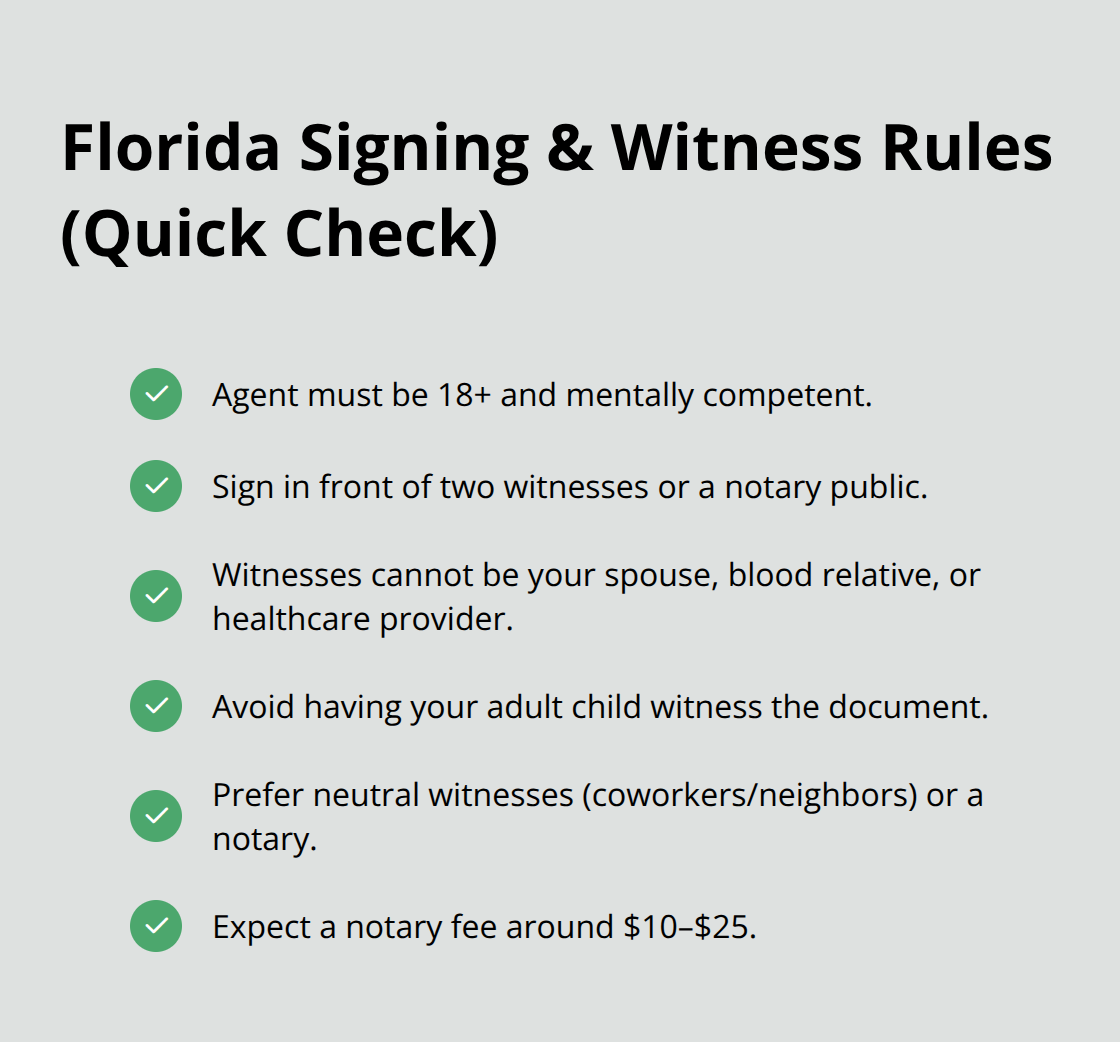
Many people make the mistake of having their adult child witness the document, which then invalidates it. Use neutral witnesses like coworkers or neighbors, or simply pay for a notary public to handle the witnessing. This costs 10 to 25 dollars and eliminates any question about whether the witnessing was done correctly.
Register and Distribute Your Directive
Once your directive is signed and witnessed properly, register it with the Florida Health Care Directive Registry. This optional step actually protects you significantly because hospitals can verify your directive’s existence through the state registry without your family hunting through old files during an emergency. Registration takes minutes online. After registration, provide copies to your healthcare agent, your primary care physician, and any hospital where you receive regular treatment. Do not keep the only copy in a safe deposit box at a bank, since your family cannot access it quickly during a medical emergency. Store the original where your healthcare agent can reach it within hours of a crisis. Family, Estate & Mediation Law can guide you through each of these steps and review your completed directive to confirm it meets Florida’s legal requirements before you finalize it.
Final Thoughts
A healthcare directives overview reveals one clear truth: the document itself matters far less than the conversations and decisions behind it. Write down your core medical values before you touch any legal form, use the official Florida Healthcare Surrogate form rather than generic templates, and name your healthcare agent with their full legal name. Have the document signed in front of two witnesses or a notary public, then register your directive with the Florida Health Care Directive Registry and distribute copies to your healthcare agent, your primary care physician, and any hospital where you receive regular treatment.
The most important step happens after you complete the paperwork. Schedule a conversation with your family and your chosen healthcare agent to discuss your wishes and explain why those choices matter to you (this single conversation prevents months of potential conflict when a medical crisis hits). Review your directive every three to five years or immediately after major life changes to keep it aligned with your current values.
We at Family, Estate & Mediation Law help St. Augustine and Palatka residents create healthcare directives that reflect their actual values and meet Florida’s legal requirements. Contact us to schedule a consultation and get your healthcare directive in place.