
Most people in St. Augustine and Palatka never put their medical wishes in writing. Without a healthcare directive, your family and doctors won’t know what you actually want if you can’t speak for yourself.
We at Family, Estate & Mediation Law help residents create healthcare directives that reflect their true values and medical preferences. This guide walks you through what these documents are, why they matter, and how to create one that protects your future.
What Healthcare Directives Actually Do
A healthcare directive is a legal document that tells doctors and hospitals what medical treatment you want if you can’t communicate your wishes yourself. In Florida, this document is called an Advance Directive and Florida Statute Chapter 765 governs it. The document names someone you trust-called your healthcare proxy or agent-to make medical decisions on your behalf. Florida law requires that your healthcare directive be signed by you in front of two witnesses or a notary public to be legally valid. Without this document, Florida hospitals follow a specific hierarchy to find someone to make decisions for you, typically starting with your spouse, then adult children, then parents. This process can take time and create conflict when family members disagree about your care.
Why Most People Get This Wrong
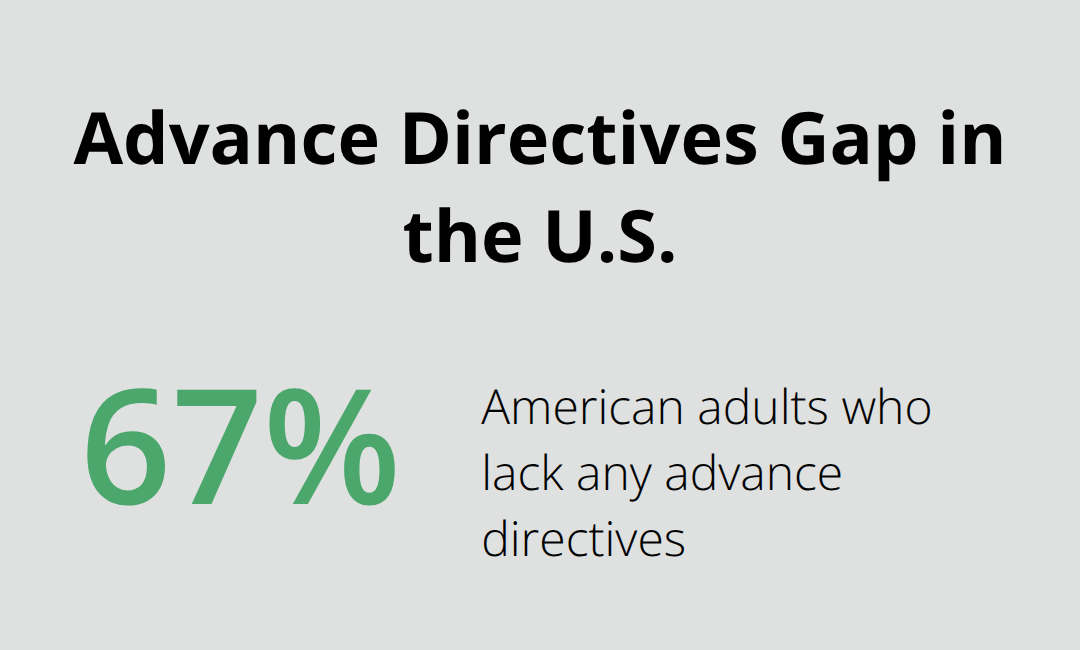
Many residents in St. Augustine and Palatka assume their family will automatically know what to do or that doctors will figure it out. According to research from The Conversation and supported by data from the American Hospital Association, roughly 67 percent of American adults lack any advance directives. This misconception costs families thousands of dollars in unnecessary medical procedures and creates emotional trauma when loved ones must guess about your preferences.
Medical emergencies happen at any age, not just for elderly individuals. Others believe their will covers medical decisions, which is completely false-your will only addresses property and assets after you die. A healthcare directive addresses decisions while you’re alive but unable to communicate. Florida courts have consistently ruled that without a written directive, families cannot stop unwanted treatment or request specific end-of-life care, even when they know that’s what you would have wanted.
The Real Cost of Inaction
When someone becomes incapacitated without a healthcare directive, their family often faces a guardianship process through Florida courts. This involves filing petitions, paying court fees (typically ranging from 1,000 to 3,000 dollars), and attending multiple hearings. The process takes weeks or months when medical decisions need to happen immediately. Families without clear directives report significantly higher stress levels and medical costs because hospitals err on the side of continuing aggressive treatment. Having a healthcare directive in place prevents guardianship proceedings, reduces medical expenses, and gives your family clear authority to honor your actual wishes from day one.
What Happens Next
Your healthcare directive only works if the right people know about it and have access to it when they need it. The next section walks you through the specific components that make a healthcare directive effective and how to structure each part so your wishes actually guide your medical care.
Key Components of a Healthcare Directive in St. Augustine and Palatka
Selecting Your Healthcare Proxy With Care
The person you name as your healthcare proxy carries enormous responsibility during a medical crisis. This isn’t a ceremonial role-your proxy will make real decisions about surgery, medication, life support, and end-of-life care when doctors need answers immediately. In Florida, your healthcare proxy must be at least 18 years old and cannot be your doctor or hospital staff member, but you can choose your spouse, adult child, sibling, or trusted friend.
Most residents in St. Augustine and Palatka make a critical mistake: they name someone without actually discussing their medical values with them first. Many people pick a proxy based on who they’re closest to emotionally, then never explain what they want. Your proxy walks into a hospital with authority but no knowledge of whether you’d accept a feeding tube, want aggressive chemotherapy, or prefer comfort care over life extension. This creates paralysis at the worst possible moment.
Having Concrete Conversations About Your Medical Values
Before you finalize your healthcare directive, sit down with your chosen proxy and walk through specific scenarios. Tell them whether you’d want resuscitation if your heart stops, how you feel about prolonged unconsciousness, whether religious or cultural beliefs shape your medical choices, and what quality of life means to you. Document these conversations in your directive using concrete language, not vague phrases like “no extraordinary measures.” Florida courts have rejected directives that use ambiguous terms because hospitals cannot act on unclear instructions.
Granting Medical Information Access Through HIPAA Authorization
Your healthcare directive also needs HIPAA authorization language that explicitly grants your proxy access to your medical records and allows doctors to discuss your condition with them. Without this authorization, your proxy cannot legally obtain information about your diagnosis, test results, or treatment options-hospitals will cite patient privacy laws and refuse to share details. This happens regularly in emergency rooms where families arrive expecting to coordinate care but find themselves shut out of conversations. Include language in your directive that authorizes your healthcare proxy to access all medical information, review records, and communicate directly with your physicians.
Planning for Proxy Unavailability
Additionally, name alternate proxies in case your first choice becomes unavailable or incapacitated during your medical emergency. Many healthcare directives fail because the named proxy lives out of state, becomes ill themselves, or cannot be reached when needed. Florida Statute 765.202 allows you to designate successor agents who step in automatically if your primary proxy cannot serve. Specify the order clearly so there’s no confusion about who has authority.
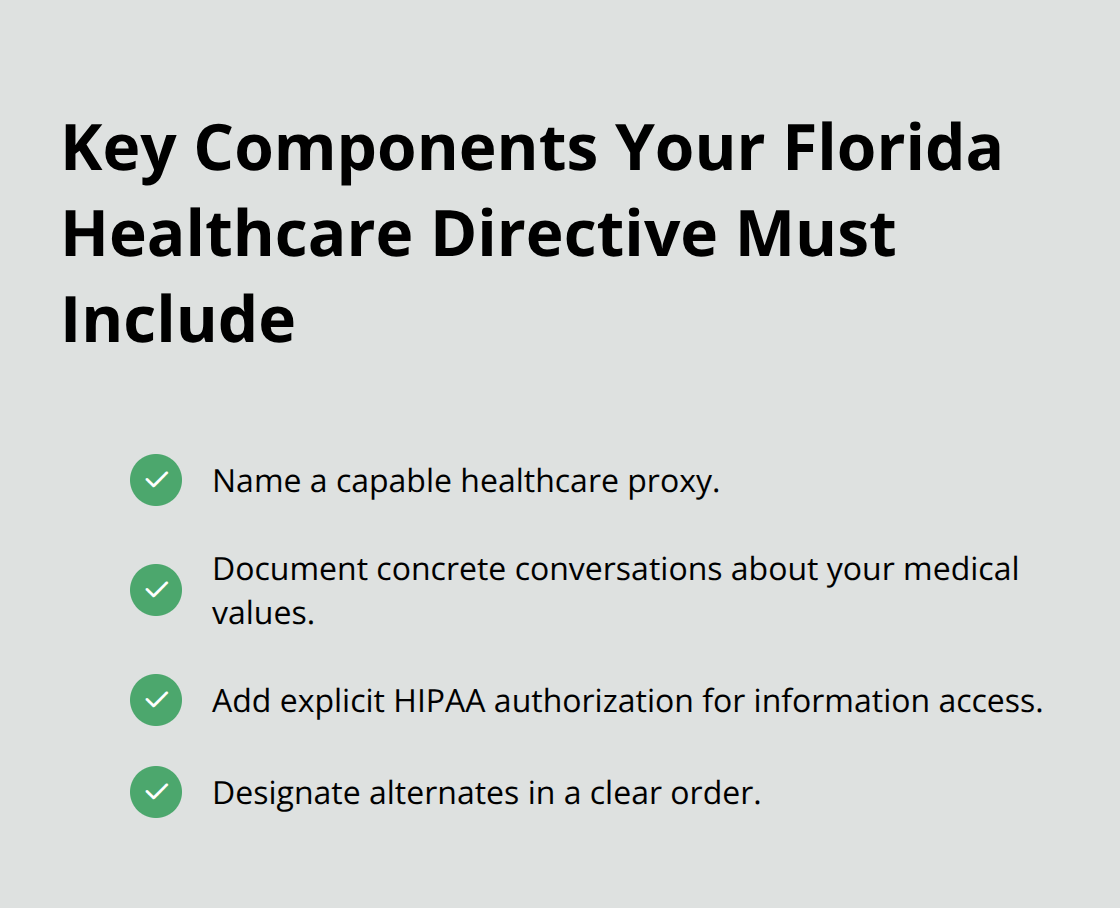
These specific components-a well-chosen proxy, documented conversations about your values, HIPAA authorization, and backup agents-transform your healthcare directive from a generic form into a functional document that hospitals and families can actually use. The next section addresses how you draft these components and work with professionals to ensure your directive meets Florida’s legal requirements.
How to Create and Update Your Healthcare Directive in St. Augustine and Palatka
Three Practical Paths to Your Healthcare Directive
You have three options for creating your healthcare directive, and the path you choose depends on your budget and comfort level with legal documents. Florida Statute 765.203 provides a standardized form that meets all legal requirements, and you can access it through the Florida Medical Association or your county clerk’s office at no cost. The form itself takes 20 to 30 minutes to complete if you’ve already decided who your proxy will be and what medical preferences you want documented. However, the statutory form uses predetermined language that may not capture your specific values or medical situation.
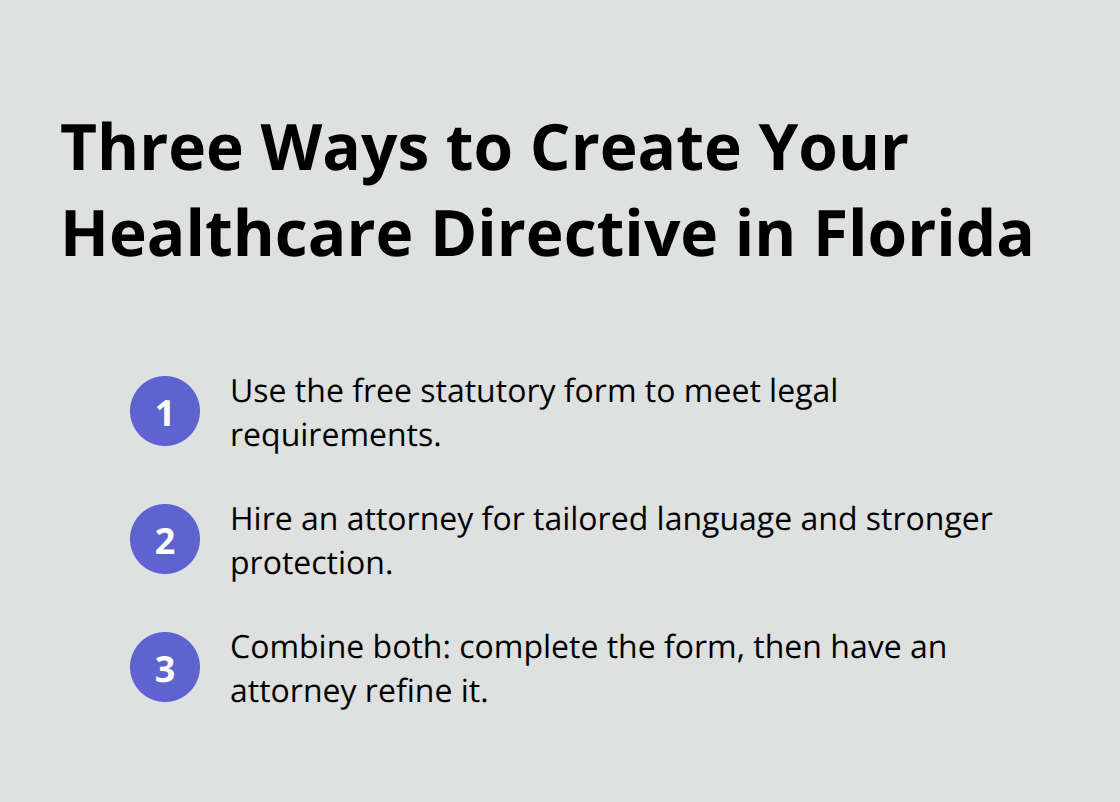
Many residents find that working with a qualified attorney costs between 300 and 800 dollars but produces a directive tailored to your actual circumstances, with clearer language about your medical preferences and stronger protection if your directive faces legal challenge. The most practical approach combines both: complete the statutory form first to clarify your thinking, then have an attorney review it and strengthen the language around your specific concerns. This hybrid method costs less than starting from scratch with an attorney while protecting your true wishes.
Signing Your Directive With Proper Authentication
Florida law requires that you sign your healthcare directive in front of two witnesses or a notary public to make it legally valid. The witnesses cannot be your healthcare proxy, your doctor, or hospital staff members, but they can be family members or trusted friends. Schedule your signing appointment and bring your completed directive along with your chosen witnesses or arrange a notary appointment. Once you sign and your witnesses or notary authenticate the document, your healthcare directive becomes a legally binding instrument that hospitals and doctors must respect.
Distributing Copies to the Right People
Your directive becomes worthless if nobody knows it exists or can find it during a medical emergency. Provide a physical copy to your healthcare proxy and explain that they should keep it accessible but secure, not locked in a safe deposit box they cannot reach during a crisis. Give copies to your primary care physician and any specialists managing chronic conditions, and ask them to scan it into your medical records. Contact your hospital’s patient relations department and ask whether they maintain advance directive registries where you can register your document. Many Florida hospitals participate in state registries that emergency rooms can access during medical crises. Additionally, inform your family members beyond just your proxy so multiple people can advocate for your wishes if needed.
Storing Your Healthcare Directive Securely
Store the original in a fireproof safe at home or with your attorney, and maintain digital copies in cloud storage with access credentials you’ve shared with your proxy. The reality is that healthcare directives fail not because they’re legally defective but because the right people cannot find them when seconds count. A directive sitting in a drawer while your family argues with hospital staff about your care serves no purpose. Your job finishes only when your proxy has the document, your doctors have the document, and your family understands where to find it.
Final Thoughts
Creating a healthcare directive isn’t something you should postpone. Right now, today, is when you have the mental clarity and time to make these decisions thoughtfully. Tomorrow brings no guarantees, and the statistics are sobering: 67 percent of American adults lack advance directives, which means most people in St. Augustine and Palatka are gambling with their medical future and their family’s emotional wellbeing.
The financial and emotional costs of inaction hit hard. Guardianship proceedings cost between 1,000 and 3,000 dollars and consume weeks when your family needs to act immediately, while hospitals continue aggressive treatment by default when they lack clear direction. Your family members face impossible choices and lasting guilt when they must guess what you would have wanted, but a healthcare directive eliminates these problems entirely.
We at Family, Estate & Mediation Law help residents across Northeast Florida protect their medical futures through advance directives that translate your values into concrete language hospitals and families can act on immediately. Contact us to schedule a consultation at our St. Augustine or Palatka office, and we will walk you through the entire process and create a directive that actually protects your future.