
Most people put off healthcare decisions until a crisis forces their hand. At Family, Estate & Mediation Law, we see how confusion about healthcare directive types leaves families unprepared and stressed.
The right form protects your wishes and gives your loved ones clear guidance. This guide walks you through your options so you can make an informed choice today.
Healthcare Directives in Florida: How They Work and Why They Matter
What Florida Law Says About Healthcare Directives
A healthcare directive is a legal document that communicates your medical wishes when you cannot speak for yourself. Florida law recognizes healthcare directives as binding instructions, which means hospitals and doctors must follow them. Florida Statutes Chapter 765 gives these documents legal weight immediately upon signing or when you specify, granting you control over decisions like life support, resuscitation, and organ donation before a crisis occurs. Without one, your family faces difficult conversations with medical staff, potential court involvement, and decisions made without knowing your actual preferences. The difference between having a directive and not having one often determines whether your wishes get honored or whether Florida law defaults to a family hierarchy that may not align with your values.
Living Wills Versus Healthcare Powers of Attorney
Living wills and healthcare powers of attorney serve different purposes, and Florida law treats them distinctly. A living will is a specific instruction document stating what medical treatments you do or do not want in end-of-life situations. A healthcare power of attorney, also called a healthcare proxy or surrogate, names a person to make medical decisions on your behalf when you cannot. Florida allows you to combine these into one document or keep them separate, depending on your situation. The key distinction matters because a living will only addresses end-of-life scenarios, while a healthcare power of attorney covers all medical decisions during any period of incapacity.
HIPAA Authorization and Medical Records Access
HIPAA authorization forms work alongside both living wills and healthcare powers of attorney by granting your chosen representatives access to your medical records and information. These forms remove barriers that would otherwise prevent hospitals from sharing your health details with the people you trust. Without HIPAA authorization, even your named healthcare proxy may face delays in obtaining critical information during emergencies.
Florida’s Signature and Witness Requirements
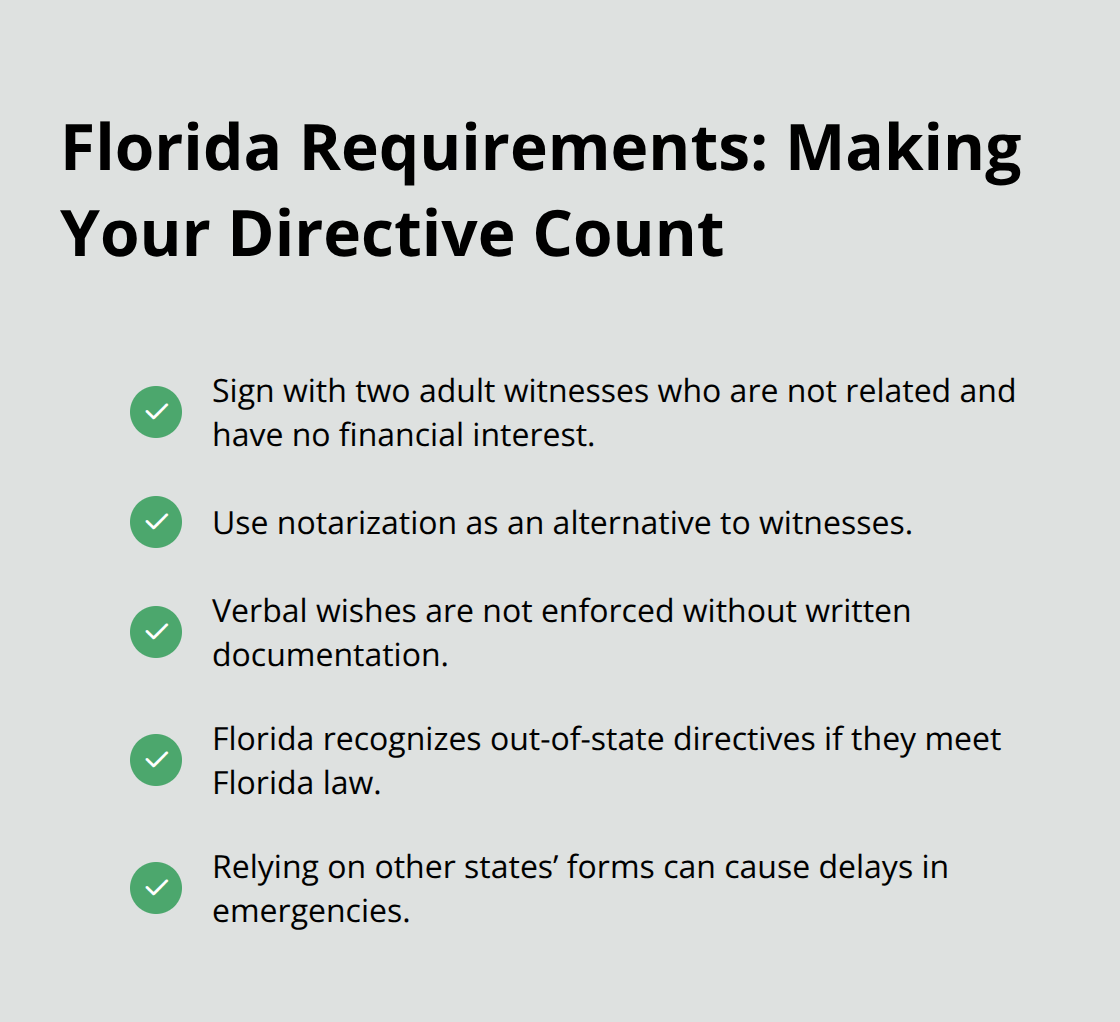
Florida requires healthcare directives to be signed by you and witnessed by two adults who are not related to you and have no financial interest in your estate, or notarized as an alternative. This verification step prevents fraud and protects your family later. Many people in St. Augustine and Palatka assume verbal wishes suffice, but Florida courts will not enforce them without written documentation. The state also recognizes out-of-state directives if they comply with Florida law, but relying on documents from other states creates unnecessary risk during medical emergencies when hospital staff need quick clarity on your intentions.
Moving Forward With Your Healthcare Decisions
Understanding these distinctions positions you to select the right forms for your situation. Your health status, family dynamics, and personal values all influence which documents you need and how you structure them.
Healthcare Directive Types: Living Wills, Powers of Attorney, and HIPAA Forms in St. Augustine and Palatka, FL
How the Three Forms Work Together
Living wills, healthcare powers of attorney, and HIPAA authorizations form a complete medical protection system, and most people need all three. A living will addresses only end-of-life scenarios where you face terminal illness, permanent unconsciousness, or end-stage disease. Florida courts interpret living wills narrowly, applying them only to those specific situations. If you suffer a stroke but survive, or develop dementia but remain physically healthy, a living will provides no guidance to your healthcare proxy. Healthcare powers of attorney fill this gap by naming someone to make all medical decisions during any period when you cannot communicate, whether that involves temporary sedation, recovery from surgery, or long-term incapacity.
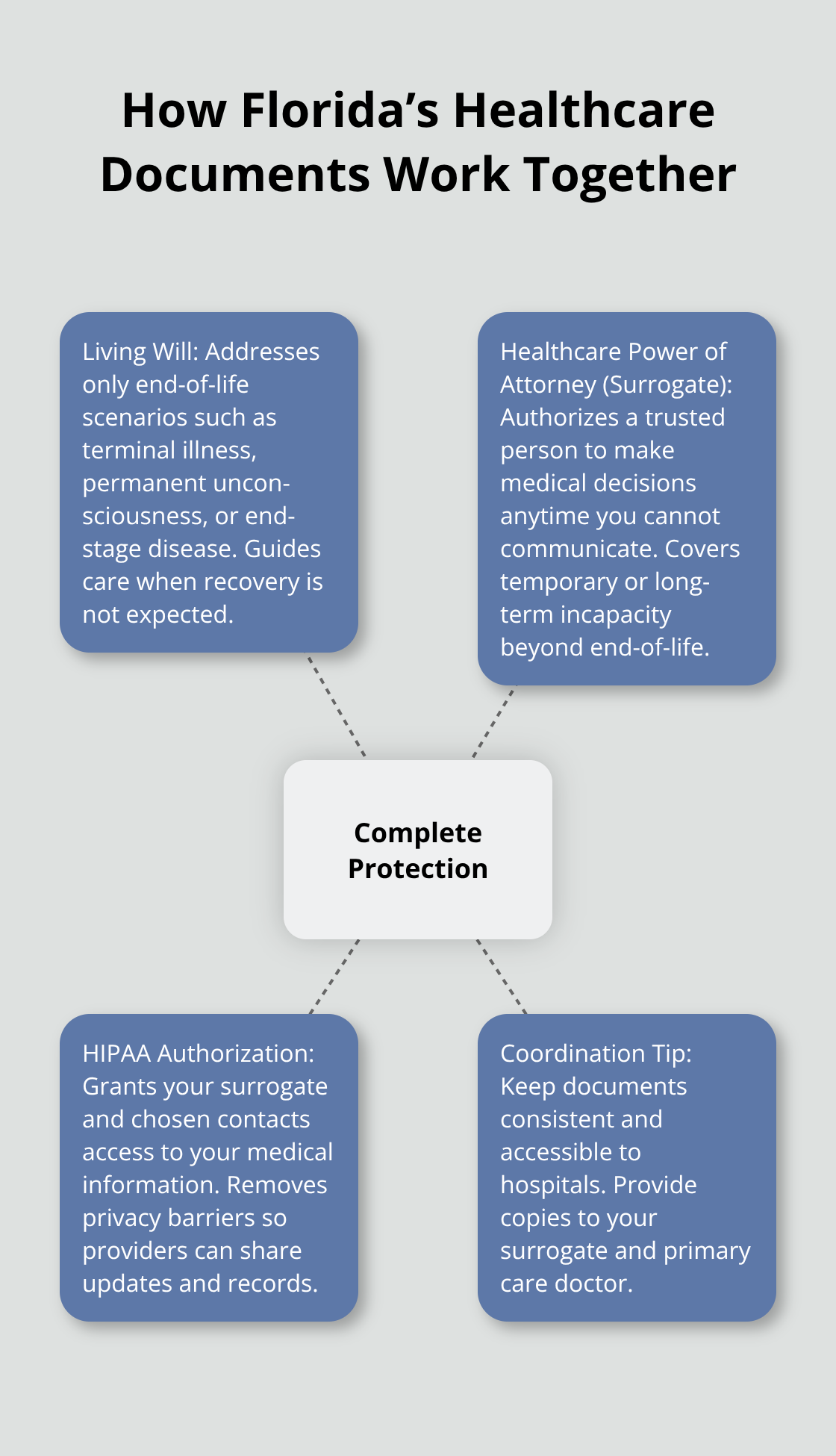
The person you name, called your healthcare surrogate in Florida, holds authority to consent to or refuse treatments, choose facilities, and access medical information. HIPAA authorization forms provide the practical piece that most people overlook-without one, hospitals can legally refuse to discuss your condition with the person you’ve named as your surrogate, even in emergencies.
Why One Document Alone Falls Short
The strongest approach combines all three documents because they address different gaps in medical decision-making. Someone in St. Augustine or Palatka who creates only a living will leaves their family unprepared for any health crisis outside the narrow end-of-life window. Someone who creates only a healthcare power of attorney without a living will forces their surrogate to guess at their wishes during terminal illness. Generic templates create incomplete or overly broad documents that fail when you need them most.
Customizing Your Documents to Match Your Health and Values
If you have chronic conditions, multiple medications, or strong preferences about specific treatments like dialysis or feeding tubes, your documents should reflect those details explicitly. Your surrogate needs to know exactly what you want without interpreting vague language during stressful moments. This customization process requires honest conversations about your medical history, your fears about specific treatments, and your definition of quality of life. The more specific your directives become, the more confidently your surrogate can act on your behalf.
What Happens When You Move Between States
Florida law recognizes out-of-state directives if they comply with Florida requirements, but relying on documents from other states creates unnecessary risk during medical emergencies. Hospital staff need quick clarity on your intentions, and out-of-state forms often trigger verification delays. If you’ve relocated to St. Augustine or Palatka from another state, updating your healthcare directives to Florida standards removes this friction.
Taking the Next Step With Professional Guidance
Your health status, family dynamics, and personal values all influence which documents you need and how you structure them. Working with someone who understands Florida law helps you avoid gaps that leave your family guessing about your wishes when medical decisions cannot wait.
What Shapes Your Healthcare Directive Choices in St. Augustine and Palatka, FL
How Your Health Status Influences Your Directives
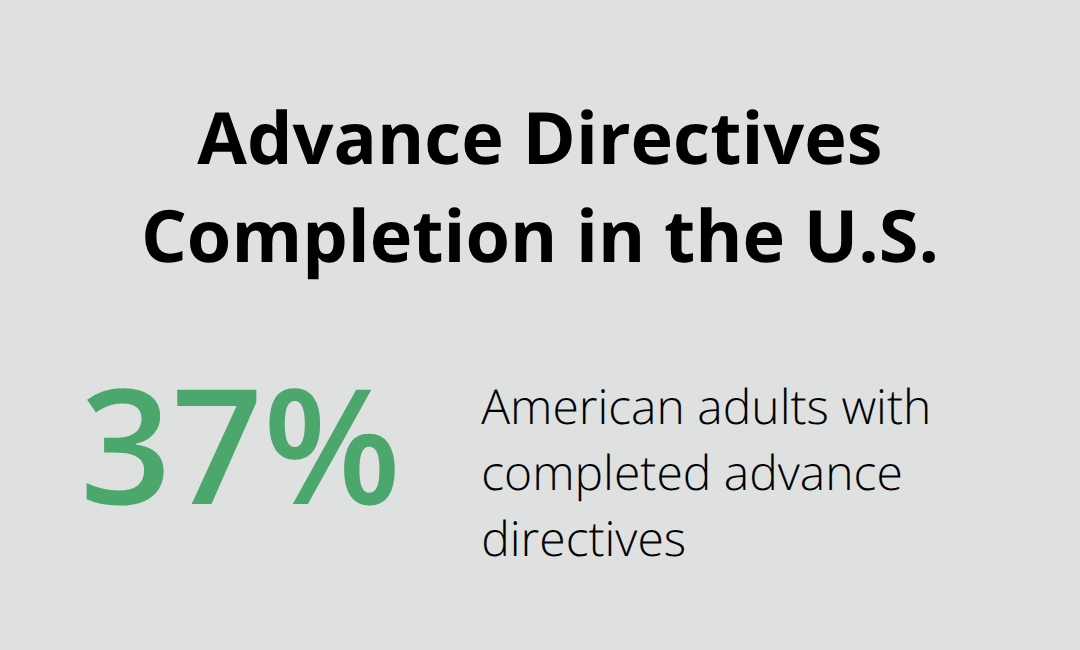
Your health status, family structure, and personal values determine which directives you need and how specific they must be. Someone managing diabetes, hypertension, and arthritis faces different medical scenarios than someone with no chronic conditions, which means their directives require different language and detail. The American Medical Association reports that patients with documented healthcare preferences experience fewer unwanted interventions and hospitalizations, yet only 37 percent of American adults have completed advance directives. This gap exists partly because people underestimate how their circumstances shape what documents they actually need.
Your current medications, previous surgeries, and known treatment fears should all influence how you structure your directives. If you experienced a bad reaction to anesthesia, watched a family member suffer complications from a feeding tube, or saw someone recover from a serious illness, those experiences belong in your documents as specific guidance, not vague wishes.
Why Your Family Structure Matters
If you live alone with adult children scattered across multiple states, naming a healthcare surrogate becomes more critical than if you have a spouse present daily. Someone with early-stage cognitive decline needs to complete directives immediately while they can still communicate complex preferences, whereas someone in perfect health can wait slightly longer but still should not delay indefinitely. Your family’s ability to agree on medical decisions also shapes how detailed your directives must be. Families with a history of conflict over major decisions need more explicit language to prevent disagreements when your surrogate must act quickly.
Having Conversations Before You Draft Documents
The practical next step involves honest conversations before you sit down to draft anything. Talk with the person you plan to name as your healthcare surrogate about whether they feel comfortable making life-and-death decisions, whether they understand your values around quality of life, and whether they can handle potential conflict with other family members who might disagree with your wishes. Many people name their spouse or adult child without ever discussing what specific situations might arise. This silence creates paralysis when your surrogate must decide whether to pursue aggressive treatment or shift to comfort care. Similarly, review your current medications and ask your doctor which treatments matter most to you and which you would want to refuse if facing terminal illness. Document these conversations in writing so your surrogate has your actual reasoning, not just your final decision.
Updating Your Directives When Life Changes
If you changed your mind about specific treatments since your last directive, or if your health shifted significantly, your existing documents likely need updating. We recommend reviewing your healthcare directives every three to five years or immediately after major life changes like a new diagnosis, retirement, or relocation to Florida from another state. Generic online forms cannot capture this level of customization, and attempting to modify them yourself often creates ambiguous language that hospitals struggle to interpret during emergencies. Professional guidance helps you avoid gaps that leave your family guessing about your wishes when medical decisions cannot wait.
Final Thoughts on Healthcare Directives for St. Augustine and Palatka Residents
Healthcare directive types translate your medical values into actionable instructions that hospitals and doctors must follow when you cannot speak for yourself. A living will addresses end-of-life scenarios, a healthcare power of attorney covers all medical decisions during incapacity, and HIPAA authorization forms grant your surrogate access to critical health information. Together, these documents eliminate guesswork and protect your family from the burden of making decisions without knowing your actual wishes.
Life changes constantly, and your directives must reflect those shifts. A new diagnosis, a change in your values about quality of life, or a shift in your family structure all warrant reviewing and updating your healthcare directives every three to five years at minimum (and immediately after major life events). Many people in St. Augustine and Palatka discover their old directives no longer match their current thinking, yet they postpone updates because the process feels overwhelming.
The practical next step involves scheduling a conversation with someone who understands Florida law and can help you customize your documents to match your health status, family dynamics, and personal values. Generic online templates cannot capture the nuance your situation requires. At Family, Estate & Mediation Law, we help individuals and families across Northeast Florida complete healthcare directives that actually work when medical emergencies arrive.