
Naming a guardian for your child is one of the most important decisions you’ll make as a parent. Without a clear plan, the court decides who raises your children if something happens to you.
We at Family, Estate & Mediation Law help families understand guardianship options for minors and create plans that reflect their values. This guide walks you through the types of guardianship available, how to choose the right person, and what the legal process actually involves.
Types of Guardianship That Work for Your Family
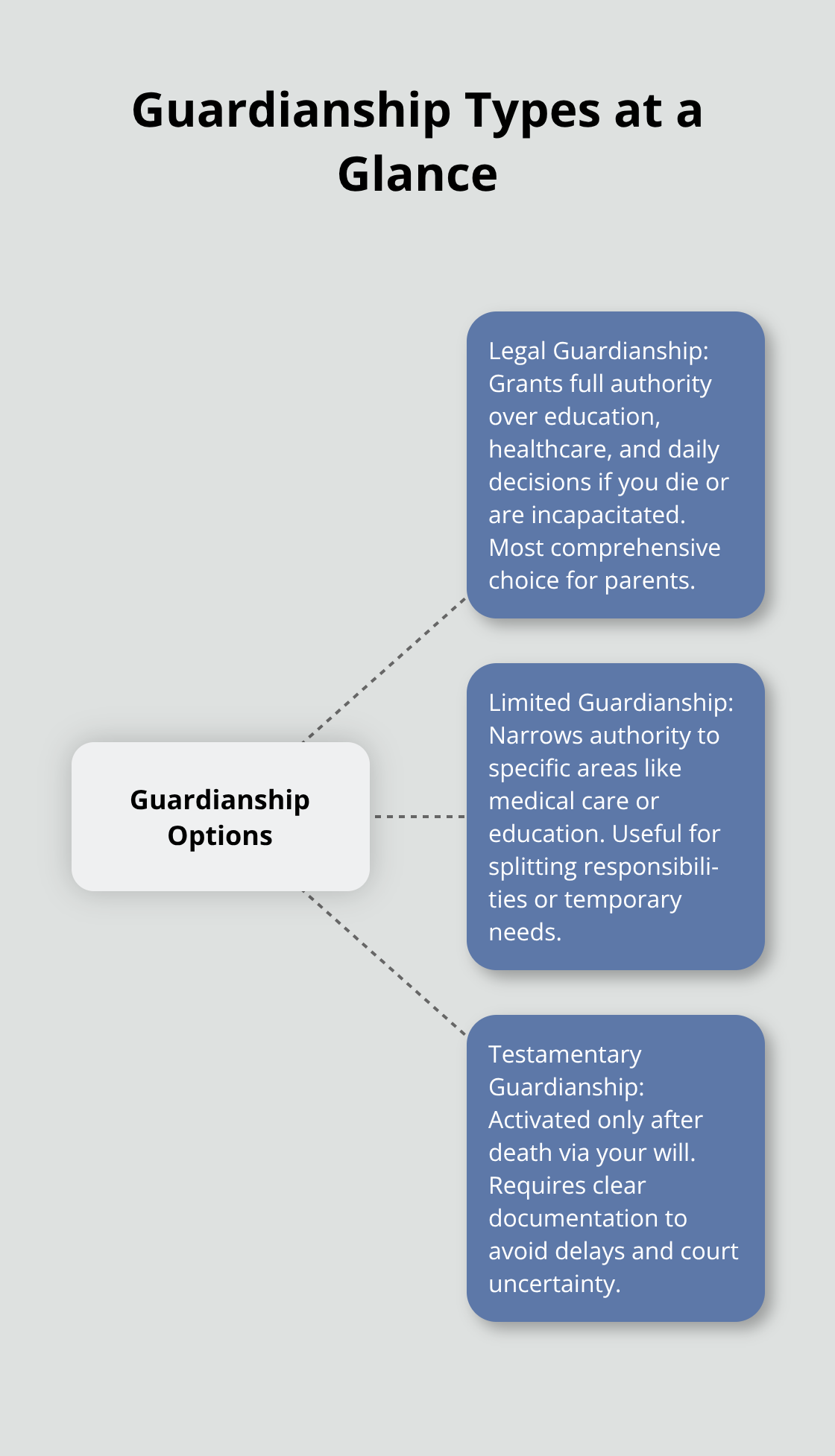
Three main guardianship structures address different family situations. Legal guardianship grants someone full decision-making authority over your child’s upbringing, education, and medical care if you pass away or become incapacitated. This is the most comprehensive option and what most parents should establish through their will. Limited guardianship restricts a guardian’s powers to specific areas, like medical decisions only, while you or another family member retains control over finances or education. This works well when you have a co-parenting arrangement or want to split responsibilities between trusted people. Testamentary guardianship is the guardianship you name in your will, which takes effect only after your death. Without this designation, the court appoints a guardian based on what a judge thinks is best, not what you want.
Full Guardianship Offers the Clearest Path Forward
Full legal guardianship eliminates confusion about who makes decisions when your child needs care. The guardian enrolls your child in school, authorizes medical procedures, and makes day-to-day parenting choices without constantly checking with other family members or the court. Some parents hesitate because they worry about giving up control, but this guardianship only activates if you cannot care for your child. Courts in Florida and across the United States increasingly favor clear, comprehensive guardianship plans over fragmented arrangements that split authority. A single guardian with full responsibility also reduces the likelihood of disputes between family members who might otherwise compete for influence over your child’s life.
Limited Guardianship Addresses Specific Needs
Limited guardianship makes sense when your situation has moving parts. You might establish temporary guardianship for a few months while you recover from surgery, or you might name one guardian for your child’s day-to-day care and another for financial decisions if you have substantial assets. Some parents use limited guardianship when a relative can handle parenting but lacks financial management skills, so they appoint a separate trustee to manage money. The trade-off is administrative burden-the court requires more paperwork and oversight when multiple guardians exist. Temporary guardianship also expires at a date you set, so you must update your plan if circumstances change.
Testamentary Guardianship Requires Intentional Planning
Testamentary guardianship takes effect only after your death, which means the court must first validate your will before your named guardian assumes responsibility. This delay (typically several weeks to months) creates a gap where the state temporarily manages your child’s care. You avoid this uncertainty by naming your guardian in your will and communicating your wishes clearly to family members. Courts respect testamentary designations when they are explicit and documented, but ambiguous language or outdated provisions can lead judges to override your preferences. The guardianship you choose shapes not just who raises your child, but how smoothly that transition happens during an already difficult time for your family.
Who Should Raise Your Child if You Cannot
Identify Guardians Who Share Your Family’s Values
The person you name as guardian will shape your child’s adolescence, influence their values, and determine how they navigate some of the most formative years of their life. This decision demands more than picking someone you like or who lives nearby. Families often make guardianship choices based on guilt, obligation, or convenience, only to face serious problems later. The right guardian needs stability in their own life, alignment with your parenting philosophy, and genuine willingness to take on this responsibility.
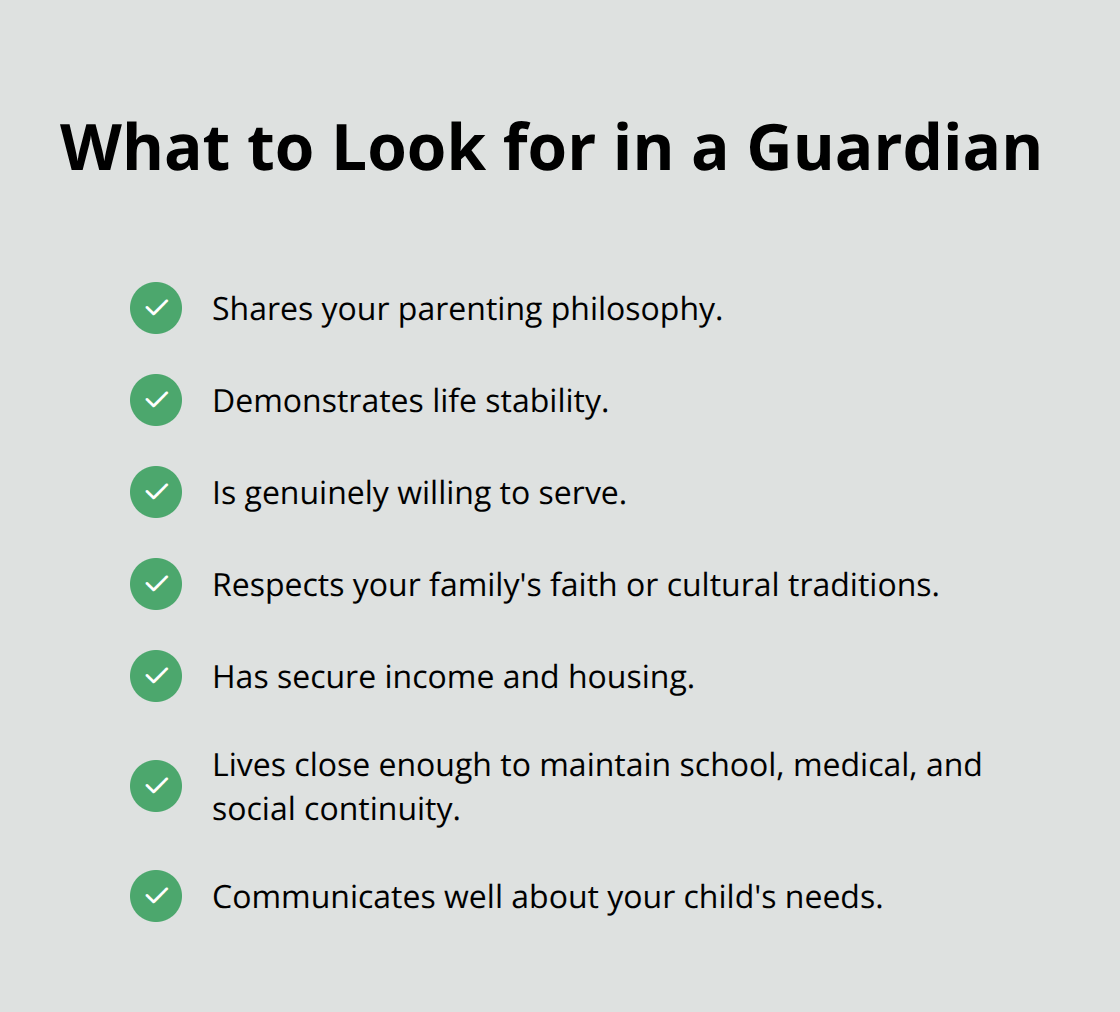
Start by identifying people who have already demonstrated they understand your family’s priorities. If you value education and outdoor activities, look for someone whose own children or lifestyle reflects these things. If faith or cultural traditions matter to your family, your guardian should respect and actively practice these values. This alignment prevents your child from experiencing a jarring shift in how they live and what they learn.
Assess Financial Stability and Geographic Proximity
Financial stability matters significantly-your guardian needs a secure income and housing situation because they will raise your child on the resources you provide through your estate. Research from the American Academy of Pediatrics shows that children placed with guardians who struggle financially experience higher rates of school disruption and behavioral challenges. A guardian without financial security cannot focus fully on your child’s needs.
Geographic proximity influences daily life substantially. A guardian living three states away creates complications for school enrollment, medical appointments, and your child’s social connections. Many parents overlook this factor because they focus on who they trust most, but proximity affects whether your child maintains friendships, continues at their current school, and stays connected to extended family. If distance is unavoidable, you need a detailed plan for how your child will maintain relationships with siblings or grandparents who live near you.
Have Direct Conversations Before Finalizing Your Will
The hardest step is actually asking someone to serve as guardian before you finalize your will. Parents often avoid this conversation because they fear rejection or making things awkward. This avoidance creates a dangerous situation where you name someone in your will who never agreed to the role and may refuse it when the time comes.
Have this conversation directly and specifically. Tell the potential guardian exactly what you are asking, not just whether they would ever help generally. Explain your parenting approach, your child’s needs, any ongoing medical or educational requirements, and what financial resources will be available. Ask them to think about it for a week before answering, and follow up with a written summary of what you discussed. If they hesitate or express concerns, listen carefully-their reservations might reflect real limitations you should address with a different guardian or additional support.
Plan for Unexpected Changes with Alternate Guardians
Designate alternate guardians in your will in case your first choice becomes unable to serve. Most people name two backups, which covers unexpected changes in circumstance. Family dynamics shift, people relocate, and health situations change. Your will should reflect reality by naming people who are genuinely prepared and willing, not people you hope will step up. Once you have identified your guardians and confirmed their willingness, the legal process requires specific documentation and court approval to make these arrangements official.
Making Guardianship Official in Court
The moment you decide who will raise your child, you face the legal machinery that transforms your wishes into binding authority. This process varies significantly by state, but the court must approve and document your guardianship arrangement. If your guardianship documents contain errors or omissions, the court may reject them entirely, forcing your family back through the filing process during an already stressful time.
File Your Guardianship Petition with the Court
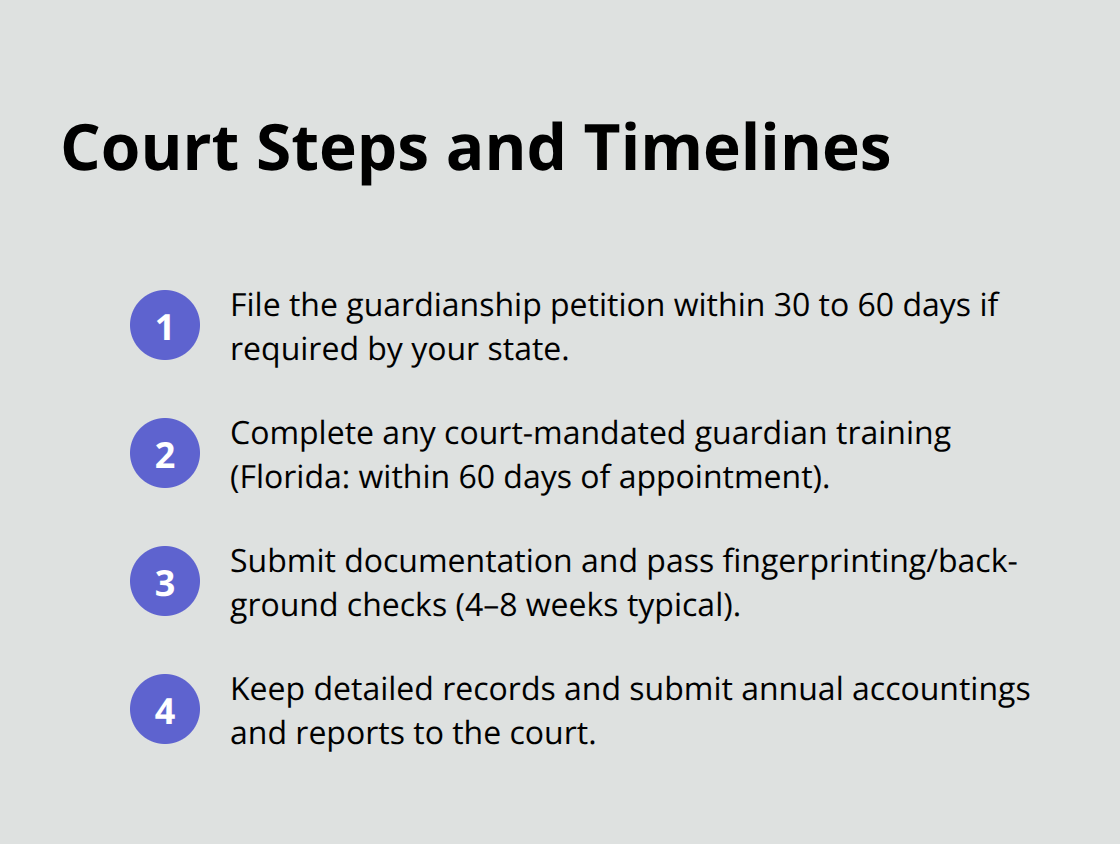
The guardianship petition is a formal request to the court that includes your child’s name, your nominated guardian’s information, and the reason guardianship is necessary. Courts typically require this petition within 30 to 60 days of your death or incapacity becoming known, though the specific timeline depends on your state’s laws and whether the guardianship is contested. Florida courts, for instance, require guardians to complete training within 60 days of appointment according to Florida Statutes Section 744.331, a requirement that many parents overlook when selecting guardians who live out of state.
Prepare Required Documentation and Background Checks
Documentation requirements form the backbone of court approval, and incomplete filings delay everything. You must provide the guardian’s background information, financial statements showing they can support your child, and proof they have no disqualifying criminal history. Most states require fingerprinting and background checks for anyone seeking guardianship, which can take four to eight weeks depending on the agency workload.
Your guardianship documents should also include detailed information about your child’s current situation: school enrollment, medical conditions, medications, allergies, and any special needs. Courts increasingly request financial disclosures from guardians because judges want assurance that your child’s resources will be managed appropriately.
Address Financial Oversight and Bond Requirements
If your estate includes substantial assets, the court may require your guardian to post a bond, essentially an insurance policy protecting your child’s inheritance. Some families avoid this by naming a separate trustee to manage money while the guardian handles day-to-day parenting decisions, eliminating the bond requirement and reducing court oversight costs.
Understand Ongoing Court Responsibilities
Once the court approves guardianship, your guardian assumes immediate decision-making authority, but their responsibilities don’t end there. Courts typically require annual accountings of how the guardian spent money on your child’s behalf, and some states mandate periodic court reviews of the guardianship arrangement itself. Florida requires guardians to file an annual guardian report detailing the child’s health, education, living situation, and any significant changes in circumstances. These ongoing responsibilities exist precisely because courts view guardianship as a trust relationship where the guardian acts in the child’s best interest, not their own.
Final Thoughts
Selecting a guardian for your child ranks among the most consequential decisions you make as a parent. The person you choose will influence your child’s values, education, and daily life during years when they need stability most. This decision should never be rushed or based on obligation alone. Instead, focus on identifying someone whose values align with yours, whose life circumstances provide genuine stability, and who has explicitly agreed to take on this responsibility.
Guardianship options for minors exist precisely because families have different needs and circumstances. Full legal guardianship works best for most parents because it eliminates confusion and gives one person clear authority to make decisions. Limited guardianship serves families with specific situations, like splitting parenting duties from financial management. Testamentary guardianship, designated in your will, takes effect after your death but requires explicit documentation to prevent court delays and uncertainty.
Your guardianship plan needs review every three to five years, or whenever major life events occur like a move, divorce, or significant change in your child’s health. Life changes constantly-your guardian might relocate, face health challenges, or experience shifts in their own family situation. Outdated guardianship documents create exactly the kind of confusion and family conflict you were trying to prevent. Contact us at femlg.com to discuss your guardianship options and create a plan that works for your family’s specific situation.