
When someone passes away in Flagler County, their estate typically goes through probate-a legal process that can feel overwhelming if you’re unprepared. Many families don’t realize how much time and money this process requires, or what options exist to simplify it.
At Family, Estate & Mediation Law, we’ve helped countless local residents navigate Flagler County probate basics and protect what matters most. This guide walks you through what probate actually involves, how long it takes, and practical strategies to avoid unnecessary complications.
What Probate Actually Means for Flagler County Residents
Understanding the Probate Process
Probate is the court-supervised process that transfers a deceased person’s assets to their heirs and beneficiaries. In Florida, this process starts when someone files the will with the probate court in the county where the person lived at death. For Flagler County residents, that means the circuit court handles your estate. The process involves validating the will, identifying all assets, paying debts and taxes, and distributing what remains according to the will or Florida’s intestacy laws if no will exists. Florida’s probate system operates under specific statutes that apply uniformly across all counties, but Flagler County courts have their own local procedures and judges who interpret these laws. The timeline typically ranges from six months to two years, though complex estates regularly take longer. Many Flagler County families underestimate both the cost and complexity involved, often assuming probate is a simple rubber-stamp process when it actually requires court filings, creditor notifications, and potential disputes over asset valuation.
How Probate Directly Affects Your Family
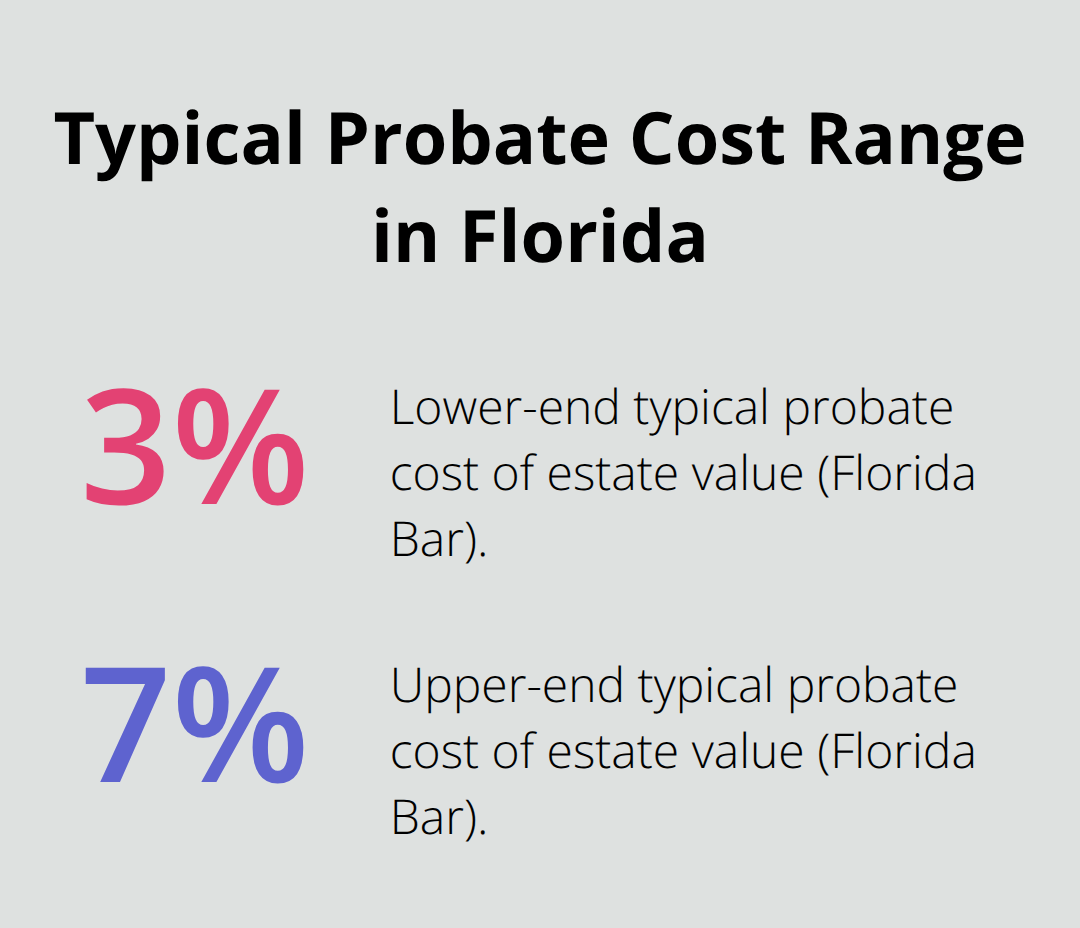
Probate directly affects your family’s access to money and property after you pass. If you own real estate in Flagler County, bank accounts, vehicles, or investments solely in your name, those assets get locked into probate until the court releases them. During this time, your spouse cannot easily access joint funds, your children cannot inherit property quickly, and your business operations may suffer. The Florida Bar reports that probate costs typically run between three and seven percent of the estate’s total value, meaning a half-million-dollar estate could cost fifteen to thirty-five thousand dollars in legal fees, court costs, and administrative expenses.
Creditors have strict deadlines to file claims in probate, and if your family misses procedural deadlines, they can lose their inheritance rights entirely. For Flagler County residents with significant assets or blended families, probate creates additional complications because Florida courts must follow strict rules about who inherits when disputes arise. The emotional toll compounds the financial burden, as families often spend months or years resolving estate matters while grieving.
Myths That Cost Flagler County Families Money
Many people believe that having a will automatically avoids probate, but this is false. A will actually guarantees probate because the court must validate it. Others assume that if they die without a will, their spouse automatically gets everything, but Florida law divides estates between spouses and children in specific percentages that may not match family wishes. Some Flagler County residents think probate only takes a few weeks, when the minimum timeframe under Florida law is actually several months due to mandatory waiting periods for creditor claims. A dangerous misconception involves believing that joint ownership solves everything. While joint ownership does pass assets directly to the surviving owner outside probate, it creates serious tax problems and removes your control if the other owner becomes incapacitated. Finally, many families assume probate is unnecessary for smaller estates, yet they still must navigate the process unless they specifically use Florida’s small estate procedures (which apply only to estates under seventy-five thousand dollars in personal property). These myths lead families to make planning decisions that result in unnecessary costs and delays.
Understanding what probate actually involves in Flagler County sets the foundation for exploring how long the process takes and what it costs your family.
Probate Timeline and Costs in Flagler County
How Long Probate Takes in Florida
Florida law mandates a minimum probate timeline of several months, but this is where reality diverges sharply from what most Flagler County families expect. The Florida Statute requires a three-month waiting period for creditors to file claims against the estate, and this period starts only after the personal representative publishes notice in a newspaper and sends notices to known creditors. In practice, most Flagler County probate cases take between six months and two years, with straightforward estates landing closer to the six-month mark and anything involving real property, business interests, or disputed assets stretching toward eighteen months or longer. The court cannot distribute assets to beneficiaries until all creditor claims expire, all taxes are paid, and the judge approves the final accounting.
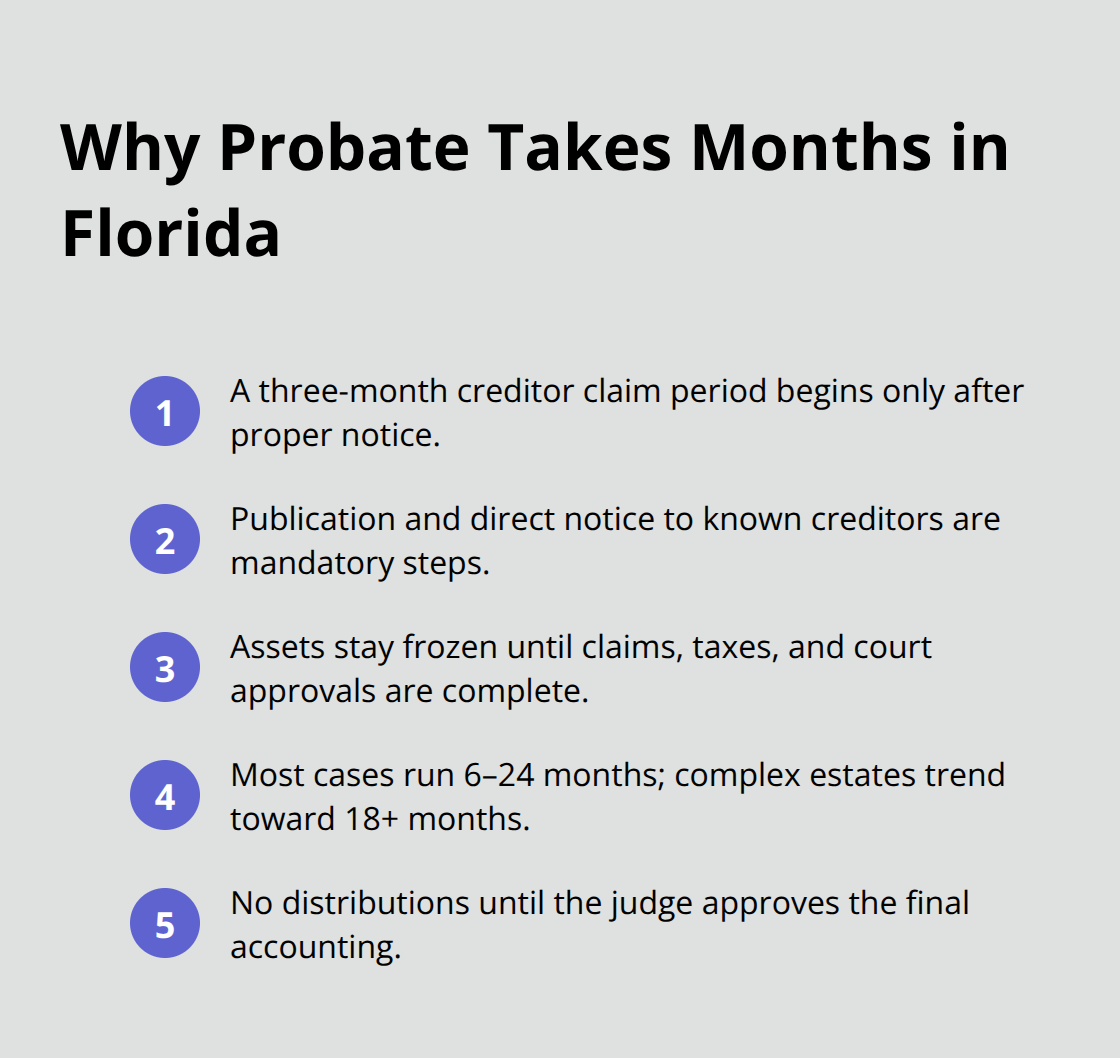
Families repeatedly face shock when they discover their loved one’s estate remains frozen nine months after death because the probate process simply moves at the pace Florida courts allow, regardless of urgency.
What Probate Actually Costs Your Estate
Costs consume between three and seven percent of estate value according to the Florida Bar, translating to fifteen thousand dollars on a five-hundred-thousand-dollar estate and substantially more for larger assets. This figure includes court filing fees ranging from three hundred to eight hundred dollars, personal representative bonds (typically one-half to one percent of estate value), attorney fees, and accountant costs if estate taxes apply. Many Flagler County families overlook that creditor claims, tax disputes, or disagreements over asset valuations add months and thousands in additional legal fees.
Why Real Estate Complicates Probate Expenses
Real estate in probate creates particular expense because properties require appraisals, title insurance updates, and potential mortgage payoffs before transfer. If your estate involves out-of-state property, costs spike dramatically because Florida courts require ancillary probate in the other state, essentially duplicating the entire process. This dual-state requirement transforms what seemed like a manageable estate into a significantly more expensive undertaking.
Factors That Extend Probate and Increase Fees
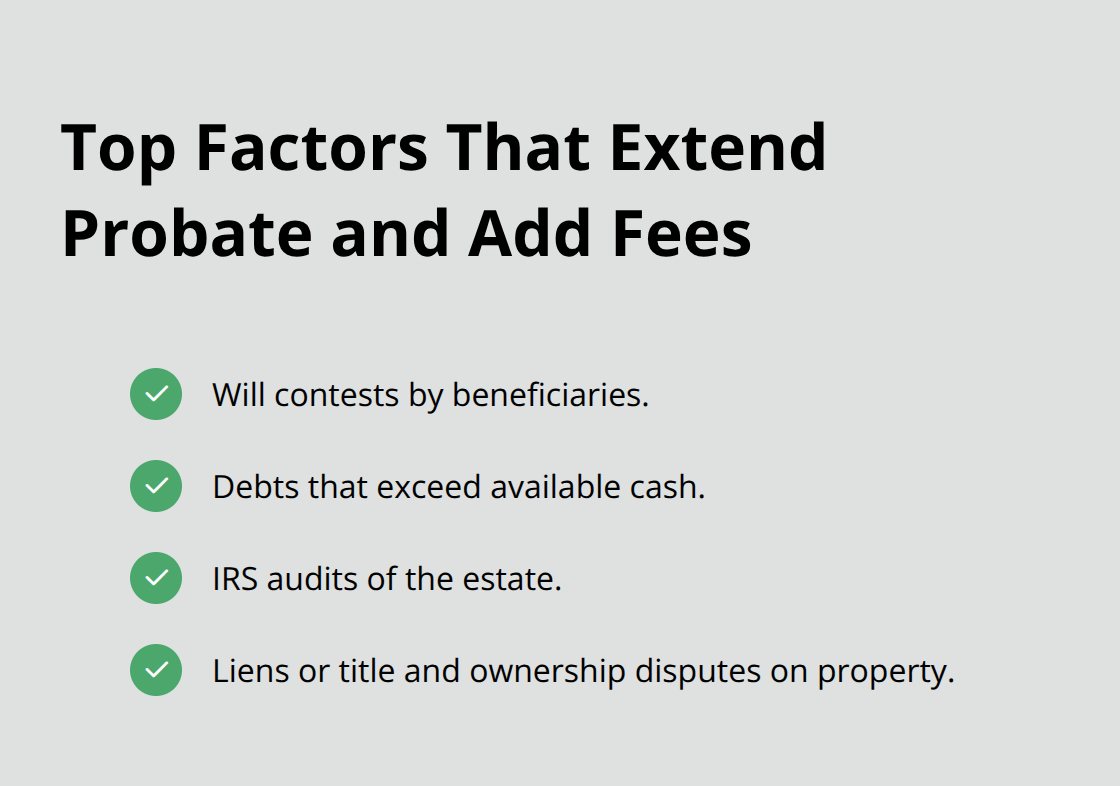
Probate extensions occur most frequently when beneficiaries contest the will, when the decedent’s debts exceed liquid assets, when IRS audits target the estate, or when property titles carry liens or ownership disputes that courts must resolve before distribution. Each complication adds months to the timeline and thousands to the final bill. Understanding these potential obstacles helps you recognize why some estates move quickly while others stall for years.
The financial and time costs of probate make exploring alternatives increasingly important for Flagler County residents who want to protect their families from unnecessary delays and expenses.
How to Avoid or Simplify Probate in Flagler County
Revocable Trusts Eliminate Probate Delays
Revising your estate plan to bypass probate entirely works better than fighting through it after death. The most effective strategy involves placing assets into a revocable living trust during your lifetime. Unlike a will, a trust transfers ownership of assets outside probate, meaning your family can access bank accounts, real estate, and investments within weeks rather than months. Florida allows you to create a revocable trust that remains under your control until death, at which point a successor trustee you name distributes assets according to your instructions without court involvement.
The cost of establishing a trust typically runs between one thousand and three thousand dollars depending on complexity, but this investment eliminates probate fees that would consume three to seven percent of your estate value. For a half-million-dollar estate, that trust investment saves fifteen to thirty-five thousand dollars in probate costs.
Why Joint Ownership Creates Hidden Problems
Joint ownership of property with right of survivorship accomplishes similar probate-avoidance goals but carries serious drawbacks you should understand. When you add someone as a joint owner, that person gains immediate control over the asset and creates potential tax complications if the property appreciates significantly. If the joint owner faces creditor problems, judgment liens, or divorce proceedings, your assets become entangled in their legal troubles. Joint ownership also removes your flexibility if circumstances change or the relationship deteriorates.
Beneficiary Designations Cost Nothing to Implement
Beneficiary designations on retirement accounts, life insurance policies, and transfer-on-death accounts provide another powerful probate-avoidance tool that costs nothing to implement. These designations bypass probate automatically because the asset passes directly to whoever you name, regardless of what your will states. Florida residents frequently overlook that outdated beneficiary designations create genuine problems, particularly after divorce or when circumstances shift unexpectedly. If you name your ex-spouse as beneficiary on a life insurance policy and remarry, your current spouse receives nothing while your ex-spouse collects the proceeds.
Review these designations every three to five years or whenever major life events occur (marriage, divorce, birth of children, significant asset changes).
Small Estate Procedures Reduce Costs Dramatically
For smaller estates under seventy-five thousand dollars in personal property, Florida’s simplified small estate procedure eliminates probate entirely if beneficiaries agree on asset distribution. This streamlined process requires only affidavits and creditor waiting periods rather than full court proceedings, reducing costs to a few hundred dollars instead of thousands.
Layered Strategies Provide Maximum Protection
Combining multiple strategies for maximum protection works better than relying on a single approach. Place your primary residence in a trust while designating beneficiaries on retirement accounts and maintaining small amounts in transfer-on-death accounts. This layered approach protects against probate while maintaining flexibility and minimizing tax consequences that single-strategy approaches sometimes create.
Final Thoughts
Probate in Flagler County doesn’t have to derail your family’s financial security or consume years of their time. Understanding your options puts you in control, and the Flagler County probate basics covered throughout this guide show that straightforward alternatives exist to bypass court delays entirely. Revocable trusts, beneficiary designations, and simplified procedures for smaller estates can eliminate months of waiting and thousands in unnecessary fees.
The cost of proper planning now-typically one thousand to three thousand dollars for a comprehensive trust-based strategy-saves your family fifteen to thirty-five thousand dollars or more in probate expenses later. Your situation involving significant assets, real estate, blended families, or business interests requires guidance from someone familiar with Florida’s probate laws and Flagler County’s specific court procedures, as these circumstances create complications that generic online resources cannot address. Planning before death occurs protects your family far better than scrambling afterward when accounts freeze and property locks into court proceedings.
We at Family, Estate & Mediation Law help Flagler County families build estate plans that protect what matters most. Contact us to schedule a conversation about your current situation and what probate avoidance strategy makes sense for your family’s future.