
When someone names you executor of an estate or trustee of a fund, you’re taking on legal obligations that carry real consequences. At Family, Estate & Mediation Law, we see firsthand how misunderstanding fiduciary duties can lead to family conflict and financial loss.
This guide breaks down what fiduciary duties explained means in practical terms-the specific responsibilities you’ll face and how to handle them correctly. Whether you’re managing an estate, serving as a guardian, or holding power of attorney, knowing your obligations protects both you and the people depending on you.
What Fiduciary Duties Actually Mean in St. Augustine and Palatka, FL
The Legal Definition and Your Obligations
A fiduciary duty is a legal obligation to act in someone else’s best interest, not your own. When you accept a fiduciary role-whether as an executor, trustee, guardian, or agent-the law holds you to a standard higher than ordinary care. This isn’t about doing your best; it’s about putting the beneficiary’s interests ahead of your own financial gain, personal convenience, or family preferences. The Florida Statutes define these duties clearly, and courts in St. Augustine and Palatka enforce them strictly. You cannot delegate away these responsibilities, and you cannot claim ignorance as a defense. The moment you sign on, you become legally bound to know what you’re supposed to do and to do it correctly.
Where Fiduciary Relationships Appear
Fiduciary relationships show up in everyday situations that people often underestimate. An executor manages a deceased person’s estate, a trustee distributes funds from a trust, a guardian makes decisions for a minor or incapacitated person, and an agent holds power of attorney-all occupy fiduciary positions. Each role carries specific duties: loyalty (never benefiting yourself at the expense of the beneficiary), prudence (making decisions a reasonable person would make), and disclosure (keeping beneficiaries informed about what you do with their assets).
The Real Cost of Fiduciary Breaches
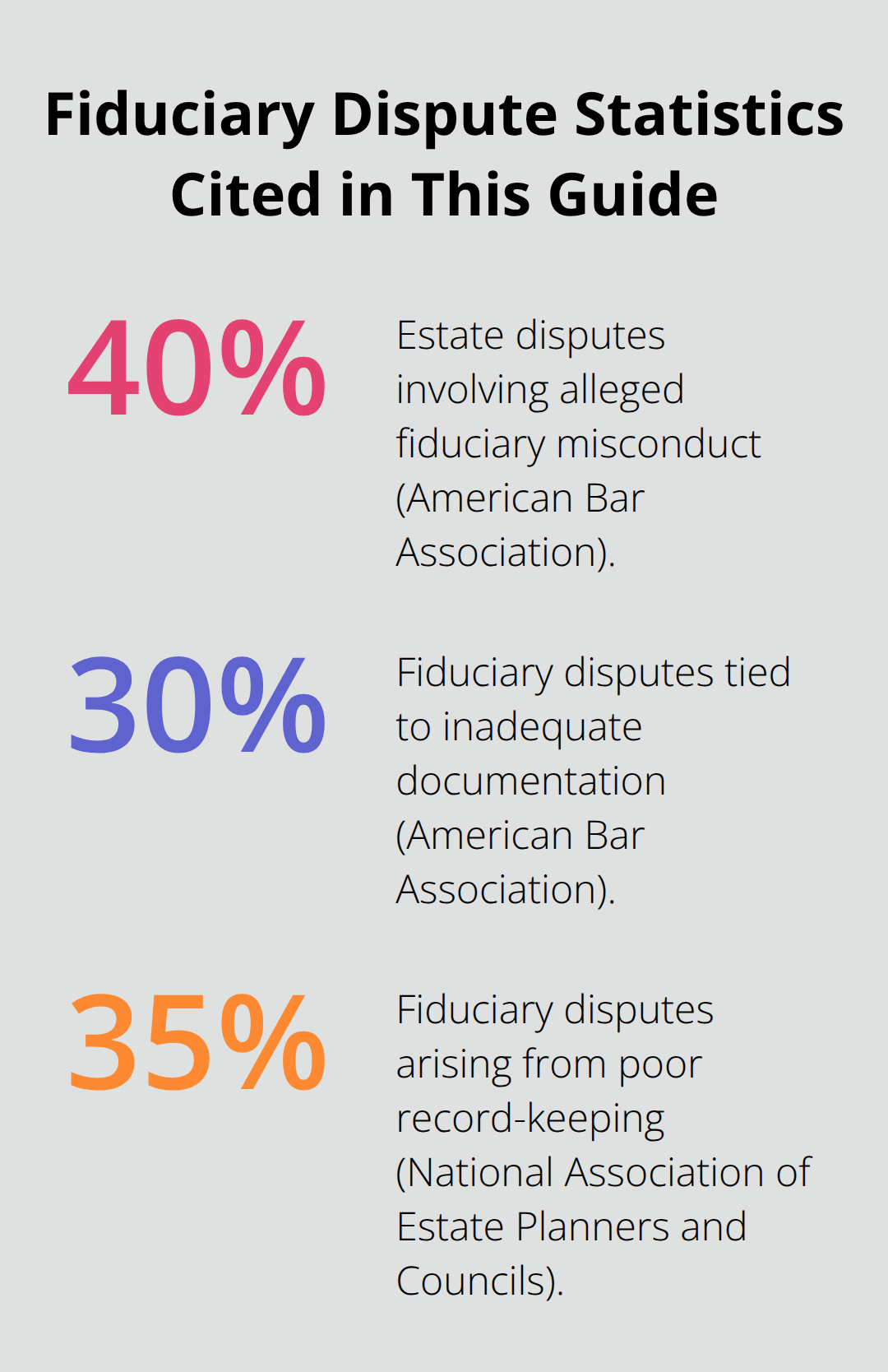
The stakes are real. According to the American Bar Association, about 40% of estate disputes involve allegations of fiduciary misconduct. When a fiduciary breaches these duties-whether through self-dealing, negligence, or outright theft-beneficiaries can sue for damages, removal from office, and recovery of lost funds. Inadequate record-keeping, failure to account for assets, or making investment decisions without proper authority can trigger litigation that divides families for years.
Poor documentation alone has cost fiduciaries thousands in legal fees just to defend themselves, even when they acted with good intentions.
Moving Forward With Your Fiduciary Role
Fiduciary duties aren’t suggestions-they’re enforceable legal standards that demand attention, transparency, and competence. Understanding these obligations sets the foundation for handling your responsibilities correctly. The specific roles you might hold (executor, trustee, guardian, or agent) each carry distinct responsibilities that require careful attention to detail and consistent communication with beneficiaries.
Key Fiduciary Roles and Their Specific Responsibilities in St. Augustine and Palatka, FL
Executors and Trustees in Estate Administration
Executors and trustees shoulder the heaviest administrative burden in estate administration, and the difference between these roles matters significantly. An executor settles a deceased person’s estate during probate, which typically takes 6 to 12 months in Florida, though complex estates can stretch longer. This means you must inventory assets, pay debts and taxes, and distribute what remains to heirs according to the will. A trustee, by contrast, manages assets that bypass probate entirely and often continues managing funds for years or decades. The Florida Statutes require both to maintain detailed accounting records, file tax returns, and provide beneficiaries with regular statements about account activity.
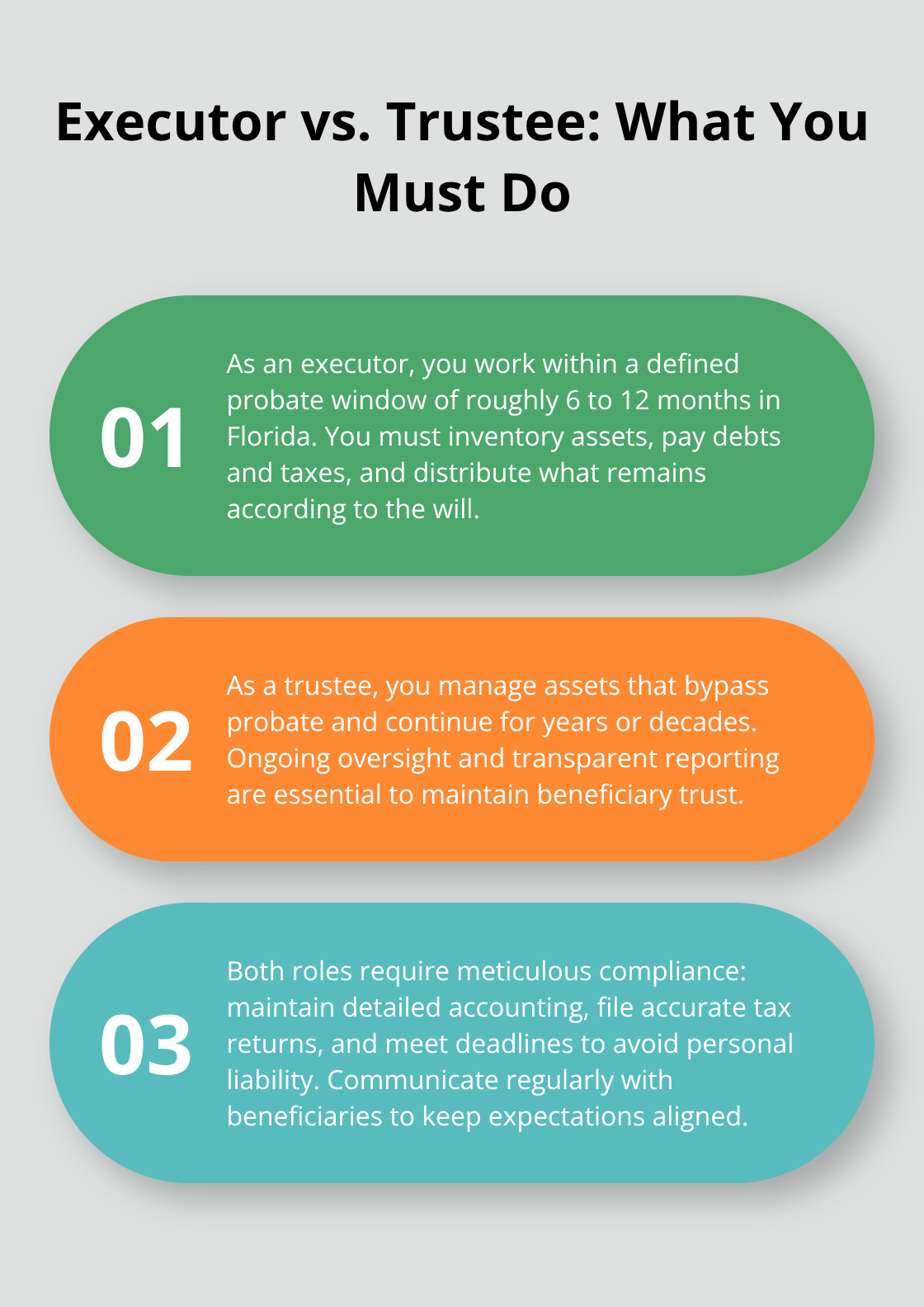
Executors face immediate pressure because probate has strict deadlines-missing them can result in personal liability. Trustees have more flexibility but face ongoing scrutiny because beneficiaries expect consistent communication about how their funds perform.
Many fiduciaries fail simply because they underestimate the paperwork involved. The American Bar Association reports that inadequate documentation accounts for roughly 30% of fiduciary disputes, making record-keeping your strongest defense against accusations of misconduct. You cannot afford to treat this responsibility casually.
Guardians and Their Obligations to Wards
A guardian makes personal and financial decisions for a minor or incapacitated adult, which means you must report to the court annually in Florida. These reports detail every expense, every medical decision, and every significant action taken on behalf of the ward. Guardianship violations-such as spending ward funds on yourself or making decisions without court approval-can result in removal and criminal charges. The court takes these violations seriously and enforces them strictly.
Agents Under Power of Attorney
Agents holding power of attorney have fewer court requirements but must still act exclusively in the principal’s interest, never commingling personal funds with the principal’s money or making self-interested transactions. The Society of Professional Trustees found that agents frequently violate their duties through simple negligence rather than intentional fraud, such as failing to keep separate accounts or making unauthorized investments. You must treat this role with the same care you would give to your own finances-actually, with more care, since the law holds you to a higher standard.
Protecting Yourself Through Proper Documentation
Your strongest protection across all roles is straightforward: maintain separate accounts, document every transaction, communicate regularly with beneficiaries about decisions you make, and avoid any financial arrangement that benefits you personally. When uncertainty arises about your obligations, seeking guidance prevents costly mistakes that can haunt you for years. In St. Augustine and Palatka, courts enforce fiduciary standards consistently, and the consequences of violations extend far beyond financial penalties-they damage family relationships and your reputation.
The specific duties you owe depend on which role you hold, but all fiduciary positions demand the same core commitment: putting someone else’s interests ahead of your own. Understanding these distinctions helps you navigate the practical challenges that arise when you actually hold these positions. The next section examines how fiduciary duties apply across the broader landscape of family and estate law, showing you how these responsibilities intersect with probate, trust management, and beneficiary protection.
How Fiduciary Duties Shape Probate and Trust Outcomes in St. Augustine and Palatka, FL
Probate and Trust Management: Two Different Frameworks
Probate and trust management operate under fundamentally different fiduciary frameworks, yet most people treat them as interchangeable. In probate, an executor has a defined endpoint-typically 6 to 12 months in Florida-and must account for every penny spent settling the estate. The court supervises this process, which means beneficiaries can challenge your actions through formal proceedings if they suspect misconduct. Trust management, conversely, continues indefinitely and often receives less court oversight, which paradoxically creates more responsibility for transparency since beneficiaries rely on you to police yourself.
This distinction matters enormously because the consequences of mismanagement differ sharply. An executor who fails to file required accountings faces court sanctions and removal. A trustee who ignores communication requests may face litigation years later when beneficiaries discover undisclosed conflicts of interest or poor investment decisions. The American Bar Association found that trustees face disputes at rates nearly 50% higher than executors, largely because beneficiaries expect ongoing transparency that many trustees fail to provide.
Your Accountability Obligations as Fiduciary
You must treat trust management as a continuous accountability process, not a passive arrangement. If you hold either role, establish separate bank accounts immediately, file all required documents on time, and communicate account activity to beneficiaries quarterly-not annually. This proactive approach eliminates the ambiguity that breeds litigation.
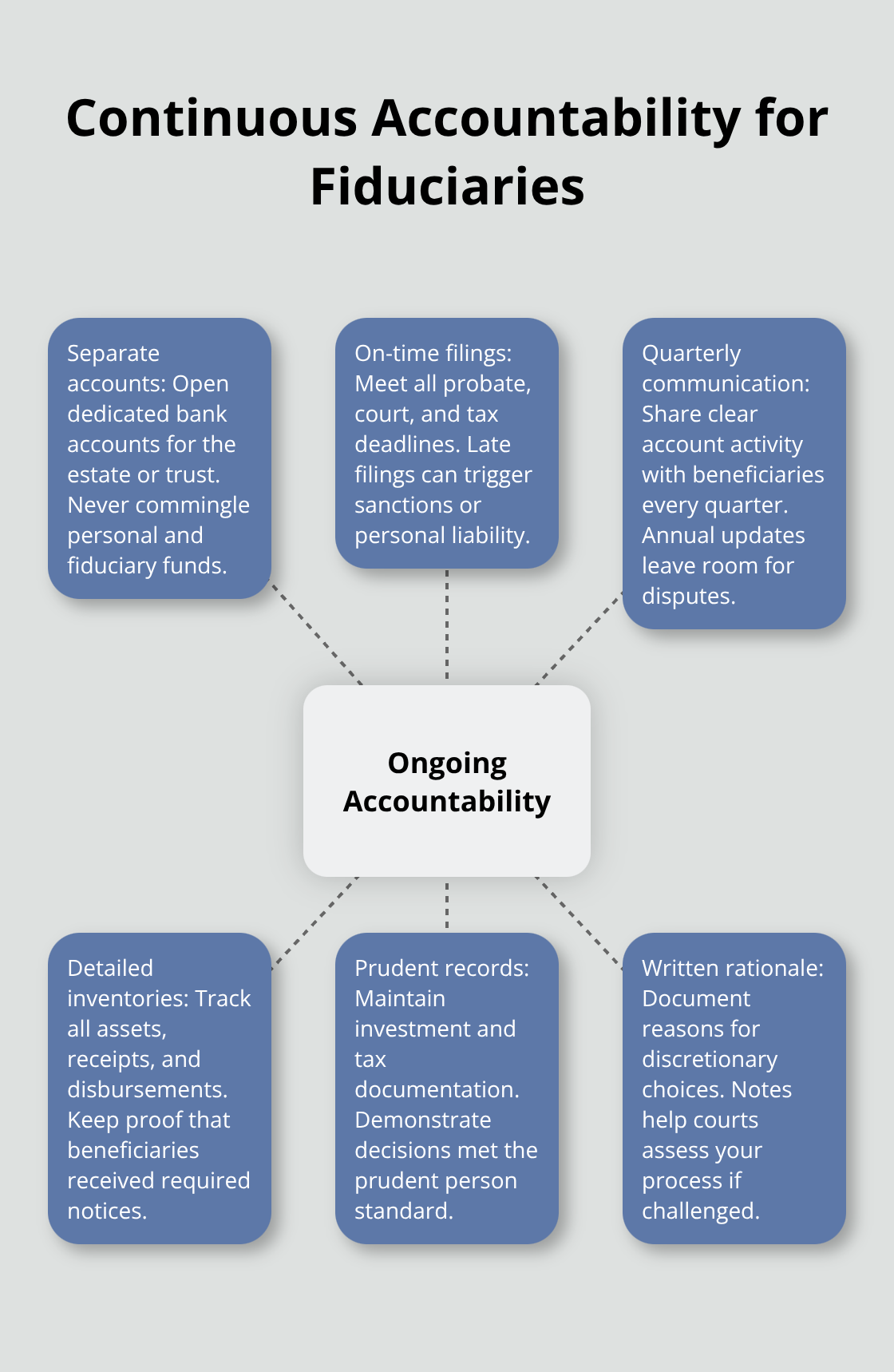
Courts in Florida require executors to file detailed inventories of estate assets, accounting statements showing all receipts and disbursements, and evidence that beneficiaries received proper notice of probate proceedings. Trustees must maintain investment records, tax documentation, and distribution ledgers that demonstrate prudent decision-making. The National Association of Estate Planners and Councils reports that approximately 35% of fiduciary disputes arise from poor record-keeping rather than actual wrongdoing, meaning meticulous documentation can prevent conflict before it starts.
Documentation as Your Primary Defense
Documentation and transparency serve as your ultimate defense against fiduciary breach accusations, yet most fiduciaries maintain inadequate records until a dispute forces their hand. Create a filing system that separates each beneficiary’s communications, investment decisions, and distributions into dedicated folders. When you make discretionary decisions (such as choosing between investment options or determining whether to distribute funds for a beneficiary’s education), document your reasoning in writing.
This record shows a court that you acted prudently and considered the beneficiary’s interests. Beneficiaries who receive regular statements showing exactly how their funds are managed rarely pursue litigation, while those kept in the dark often do regardless of your actual performance. Transparency isn’t a burden; it’s your most effective protection against accusations that could otherwise haunt you for years.
Final Thoughts on Fiduciary Accountability
Fiduciary duties explained comes down to one principle: the person holding the role must act in someone else’s interest, not their own. Whether you serve as an executor settling an estate, a trustee managing funds, a guardian making decisions for a ward, or an agent holding power of attorney, this standard never wavers. The law in Florida enforces it strictly, and courts in St. Augustine and Palatka hold fiduciaries accountable when they fall short.
The most effective protection you can build is straightforward and practical. Maintain separate accounts for the funds you manage, document every decision and transaction in writing, and communicate regularly with beneficiaries about account activity. The American Bar Association data shows that fiduciaries who maintain detailed records and transparent communication rarely face disputes, while those who neglect documentation invite conflict regardless of their actual performance.
If you face uncertainty about your obligations or suspect a fiduciary is mismanaging assets, contact Family, Estate & Mediation Law to discuss your specific situation and gain clarity on your rights and responsibilities.