Most families put off estate planning because it feels overwhelming. The truth is, without a clear plan, your loved ones face unnecessary stress, delays, and expenses when you’re gone.
We at Family, Estate & Mediation Law help families in St. Augustine and Palatka, FL create practical estate planning strategies that protect what matters most. This guide covers the essential documents you need, common mistakes to avoid, and actionable steps to build a lasting legacy.
Why Estate Planning Matters for Your Family
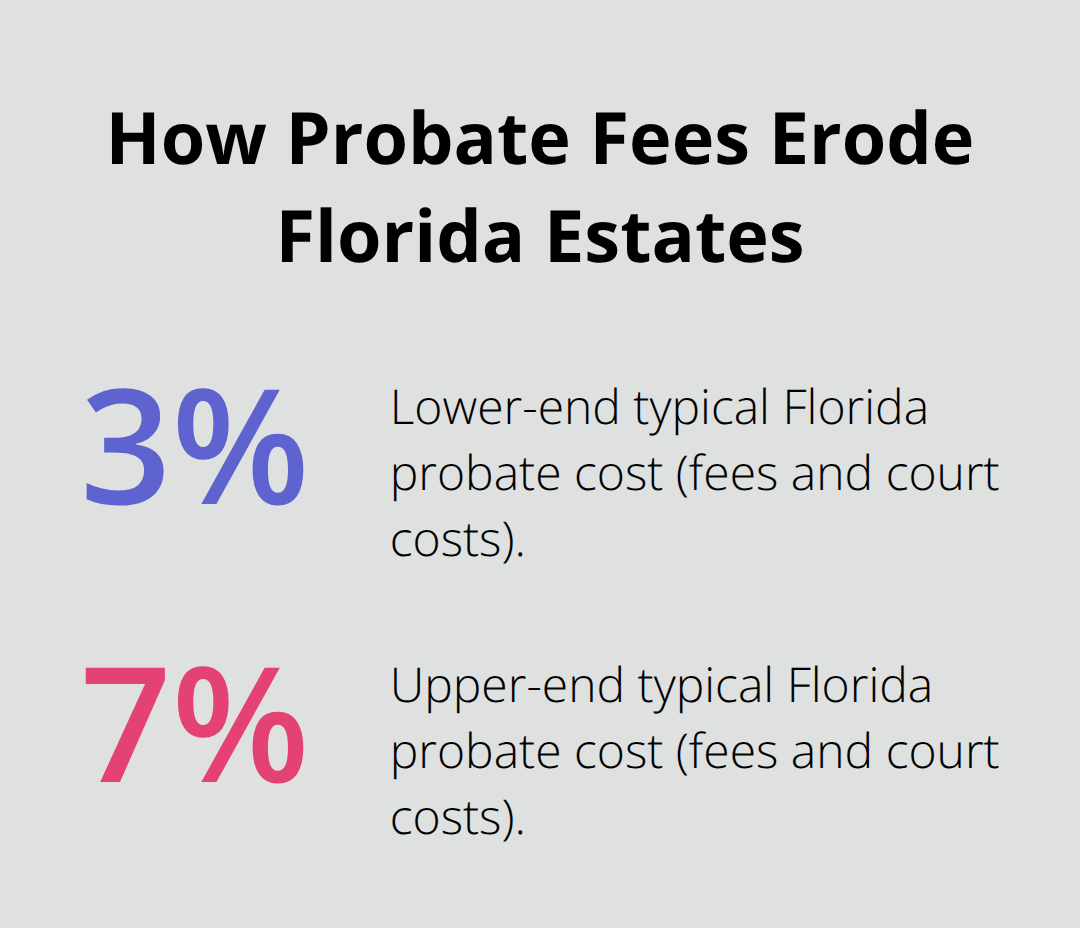
Without a will or trust in place, Florida law decides who inherits your assets through intestate succession rules, which rarely match what families actually want. Your spouse receives only a portion of your estate, and your children wait months or years while the probate court settles your affairs. In Florida, probate typically costs 3–7% of your estate’s value in fees and court costs alone, according to data from the Florida Bar. For a $500,000 estate, that means $15,000 to $35,000 goes to the court system instead of your family.
Florida Intestacy Laws Ignore Your Personal Wishes
Florida intestacy laws follow a strict order of inheritance that ignores your personal wishes entirely. If you die without a will, your children might contest the distribution, creating family conflict and legal bills that drain the remaining estate. A valid will takes precedence and directs exactly who receives what, preventing disputes and keeping your intentions clear in writing. Without it, your blended family, unmarried partner, or charitable causes you care about receive nothing-only blood relatives named in state law benefit.
The probate process itself becomes public record, meaning anyone can access details about your assets and beneficiaries. This public disclosure compromises your family’s privacy during an already difficult time.
Probate Delays Cost Your Family Time and Money
Florida probate can take 6–12 months or longer if disputes arise, during which your family may struggle financially while waiting for inheritance distributions. Your executor faces personal liability for mistakes, potentially leading to surcharges against their own assets if funds are mismanaged. Property held in probate cannot be sold quickly to pay debts or estate taxes, forcing families into difficult positions.
Trusts bypass probate entirely, allowing immediate transfer of assets to beneficiaries without court involvement or public disclosure. With a trust, your family receives their inheritance within weeks rather than years. Your estate remains private, and your loved ones avoid the financial strain that probate creates.
Essential Documents Protect What Matters Most
The documents you choose now determine whether your family navigates a smooth transition or faces months of court proceedings and unnecessary expenses. A will, trust, power of attorney, and healthcare directive form the foundation of any solid estate plan. Each document serves a specific purpose, and together they create a comprehensive strategy that reflects your values and protects your family’s financial security.
Build Your Foundation With the Right Documents
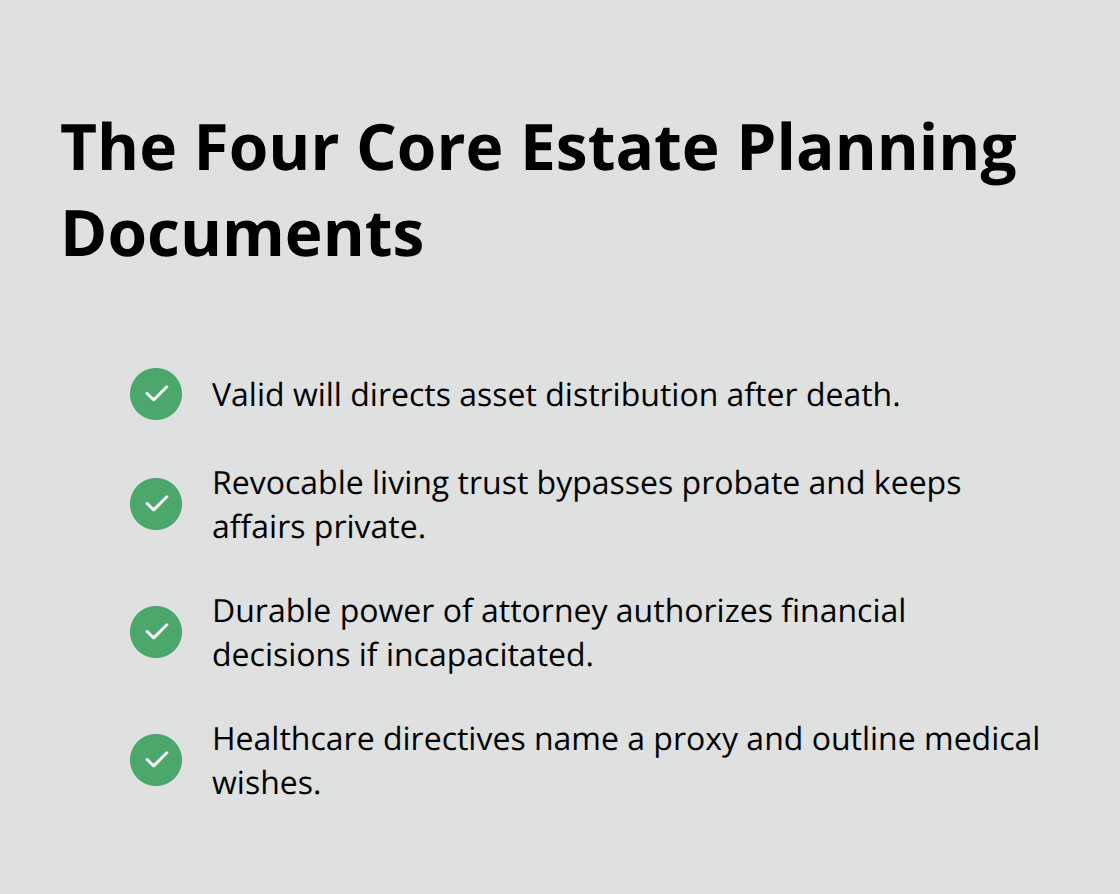
A will alone cannot protect your family from the financial chaos that follows your death. Florida law requires specific documents working together to cover every scenario your family might face, and skipping even one creates dangerous gaps. A will addresses only asset distribution after probate, leaving your healthcare decisions, financial management during your lifetime, and tax protection completely unaddressed. Four core documents form an integrated system: a valid will, a revocable living trust, durable powers of attorney for finances, and healthcare directives that name someone to make medical decisions if you cannot.
Your Will Must Meet Florida’s Strict Requirements
Florida law demands that you sign your will in front of two witnesses who watch you sign and then sign themselves. A court will reject your entire will without proper witnessing, forcing your estate into intestacy and negating months of planning work. This single procedural failure wipes out your intentions and leaves your family subject to Florida’s intestacy rules instead.
Revocable Living Trusts Bypass Probate Entirely
A revocable living trust transfers ownership of your assets into the trust during your lifetime, meaning those assets pass directly to your beneficiaries outside the court system when you die. Trust administration takes weeks, not months, and your family’s financial information stays private. This matters significantly because probate exposes your estate details to public record, while trust administration remains confidential.
Durable Powers of Attorney Protect You During Your Lifetime
A durable power of attorney for finances lets you name someone to manage your money and property immediately if you become incapacitated. Without it, your family must petition a court for guardianship-a costly and public process that can take months. This document activates your chosen agent right away, avoiding court involvement entirely.
Healthcare Directives Give Your Family Clear Direction
Your healthcare directive and living will specify your medical wishes and name a healthcare proxy to make decisions aligned with your values if you cannot communicate. Florida recognizes these documents, and having them in place prevents family disagreements about life-sustaining treatment. Many families in St. Augustine and Palatka overlook these healthcare documents, assuming spouses automatically make decisions-Florida law does not grant this authority without proper documentation, meaning hospitals may turn to courts instead of your family during medical crises.
These four documents work together to address every critical area of your life and legacy. Get started with a consultation to examine the specific mistakes that undermine even well-intentioned planning efforts.
Common Estate Planning Mistakes to Avoid in St. Augustine and Palatka, FL
Life Changes Demand Immediate Document Updates
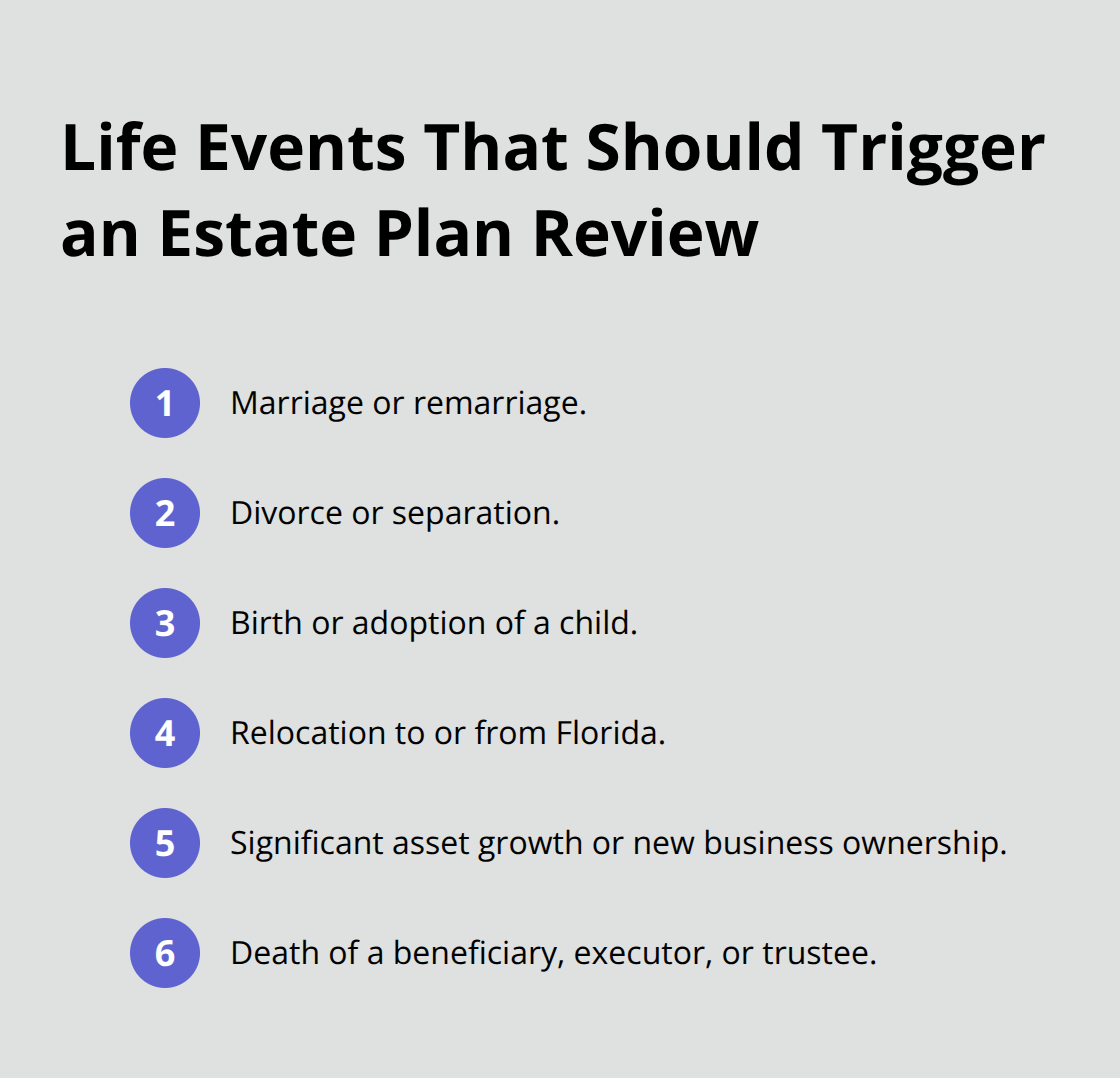
Most families treat estate planning as a one-time task completed and then forgotten for decades. This approach destroys even the best-laid plans. Life changes constantly-marriages, divorces, births, relocations, significant asset growth, and deaths reshape your financial picture and family structure. A will or trust drafted ten years ago likely contradicts your current situation entirely.
Florida law recognizes this problem by allowing you to revoke and rewrite documents, but only if you take action.
Many families in St. Augustine and Palatka discover too late that their outdated plans created exactly the conflicts and expenses they tried to prevent. After a divorce, your ex-spouse may still appear as a beneficiary or executor in documents signed years earlier. Florida courts sometimes honor these outdated designations despite your changed circumstances. A child born after your will was drafted receives nothing unless you formally update the document, and Florida courts interpret this silence as intentional disinheritance rather than oversight.
Outdated Beneficiary Designations Override Your Will
Remarriage without updating your trust means your new spouse may inherit a smaller share than you intended, while your previous estate plan favors an ex-partner. These scenarios happen repeatedly because families assume their documents remain valid without maintenance. Property purchases, business ownership, retirement account growth, and inheritance from parents all shift your asset base and tax situation dramatically, yet many people never revisit the beneficiary designations on life insurance policies, retirement accounts, or investment portfolios.
These designations override what your will states. If your old policy names an ex-spouse as beneficiary, that person receives the payout regardless of what your current will says. The Florida Bar reports that outdated beneficiary designations cause more inheritance disputes than almost any other planning error. Review your complete estate plan every three to five years or immediately following major life events to catch these dangerous gaps.
Tax Planning Mistakes Drain Family Resources
Overlooking tax planning represents the second major failure that drains family resources unnecessarily. Federal estate taxes apply to estates exceeding $13.61 million in 2024, but Florida property taxes, income taxes on inherited retirement accounts, and probate costs affect every estate regardless of size. Families often fail to understand that inheriting a traditional IRA or 401(k) triggers immediate income tax liability for beneficiaries-a $200,000 retirement account might deliver only $140,000 after taxes depending on the beneficiary’s tax bracket.
Strategic trust structures, spousal rollover options, and charitable giving strategies reduce these taxes significantly, yet many people skip this planning entirely. The difference between a basic will and a tax-optimized trust can save a family tens of thousands of dollars. Without proper planning, your family pays taxes that sophisticated planning could have eliminated. Skipping tax consultation represents false economy-the cost of professional guidance pays for itself many times over through the taxes you avoid.
Final Thoughts
Estate planning feels distant until a health crisis or death forces your family to navigate it unprepared. The family estate planning tips covered in this guide address the real problems families face: probate delays, outdated documents, tax waste, and family conflict. Your first step is straightforward-write down your assets, name your beneficiaries, and identify who you trust to manage your affairs if you cannot.
The four core documents-a will, revocable living trust, durable power of attorney, and healthcare directive-work together to cover every scenario your family might face. The cost of professional guidance is minimal compared to what families lose through probate fees, tax mistakes, and outdated plans. We at Family, Estate & Mediation Law help families across Northeast Florida build practical estate plans that reflect their values and protect their legacies.
Life changes constantly, and your estate plan must change with it. Review your documents every three to five years or immediately after major life events like marriage, divorce, birth, relocation, or significant asset changes (this ongoing maintenance prevents the outdated designations and forgotten provisions that create the exact problems you tried to avoid). Contact Family, Estate & Mediation Law to discuss your specific situation and build a plan that works for your family’s future.