Estate taxes considerations affect families across Florida, and many people don’t realize how much their heirs could lose without proper planning. The difference between a well-structured estate plan and a reactive approach can mean hundreds of thousands of dollars for your family.
We at Family, Estate & Mediation Law help families in St. Augustine and Palatka protect what they’ve built. This guide walks you through the strategies that actually work.
How Federal Estate Taxes Work in St. Augustine and Palatka, FL
Understanding the Federal Exemption Threshold
Federal estate taxes apply to estates exceeding 13.61 million dollars in 2024, according to the Internal Revenue Service. This threshold determines whether your family faces federal tax liability at all. Florida itself has no state estate tax or inheritance tax, which makes it genuinely attractive for estate planning compared to states like Massachusetts or Oregon that impose their own levies. However, this doesn’t mean Florida residents escape taxation entirely.
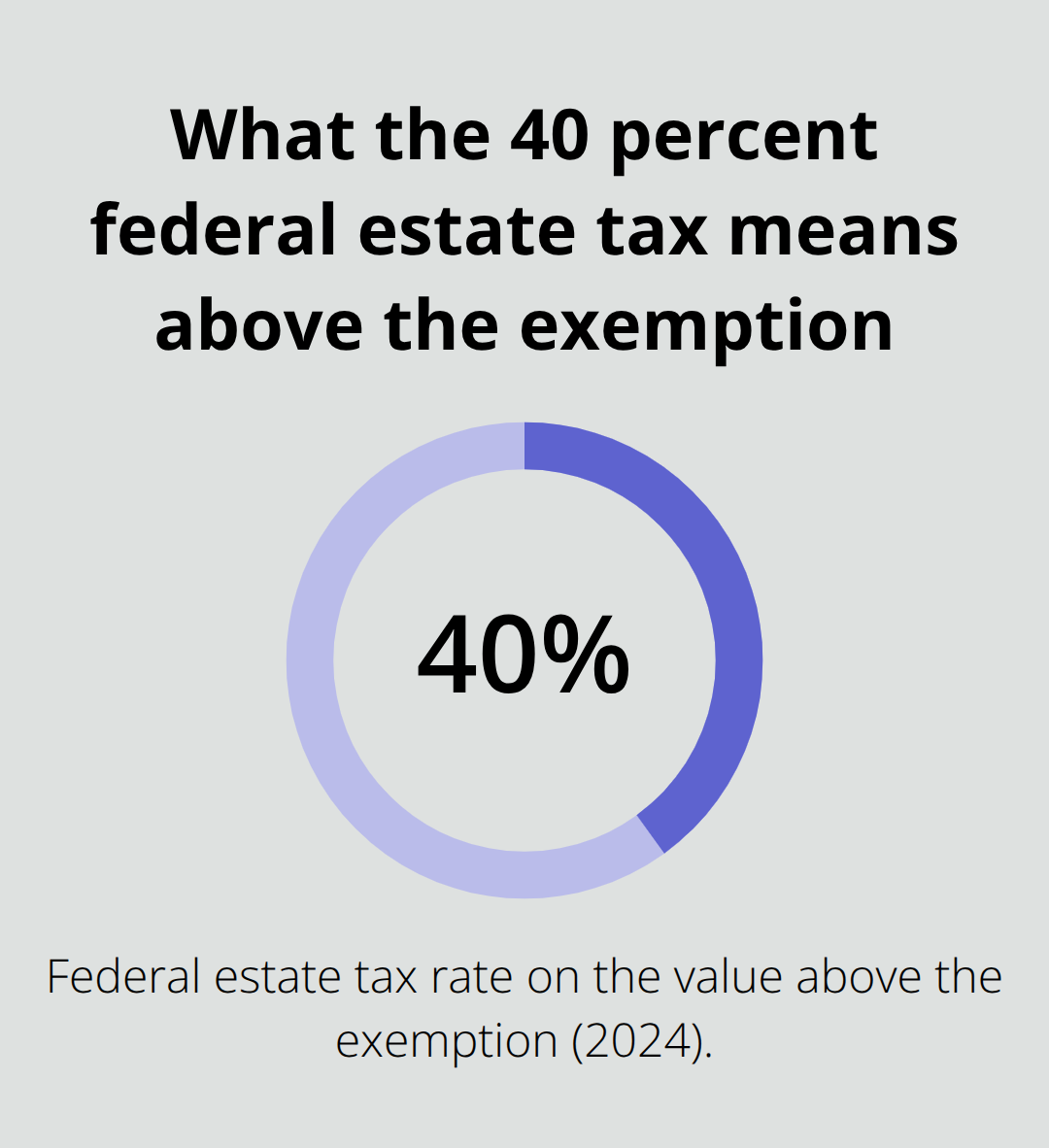
If your estate surpasses the federal exemption, your heirs lose 40 percent of everything above that threshold to federal taxes alone. The exemption amount changes annually and is scheduled to drop to roughly 7 million dollars per person in 2026 unless Congress acts. This sunset provision creates urgency for families with substantial assets.
The Portability Election Most Families Miss
The portability election is where most Florida families miss significant savings. When the first spouse dies, the surviving spouse can inherit the deceased spouse’s unused exemption, effectively doubling the protection to 27.22 million dollars in 2024. Many people fail to file the necessary paperwork with the IRS within nine months of death, losing this benefit permanently.
This nine-month window is not negotiable. Missing it costs families hundreds of thousands of dollars in unnecessary taxes. The IRS requires Form 706 (the estate tax return) to claim portability, even if the estate falls below the taxable threshold.
Life Insurance and Irrevocable Trusts
Life insurance proceeds add another layer of complexity because they typically avoid probate but still count toward your taxable estate unless structured properly through an irrevocable life insurance trust. These trusts remove the death benefit from your taxable estate entirely, protecting the proceeds for your beneficiaries.
The timing matters significantly. You must establish an irrevocable life insurance trust before you apply for new coverage (or transfer existing policies into it) for the strategy to work. Waiting until after diagnosis or health problems emerge makes this planning impossible.
What Happens Without Proper Structure
Families with estates over five million dollars face substantial tax exposure without proactive planning. The difference between a structured approach and reactive scrambling often exceeds hundreds of thousands of dollars. Contact us in St. Augustine and Palatka to discuss concrete strategies that actually reduce what your heirs owe.
How to Reduce What Your Estate Actually Owes
Trusts That Shrink Your Taxable Estate
Trusts stand as the most direct tool for reducing your taxable estate, and the financial difference between having them and not having them runs into the hundreds of thousands of dollars. A qualified personal residence trust lets you transfer your home at a discounted value while you retain the right to live there for a set term. The IRS values this transfer based on mortality tables and interest rates, not current market value, which means you gift significantly less than what the property is actually worth. For St. Augustine and Palatka families with homes valued at one million dollars or more, this strategy alone can save 200,000 to 400,000 dollars in estate taxes.
Charitable remainder trusts work similarly but benefit charitable organizations, allowing you to claim an immediate income tax deduction while keeping income from the trust assets during your lifetime. These structures require careful setup-mistakes in drafting cost families the entire tax benefit-so working with someone who understands Florida law matters tremendously.
Annual Gifting Removes Money Tax-Free
Annual gifting operates mechanically but powerfully because it reduces your taxable estate dollar-for-dollar without triggering gift taxes. The IRS allows you to gift 18,000 dollars per person per year in 2024 without using any of your lifetime exemption. A married couple can gift 36,000 dollars annually to each child, grandchild, or any other individual. Over ten years, a couple with three children can move 1.08 million dollars out of their taxable estate completely tax-free.
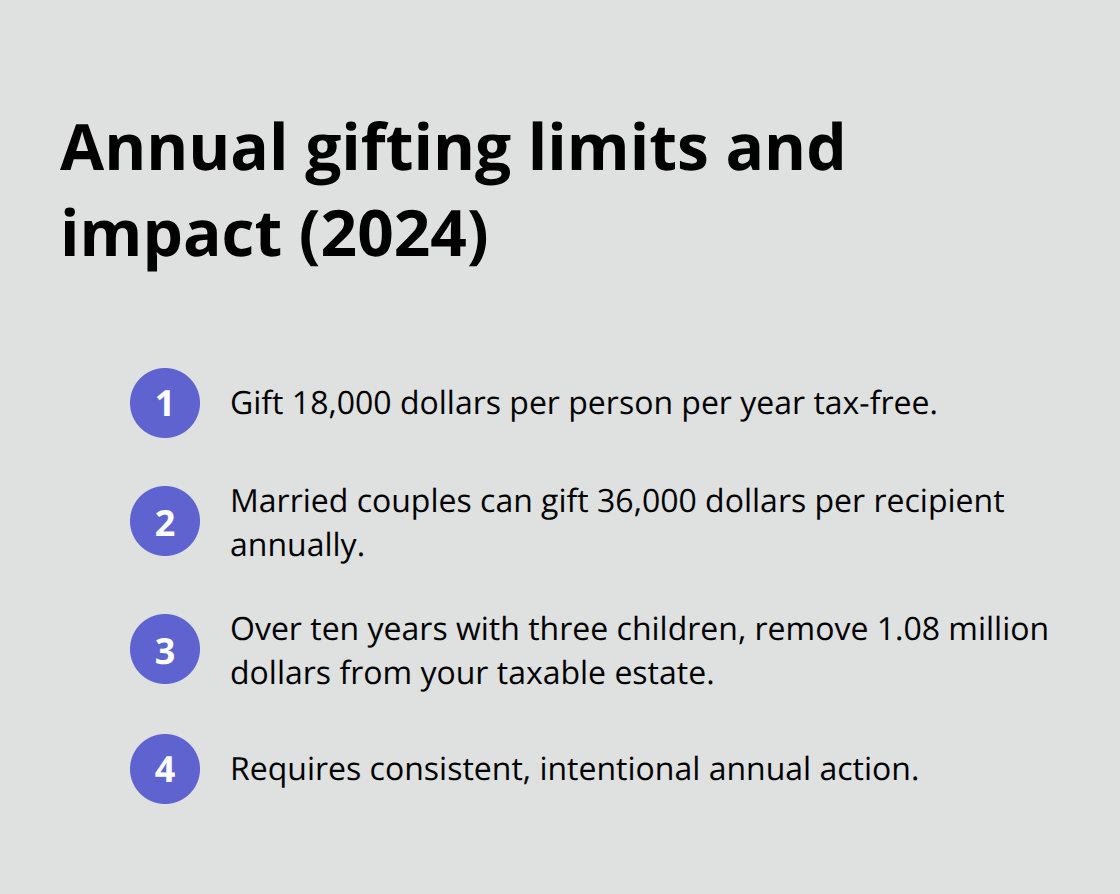
Most families fail to use this allowance because it requires intentional, consistent action year after year. The strategy demands discipline and planning, but the payoff justifies the effort.
Life Insurance Provides Tax-Free Liquidity
Life insurance structured through an irrevocable life insurance trust accomplishes what no other tool can-it provides liquidity to pay estate taxes without forcing your heirs to sell family assets or businesses. The death benefit lands outside your taxable estate entirely if the trust owns the policy from inception, meaning a 500,000 dollar death benefit costs zero in estate taxes instead of 200,000 dollars at the 40 percent federal rate.
The critical requirement is timing: you cannot transfer an existing policy into an irrevocable trust and have it work. The IRS has a three-year lookback period that captures transfers made too close to death. Starting this strategy while you are healthy removes all uncertainty about insurability and tax treatment, and it positions your family to handle the actual costs of estate settlement without financial strain.
Common Estate Planning Mistakes That Increase Tax Burden in St. Augustine and Palatka, FL
Outdated Documents Create Immediate Tax Problems
Most families in St. Augustine and Palatka fail to update their estate documents after major life events, and this oversight creates immediate tax problems. Divorce, remarriage, the birth of children or grandchildren, significant asset increases, and relocation all trigger the need for document revision. When your will or trust still names an ex-spouse as executor or beneficiary, or when it fails to account for assets acquired after the original document was drafted, your estate plan works against your family instead of protecting them.
The IRS does not care that you forgot to update your trust after inheriting 500,000 dollars or purchasing investment property-that money still counts toward your taxable estate at full value. Florida courts have seen countless cases where outdated beneficiary designations on retirement accounts or life insurance policies override the terms of a will entirely, sending assets to someone the deceased no longer intended to benefit. Updating documents takes a few hours and costs far less than the tax liability created by neglect.
The Portability Election Deadline You Cannot Miss
The portability election requires even more precision because missing the deadline costs your family hundreds of thousands in unnecessary taxes. If you fail to file Form 706 within nine months of your spouse’s death, you permanently lose the ability to transfer their unused exemption to your surviving spouse. This deadline applies regardless of whether your estate exceeds the taxable threshold, and many families miss it simply because they do not know it exists or assume probate attorneys will handle it automatically.
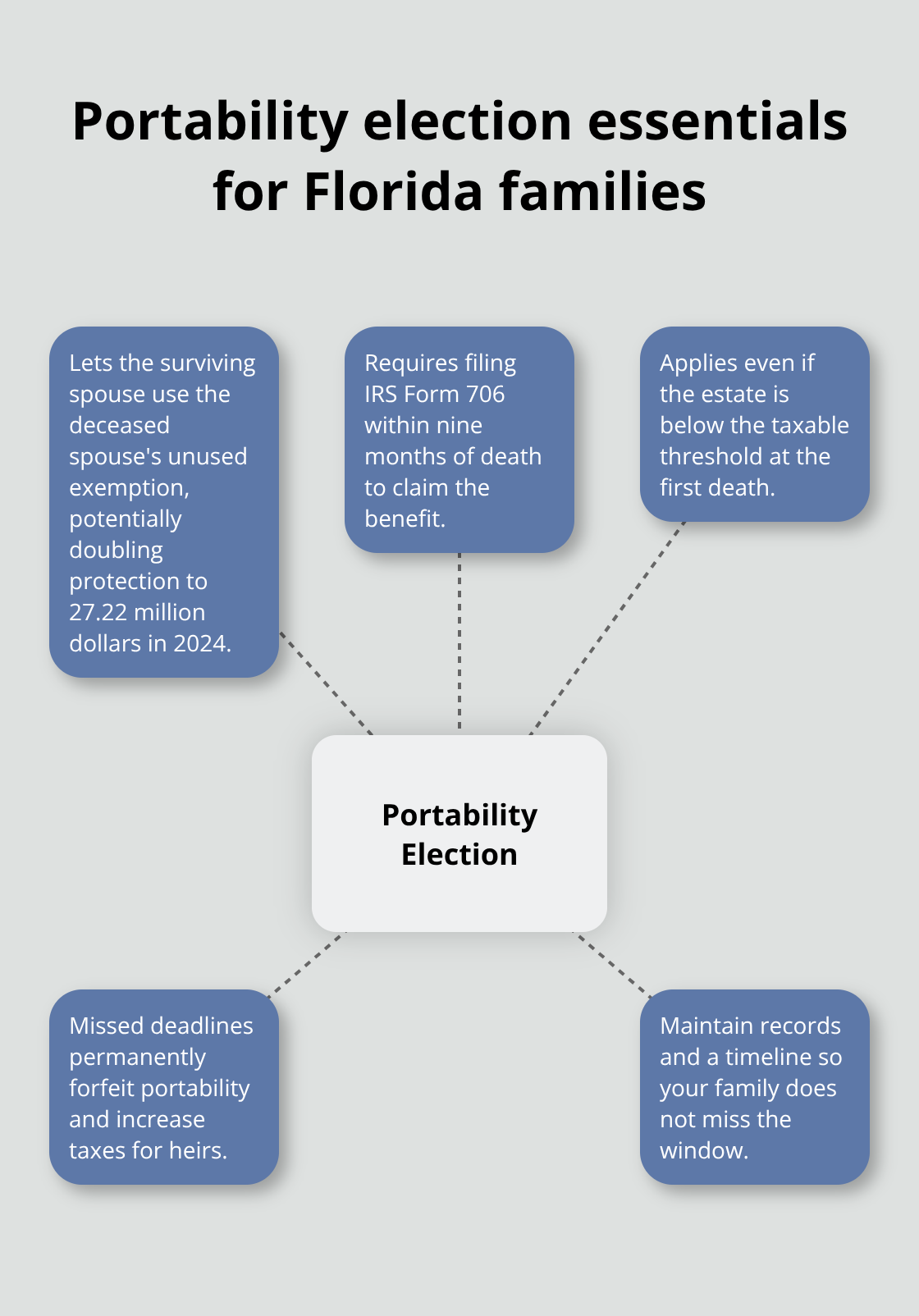
The nine-month window is absolute and non-negotiable. Once it passes, the opportunity vanishes forever, and your surviving spouse loses the tax protection that proper planning would have provided.
Uncoordinated Assets Across Multiple Institutions
Families with assets spread across multiple institutions-bank accounts in one state, investment portfolios with different firms, retirement accounts at former employers, and real estate in multiple locations-often fail to coordinate these holdings within a unified estate plan. When assets sit outside your trust structure or lack properly designated beneficiaries, they enter probate separately and may trigger duplicate tax reporting or create conflicts between different documents.
Consolidating accounts, reviewing every beneficiary designation annually, and ensuring all major assets flow through your estate plan prevents these expensive mistakes. This coordination work (though sometimes tedious) protects your heirs from unnecessary complications and tax exposure that fragmented planning creates.
Final Thoughts
Estate taxes considerations demand action, not procrastination. The strategies outlined in this guide work only when you implement them before crisis strikes. We at Family, Estate & Mediation Law understand that families in St. Augustine and Palatka face real deadlines and real tax exposure, which is why we focus on concrete planning rather than theoretical discussions.
The difference between families who preserve their wealth and those who watch it disappear to taxes comes down to one factor: they acted while they had time. Portability elections expire nine months after death, irrevocable life insurance trusts require you to be insurable, and annual gifting strategies compound over years, not months. Each of these tools loses its power the moment you wait too long.
Review your current estate plan against the strategies discussed here and contact us in St. Augustine and Palatka to discuss your specific situation. If your documents are more than three years old, if you have experienced major life changes, or if your assets have grown significantly, your plan likely needs updating. We serve Northeast Florida with practical strategies that preserve what you have built for the people you care about most.