Most people in St. Augustine and Palatka, FL put off estate planning because they think it’s only for the wealthy or elderly. The truth is far different-without a clear plan, your family faces unnecessary conflict, expensive legal fees, and the state making decisions about your assets.
We at Family, Estate & Mediation Law help families build an estate plan overview that actually protects what matters. This guide walks you through what happens when you don’t plan, the tools that work, and how to get started locally.
What Happens Without an Estate Plan
When you die without an estate plan in Florida, state law takes over completely. Florida Statutes Chapter 732 dictates exactly who inherits your assets and who raises your minor children-regardless of what you would have wanted. If you’re married with children, your spouse doesn’t automatically get everything; Florida law splits your estate between your surviving spouse and your children, often creating unnecessary complications. According to Investopedia in 2025, less than one-third of Americans have an estate plan despite widespread awareness of its importance, leaving millions of families vulnerable to state-mandated outcomes.
State Law Controls Your Assets and Family
Without a plan, your family loses control over asset distribution entirely. Probate in Florida becomes mandatory for most estates, and the 2026 filing fees alone in the 7th Judicial Circuit range from $231 to $400 depending on the type of administration. These fees represent just the beginning; your heirs also face court delays, attorney fees, and the emotional burden of navigating the probate system while grieving. In Putnam County, you must deposit the original will with the Clerk of Court in Palatka within 10 days of death notice, and formal administration can stretch the process significantly longer than a properly structured plan would allow.
Probate Costs Drain Your Estate Quickly
Probate without a plan costs families thousands of dollars in unnecessary legal fees and court expenses. A revocable living trust allows assets to pass directly to beneficiaries outside probate, saving your heirs both time and money. If your estate includes property in multiple states or complex family situations, the costs multiply rapidly. The emotional toll matters just as much as the financial one-siblings often clash over asset distribution when state law determines the outcome, turning grief into family conflict.
Medical Decisions Fall to Your Family Without Guidance
Without clear documentation of your medical wishes in a living will or healthcare directive, your family members face agonizing decisions about life-prolonging treatments with no guidance from you. Powers of attorney become useless after death, leaving no one with authority to handle your financial or healthcare decisions during the final stages of life. Your loved ones must make critical choices about your care without knowing what you would have wanted, adding stress to an already difficult time.
Family Disputes Escalate Without Clear Documentation
Family disputes over estates happen frequently when no plan exists, because state law leaves room for interpretation and disagreement. One family member might believe they deserve more based on caregiving; another might contest the validity of documents or claim unfair treatment. Without a clear, documented plan created while you’re living, your children and spouse spend money fighting each other instead of preserving your legacy. Guardianship designations become critical if you have minor children-without naming a guardian in writing, the court decides who raises your kids, potentially placing them with someone you wouldn’t have chosen. These legal battles drain estate assets quickly, sometimes consuming 20-30% or more of what should have passed to heirs. The stress and resentment created by intestate succession can damage family relationships for years after probate concludes.
The specific tools you need to prevent these outcomes depend on your family situation, your assets, and your goals. Understanding what each component does-and how they work together-helps you build a plan that actually protects what matters most to you and your loved ones.
What Each Document Actually Does in Your Plan
A comprehensive estate plan isn’t about having every possible document-it’s about having the right ones coordinated to work together. In St. Augustine and Palatka, FL, many families create a will and think they’re done, when in reality a will alone leaves massive gaps. A last will and testament only controls assets that don’t have a named beneficiary and aren’t held in trust, meaning it covers far less than most people assume. The four core documents most Floridians actually need are a living will, a last will and testament, a revocable trust, and a durable power of attorney. A revocable living trust transfers assets during your lifetime and remains adjustable until death, allowing your estate to skip probate entirely and saving your family thousands in court fees and delays.
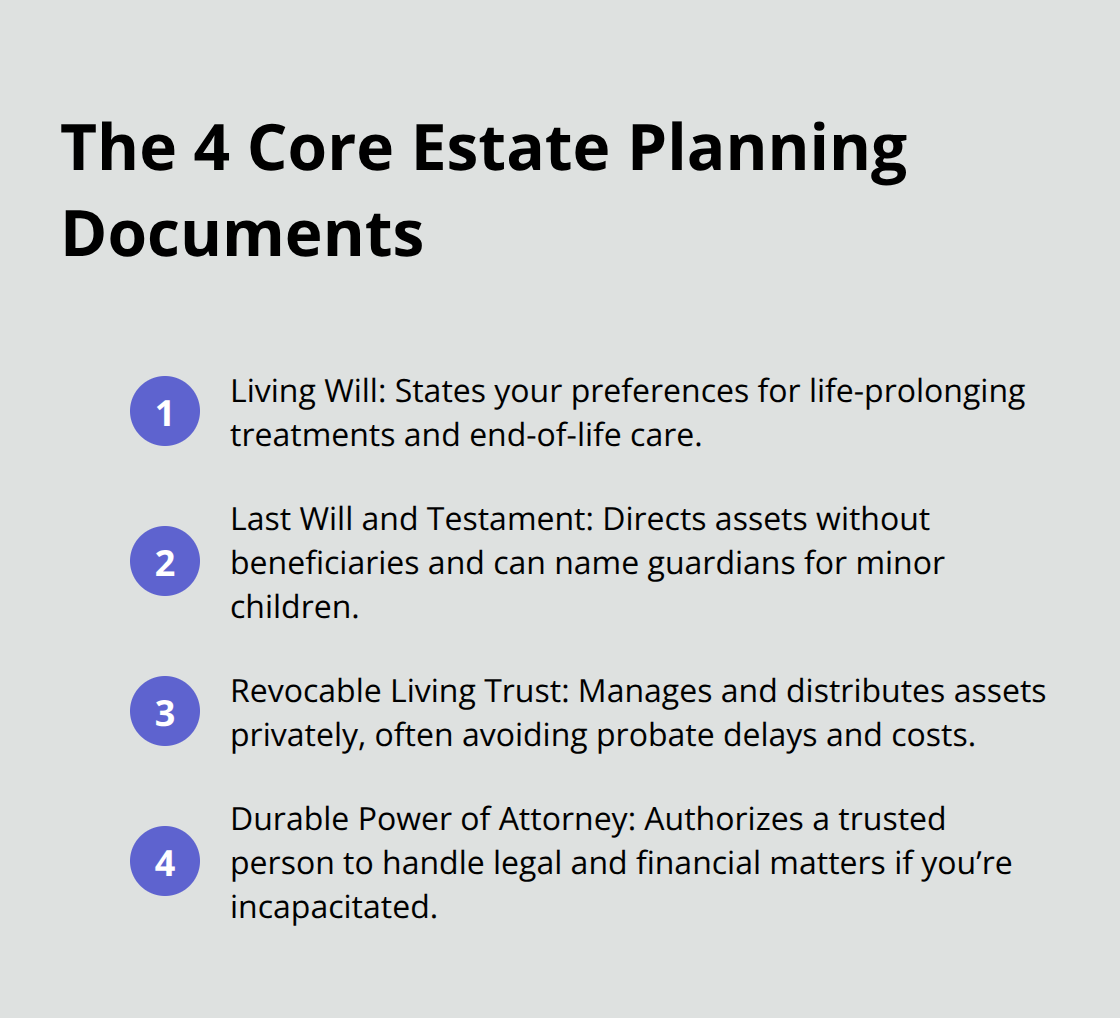
Unlike a will, a trust keeps asset details private-your family’s financial information never becomes public record like it does in probate court. A durable power of attorney names someone you trust to handle legal and financial decisions if you become incapacitated, and Florida Statutes Section 709.2104 requires specific language to keep it durable after incapacity occurs. Many people create a power of attorney and think it solves everything, but it ends at death, leaving no one with authority for final medical or financial matters during end-of-life care.
Your Medical Wishes Need Written Documentation
A living will and healthcare directive serve different purposes, though many people use the terms interchangeably. A living will communicates your specific preferences about life-prolonging treatments, do-not-resuscitate orders, organ donation, and other end-of-life medical care when you cannot speak for yourself. A healthcare directive names someone to make medical decisions on your behalf if you’re incapacitated-this person, sometimes called a healthcare surrogate in Florida, interprets your wishes and makes choices your doctors need immediately. Without both documents, your family members face devastating decisions without knowing what you wanted, and hospitals may refuse to follow their guidance without proper written authority. Emergency guardianship petitions in Florida cost $1,500 to $5,000 or more in attorney fees alone, making advance planning far more affordable than crisis intervention.
Trusts Require Active Funding to Actually Work
The biggest mistake families make in St. Augustine and Palatka is creating a trust and then never transferring assets into it. A trust sitting empty with no funded accounts inside provides zero probate protection-assets must actually be titled in the trust’s name or have the trust named as beneficiary to pass outside probate. This means retitling your deed, changing bank account ownership, and updating beneficiary designations on retirement accounts and life insurance policies.
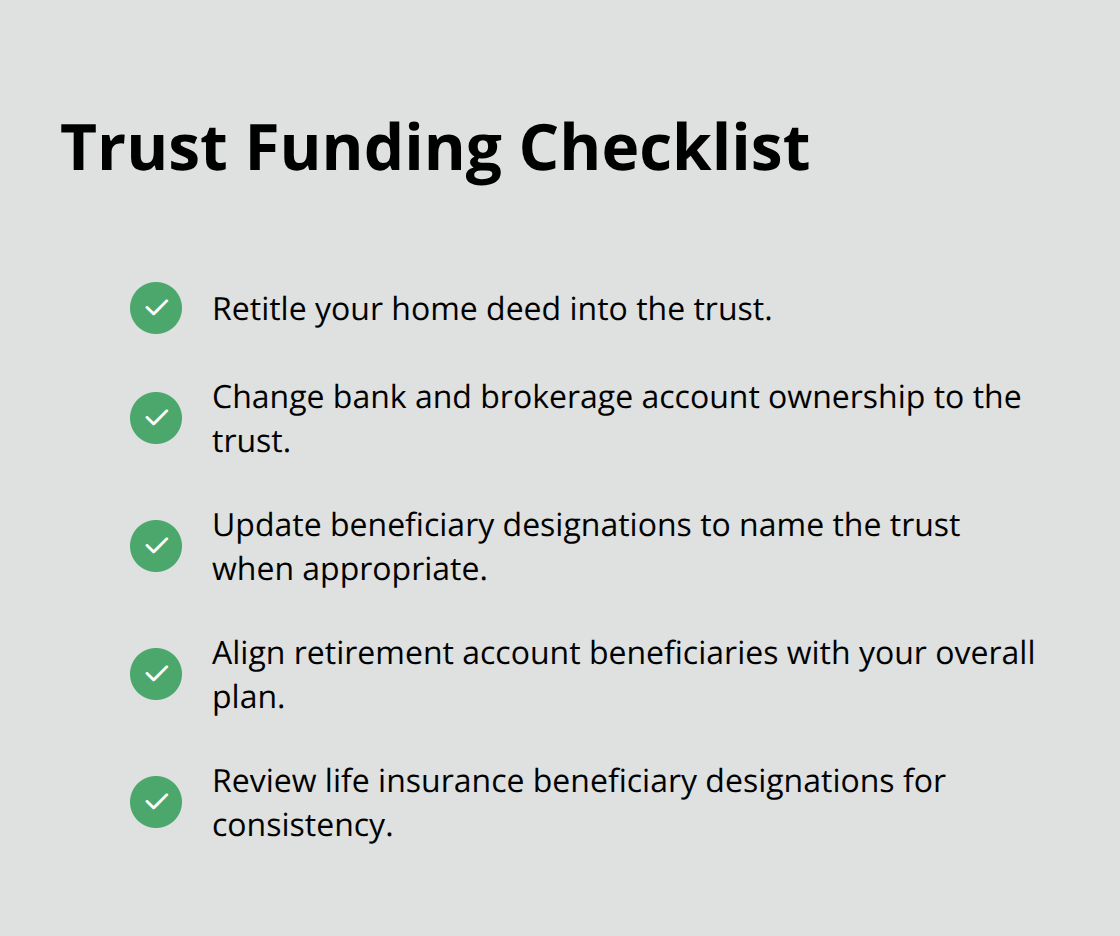
Many people skip this step because it feels tedious, then their heirs end up in probate anyway, defeating the entire purpose. A pour-over will captures any assets accidentally left out of the trust and directs them into the trust upon death, but it still requires probate to execute, adding time and cost. Beneficiary designations on life insurance, retirement accounts, and brokerage accounts generally trump what’s in your will or trust, so you must review and harmonize these designations with your overall plan to prevent unintended outcomes.
How These Documents Work Together
Each document plays a specific role, and gaps between them create problems. Your durable power of attorney handles decisions while you’re alive but incapacitated; your healthcare directive addresses medical choices during that same period. Your revocable trust controls asset distribution during life and after death, while your will captures anything that missed the trust. When these documents coordinate properly, your family avoids probate, knows your wishes, and faces no confusion about who makes decisions at critical moments. Without coordination, assets pass in ways you didn’t intend, and your family members lack authority to act when they need it most.
The specific structure of your plan depends on your family situation, your assets, and your goals. Understanding how each component functions-and how they connect-helps you build a plan that actually protects what matters most to you and your loved ones. The next step involves assessing your specific circumstances and determining which tools fit your situation best.
How to Build Your Plan in St. Augustine and Palatka, FL
Start With a Complete Asset and Debt Inventory
Your first move is to list everything you own and everything you owe. This means documenting bank accounts, retirement accounts with their current balances, life insurance policies with death benefits, real estate deeds, business interests, vehicles, and any debts like mortgages or credit cards. Many people skip this step and jump straight to documents, then discover mid-planning that they’ve missed accounts or titled assets incorrectly. A detailed inventory forces you to see exactly what passes through probate versus what transfers automatically through beneficiary designations. Once you know what you have, you can decide which assets belong in a trust, which should keep beneficiary designations, and which need special handling. This inventory also reveals tax implications-if your estate exceeds Florida’s current thresholds for federal estate taxes, you need different planning than someone with a smaller estate. Gather statements and deeds; this foundation determines everything that follows.
Name Your Decision-Makers Before You Need Them
Next, decide who will handle your affairs if you become incapacitated or die. This means naming a financial power of attorney, a healthcare surrogate, an executor, and a trustee if you’re creating a trust. These roles require different skills and judgment. Your financial power of attorney needs to understand money and be detail-oriented; your healthcare surrogate must know your values and feel comfortable making life-or-death medical decisions; your executor needs organizational ability and willingness to handle paperwork and court filings; your trustee requires long-term commitment since trust administration continues for years after your death.
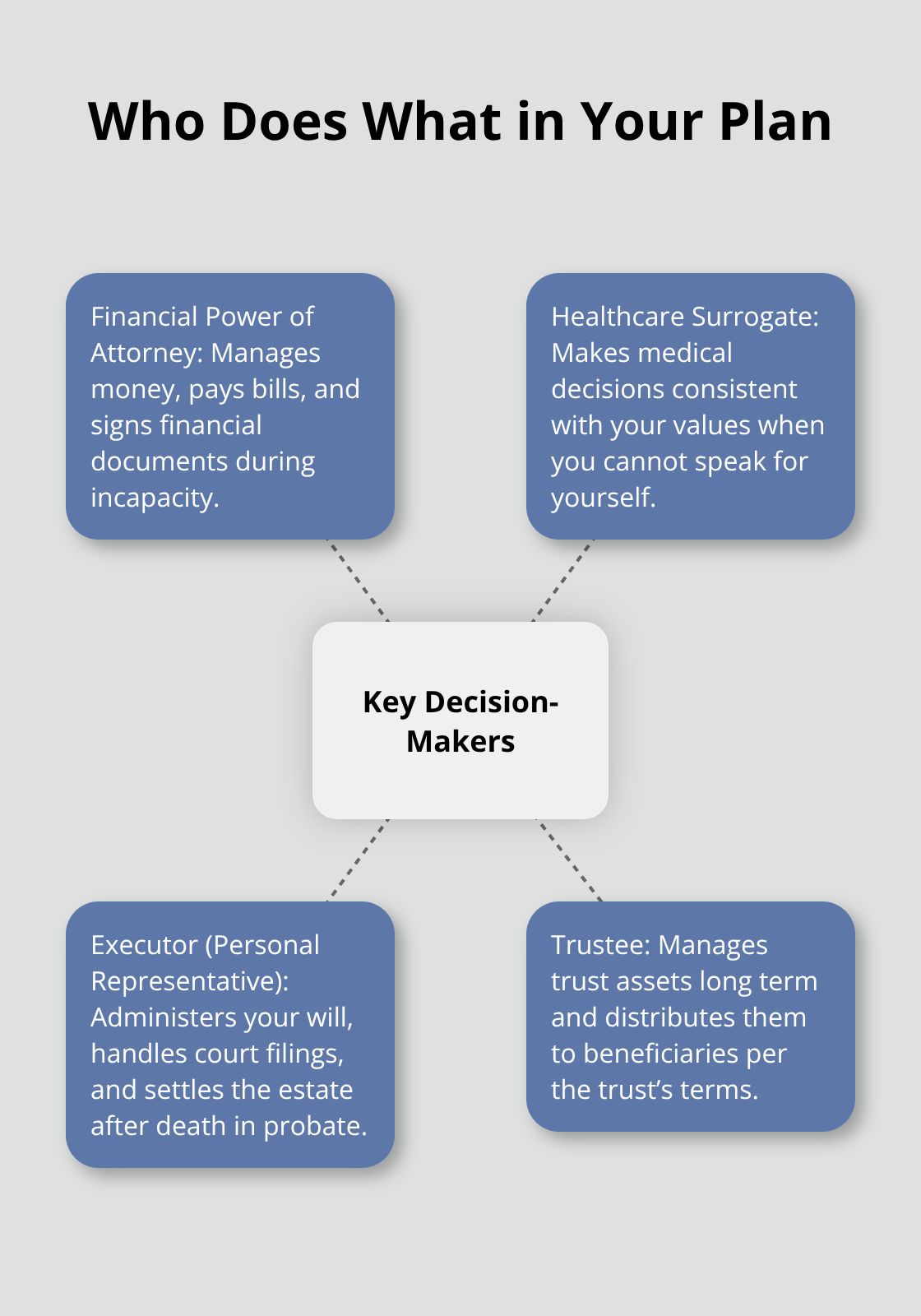
Many families make the mistake of naming the same person for every role, which overburdens one person and ignores specialized needs. You might name your oldest child as executor but choose your spouse as trustee and a different adult child as healthcare surrogate. Age matters too-naming someone in their eighties as trustee means finding a replacement trustee if they die or become incapacitated themselves. Have honest conversations with each person before adding them to documents; people who don’t understand the role or feel unprepared often decline to serve, creating chaos after you’re gone.
Work With a Local Attorney to Draft Coordinated Documents
After inventorying assets and selecting your decision-makers, work with an attorney in St. Augustine and Palatka to draft documents tailored to your specific situation. Florida’s intestacy laws and probate rules are state-specific, and mistakes cost families thousands in extra court fees or unintended tax consequences. The attorney will coordinate your will, trust, powers of attorney, and healthcare directives so they work together seamlessly rather than creating gaps or conflicts. If you own property in multiple states, the planning becomes more complex because each state has different titling requirements and probate rules. Your attorney will also address guardianship designations for minor children, ensuring courts know exactly who you want raising your kids if both parents die simultaneously. Many families believe they can use online document services for estate planning, but generic templates often miss state-specific requirements or fail to properly fund trusts, leaving families in probate anyway. A local attorney familiar with Putnam County and St. Johns County procedures ensures your documents comply with local court rules and clerk office requirements.
Fund Your Trust to Make It Actually Work
After your plan is drafted, your attorney will guide you through the critical step of funding your trust by retitling assets, updating beneficiary designations, and ensuring bank accounts and investment accounts are properly designated to pass outside probate. This funding stage is where most plans fail-documents sit in a drawer while assets remain titled incorrectly, defeating the entire purpose of the plan. Take the time to complete this step fully, as incomplete funding leaves your family facing probate despite having a trust in place.
Final Thoughts
An estate plan overview protects your family from unnecessary conflict, expensive probate costs, and state-mandated decisions about your assets and children. Without one, your loved ones face thousands in legal fees, months of court delays, and the emotional burden of fighting over your legacy while grieving. With a coordinated plan in place, your wishes guide every decision, your family avoids probate, and your assets transfer smoothly to the people you choose.
The best time to plan is now, while you’re healthy and can make clear decisions about your family’s future. Start with an inventory of your assets, name your decision-makers, and understand which documents your situation requires. Many families in St. Augustine and Palatka delay planning because they believe it’s complicated or expensive, but the cost of inaction far exceeds the cost of proper planning.
Schedule a consultation with Family, Estate & Mediation Law to discuss your situation and begin building a plan that actually protects your loved ones. Our team serves families throughout Northeast Florida with offices in St. Augustine and Palatka, providing practical guidance tailored to your specific circumstances. Your family’s security and your legacy deserve more than a generic online template or procrastination.