
Most people avoid thinking about medical decisions until a crisis forces their hand. Advanced care planning gives you control over your healthcare wishes before that moment arrives.
At Family, Estate & Mediation Law, we help St. Augustine and Palatka residents create documents that speak for them when they cannot. This guide walks you through the documents, conversations, and steps that protect both your health preferences and your family’s peace of mind.
What Your Advanced Care Documents Should Actually Say
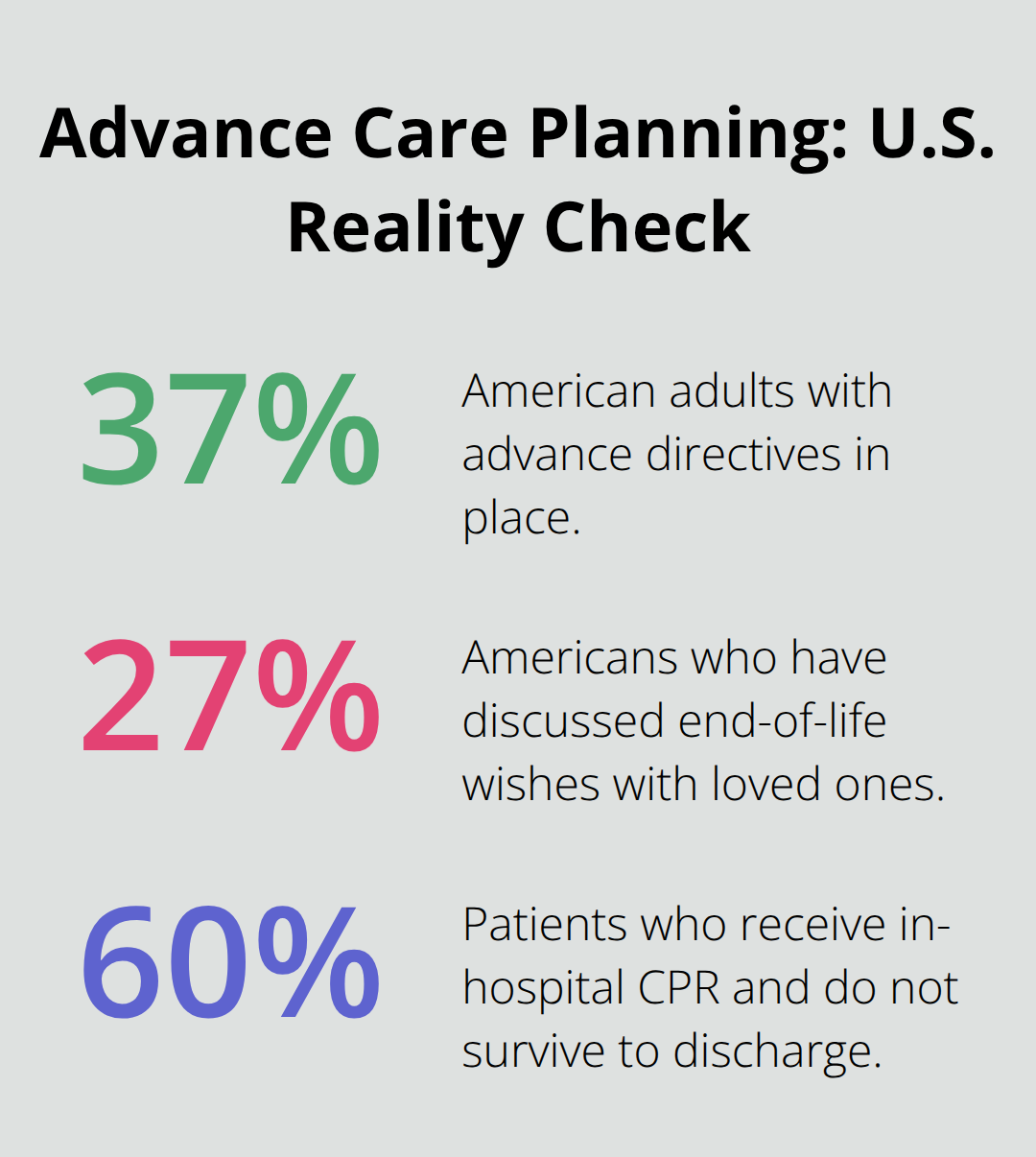
Advanced directives and healthcare power of attorney documents are not one-size-fits-all forms you complete and forget. They contain specific instructions that guide medical teams through your actual preferences when you cannot communicate them. A living will documents your wishes about life-sustaining treatment, resuscitation, and end-of-life care. A healthcare power of attorney designates someone to make medical decisions on your behalf if you’re unable to do so. The difference matters because a living will addresses specific scenarios while a healthcare power of attorney gives someone authority to handle unforeseen situations. According to the American Hospital Association, only about 37 percent of American adults have advance directives in place, which means the majority of medical decisions fall to family members guessing at what the patient would have wanted. This creates conflict, guilt, and sometimes legal complications that derail families during their most vulnerable moments.
Selecting Your Healthcare Agent
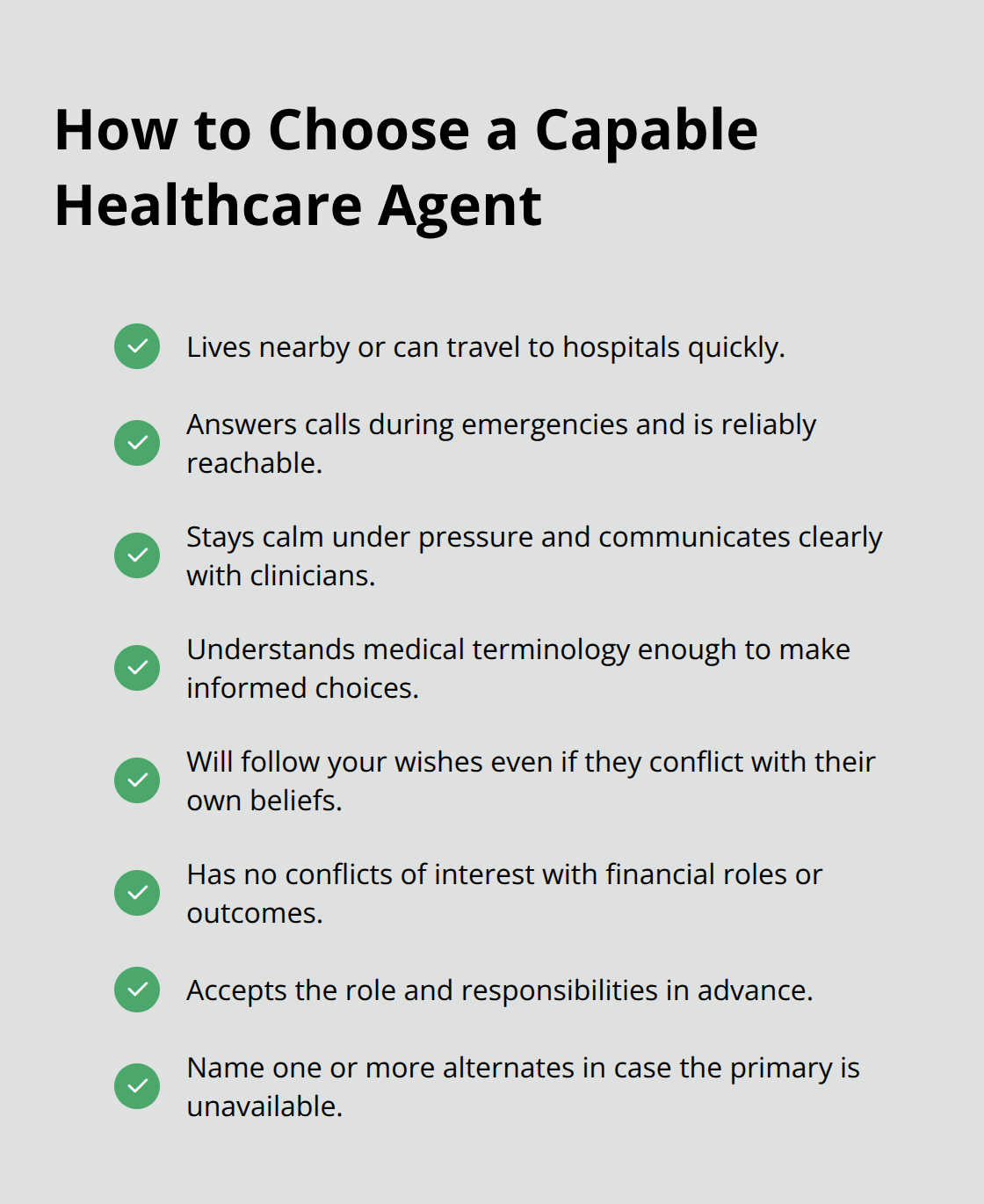
Your healthcare agent carries enormous responsibility. This person will interpret your wishes, communicate with doctors, and potentially make life-and-death decisions. Many people choose a spouse or adult child out of habit rather than capability, which backfires when that person freezes under pressure or lacks the emotional strength to authorize withdrawal of life support. Your agent needs to be someone who will follow your instructions even when their personal preferences differ, who can handle medical terminology and hospital bureaucracy, and who remains calm during crisis. Name a primary agent and at least one alternate in case your first choice is unavailable or unwilling. Document exactly what authority they have-can they refuse treatment, donate organs, access your medical records, or make decisions about comfort care only? The specificity prevents your agent from second-guessing themselves or facing family members who question their decisions later. Include their contact information and confirm they actually accept the role before you sign anything.
Having Conversations That Matter
Writing the document means nothing if your family doesn’t know what you want. Research from The Conversation Project shows that only 27 percent of Americans have discussed their end-of-life care wishes with loved ones, yet family members often must interpret vague documents during emergencies. Talk with your healthcare agent about specific scenarios-if you suffered a severe stroke with no recovery prospects, would you want a feeding tube? If you developed advanced dementia, what quality of life would be unacceptable to you? These conversations feel uncomfortable, which is exactly why people avoid them and why conflicts explode later. Tell your family where you keep these documents and who has access to them. Share copies with your primary care physician and hospital records department so medical teams don’t waste critical minutes searching for your wishes. Your agent should know whether you’re an organ donor, whether you have religious or cultural preferences about treatment, and what your definition of acceptable recovery looks like. These discussions clarify your values and give your family permission to let go when the time comes.
Once you’ve identified your agent and had these conversations, the next step involves working with legal professionals who can translate your wishes into documents that hospitals and medical teams will actually follow.
Medical Decisions You’ll Actually Face in St. Augustine and Palatka, FL
End-of-Life Care Choices That Matter
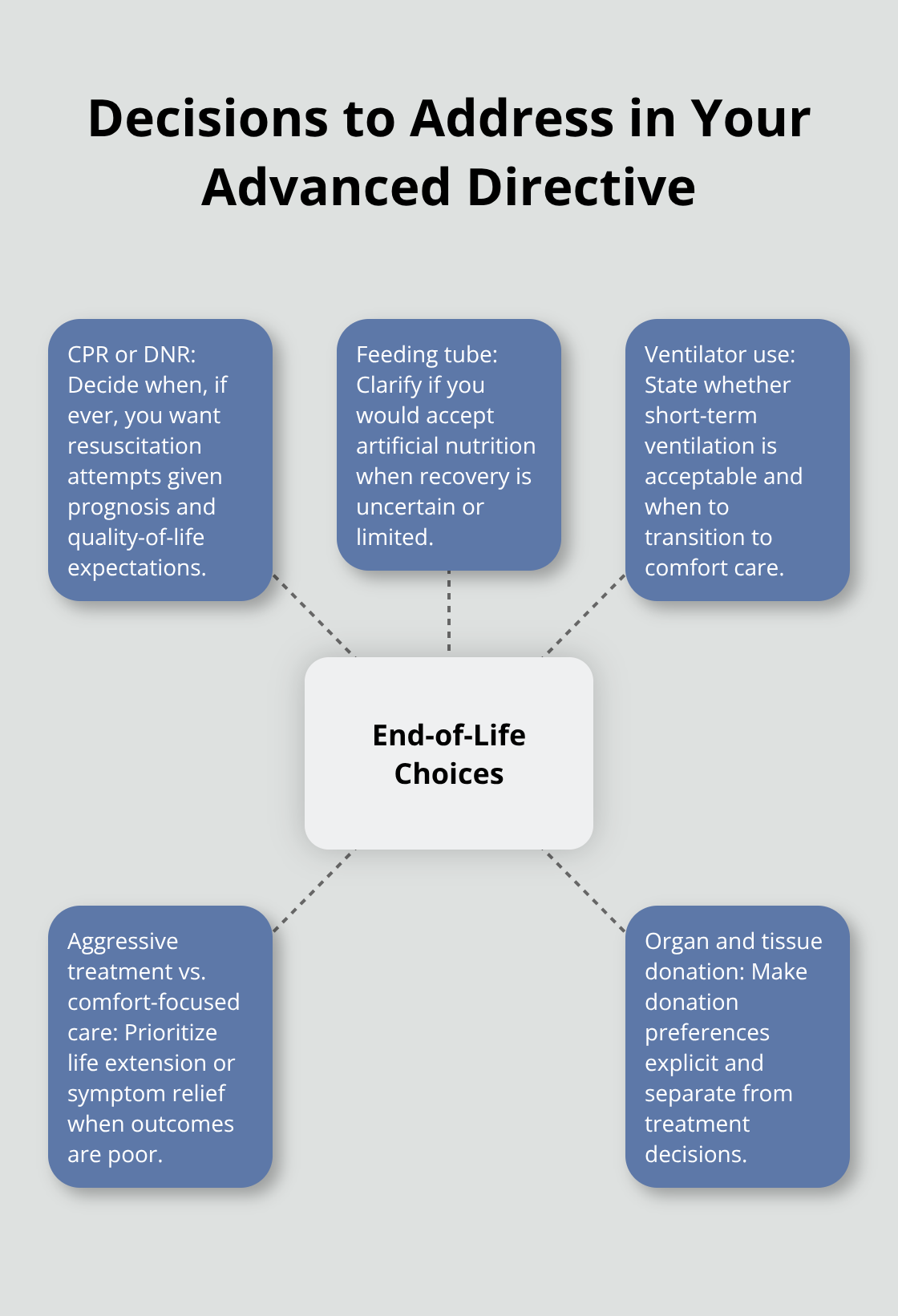
End-of-life care decisions terrify people because they seem abstract until they’re not. When your parent suffers a massive stroke or your spouse develops late-stage cancer, the hospital presents you with immediate choices about feeding tubes, ventilators, and resuscitation attempts. Your advanced directive should address these specific scenarios rather than vague language about prolonging life. Do you want CPR if your heart stops but you have terminal cancer? Would you accept a feeding tube if you couldn’t swallow but might recover some quality of life? Would you want aggressive treatment for a few more weeks or comfort-focused care that prioritizes pain management over extending survival?
The American Medical Association reports that roughly 60 percent of patients who receive CPR in hospital settings do not survive to discharge, and survivors often face severe neurological damage. This means that checking the box for full resuscitation might guarantee months in an intensive care unit followed by permanent disability rather than recovery. Your healthcare agent needs to know whether you’d accept that outcome or whether comfort care and natural death align better with your values.
Organ and Tissue Donation Decisions
Organ donation and tissue donation represent separate decisions from end-of-life care, and many people misunderstand the timing. Donation doesn’t accelerate your death-medical teams treat you fully until they determine brain death has occurred through rigorous testing. Some people fear that registering as a donor means hospitals won’t fight as hard to save them, but this contradicts how hospital protocols actually work. Your donation decision lives separately from your medical treatment decisions.
If you want to donate, register through your state’s donor registry and tell your healthcare agent and family so they can support that choice when the time comes. This clarity prevents confusion during the most stressful moments and honors your wishes without ambiguity.
When Your Agent Must Interpret Your Values
Unexpected health crises like severe accidents or sudden illness create situations where your living will might not address exactly what happens. This is where your healthcare agent’s judgment matters most. They interpret your values and apply them to situations you never imagined. If you collapse with a traumatic brain injury, your agent decides whether aggressive rehabilitation aligns with your wishes or whether the injury severity makes recovery impossible by your own standards.
If you develop a severe infection during recovery from surgery, your agent determines whether antibiotics and continued treatment match what you’d want. These judgment calls require trust and clarity about your core values rather than rigid rules. The strength of your advanced directive depends on how well you’ve communicated your underlying values-not just your preferences for specific treatments. Your agent needs permission to make decisions you couldn’t predict, guided by what they know about what matters most to you.
Once you’ve clarified these medical scenarios and equipped your healthcare agent with both documents and understanding, the final step involves working with legal professionals who can translate your wishes into documents that hospitals and medical teams will actually follow.
Building Your Advanced Care Plan in St. Augustine and Palatka, FL
Select Your Healthcare Agent First
The moment you decide to create an advanced care plan, most people stall because they don’t know where to start or who should handle the paperwork. You need to move past that hesitation by identifying your healthcare agent first, then scheduling conversations with family members, and finally working with legal professionals who understand Florida’s specific requirements. Your healthcare agent selection determines everything that follows because this person either makes your plan work smoothly or creates confusion when hospitals need answers.
Choose someone who lives nearby or can travel quickly to hospitals, who answers their phone at 2 AM when emergencies happen, and who won’t disappear during family drama. This eliminates distant relatives who mean well but can’t physically show up, people with substance abuse issues that impair judgment, and individuals with severe anxiety around medical settings. Your alternate agent matters equally because your first choice might become incapacitated themselves during a crisis.
One person cannot serve as both your healthcare agent and your financial power of attorney because these roles create conflicts of interest-the financial agent benefits from your death while the healthcare agent makes treatment decisions. Florida law allows you to name multiple alternates in order of succession, so if your spouse cannot reach the hospital within hours, your adult child takes over without legal delays.
Have Dedicated Conversations Before Signing
Once you’ve identified your agents, schedule dedicated conversations with them before you sign anything. This isn’t a casual mention at dinner-sit down separately with each person and walk through specific scenarios about what you want. Ask whether they can follow your wishes if those wishes conflict with their own beliefs about prolonging life or accepting death.
Most people discover during these conversations that their chosen agent has doubts, which gives you time to find someone better rather than discovering this during an actual medical emergency. These discussions clarify expectations and prevent your agent from second-guessing themselves when hospitals demand immediate decisions. Your agent needs to know your core values, not just your treatment preferences, so they can interpret your wishes in situations you never anticipated.
Work with a Florida Attorney
After these conversations, contact an attorney in St. Augustine and Palatka who handles Florida advance directives. Florida requires specific language and witness requirements that generic online forms often miss, which means documents created without legal guidance get rejected by hospitals. Your attorney confirms that your healthcare agent understands their responsibilities, reviews your medical preferences for internal consistency, and ensures your documents comply with Florida Statutes Chapter 765.
This professional step costs between three hundred and eight hundred dollars depending on complexity, but it prevents documents from being challenged by family members or rejected by medical institutions when you need them most. Family, Estate & Mediation Law Group has over 50 years of combined experience helping Northeast Florida residents with estate planning and advance directives, with offices in both St. Augustine and Palatka.
Final Thoughts
Advanced care planning protects your medical wishes and shields your family from impossible decisions during crisis moments. The documents you create today become your voice when you cannot speak, and they transform vague family discussions into clear instructions that hospitals can follow. Without these documents in place, medical teams default to aggressive treatment regardless of your preferences, and family members face legal battles over who decides your care while you suffer.
The three steps we outlined work together to build a plan that actually functions when needed. Selecting a healthcare agent who understands your values, having honest conversations about specific medical scenarios, and working with a Florida attorney to formalize your wishes creates a foundation that prevents conflict and honors your autonomy. The cost of creating these documents through a qualified attorney is minimal compared to the legal battles, family divisions, and medical complications that arise when advance care planning documents are missing or poorly drafted.
St. Augustine and Palatka residents who want to move forward with advanced care planning should contact Family, Estate & Mediation Law to schedule a consultation. The team helps Northeast Florida families create documents that protect both healthcare wishes and family relationships. Your next step is scheduling that conversation with an attorney rather than waiting for a health crisis to force your hand.