A healthcare directive in Florida gives you control over your medical decisions if you can’t communicate them yourself. Without one, doctors and family members may face confusion about what you actually want.
At Family, Estate & Mediation Law, we’ve seen firsthand how healthcare directives Florida protect families from difficult guesswork during medical crises. This guide walks you through what you need to know to create one that truly reflects your wishes.
What Florida Law Actually Requires in a Healthcare Directive
The Legal Framework Behind Your Directive
A healthcare directive in Florida is far more than a generic form you fill out and forget. Chapter 765 of the Florida Statutes defines it as a witnessed written document or oral statement that designates a healthcare surrogate, contains a living will, or expresses an anatomical gift. The surrogate you name gains authority to make medical decisions and access your health information when you cannot communicate your own wishes. Florida law presumes you have capacity to make these decisions until a physician determines otherwise, which means you control the process entirely.
How the Three Core Components Work Together
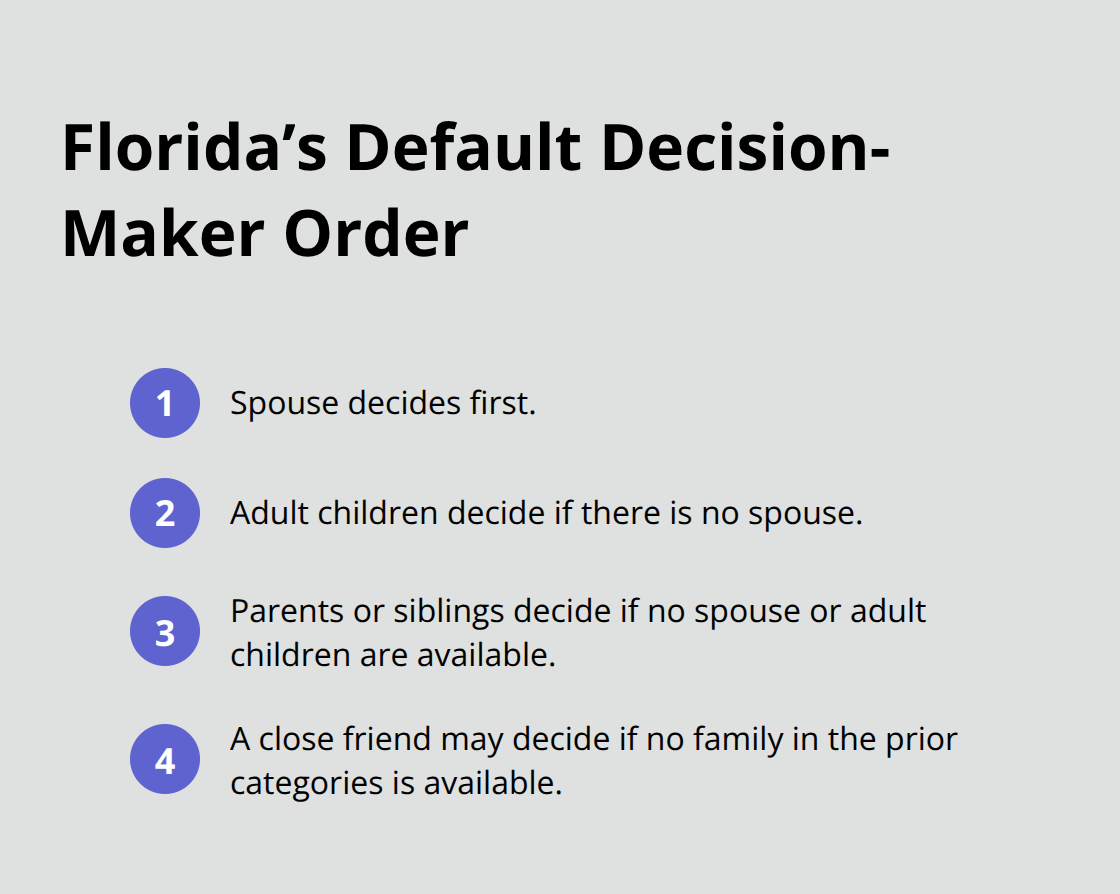
The three core components work together to cover different medical scenarios. Your surrogate makes day-to-day decisions, your living will addresses life-prolonging procedures in terminal or end-stage conditions, and your anatomical gift specifies organ or tissue donation preferences. Without a written directive, Florida law creates a default hierarchy where your spouse decides first, then adult children, then parents or siblings, then close friends. That statutory order often conflicts with what families actually want, and it requires proof of relationships and availability that can delay critical medical decisions by days.
Why Hospitals Reject Incomplete Directives
Florida residents face a specific problem that generic directives miss entirely. Hospitals, nursing homes, hospices, and home health agencies must provide written advance directive information to patients under state law, yet most people never receive it or understand what they’re signing. Medical providers follow documented instructions, not guesses, so your family’s assumptions about your wishes carry no legal weight. A valid directive requires two adult witnesses, with at least one unrelated to you by blood or marriage, and hospitals will reject directives that lack proper signatures or witness information.
Cross-State Complications and Local Solutions
Florida recognizes directives created in other states if they meet that state’s requirements, but cross-state complications still arise when families split between jurisdictions. The real issue emerges when you move between states or own property in multiple locations-your directive may satisfy Florida law but fail to meet requirements in another state where medical decisions must be made. Family, Estate & Mediation Law works with Northeast Florida families to ensure directives align with state law requirements and your actual medical philosophy, avoiding the gaps that create family conflict during medical emergencies.
Understanding these legal requirements sets the foundation for creating a directive that actually protects your wishes. The next step involves selecting the right person to carry out those wishes and documenting your preferences with precision.
What Your Healthcare Directive Actually Covers
When Your Directive Actually Activates
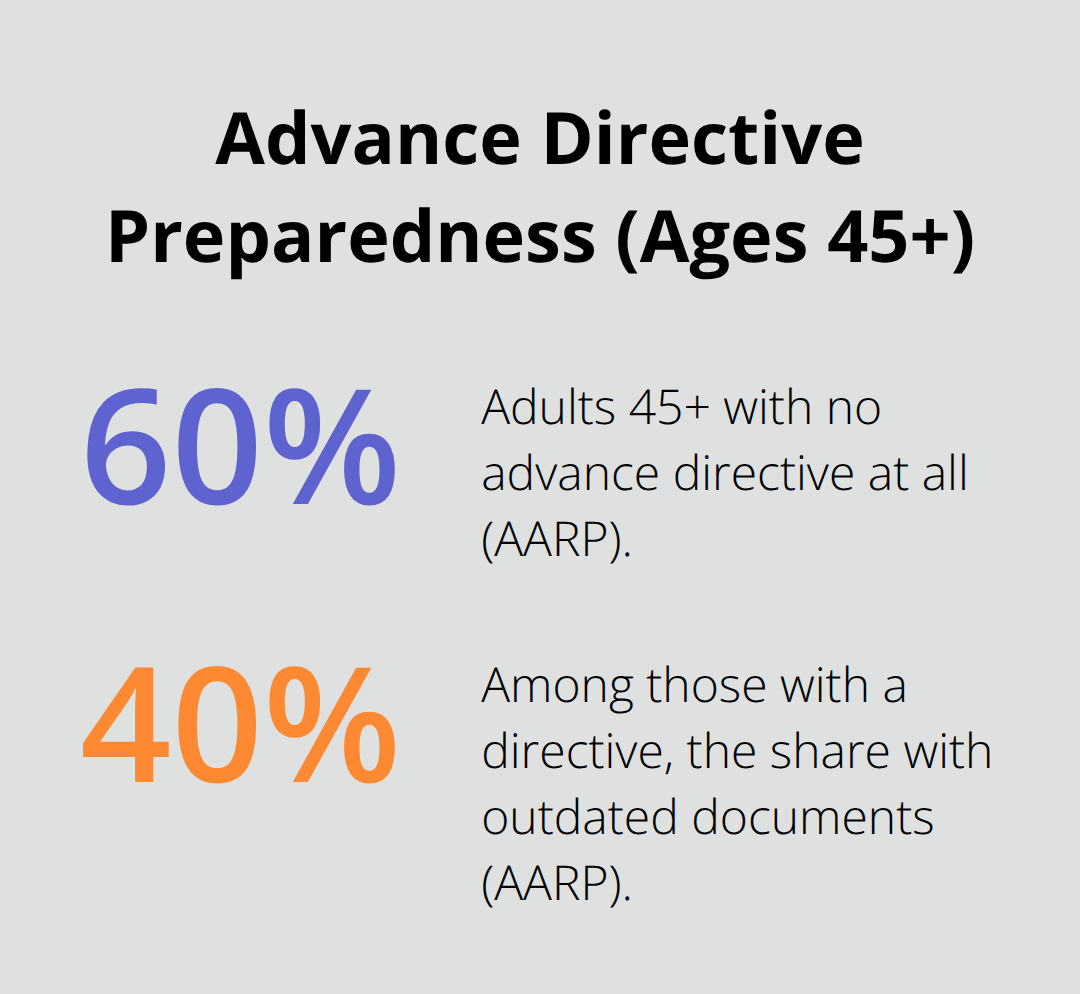
Most Florida residents believe a healthcare directive only matters when death is imminent, but this misunderstanding costs families real money and causes preventable medical conflicts. A healthcare directive controls medical decisions whenever you cannot communicate them yourself-whether that’s during surgery recovery, a serious accident, temporary incapacity from medication, or a coma. The AARP found that 60% of adults over 45 have no advance directive at all, and among those who do, roughly 40% have outdated documents that no longer reflect their actual wishes or life circumstances. Your directive activates the moment your physician determines you lack capacity to decide, not when you’re dying.
This distinction matters because medical incapacity happens far more often than terminal illness.
Why Hospitals Require Written Surrogates
A patient under general anesthesia cannot communicate preferences, yet surgeons still need authorization to proceed with unexpected complications. Your family cannot simply tell the hospital what they think you would want without a documented surrogate designation, and hospitals will delay or deny treatment rather than guess at your intentions. Florida law requires your surrogate to follow your documented instructions or, if instructions are unclear, to act in your best interests as they understand them. This creates a legal liability for your surrogate and a source of family conflict that a written directive prevents entirely.
The Problem With Casual Conversations
The second critical misconception is that your family automatically knows your medical wishes because you’ve talked about them casually. Conversations disappear under stress, memories conflict, and family members often disagree about what you actually said years earlier. Many Northeast Florida families discover after a medical crisis that their chosen surrogate interprets their wishes completely differently than intended, or that siblings disagree on what their parent would have wanted. Without documented preferences, your surrogate faces genuine uncertainty during the most stressful moment of their life.
Why One Directive Cannot Cover All Scenarios
Thinking one directive covers all scenarios leaves gaps that affect real medical decisions. Your living will addresses terminal conditions and end-stage conditions specifically, but what about permanent unconsciousness without a terminal diagnosis, or experimental treatments, or pain management versus aggressive intervention? A comprehensive directive addresses these distinct scenarios separately, and your surrogate needs clear guidance on whether you prefer comfort care over extended life support. Without these specifics, your surrogate often makes medical decisions you would have rejected, and that uncertainty creates lasting family conflict.
The next step requires you to select the right person to carry out your wishes and document your preferences with precision that eliminates ambiguity.
How to Create and Execute Your Healthcare Directive
Select Your Healthcare Surrogate With Care
The right healthcare surrogate matters far more than most Florida residents realize, and this choice directly determines whether your medical wishes get followed during a crisis. Your surrogate must be someone willing to make difficult decisions under stress, someone who understands your values well enough to interpret unclear situations, and someone physically available when decisions need to happen fast. The worst choice is naming someone out of obligation or family politics-a reluctant surrogate creates liability for themselves and uncertainty for your doctors.
Talk directly with your chosen surrogate before naming them, explain your medical philosophy in detail, and verify they actually want this responsibility. Many families discover too late that their chosen surrogate feels unprepared or disagrees with their medical preferences. Florida law allows you to name an alternate surrogate as backup, which protects you if your first choice becomes unavailable or unwilling.
Communicate Your Preferences to Your Surrogate
Give your surrogate a copy of your complete directive immediately, not years later during a medical emergency, and discuss specific scenarios like permanent unconsciousness, experimental treatments, and pain management versus aggressive intervention. Your surrogate needs to understand not just what you want, but why you want it-the reasoning behind your choices matters when they face ambiguous medical situations. Without this conversation, your surrogate operates from assumptions that may conflict with your actual values.
Document Your Medical Preferences With Precision
Write down exactly what life-prolonging procedures mean to you-ventilators, feeding tubes, CPR, dialysis, and artificial hydration are distinct interventions with different outcomes, and your surrogate needs clear guidance on each one. Florida Health Care Advance Directives forms available through the state provide space for these specifics. Many Northeast Florida residents benefit from working through these decisions with someone experienced in healthcare law rather than trying to interpret the forms alone.
Execute Your Directive According to Florida Law
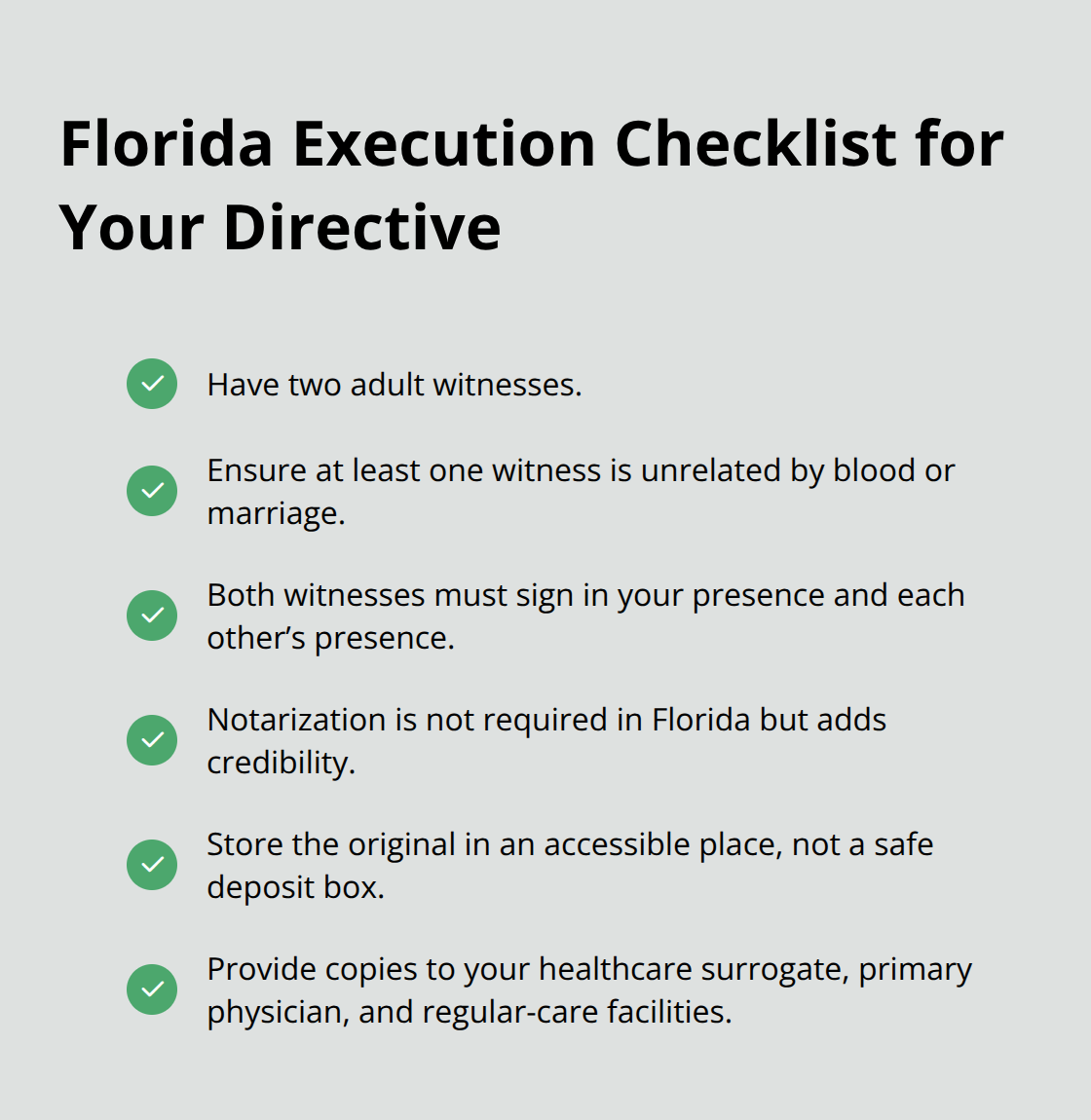
Proper execution requires two adult witnesses, at least one unrelated to you by blood or marriage, and both must sign in your presence and each other’s presence. Notarization is not legally required in Florida but adds credibility if anyone challenges your directive later. Keep the original signed document in an accessible place-not a safe deposit box that requires a key holder-and provide copies to your healthcare surrogate, your primary physician, and any facility where you receive regular care.
Store and Update Your Directive Strategically
Consider scanning the signed directive and storing it digitally on your phone or cloud storage so it’s available immediately if you need emergency care far from home. Florida law allows you to revoke or change your directive at any time with a new written and signed document, so your directive can evolve as your medical philosophy or life circumstances change. Update your directive whenever major life events occur (marriage, divorce, serious illness diagnosis) or when your medical preferences shift. As part of your broader estate planning checklist, your healthcare directive ensures your complete wishes are documented and protected.
Final Thoughts
Healthcare directives Florida work because they replace assumptions with clarity and give your surrogate legal authority to act immediately when you cannot communicate. Your living will guides decisions about life-prolonging procedures, your anatomical gift preferences receive honor without family debate, and your family avoids weeks of conflict during medical crises. The few hours you invest now in creating and discussing your directive saves your loved ones from impossible decisions when stress runs highest.
We at Family, Estate & Mediation Law help Northeast Florida families create healthcare directives that reflect their medical philosophy and protect their futures. Our team understands the specific gaps that generic forms miss and the family dynamics that complicate medical decisions, so we work with you to select the right surrogate, document your preferences with precision, and meet all Florida law requirements. Whether you live in St. Augustine, Palatka, or anywhere across Northeast Florida, we guide you through this process with practical strategies that preserve your autonomy.
Contact Family, Estate & Mediation Law to schedule a consultation about your healthcare directive today. Bring any existing documents, think through your medical preferences, and come ready to discuss who should make decisions if you cannot communicate them yourself.