
A healthcare directive is one of the most overlooked documents in estate planning, yet it directly controls who makes medical decisions for you when you cannot. Without one in place, your family may face legal battles and uncertainty during your most vulnerable moments.
At Family, Estate & Mediation Law, we help Florida residents understand the Florida healthcare directive essentials that protect their health and peace of mind. This guide walks you through what you need to know to create a directive that actually works.
What a Florida Healthcare Directive Actually Does
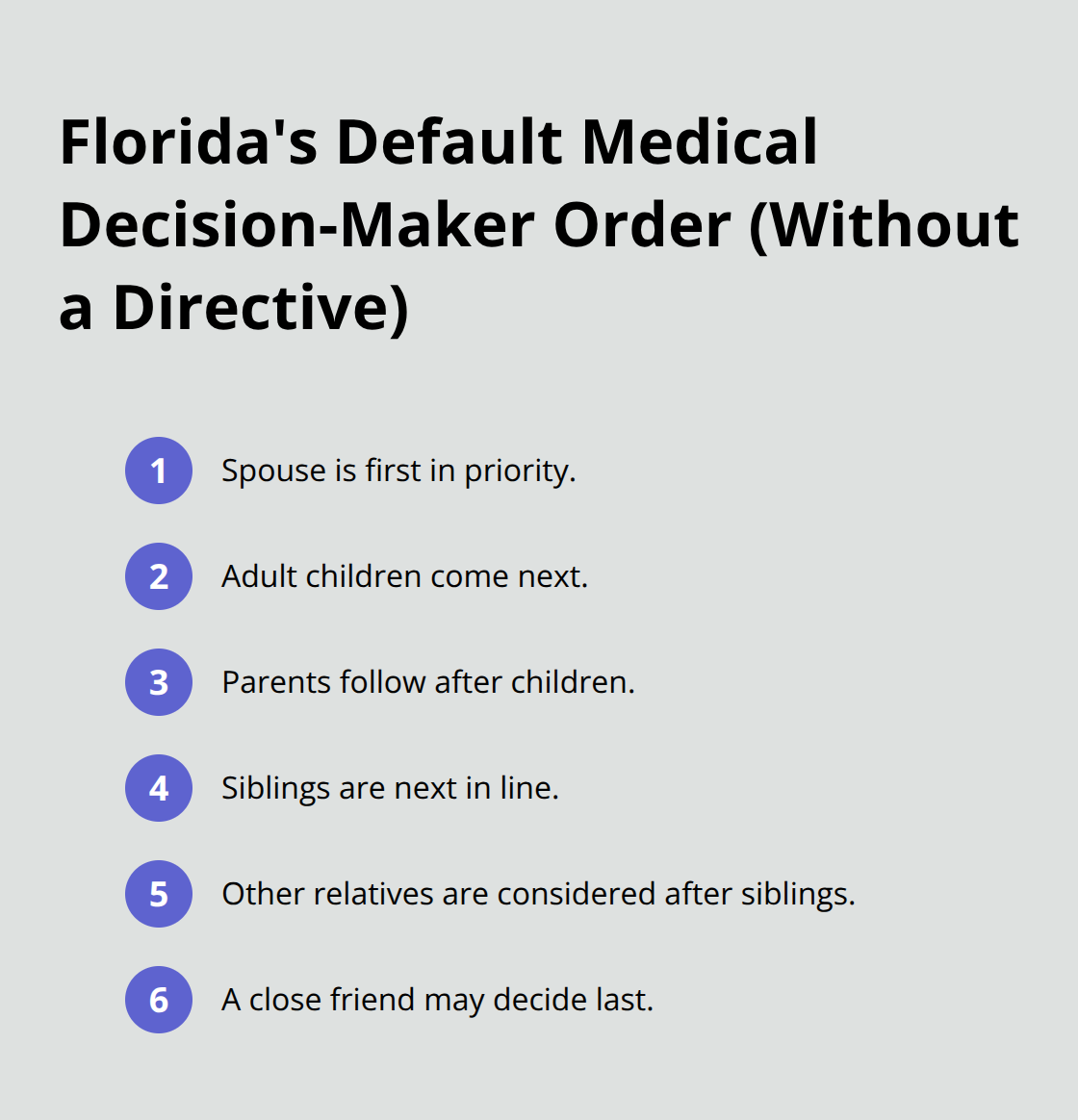
A Florida healthcare directive is a legal document that names someone to make medical decisions for you if you become unable to do so yourself, and it states your preferences for specific treatments. Under Florida Statute 765, this directive takes effect immediately or upon incapacity, depending on how you structure it, and healthcare providers must follow it. The document eliminates the need for court involvement, which means your family avoids the lengthy and expensive process of obtaining a guardianship. Without a directive in place, Florida law establishes a priority order for decision-making: spouse first, then adult children, then parents, then siblings, then other relatives, then a close friend. This hierarchy can create conflict when family members disagree about your care, and hospitals may delay treatment decisions while waiting for legal clarity.
How a Directive Differs from a Will or Power of Attorney
Many people confuse a healthcare directive with a will or financial power of attorney, but they serve completely different purposes and activate at different times. A will only takes effect after death and addresses property distribution, while a healthcare directive controls medical decisions while you are alive but incapacitated. A financial power of attorney handles money and legal matters, not medical care.
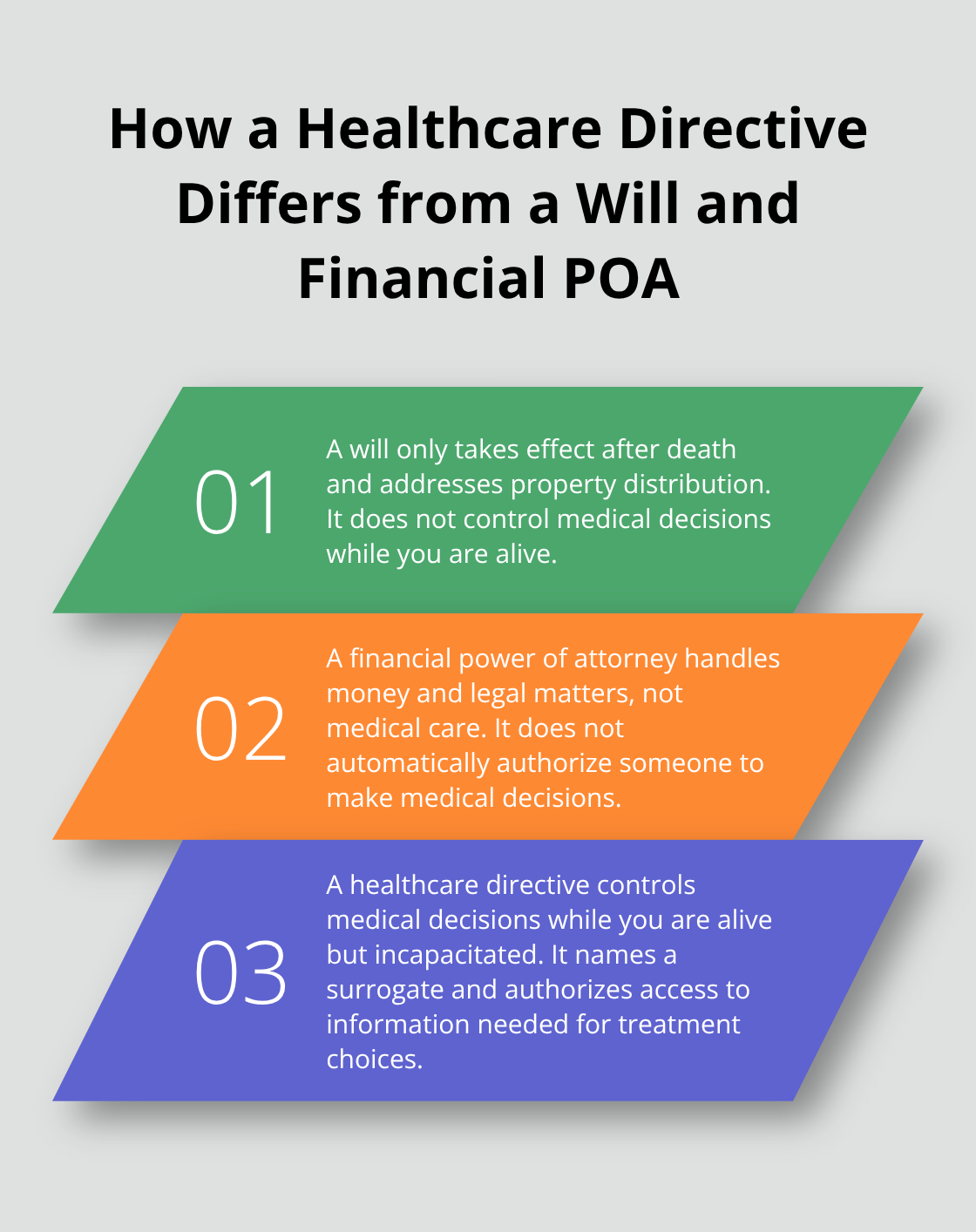
Florida allows you to create all three documents as separate instruments, and they work together as part of a complete estate plan. The healthcare directive is the only document that gives someone authority to speak with doctors, access your medical records under HIPAA rules, and make treatment decisions during a health crisis. This distinction matters because a spouse with power of attorney over finances cannot automatically make medical decisions without a separate healthcare surrogate designation.
What Happens When You Skip This Document
Florida residents who lack a healthcare directive often face serious consequences during emergencies. Hospitals cannot share medical information with family members without HIPAA authorization, and doctors cannot accept treatment decisions from relatives without legal documentation. When multiple family members disagree about care, the facility may petition for a court-appointed guardian-a process that costs $5,000 to $15,000 and takes weeks or months to complete. During that time, your medical condition may deteriorate while the court sorts out who has authority to decide. Creating a directive takes a few hours and costs far less than litigation, yet most adults over 50 still lack one.
Why Your Healthcare Surrogate Choice Matters
The person you name as your healthcare surrogate carries enormous responsibility. This individual must understand your medical values, respect your wishes even when they disagree with them, and communicate clearly with doctors during stressful situations. You should discuss your preferences with your chosen surrogate before you finalize the document, and provide them with a signed copy so they know what you want. Selecting someone based on availability or family obligation rather than trustworthiness often leads to poor decisions later. The surrogate designation also allows you to name an alternate surrogate in case your first choice becomes unavailable or unwilling to serve.
Moving Forward with Your Directive
Understanding what a healthcare directive does and how it differs from other documents positions you to make informed decisions about your medical future. The next step involves learning what specific components you need to include in your directive to make it legally valid and truly reflective of your values.
Key Components of Your Florida Healthcare Directive
Your healthcare directive only works if it contains the right information and names the right person to act on your behalf. Florida Statute 765 sets clear requirements for what must appear in your document, and skipping any of these components creates gaps that hospitals and doctors will exploit during emergencies.
Selecting and Instructing Your Healthcare Surrogate
The most critical decision is naming your healthcare surrogate-the person who will speak for you when you cannot speak for yourself. This person needs more than willingness to help; they need a clear understanding of your medical values and specific treatment preferences written directly into the document. Many Florida residents name a spouse or adult child without ever discussing what that person should do if you suffer a stroke, enter a persistent vegetative state, or face terminal illness. That silence creates confusion when the surrogate must make life-or-death decisions under pressure.
You should have a conversation with your chosen surrogate about whether they would want aggressive life-sustaining treatment in your situation, whether they would accept a DNR order, and how they would handle situations where no clear answer exists. Document these conversations in writing within your directive itself, not just in casual discussion. The more specific you are about your wishes, the less room exists for family conflict or medical facility delays.
Florida law allows you to name an alternate surrogate in case your first choice becomes unavailable, unwilling, or unable to serve. This backup designation protects you against unexpected circumstances that prevent your primary surrogate from acting.
Stating Your Medical Preferences and Values
If you have strong religious or philosophical beliefs about medical treatment, state them explicitly in your directive. If you want to donate organs after death, that information belongs in your directive as well. Florida residents can access downloadable forms through the Florida Agency for Health Care Administration or through CaringInfo’s Florida advance directive page, and these state-approved templates guide you through exactly what to include.
Your specific preferences about life-sustaining treatment, pain management, and end-of-life care transform your directive from a generic document into one that truly reflects your values. Healthcare providers will follow these stated preferences when you cannot communicate them yourself.
Authorizing Access to Your Medical Information
Your directive must also address HIPAA authorization, which determines who can access your medical records and receive information from your doctors. Without explicit HIPAA language in your directive, hospitals will refuse to share your test results, diagnosis, or treatment options with your family members, even your spouse. This creates a dangerous situation where your surrogate cannot make informed decisions because they lack medical information.
Florida allows you to name specific individuals who can receive health information, or you can authorize your healthcare surrogate to access everything. Some people name their surrogate plus their spouse and adult children as authorized recipients, ensuring multiple family members understand your condition and can support the surrogate’s decisions.
Making Your Directive Accessible When It Matters
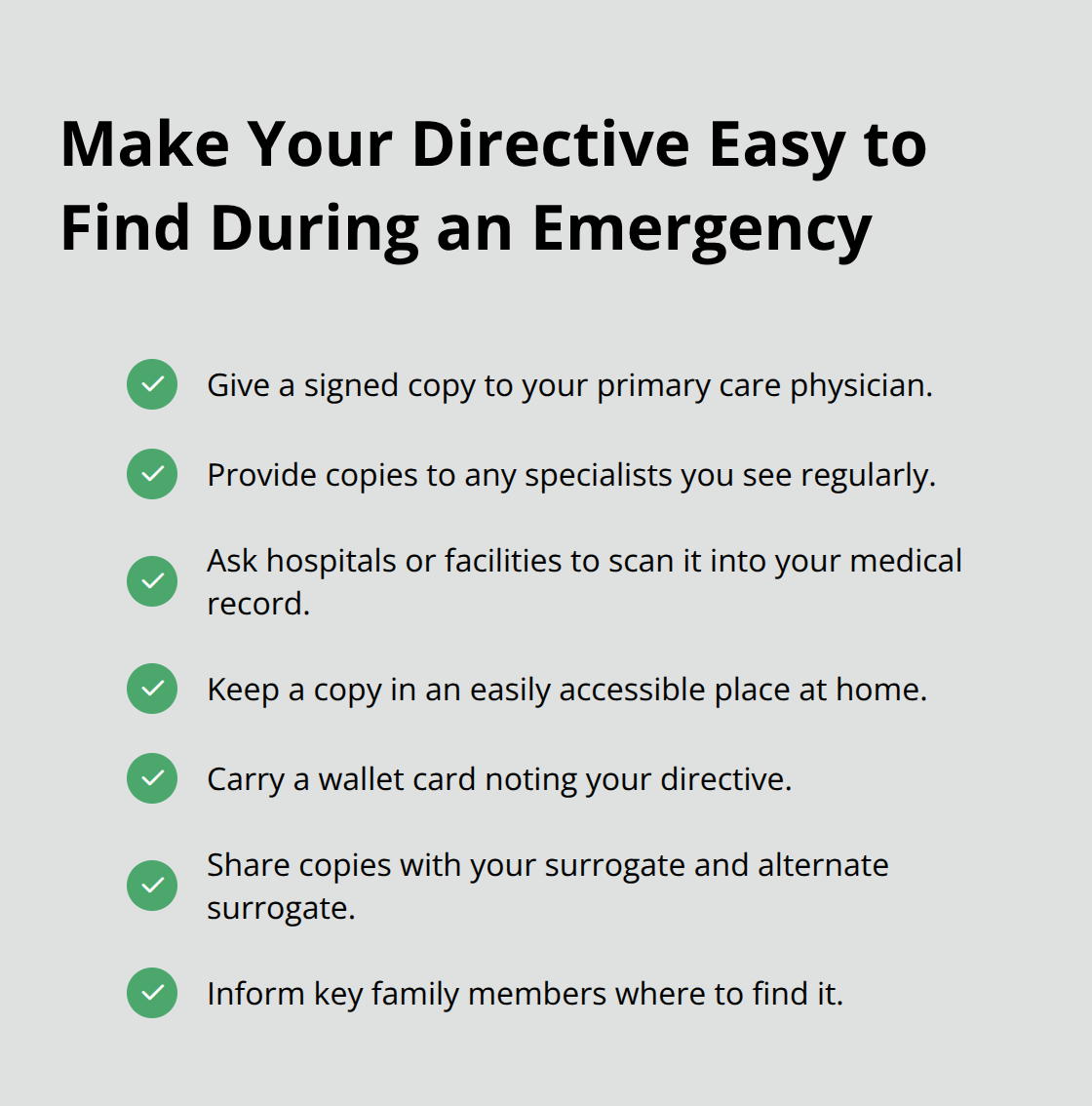
Once you complete your directive with proper signatures and witness requirements, you must store it where your healthcare provider can actually find it during an emergency. Many Florida residents complete their directives then file them away in a safe deposit box that nobody accesses until after death. Instead, provide a signed copy directly to your primary care physician and any specialists you see regularly. If you spend significant time in a hospital or nursing facility, request that the document be scanned into your medical record.
Keep a copy in an easily accessible location at home and consider carrying a wallet card that alerts emergency responders to the existence of your directive. Share copies with your healthcare surrogate, alternate surrogate, and any family members who should know your wishes. The more people who possess a copy, the greater the chance that someone will produce it when you cannot communicate.
With the right components in place and proper distribution of your directive, you have created a document that actually protects your medical autonomy. The next step involves understanding the legal requirements that make your directive valid and enforceable in Florida.
Common Mistakes That Undermine Your Healthcare Directive
Most Florida residents who complete a healthcare directive believe they have solved the problem, yet their document becomes worthless within a few years due to circumstances they never anticipated. Life changes constantly-you remarry, relocate, develop new medical conditions, change your religious beliefs, or realize your chosen surrogate no longer fits your needs. Your directive written ten years ago when your children were young and your health was stable does not reflect who you are today.
Courts have enforced outdated directives that contradicted a person’s current wishes simply because the individual never formally updated the document, leaving families devastated by decisions that no longer matched the patient’s values. Florida Statute 765 allows you to revoke or modify your directive at any time, yet most people treat it as a one-time task completed and forgotten.
Failing to Update Your Directive After Life Changes
You should review your directive every two to three years and immediately after major life events-marriage, divorce, diagnosis of a serious illness, retirement, or moving to a different state. When you make changes, write them down, sign and date them, and distribute copies to your healthcare provider, your surrogate, and relevant family members. Simply telling your surrogate about changes verbally creates confusion later when they cannot remember exactly what you said or when you said it.
Not Communicating Your Wishes to Your Surrogate and Family
The second critical failure happens when your healthcare surrogate and your family members never actually read your directive before a crisis occurs. You name someone as your surrogate, complete the paperwork, and assume they understand what you want-but they have never seen the document or discussed your specific wishes. When an emergency strikes and your surrogate must decide whether to pursue aggressive treatment or accept comfort care, they freeze because they have no clear guidance.
Hospitals also delay treatment while staff hunt for a copy of your directive, and family members contradict the surrogate’s decisions because nobody told them what you wanted. Schedule a specific conversation with your chosen surrogate at least once, walk through your preferences together, and answer their questions before they face life-or-death decisions under pressure. Give them a signed copy to keep at home, not filed away somewhere inaccessible.
Inform your primary care physician, any specialists you see regularly, and your adult children that a directive exists and where to find it. Some Florida residents add their directive to their email signature or text it to key family members so multiple people possess a current copy.
Selecting the Wrong Healthcare Surrogate
The person you select as surrogate should be someone you trust completely, someone who shares your values about medical treatment, and someone willing to advocate for your wishes even when family members disagree. Choosing your surrogate based solely on convenience or family obligation-naming your oldest child because they live closest, or your spouse simply because they are married to you-often backfires when that person cannot handle the emotional weight of the decision or lacks the assertiveness to push back against medical staff or other family members.
Your surrogate must be able to say no to treatment you would refuse, and they must be comfortable discussing death and disability without minimizing your concerns or imposing their own preferences onto your medical decisions. The person you name carries enormous responsibility and must understand your medical values, respect your wishes even when they disagree with them, and communicate clearly with doctors during stressful situations.
Final Thoughts
You now understand what a Florida healthcare directive essentials entails, what components make it legally valid, and how to avoid the mistakes that render most directives ineffective within years. The final step involves creating your directive and implementing it before a health crisis forces your family to make decisions without your guidance. You can download a state-approved form from the Florida Agency for Health Care Administration or CaringInfo’s Florida advance directive page, complete it yourself, and have two witnesses sign it-with at least one witness who is not your spouse or blood relative. This approach costs nothing and takes a few hours, since Florida law does not require an attorney to create a valid directive.
Alternatively, working with an attorney ensures your directive integrates seamlessly with your will, trust, and financial power of attorney, creating a complete estate plan rather than isolated documents that conflict with each other. Once your directive is complete and properly witnessed, provide signed copies to your healthcare surrogate, your primary care physician, and any specialists you see regularly. Schedule a conversation with your surrogate to discuss your specific wishes and answer their questions before they face life-or-death decisions under pressure.
Your named surrogate, stated medical preferences, and HIPAA authorization protect your autonomy and spare your family from legal battles during your most vulnerable moments. Review your directive every two to three years and immediately after major life changes to keep it current. Contact Family, Estate & Mediation Law to discuss how your directive fits into your overall estate plan.