Estate planning for seniors isn’t optional-it’s the foundation that protects what you’ve built and controls where it goes. Without a clear plan, your family faces delays, taxes, and conflict when they need stability most.
At Family, Estate & Mediation Law, we’ve seen firsthand how the right strategy makes all the difference. This guide walks you through the documents you need, the mistakes to avoid, and the steps to take action today.
Why Estate Planning Matters for Seniors
Without a plan in place, your family inherits far more than your assets-they inherit stress, delays, and unnecessary costs. The numbers tell a stark story: only 32% of Americans have a will as of 2024, according to the Caring.com 2024 Wills and Estate Planning Study, yet probate alone can consume up to 10% of an estate’s value while stretching out for months or even years. For seniors, this isn’t abstract math. It’s the difference between your children receiving their inheritance within months versus waiting through lengthy court proceedings while creditors and taxes chip away at what you built. Federal estate taxes also matter more than many realize.
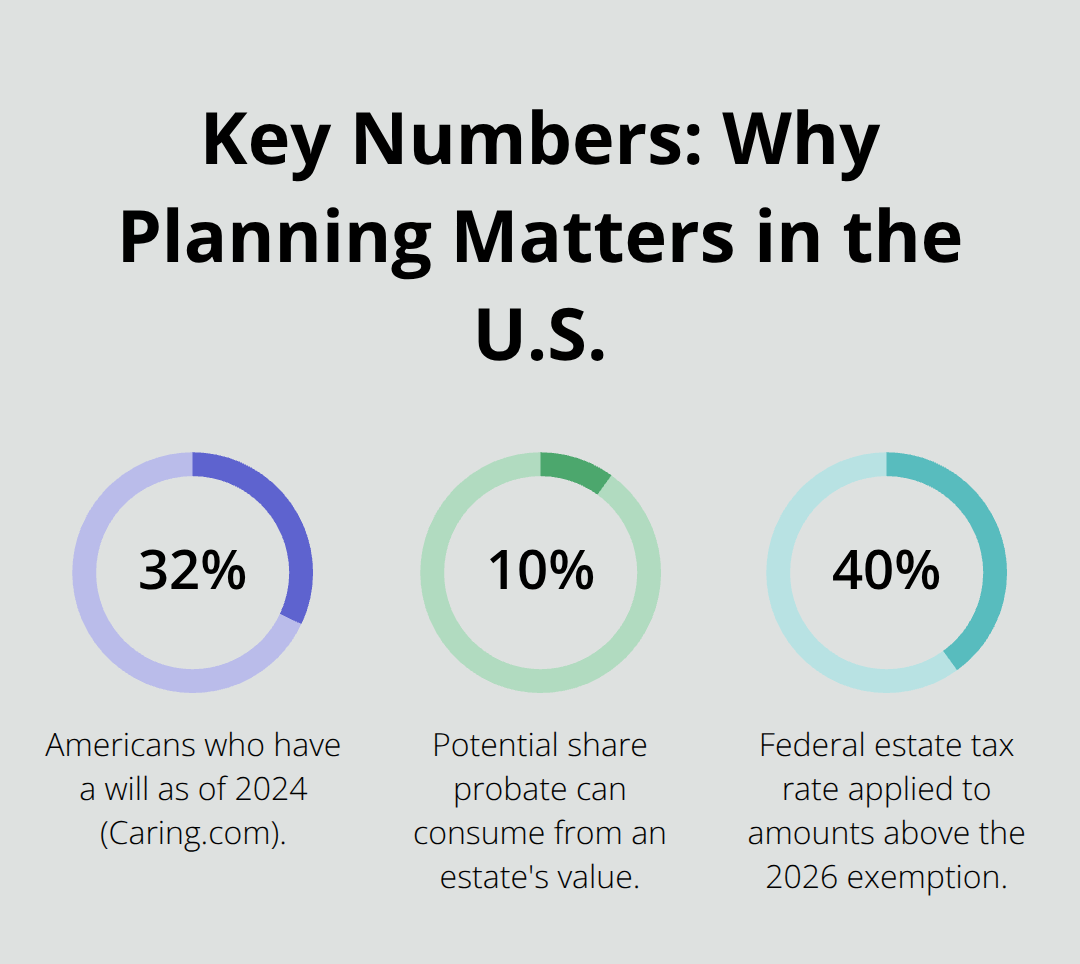
As of 2026, the lifetime gift and estate tax exemption stands at $15 million per person, but anything above that faces a 40% federal tax unless transferred to a spouse or charity. Without intentional planning-such as gifting during your lifetime within the $19,000 annual exclusion per recipient-you leave money on the table that could go to your family instead of the government. The cost of inaction compounds when you factor in state-level taxes and the probate process itself.
Control Where Your Assets Go
A clear estate plan controls where your assets go, who manages them, and under what conditions. It names guardians for minor grandchildren so you, not the court, decide who raises them. It designates healthcare proxies and specifies your medical wishes through advance directives, ensuring your family knows exactly what you want if you can’t speak for yourself. Without documentation, heirs face months of legal hurdles just to access a basic email account.
Address Digital Assets and Online Accounts
Most families overlook digital assets and online accounts-cryptocurrency wallets, email accounts, social media-that represent real value and require access credentials. Your heirs won’t know these assets exist without clear documentation. A comprehensive plan identifies these accounts and provides instructions for managing or transferring them after your death.
Update Your Plan When Life Changes
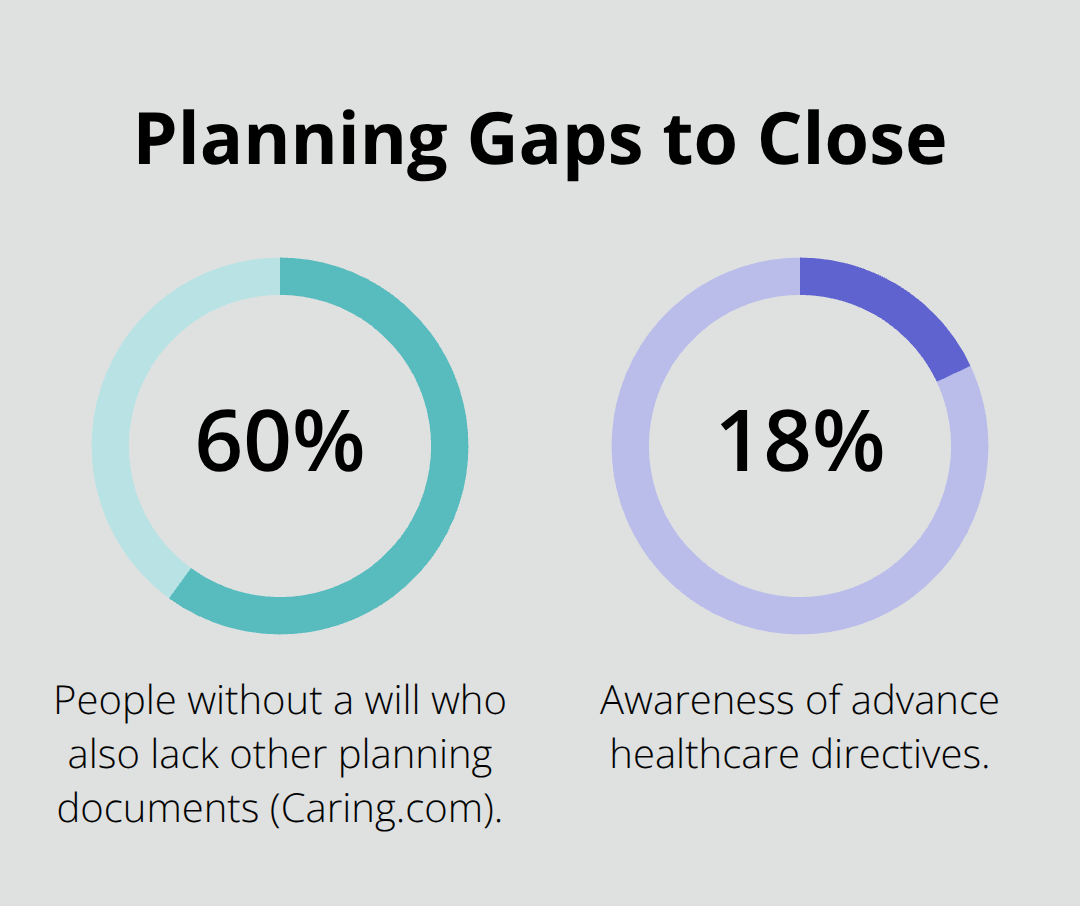
Life changes demand updates to your estate plan. A marriage, divorce, new grandchild, or significant shift in assets requires your plan to evolve. The Caring.com study found that 60% of people without a will haven’t created other planning documents, leaving their families vulnerable to unintended consequences and state intestacy laws that may contradict your actual wishes.
Procrastination remains the top barrier seniors face, yet the complexity many fear dissolves once you take the first step toward professional guidance.
Essential Documents Every Senior Needs
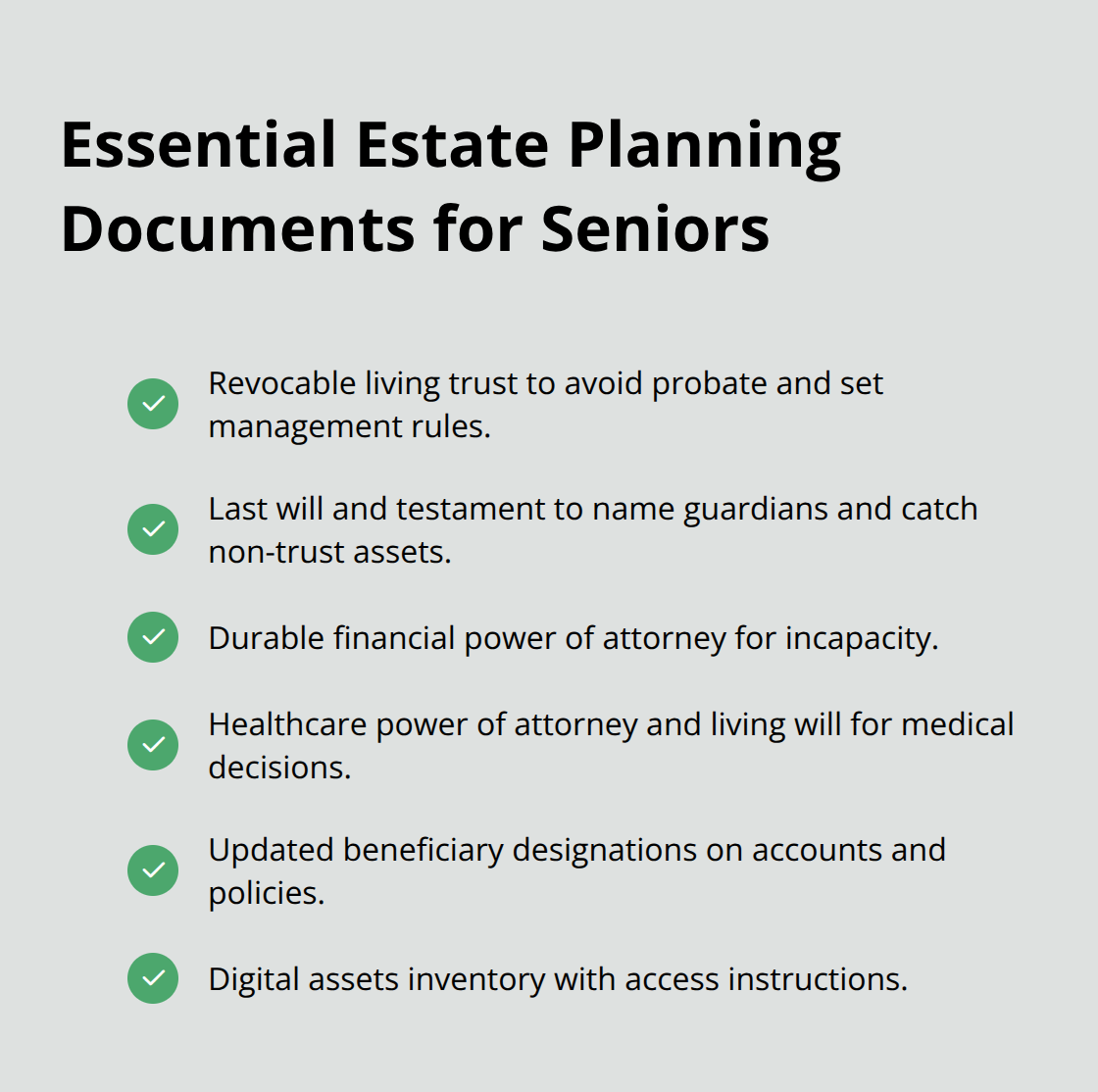
A will alone won’t protect your family or your legacy. We at Family, Estate & Mediation Law have worked with hundreds of seniors who believed a basic will covered everything, only to discover critical gaps when life shifted unexpectedly. The foundation starts with a revocable living trust, which handles assets without probate and keeps your affairs private during your lifetime and after death. Unlike a will, a living trust lets you set rules for how assets are managed, appoint a successor trustee, and distribute income or principal to beneficiaries on your terms.
Why a Living Trust Matters More Than You Think
For seniors with property in multiple states or complex family situations, a living trust becomes essential. Probate in each state where you own property means multiplied costs and delays that a trust eliminates entirely. Wills remain important for naming guardians for minor grandchildren and catching any assets not titled in the trust, but they should work alongside your trust, not replace it.
Financial and Healthcare Powers of Attorney
A durable power of attorney appoints someone you trust to handle financial decisions if you’re unable to do so, avoiding the need for a costly court guardianship. This document must be properly drafted to be recognized by banks and institutions; many online services produce versions that financial institutions reject, creating exactly the crisis it’s meant to prevent. Your healthcare power of attorney and living will work together to communicate your medical wishes when you cannot speak for yourself.
Studies show awareness of advance healthcare directives remains low at just 18 percent, yet these documents prevent family conflict and honor your actual preferences rather than leaving loved ones to guess.
Beneficiary Designations and Joint Ownership
Beneficiary designations on retirement accounts, life insurance, and payable-on-death accounts override your will entirely-meaning they control where those assets go regardless of what your will says. The Caring.com study found that 60 percent of people without a will also failed to review or update beneficiary designations, leading to assets going to ex-spouses or deceased beneficiaries instead of intended heirs.
If you own property jointly with someone other than your spouse, clarify whether it’s joint tenancy with rights of survivorship or tenancy in common, as this determines whether the property passes automatically to the co-owner or through your estate. The step-up in cost basis at death means heirs can sell inherited assets at current market value with little or no capital gains tax on appreciation before death-a significant benefit that proper planning preserves.
Getting Your Documents in Order
Gather your current documents and review each beneficiary designation against your actual wishes. Update them to align with your overall estate plan. This alignment prevents conflicts between what your will says and where your accounts actually go, ensuring your family receives what you intend. With the right documents in place, you’re ready to address the mistakes that derail even well-intentioned plans.
Common Estate Planning Mistakes Seniors Make
Seniors make three critical mistakes that undermine even well-drafted estate plans. The first is allowing documents to sit untouched for years while life transforms around them. A marriage, divorce, birth of a grandchild, significant change in assets, or health diagnosis should trigger an immediate review. Yet most seniors treat estate planning as a one-time event rather than a living document that evolves with circumstances. The Caring.com 2024 Wills and Estate Planning Study revealed that 60% of people without a will have created no other planning documents whatsoever, and those who do have documents rarely update them after major life transitions. This inaction creates a cascade of problems. An outdated beneficiary designation on a retirement account might direct $500,000 to an ex-spouse you haven’t spoken to in fifteen years. A will written before your second marriage fails to account for blended family dynamics, leaving your current spouse vulnerable and your adult children from your first marriage in conflict. A trust established when you owned property in one state doesn’t address real estate you’ve since acquired in another. These aren’t theoretical risks. They happen regularly because seniors assume their old documents still work.
The Guardianship Gap Nobody Addresses
The second mistake is failing to name guardians for minor grandchildren in your will. Many seniors assume this responsibility won’t fall to them, or they delay the conversation because it feels uncomfortable. If your adult child dies and you haven’t designated a guardian in your will, the court decides who raises your grandchildren based on state law and the judge’s assessment, not your preferences. That guardian might be someone you wouldn’t choose. Naming a guardian requires naming an alternate guardian as well, since circumstances change and your first choice might become unavailable. This decision demands clarity about who shares your values regarding education, discipline, religious upbringing, and financial management. It also requires a candid conversation with the person you’re naming to confirm they’re willing to take on the responsibility. Most seniors skip this step because it’s emotionally difficult, yet skipping it creates far greater difficulty for the children later.
Digital Assets Create Hidden Complications
The third mistake involves overlooking digital assets entirely. Your children won’t find cryptocurrency wallets, PayPal accounts, or stock trading platforms unless you document them explicitly. They won’t know your email password to access financial statements or important correspondence. They can’t access your cloud storage, photo libraries, or digital documents without credentials. Many seniors maintain significant value in these accounts without ever mentioning them to family members. A comprehensive estate plan identifies every digital asset, explains how to access each one, and specifies who should inherit or manage each account. This documentation should be stored securely alongside your physical documents and updated whenever you open new accounts or change passwords. Without this information, your heirs waste months trying to locate assets and may never discover accounts that should have been part of their inheritance.
Final Thoughts
Estate planning for seniors stops being abstract the moment you sit down with someone who understands your situation. The documents matter. The strategy matters. But nothing happens without taking action, and action starts with a conversation.
Start by gathering what you have: your current will, any trust documents, beneficiary designations from retirement accounts and life insurance, and property deeds. Write down your digital assets and where you keep passwords. List your children, grandchildren, and anyone else you want to protect through your plan. This inventory takes a few hours and gives a professional something concrete to work with.
Schedule a conversation with someone who handles estate planning regularly. They ask questions about your family structure, your assets, your concerns about taxes and probate, and your wishes for incapacity and end-of-life care. They identify gaps in your current documents and explain options you may not have considered, like whether a living trust makes sense for your situation or whether gifting strategies could reduce your tax burden. Family, Estate & Mediation Law brings over 50 years of combined experience to estate planning for seniors in Northeast Florida, with offices in St. Augustine and Palatka ready to help you move from uncertainty to confidence about your legacy.