A living trust in Florida gives you control over your assets while you’re alive and ensures they transfer smoothly to your loved ones after you pass. Many people put off creating one because they think it’s complicated or unnecessary, but the reality is that a living trust can save your family thousands of dollars and months of stress.
At Family, Estate & Mediation Law, we’ve helped countless families in St. Augustine and Palatka build trusts that match their unique situations. This guide walks you through what living trusts actually do, why they matter for Florida residents, and the mistakes to avoid.
What a Living Trust Actually Is
A living trust is a legal document you create while you’re alive that holds the title to your assets and directs how they pass to your beneficiaries after death. Unlike a will, which only takes effect after you die, a living trust works immediately and operates outside the probate system entirely. You can name yourself as the trustee, meaning you maintain complete control over your assets during your lifetime-you can buy, sell, or transfer property just as you normally would. The trust document specifies who takes over as successor trustee if you become incapacitated or pass away, and it outlines exactly how your beneficiaries receive their inheritance. According to Florida Statute Chapter 736, a revocable living trust (the most common type) allows you to modify or revoke it at any time as long as you remain mentally competent, giving you flexibility if your circumstances or wishes change.
How Your Trust Works While You’re Living
During your lifetime, you operate the trust as if it doesn’t exist-because from a practical standpoint, it shouldn’t complicate your daily life. You fund the trust by transferring asset titles into it: real estate through a new deed, bank and brokerage accounts through retitling, and life insurance policies by naming the trust as beneficiary. For homestead property in Florida, proper deed language preserves your homestead tax exemption under Florida Statute Section 196.041, so this step matters significantly. You file no separate tax return while the trust is revocable; the IRS treats it as a grantor trust, meaning all income flows to your personal tax return using your Social Security number. The real power of a living trust appears when you face incapacity-if you become unable to manage your affairs, your successor trustee steps in immediately without court involvement, avoiding the costly and invasive guardianship process that probate courts impose. This is why many Florida families prioritize living trusts over wills: probate for a $500,000 estate costs roughly $15,000 in statutory attorney fees plus similar personal representative fees under Florida Statutes Section 733.6171, while a living trust sidesteps these expenses entirely.
What Happens After Death
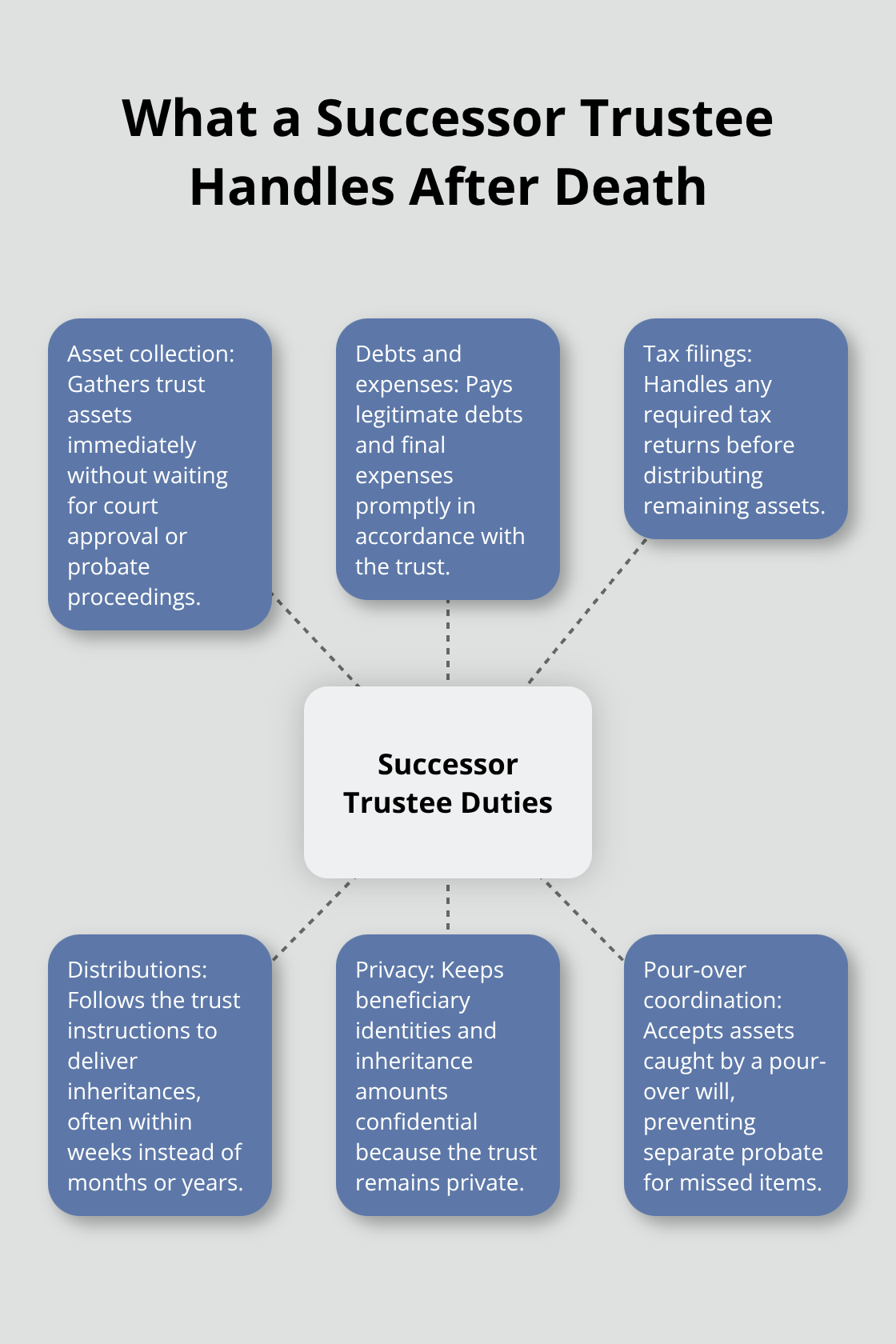
When you pass away, your living trust becomes irrevocable and your successor trustee takes control without waiting for court approval or probate proceedings. The successor trustee collects your assets, pays legitimate debts and final expenses, handles any required tax filings, and distributes the remaining assets to your beneficiaries according to the instructions in your trust document-typically completed within weeks rather than the six months to two years probate often takes. Because the trust remains private (unlike a will, which becomes a public court record), your beneficiaries’ identities and inheritance amounts stay confidential. The trust document can include specific provisions like staggered distributions for young beneficiaries, ongoing support for family members with special needs, or protections that shield inheritances from creditors or divorcing spouses. A pour-over will still matters after death-it catches any assets you accidentally failed to transfer into the trust during your lifetime and directs them into the trust, preventing those assets from going through probate separately.
Why Proper Funding Determines Your Trust’s Success
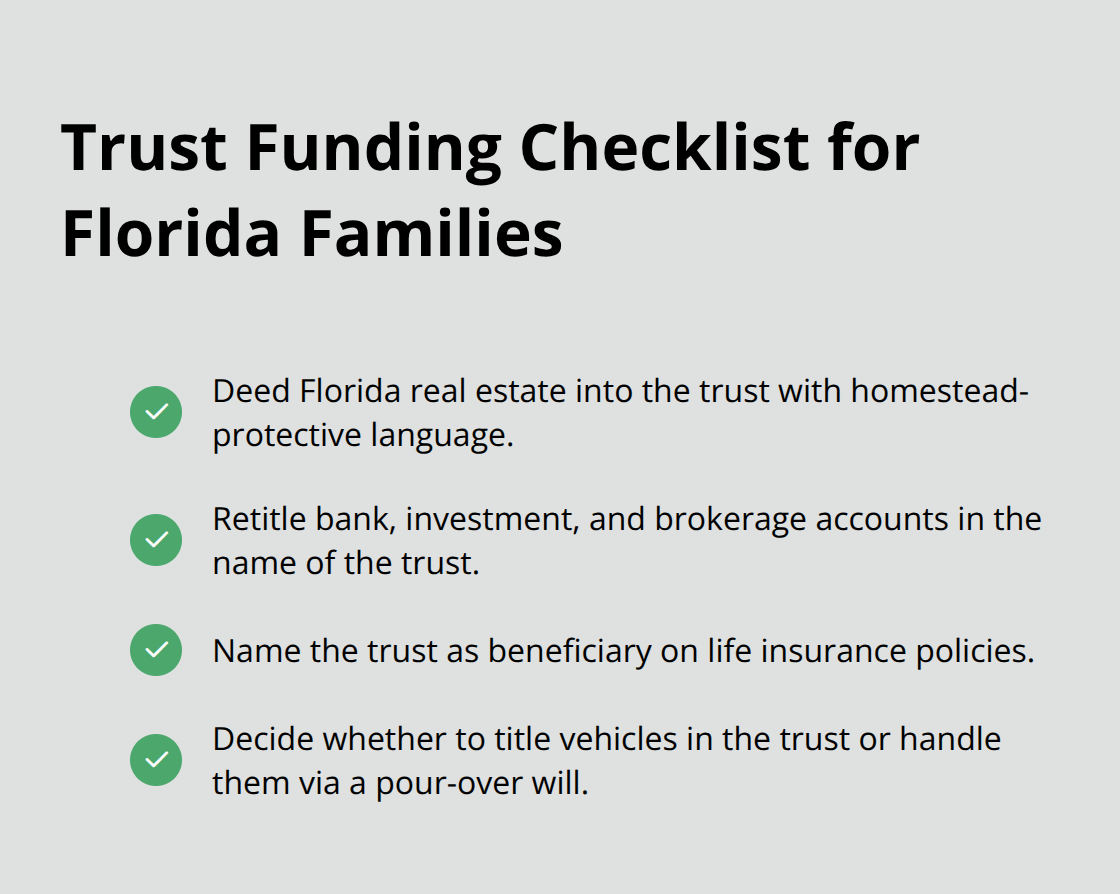
The difference between a trust that works and one that fails often comes down to a single factor: funding. Many people create a trust document but never actually transfer their assets into it, which means those assets still pass through probate when they die. Real estate requires a new deed that names the trust as owner (with language that preserves homestead protections in Florida). Bank accounts, investment accounts, and brokerage positions need retitling to show the trust as owner. Life insurance policies should name the trust as beneficiary rather than your individual name. Vehicles can be titled in the trust or handled through your pour-over will.
Without this transfer step, your trust sits empty and provides no protection or probate avoidance-it becomes merely a piece of paper. The cost to fund a trust varies based on asset complexity, but many families in St. Augustine and Palatka find that the upfront investment in proper funding saves far more in probate costs and delays later.
Why a Living Trust Saves Florida Families Thousands in Probate Costs
The Real Cost of Probate in Florida
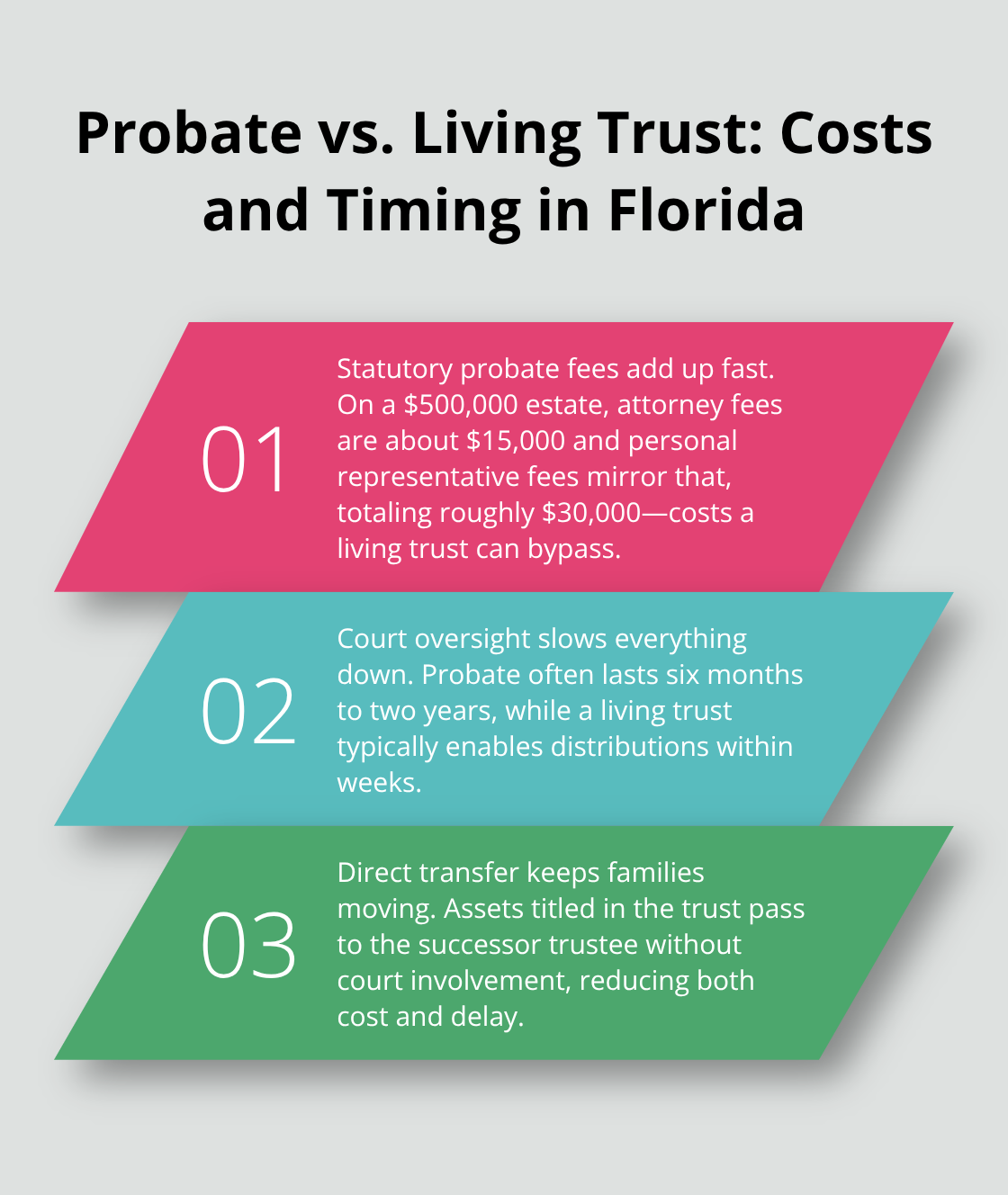
A living trust eliminates probate entirely for the assets you place inside it, which means your family avoids the statutory fees that Florida law imposes on estates. Under Florida Statutes Section 733.6171, probate attorney fees for a $500,000 estate run approximately $15,000, and the personal representative fee mirrors that amount-totaling roughly $30,000 in combined costs before your beneficiaries receive a single dollar. A living trust bypasses these expenses completely because assets transfer directly to your successor trustee without court involvement. The timeline difference matters just as much: probate in Florida typically stretches six months to two years depending on estate complexity and whether disputes arise, while a living trust allows your successor trustee to distribute assets to beneficiaries within weeks.
For families in St. Augustine and Palatka with real estate in multiple states, the savings multiply dramatically. Ancillary probate proceedings in each additional state add thousands more in fees and extend the settlement timeline significantly. The cost to create and fund a living trust ranges from roughly $1,500 for straightforward estates to $3,000 to $5,000 for more complex situations with multiple properties or business interests, making the upfront investment a clear financial win compared to what probate will cost your family.
How Privacy Protects Your Family’s Financial Information
Probate files become public records accessible to anyone, meaning your beneficiaries’ names, inheritance amounts, and asset details become searchable information that creditors, distant relatives, or scammers can easily find. A living trust remains completely private-no court filings, no public record, no disclosure of who inherits what. This confidentiality matters especially for families who want to keep their financial matters away from public view.
Maintaining Control Over Your Assets and Decisions
You maintain absolute control over your assets during your lifetime since you serve as trustee, and you can modify or revoke the trust at any time as long as you remain mentally competent under Florida law. If circumstances shift-a relationship ends, a child’s financial situation changes, or your priorities evolve-you simply amend the trust document rather than navigating probate court complications. Your successor trustee steps in immediately if you become incapacitated, without waiting for a guardianship hearing or court appointment, which means your affairs continue smoothly without judicial oversight or public involvement.
This combination of privacy, flexibility, and control explains why families across Northeast Florida who prioritize keeping their financial matters confidential and maintaining management authority choose living trusts over traditional wills. The next section addresses the specific mistakes that undermine these advantages and how to avoid them.
Three Trust Mistakes That Derail Florida Families
Mistake #1: Creating a Trust Without Funding It
The gap between signing a trust document and actually transferring assets into it determines whether your family saves thousands or wastes money on probate anyway. Many people create a trust but never move their assets into it, leaving the trust completely empty. A trust sitting on a shelf with no assets inside provides zero protection and zero probate avoidance-it functions as an expensive piece of paper.
Real estate must transfer via a new deed that names the trust as owner while preserving your homestead exemption under Florida Statute Section 196.041. Bank accounts, brokerage positions, and investment accounts require retitling to show the trust as owner. Life insurance policies need the trust named as beneficiary instead of your individual name. Without these transfers completed, probate will still consume your estate when you die.
The cost to fund properly ranges from roughly $1,500 to $3,000 depending on how many assets you own, but that upfront investment prevents the $15,000 to $30,000 in probate costs Florida law imposes on larger estates under Florida Statutes Section 733.6171.
Mistake #2: Ignoring Your Trust When Life Changes
Families create a trust and then ignore it when life changes dramatically. A divorce, the birth of grandchildren, a child’s substance abuse problem, a significant inheritance, or a move to a different state all demand trust amendments to reflect your actual situation. We’ve handled cases where someone created a trust naming an ex-spouse as successor trustee or beneficiary, then never updated it-meaning that ex-spouse would control the entire estate if something happened.
Major life events require you to review and revise your trust document, ideally within months of the change. Failing to update your trust after significant shifts in your family or finances leaves outdated instructions in place that no longer match your wishes or your family’s needs.
Mistake #3: Selecting the Wrong Trustee or Co-Trustee
Selecting the wrong trustee or co-trustee creates friction and mismanagement that can plague your family for years after your death. Your successor trustee holds fiduciary duties that require managing assets properly, filing tax returns accurately, keeping detailed records, and distributing funds according to your instructions. Many families appoint a well-meaning family member who lacks financial skills or has conflicts of interest with other beneficiaries.
A professional trustee or a combination of a trusted family member paired with a professional advisor often prevents disputes and ensures competent management. The successor trustee role demands someone organized, honest, and capable of handling complex financial decisions-not simply someone you love. This person will control significant assets and make decisions that affect your beneficiaries’ financial security, so competence matters far more than emotional closeness.
Final Thoughts
Creating a living trust in Florida requires more than signing a document-it demands someone who understands Florida’s specific laws, your family’s unique circumstances, and the practical steps that actually protect your assets. At Family, Estate & Mediation Law, we listen to what matters most to you and build living trusts that account for individual situations rather than applying generic templates. Some families prioritize privacy, others face blended family dynamics, and still others own property across multiple states-we tailor each trust to address these real circumstances.
The difference between a trust that works and one that fails often comes down to proper funding and ongoing management. We handle the details that many people overlook: ensuring your homestead property transfers correctly while preserving your tax exemption, retitling accounts to match your trust, naming the right successor trustee, and creating a pour-over will that catches any assets you might have missed. After your trust is created, we provide the support you need to maintain it through life changes and prepare your successor trustee for their responsibilities.
Contact Family, Estate & Mediation Law for a complimentary consultation when you’re ready to move forward with your estate plan. Call us at 386-693-4935 or visit our offices in St. Augustine and Palatka to discuss how we can build a trust that protects your family and preserves your legacy.