
You created a trust, but if you haven’t funded it properly, it won’t protect your family or assets the way you intended. Many people miss this critical step, leaving their estate plan incomplete.
At Family, Estate & Mediation Law, we see this mistake regularly. Learning how to fund a trust correctly takes just a few practical steps and makes all the difference in whether your plan actually works.
Why Your Unfunded Trust Won’t Protect You
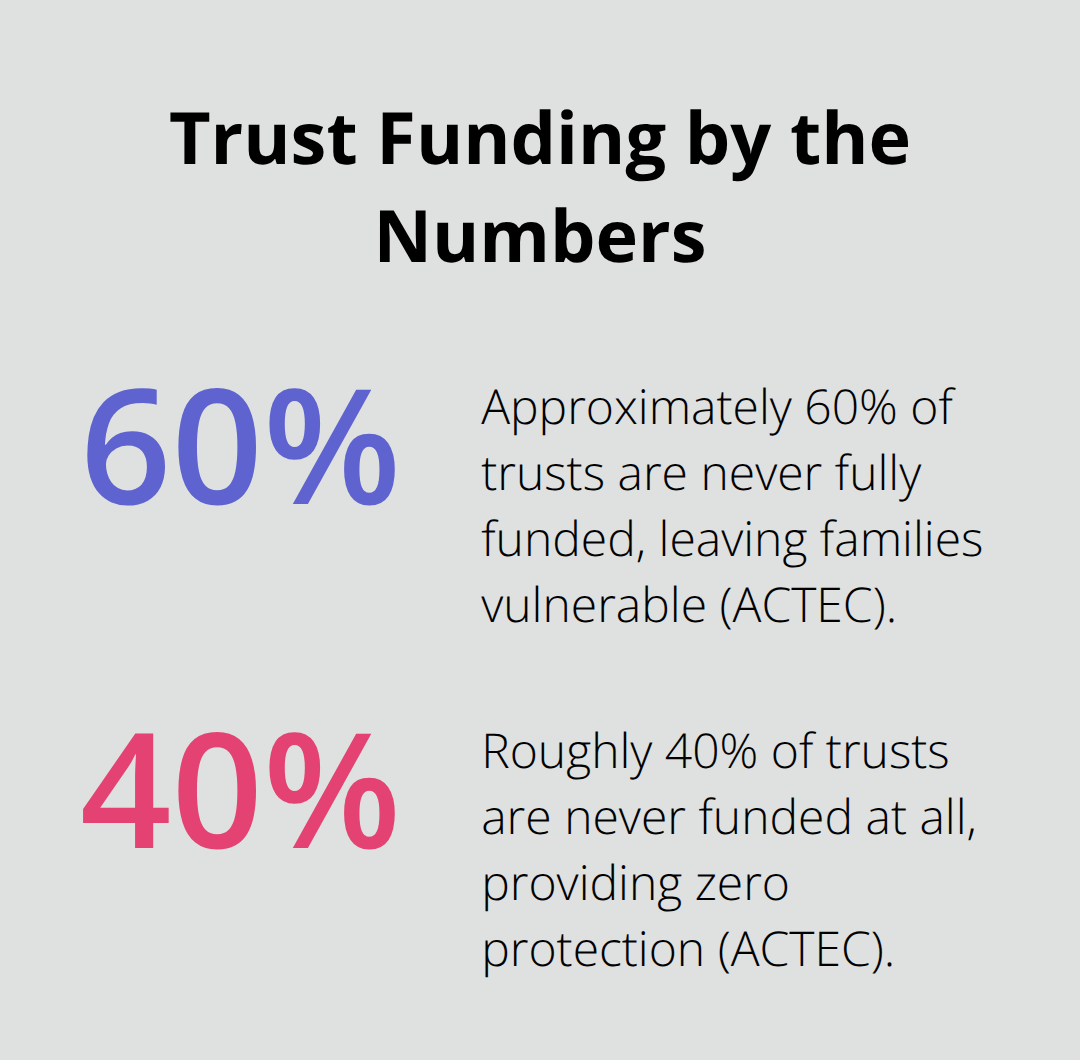
An unfunded trust sits on your shelf like an insurance policy you never activated. The document exists, but it does nothing for your family because your assets remain in your individual name rather than held by the trust. This is where most people’s estate plans fall apart. According to research from the American College of Trust and Estate Counsel, approximately 60% of trusts created never get fully funded, leaving families vulnerable to exactly what the trust was supposed to prevent. Without proper funding, your trust has zero legal power over your property, your finances, or decisions about your care if you become incapacitated.
Probate Still Happens When Your Trust Sits Empty
If you die without funding your trust, your assets go through probate anyway, which defeats the entire purpose of creating one. Probate in Florida typically takes 6 to 12 months minimum, sometimes stretching to 2 years for complex estates, according to the Florida Bar. During this time, your family cannot access funds to pay bills or handle immediate needs. Court fees, attorney fees, and other expenses consume 3% to 7% of your estate’s value on average. Worst of all, probate becomes public record. Anyone can walk into a courthouse and see exactly what you owned, who inherited it, and details about your family’s financial situation. Your children’s names, the value of your home, bank account balances-all become public information. A funded trust keeps everything private.
Incapacity Planning Only Works With Funded Assets
If you become unable to manage your affairs due to illness or injury, your successor trustee can only control assets titled to the trust. Any property still in your individual name requires a separate power of attorney or court intervention through a guardianship proceeding. Guardianship is expensive, invasive, and puts control in the hands of a judge rather than someone you’ve chosen. Families face guardianship costs exceeding $10,000 just for the initial proceedings, plus ongoing court supervision fees. If your home, investment accounts, and vehicles remain in your name alone while only your personal items sit in the trust, your successor trustee cannot pay your mortgage, manage your investments, or sell your car to cover medical expenses. The funding determines whether your plan actually functions during the crisis moment when you need it most.
What Happens Next With Your Assets
Now that you understand why funding matters, the next step requires you to identify which assets actually belong in your trust and how to transfer them properly.
How to Actually Transfer Your Assets Into the Trust
Start With a Complete Asset Inventory
The gap between creating a trust and funding it happens because most people don’t know what to do next. You have a document, but your assets still sit in your individual name. The funding process itself isn’t complicated-it just requires attention to detail and knowing which assets go where. Start by listing everything you own: your home, vehicles, bank accounts, investment accounts, retirement accounts, insurance policies, and digital assets. Not everything goes into the trust the same way, and some assets shouldn’t go in at all.
Retitle Real Estate and Bank Accounts
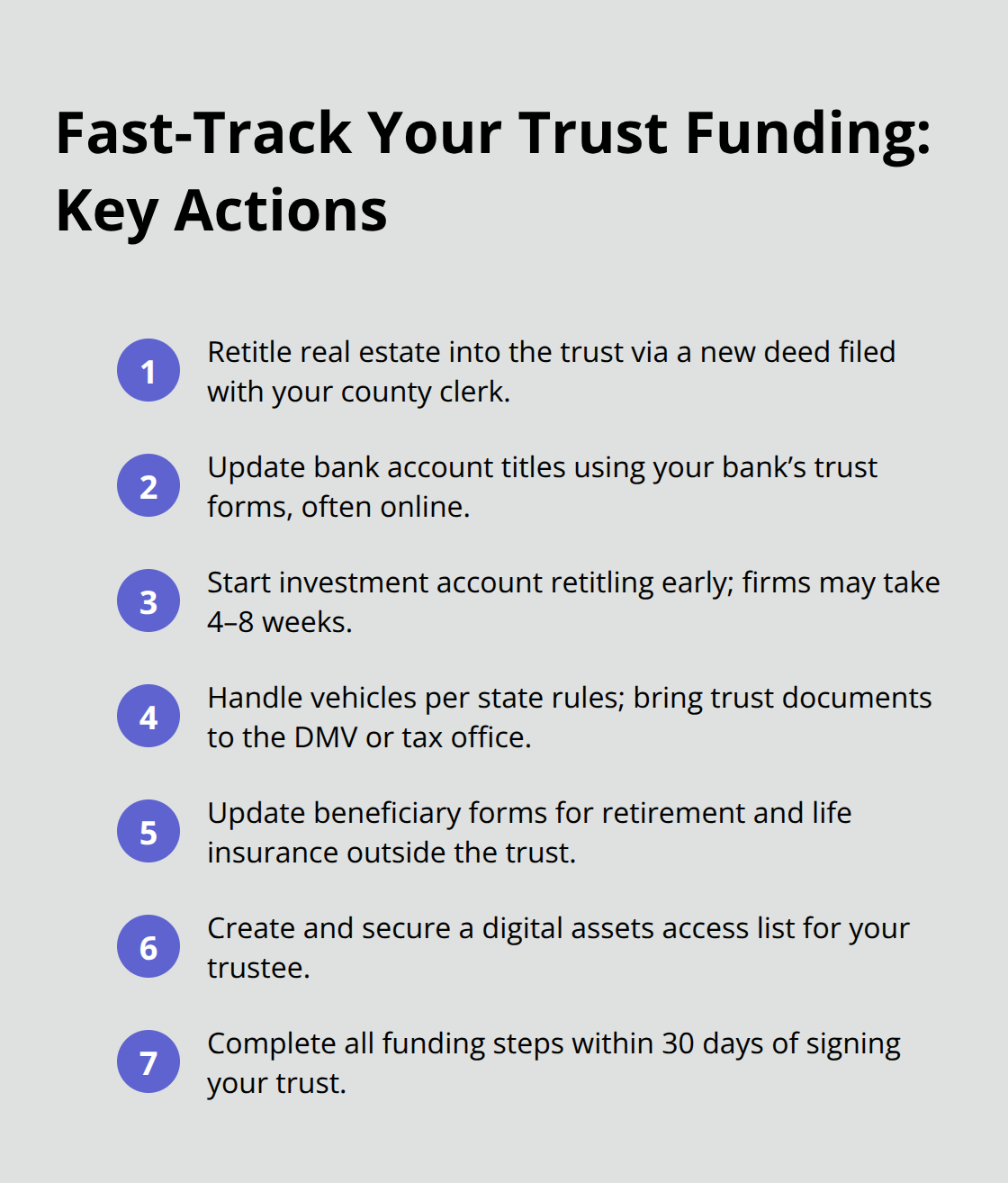
Real estate and bank accounts transfer by retitling ownership documents to the name of your trust. When you retitle your home, the deed changes from your individual name to your trust name. This takes one document filed with your county clerk-typically costing between $50 and $300 depending on your location. Your bank accounts retitle through a simple form your financial institution provides; many banks now handle this online. The process moves quickly for bank accounts, often completing within days.
Handle Vehicles and Investment Accounts Differently
Vehicles transfer differently depending on your state. Some states allow you to retitle on the vehicle registration itself, while others require a separate trust document presented at the DMV. Florida allows trust titling on vehicle registrations, which takes a visit to your local tax collector’s office with the trust document and current title. Investment accounts and brokerage accounts retitle by contacting your investment firm directly. They have specific procedures for trust transfers and often require certified copies of your trust document. Most investment firms won’t charge you to retitle accounts into a trust, but they move slowly-typically taking 4 to 8 weeks to complete the transfer. Start this process early rather than waiting until you need the funds.
Manage Beneficiary Designations and Digital Assets Separately
Retirement accounts and life insurance policies require different handling. These accounts have beneficiary designations that override your trust, meaning they pass directly to whoever you named as beneficiary, completely bypassing your trust and probate. If your trust should receive these assets, you must update the beneficiary designation forms directly with the financial institution or insurance company-not through your trust document. Many people overlook this critical distinction and accidentally leave retirement accounts and insurance to ex-spouses or outdated beneficiaries. Digital assets present a growing problem. Your email accounts, social media profiles, cryptocurrency holdings, and online banking access need documentation too. Create a separate list noting usernames, password managers, and instructions for accessing these accounts, then store this information securely with your trust documents. Without this list, your successor trustee cannot access your digital life, leaving important accounts frozen or inaccessible.
Complete Funding Within 30 Days of Signing
The timing of funding matters significantly. Do not wait until after you sign your trust document to fund it. Complete the retitling and transfers within 30 days of signing your trust. This prevents the common scenario where someone creates a trust, intends to fund it later, then dies before completing the transfers-leaving the trust empty and defeating its entire purpose. Once you’ve transferred your major assets, the next step involves addressing the mistakes that commonly derail even well-intentioned funding efforts.
Common Mistakes That Derail Trust Funding
Most trust funding failures happen not because the process is complicated, but because people skip steps they don’t think matter. We at Family, Estate & Mediation Law see the same preventable mistakes repeatedly, and they cost families tens of thousands of dollars in probate fees, taxes, and legal complications.
Leaving Assets Out of the Trust Entirely
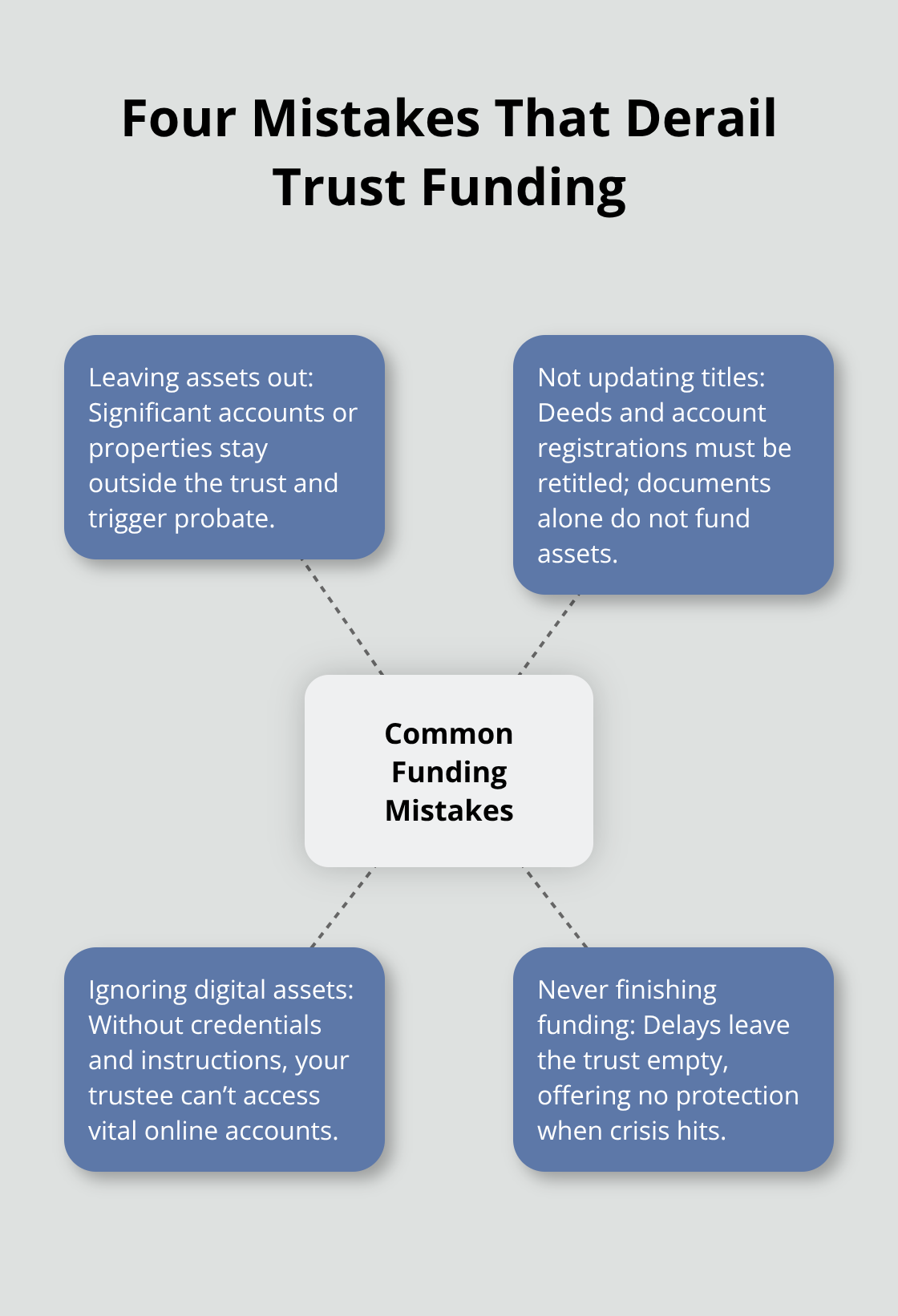
The first major mistake is leaving significant assets completely out of the trust. People retitle their home and primary bank account, then forget about the investment portfolio their grandfather left them, the rental property they inherited, or the vacation cabin they own with their spouse. These forgotten assets still go through probate when you die, which means your successor trustee cannot access them through the trust. A single overlooked asset can trigger the entire probate process you created the trust to avoid.
Failing to Update Titles and Ownership Documents
The second mistake is failing to update titles and ownership documents properly. You cannot simply write in your trust document that your house belongs to the trust and call it funded. The deed must actually be retitled at your county clerk’s office. Bank accounts must have the title changed on the account itself, not just in your will or trust. Investment accounts require formal transfer forms completed with your brokerage firm. Without these official changes, the asset remains in your individual name, and probate applies. Many people create a trust, hand it to their accountant or attorney, and assume the funding happens automatically. It does not.
Ignoring Digital Assets and Online Accounts
The third critical failure involves digital assets and online accounts, which most people completely ignore. Your cryptocurrency holdings, email accounts, social media profiles, online banking access, and cloud storage files have real value and real consequences. When you die without documentation, your family cannot access these accounts to retrieve important documents, settle your digital affairs, or claim cryptocurrency holdings. Financial institutions typically freeze digital accounts when they learn of death, and your family must go through a lengthy process to prove they have authority to access them.
Never Actually Completing the Funding Process
The fourth mistake is the most tragic because it is entirely avoidable: creating a trust and then never funding it. Life gets busy, you intend to complete the transfers next month, and then you have a heart attack or car accident. Your trust sits empty because you never actually retitled anything. According to research from the American College of Trust and Estate Counsel, this happens in roughly 40% of trusts. Your family inherits a document that provides zero protection because the assets never transferred into it. Complete your funding within 30 days of signing your trust, not at some vague future date.
Final Thoughts
Your trust only works if you fund it properly. Creating the document marks the beginning, but the real protection comes from transferring your assets into the trust through proper retitling and ownership changes. Without funding, your trust sits unused while your family faces probate delays, public disclosure of your finances, and expensive court proceedings that cost tens of thousands of dollars.
The mistakes we outlined-leaving assets out, failing to update titles, ignoring digital accounts, and postponing the funding process-happen because people underestimate how simple the actual work is. Retitling your home takes one document, updating bank accounts requires a form, and contacting your investment firm takes a phone call. What makes the difference is completing how to fund trust within 30 days of signing your trust, not waiting for some future moment that may never arrive.
Your trust funding strategy should match your specific situation, since some assets need different handling than others. Retirement accounts and insurance policies work through beneficiary designations rather than trust transfers, while digital assets require separate documentation and real estate follows its own retitling procedures. We at Family, Estate & Mediation Law help families across Northeast Florida establish and fund trusts that actually protect their assets and preserve their legacies, and we recommend working with a professional who understands how to fund a trust properly.