
Planning for your child’s future care shouldn’t wait until a crisis forces your hand. Preneed guardianship lets you make these decisions now, on your own terms, rather than leaving them to the courts later.
At Family, Estate & Mediation Law, we’ve seen how the preneed guardianship process protects families who want control over who cares for their children if something happens to them. This guide walks you through each step, from initial planning to court approval.
What Preneed Guardianship Actually Is
The Legal Definition and Court Approval
Preneed guardianship is a legal declaration you file with the court now, while you’re healthy and able to make decisions, naming who will care for your children if you become incapacitated or die. It’s not a guess or a suggestion-it’s a court-approved document that carries legal weight. When you establish preneed guardianship, you tell the court exactly who you want as guardian, and the court reviews your choice before approving it.
This matters because without it, a judge decides who raises your children based on what they think is best, not what you know is best. The court doesn’t know your family dynamics, your values, or your preferences. You do.
How Preneed Guardianship Differs from Traditional Guardianship
The difference between preneed and traditional guardianship is fundamental. Traditional guardianship happens after a crisis-after you’ve died, become unable to care for your kids, or a court finds you unfit. At that point, someone files a petition, the court holds hearings, and potentially multiple people compete for guardianship.
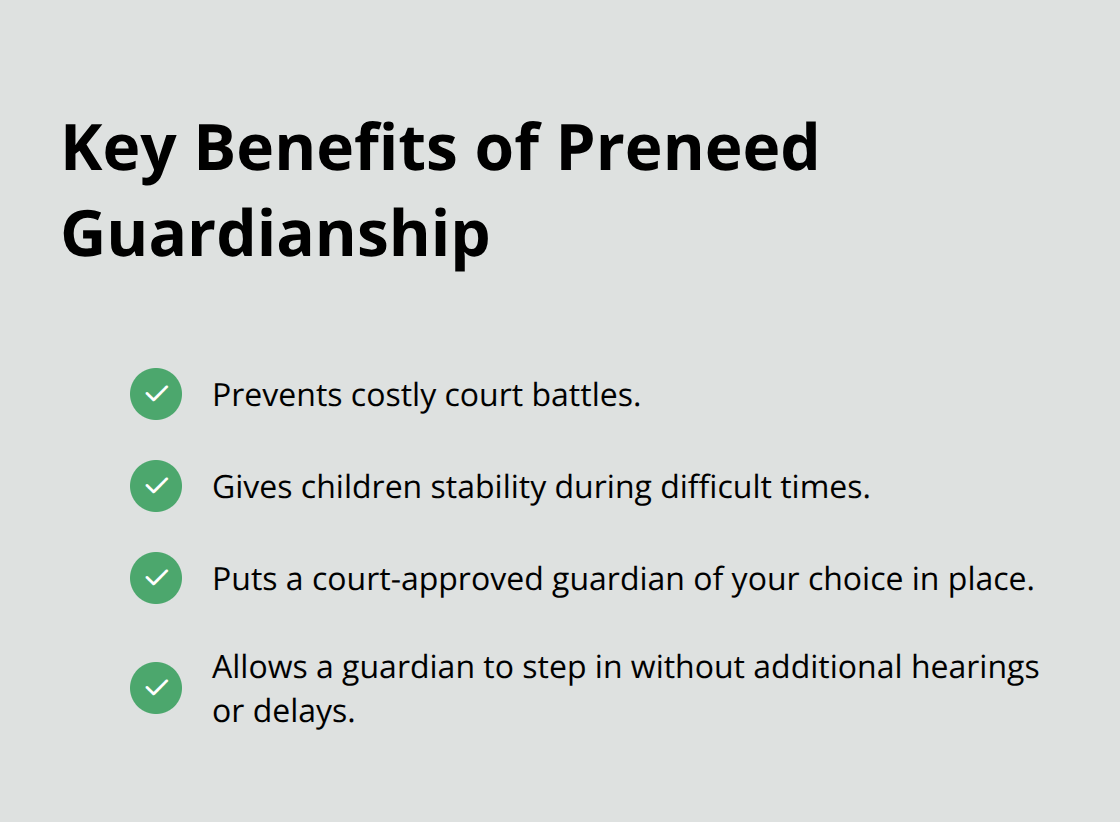
Preneed guardianship eliminates that chaos. You’ve already made the decision, the court has already approved it, and your choice stands in place. This prevents costly court battles and gives your children stability during an already difficult time.
Why Control Over Your Children’s Future Matters
You get to decide if your sister raises your kids or your best friend. You get to specify if guardianship goes to a couple together or if it passes to someone else if one guardian becomes unable to serve. You can even name alternate guardians in order of preference (first choice, second choice, third choice).
Without preneed guardianship, your children could end up with someone you wouldn’t have chosen, or worse, split between different guardians if no clear preference exists. Florida law allows you to name a preneed guardian for a minor child, and the court must consider your stated preference heavily when deciding guardianship after your death or incapacity.
The Real Protection Preneed Guardianship Provides
The practical protection here is real-you remove uncertainty and prevent your family from fighting in probate court while your children need immediate care. Your children avoid the trauma of court proceedings and the confusion of not knowing who will raise them. Your chosen guardian knows your wishes and can step in immediately.
This is where the process becomes concrete. Understanding what preneed guardianship accomplishes sets the stage for the actual steps you’ll take to establish it.
Step-by-Step Process for Establishing Preneed Guardianship
Initial Consultation and Assessment of Your Situation
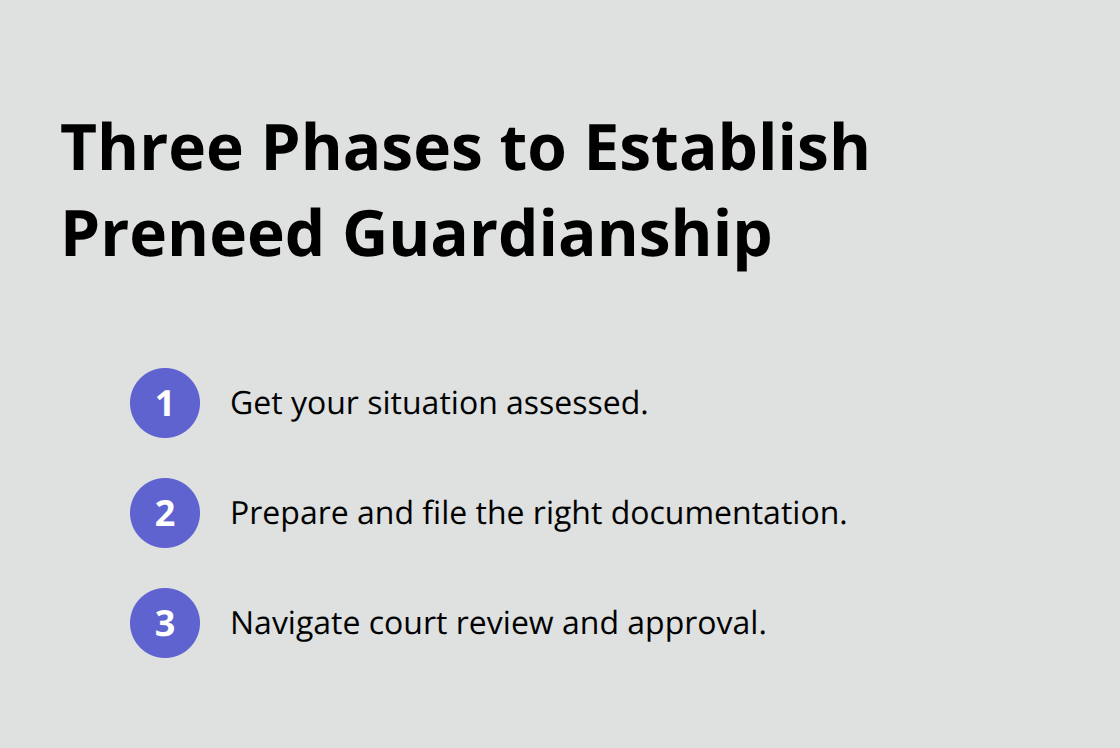
Establishing preneed guardianship requires three concrete phases: getting your situation assessed, preparing the right paperwork, and navigating court approval. Start by scheduling a consultation where you’ll discuss your family structure, your choice of guardian, and any special circumstances affecting your children. During this assessment, you’ll identify whether preneed guardianship alone meets your needs or if you should combine it with a will, trust, or healthcare directive.
This matters because Florida courts look at your complete estate plan, not just guardianship documents in isolation. The consultation also surfaces potential conflicts-if you’re naming a guardian your spouse disagrees with, that tension needs addressing before you file anything with the court.
Documentation and Filing Requirements
Documentation comes next, and this is where precision matters. Florida requires you to file a petition for preneed guardianship with the court, which includes a formal declaration naming your chosen guardian and explaining why this person is suitable. You’ll need the guardian’s written consent before filing, so contact them first and confirm they’re willing to accept the role. The court also requires your full identifying information, your children’s names and birthdates, and documentation of your parental rights. If you’re naming alternate guardians, each must provide written consent separately. Filing fees in Florida range from approximately $250 to $400 depending on your county, and processing typically takes four to six weeks.
Court Notification and Objection Period
Once you file, the court sends notice to your spouse if you’re married, and Florida law gives them thirty days to object. This notification period exists specifically to prevent one parent from unilaterally choosing guardians without the other’s input, so transparency at this stage prevents delays later. Your spouse can challenge your choice of guardian during this window, which means addressing disagreements before filing protects your timeline. The court reviews all documentation and objections before issuing approval. When the court approves your preneed guardianship, your choice becomes legally binding and takes effect immediately if you become incapacitated or pass away. This approval means your selected guardian can step in without additional court hearings or delays-your children transition to their care based on your documented wishes rather than a judge’s determination made during crisis.
Common Challenges and How to Address Them
Family Disagreements Over Guardianship Choices
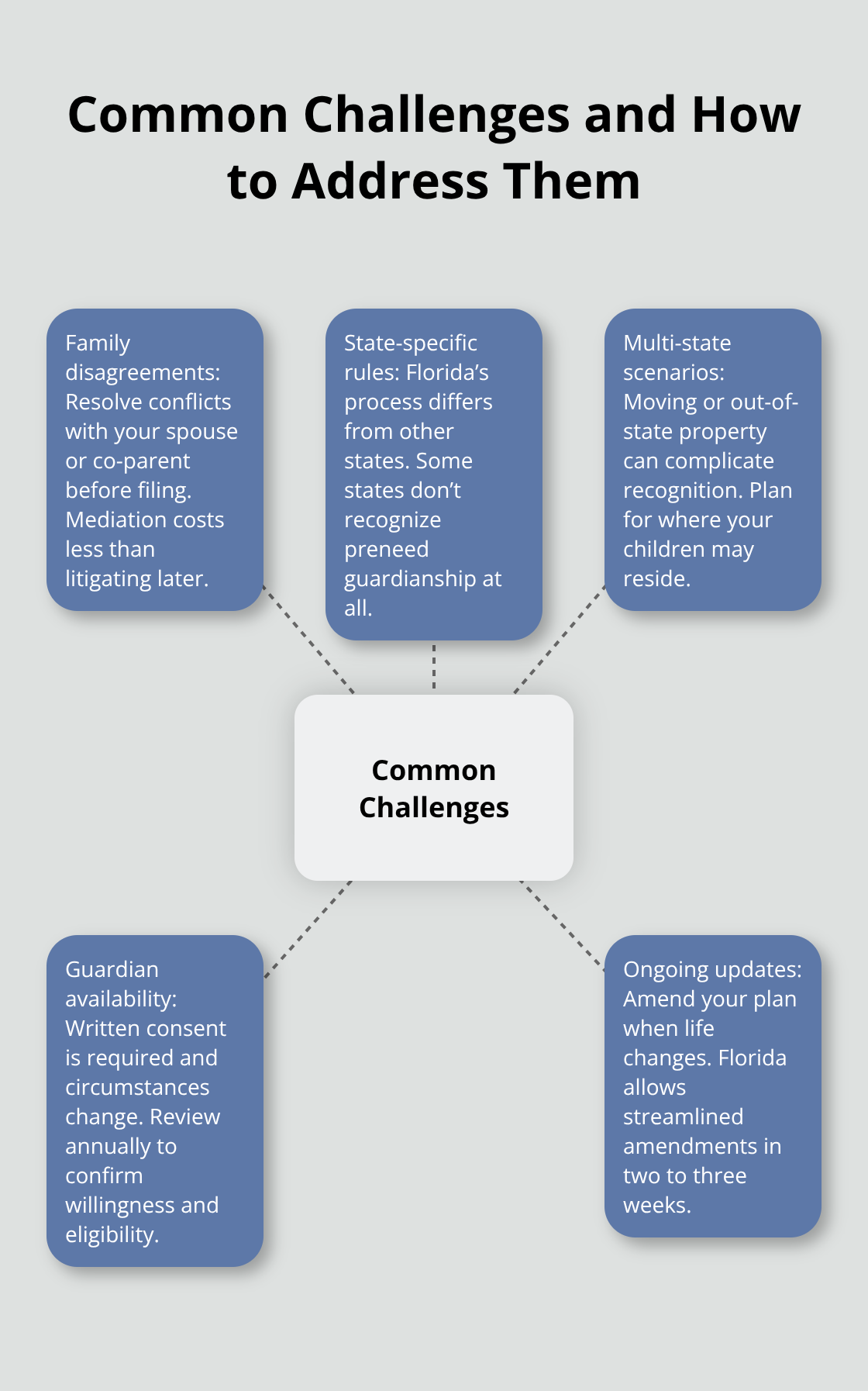
Family disagreements over guardianship choices represent the single largest obstacle we see during the preneed process. One parent wants their sibling as guardian while the other insists on a trusted friend. A grandparent believes they should raise the grandchildren, but the parents have chosen someone else entirely.
These conflicts will not resolve themselves, and filing preneed guardianship documents without addressing them creates legal chaos. Florida law gives your spouse thirty days to object after you file, which means unresolved tensions between spouses will surface in court anyway.
The practical solution requires brutal honesty before you file anything. Sit down with your spouse or co-parent and discuss your guardianship choice. If disagreement exists, address it through conversation or mediation rather than letting the court force a resolution later. Mediation through a neutral third party costs significantly less than fighting in probate court after your death or incapacity.
State-Specific Requirements and Multi-State Complications
State-specific requirements present the second major challenge, particularly for families who’ve moved or own property in multiple states. Florida’s preneed guardianship process differs substantially from other states regarding documentation, filing fees, and court approval timelines. Some states don’t recognize preneed guardianship at all, which means your Florida court approval provides no protection if your children are in another state when guardianship activates.
Additionally, Florida courts require the guardian’s written consent before filing, and if your named guardian moves out of state or becomes unwilling to serve, your entire preneed guardianship becomes invalid. This reality makes annual reviews far more important than most families realize.
Updating Your Preneed Guardianship Plan Over Time
Life changes constantly. Your chosen guardian’s health declines, they relocate for work, or family relationships shift dramatically. A guardianship plan that made perfect sense five years ago may no longer work today. Try reviewing your preneed guardianship annually during your birthday month or during major life events like divorce, remarriage, or relocation.
If your circumstances change significantly, file an amended preneed guardianship rather than hoping the old documents still apply. Florida allows straightforward amendments without restarting the entire court process, which takes approximately two to three weeks and costs roughly one-third the price of establishing guardianship from scratch. This approach (updating rather than abandoning your plan) keeps your family’s protection current without unnecessary expense or delay.
Final Thoughts
Preneed guardianship process gives you control over one of the most important decisions a parent can make. Rather than leaving your children’s future to court decisions made during crisis, you establish your wishes now while you’re healthy and able to think clearly. The steps are straightforward: assess your situation, prepare the required documentation, and navigate court approval, with most families completing this within four to six weeks.
The real value emerges when you need it. Your chosen guardian knows your expectations, your children avoid courtroom trauma, and your family sidesteps expensive legal battles during an already difficult time. Annual reviews keep your plan current as your circumstances change, and amendments cost far less than starting over.
Preneed guardianship works best alongside your will, trust, and healthcare directives as part of a complete estate plan. We at Family, Estate & Mediation Law serve families in St. Augustine and Palatka, and we’ll walk you through each step so your children’s future remains in your hands, not the court’s. Schedule a consultation with us to establish preneed guardianship or review your current plan.