Real estate often represents the largest asset families own, yet many people overlook how critical it is to plan for its transfer. Without proper real estate inheritance planning, your heirs could face unexpected tax bills, lengthy probate delays, or family disputes over property rights.
At Family, Estate & Mediation Law, we’ve seen firsthand how the right strategy protects both your property and your family’s financial security. This guide walks you through proven approaches to transfer your real estate smoothly and efficiently.
Why Real Estate Demands Different Estate Planning
Real estate sits at the intersection of three major problems that most families fail to address until it’s too late. First, property typically represents 40 to 60 percent of a family’s total wealth, according to data from the Federal Reserve’s Survey of Consumer Finances. Second, transferring real estate requires navigating title transfers, deed recordings, and state-specific property laws that vary dramatically depending on where your property is located. Third, the tax consequences can obliterate your heirs’ inheritance if you don’t plan strategically.

Property Value Creates Estate Tax Exposure
The median home value in Florida reached approximately $380,000 in 2024, and many families own multiple properties or investment real estate worth substantially more. Federal estate taxes apply to estates exceeding $13.61 million in 2024, but state-level taxes and the step-up in basis calculations create complications that demand attention now. If your real estate passes through probate, your heirs face court fees, attorney costs, and delays lasting 6 to 12 months.
Capital gains tax presents an even sharper problem. When you pass property to your heirs, they typically receive a step-up in basis, meaning they inherit the property valued at its market price on your death date rather than your original purchase price. However, this benefit only applies if the property transfers correctly through your estate plan. If property transfers outside your estate plan through joint ownership or improper titling, your heirs could owe capital gains taxes on decades of appreciation.
Ownership Structure Determines Your Heirs’ Legal Burden
How you currently title your property directly determines whether your heirs inherit smoothly or face legal complications. Joint ownership with rights of survivorship sounds simple but creates problems if co-owners die simultaneously, if you want to change ownership later, or if creditors pursue claims against one owner. Tenancy in common arrangements give each owner a separate interest that passes through their individual estate, meaning your heirs could end up co-owning property with strangers.
Holding property in your individual name requires probate but gives you complete control during your lifetime. Trusts bypass probate entirely and provide privacy, flexibility, and control over when and how heirs receive property (without court involvement or public record exposure). The choice between these structures depends on your specific goals, family situation, and whether you own property in multiple states-factors that make the next section on transfer strategies particularly important for your situation.
How to Transfer Real Estate to Your Heirs Without Probate Delays
Trusts Bypass Probate and Preserve Control
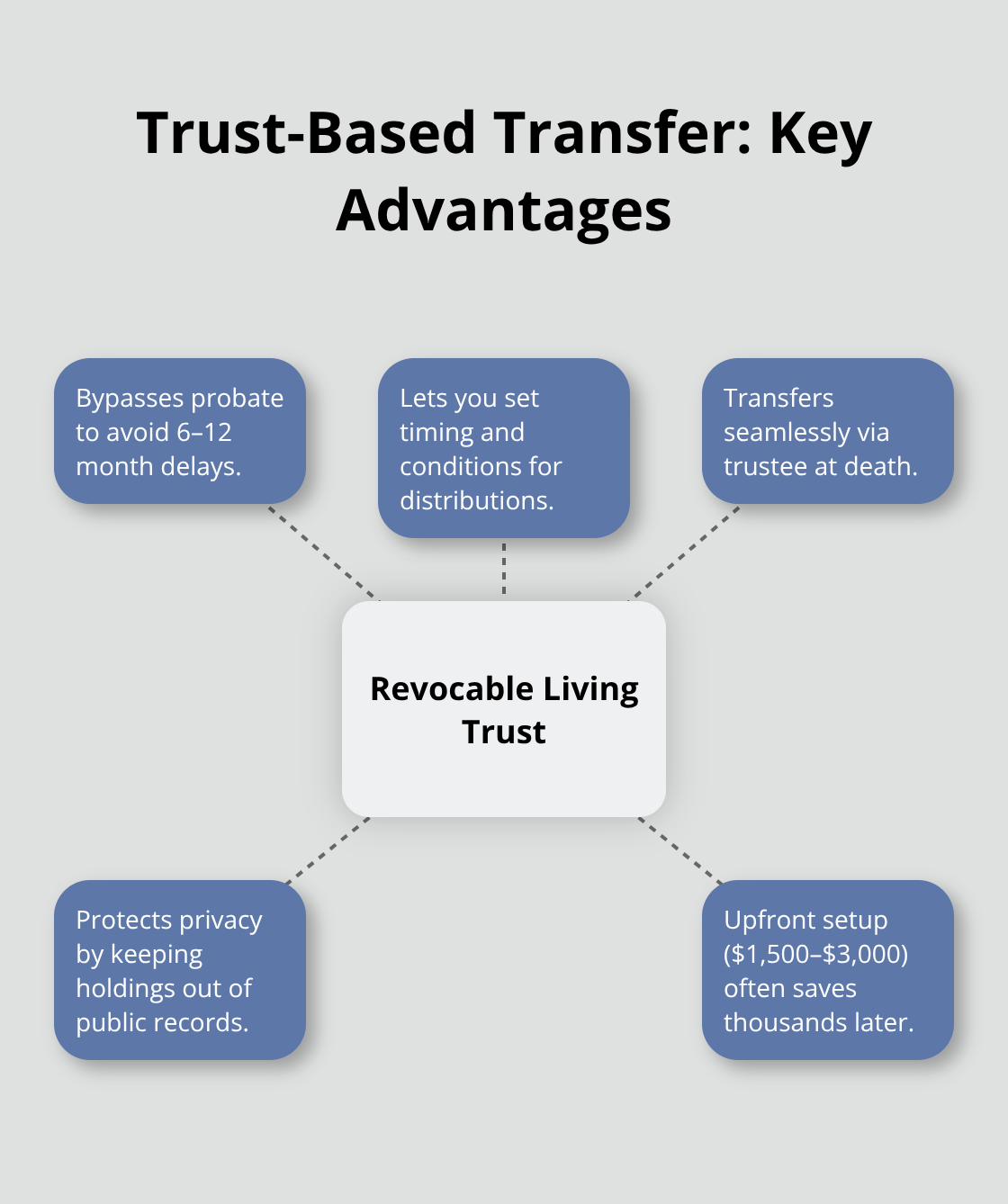
Trusts remain the most effective transfer method because they bypass probate entirely while giving you complete control over timing and conditions for your heirs’ inheritance. When you fund a revocable living trust with your real estate, the property transfers to your heirs immediately upon your death through the trustee, avoiding court involvement and the 6 to 12 month probate timeline. This approach costs between $1,500 and $3,000 upfront to establish properly, but saves your heirs thousands in probate fees and eliminates public record exposure of your property holdings.
Beneficiary Deeds Offer Simplicity for Straightforward Situations
Beneficiary deeds provide a simpler alternative for straightforward situations where you own property outright and want it to transfer to a single heir. These deeds cost virtually nothing to record but lack the flexibility of trusts and don’t address what happens if your named beneficiary dies before you do. If you choose this route, verify that your state recognizes beneficiary deeds and confirm the exact legal language required in your county-requirements vary significantly across Florida’s 67 counties and differ even more across state lines if you own property elsewhere.
Life Insurance Solves the Tax Problem Real Estate Creates
Life insurance positioned outside your taxable estate solves the capital gains and estate tax problem that real estate creates. When your real estate value exceeds the federal exemption or you own multiple properties, an irrevocable life insurance trust holds a policy on your life and pays your heirs the death benefit tax-free, giving them cash to cover estate taxes without forcing them to sell the property. This strategy works because life insurance proceeds avoid income tax, and when structured correctly through an irrevocable trust rather than your estate, they also avoid federal estate tax.
The cost depends on your age and health, but a $500,000 policy for a 60-year-old in good health typically runs $150 to $300 monthly. Wills alone prove insufficient for real estate transfer because they guarantee probate and don’t address tax liability, making them the weakest option for property owners concerned about their heirs’ financial security.
Why Ownership Structure Matters for Your Transfer Strategy
The method you select for transferring your real estate depends directly on how you currently title the property and what complications you want to avoid. Multiple properties across different states, blended families, or significant estate value all point toward trusts as the superior choice. Straightforward situations with a single heir and modest property value might work with beneficiary deeds, though the lack of flexibility creates risks if circumstances change.
Mistakes That Destroy Real Estate Inheritance Plans
Outdated Documents Create Unintended Consequences
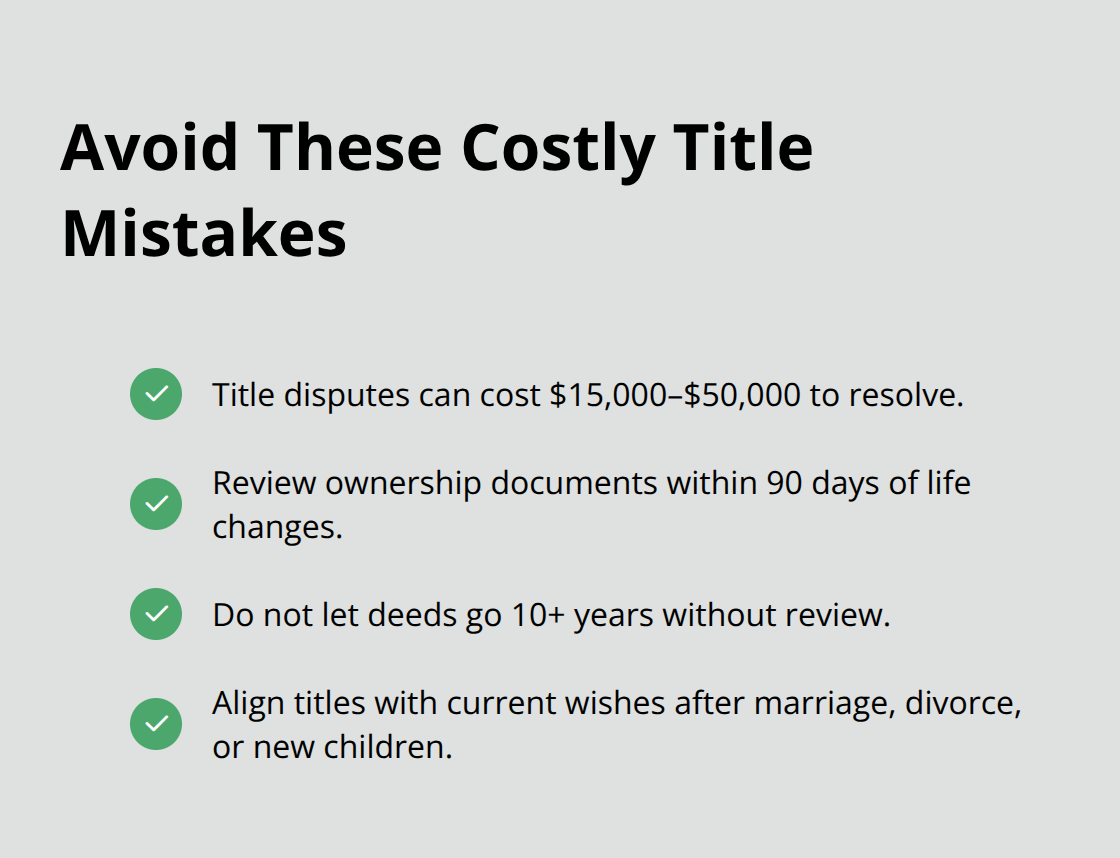
Most families treat their real estate documents as permanent fixtures rather than living records that demand regular updates. When you marry, divorce, add children, or experience significant financial changes, your property ownership structure becomes outdated almost immediately. If you titled your home jointly with your first spouse but later remarried, your current spouse may have unintended inheritance rights that conflict with your actual wishes.
The Florida Department of State reports that property title disputes cost families an average of $15,000 to $50,000 in legal fees to resolve, and many of these disputes stem directly from ownership documents that haven’t been reviewed in 10 or more years. Life changes demand document reviews within 90 days-not eventually, not when you get around to it, but within three months of the event occurring.
Ignoring Capital Gains Tax Until It’s Too Late
Another widespread mistake involves ignoring capital gains tax entirely until after your death, when your heirs face the bill. If you purchased a rental property for $200,000 thirty years ago and it’s now worth $600,000, your heirs owe federal capital gains tax on the $400,000 appreciation unless the property transfers through your estate plan correctly and receives a step-up in basis.
Many families discover too late that jointly held property or improperly titled real estate forfeits this step-up benefit, forcing heirs to pay taxes on decades of appreciation they never actually earned. This tax burden often exceeds what families anticipated, creating financial strain precisely when heirs should be settling the estate smoothly.
Joint Ownership Without Succession Plans Invites Disaster
The third and most damaging mistake involves holding property jointly without any succession plan if both owners die simultaneously or in quick succession. Joint ownership with rights of survivorship feels protective but creates nightmares when circumstances shift unexpectedly. If you and your spouse own your home jointly and both die in a car accident, Florida probate law determines how the property divides among your children, potentially contradicting your actual wishes entirely.
Families spend $30,000 to $75,000 resolving disputes that stem from this single mistake (disputes that destroyed relationships and delayed inheritance for years). The solution requires reviewing your deed within the next 30 days and confirming whether your current ownership structure aligns with your actual goals and current family situation. Failing to update your beneficiary deed, trust, or deed structure after remarriage, a child’s birth, or significant property appreciation means your heirs inherit complications instead of property.
Final Thoughts
Real estate inheritance planning protects your family from unexpected tax bills, lengthy probate delays, and destructive disputes over property rights. The families who avoid these outcomes act before crisis forces their hand-they review their deeds, update their trusts, and confirm their beneficiary designations while they still have time to make changes without pressure or panic. Taking action now costs far less than resolving problems after your death, with a trust running $1,500 to $3,000 upfront but saving your heirs thousands in probate fees and months of court delays.
Updating your deed takes an afternoon but prevents the $30,000 to $75,000 legal battles that destroy families when ownership documents contradict actual wishes. Life insurance positioned correctly outside your taxable estate costs $150 to $300 monthly but gives your heirs the cash they need to cover estate taxes without selling the property you worked decades to build. Whether you own a single home, multiple properties across state lines, or investment real estate generating income, the right strategy protects your family’s financial future.
Contact Family, Estate & Mediation Law Group to review your current real estate ownership structure and confirm your inheritance plan aligns with your actual goals. Our team understands how real estate complicates estate planning and what steps actually protect your family. Your heirs deserve clarity, not complications.