
A power of attorney gives you control over who makes decisions if you can’t. Without one, your family may face legal delays and costly court proceedings.
At Family, Estate & Mediation Law, we help seniors understand their senior POA options so they can protect their autonomy and finances. This guide walks you through the types available, how to choose the right agent, and what it takes to create a valid document.
How Power of Attorney Actually Works
A power of attorney document transfers decision-making authority to someone you trust when you cannot act. This isn’t theoretical protection-it prevents your family from petitioning a court to establish guardianship, a process that costs between $1,500 and $5,000 and takes three to six months in most states. The person you name, called your agent or attorney-in-fact, can handle banking, bill payments, property sales, and healthcare decisions depending on what powers you grant them. Seniors who establish POA before cognitive decline avoid the legal limbo that forces relatives to freeze accounts and delay critical medical choices.
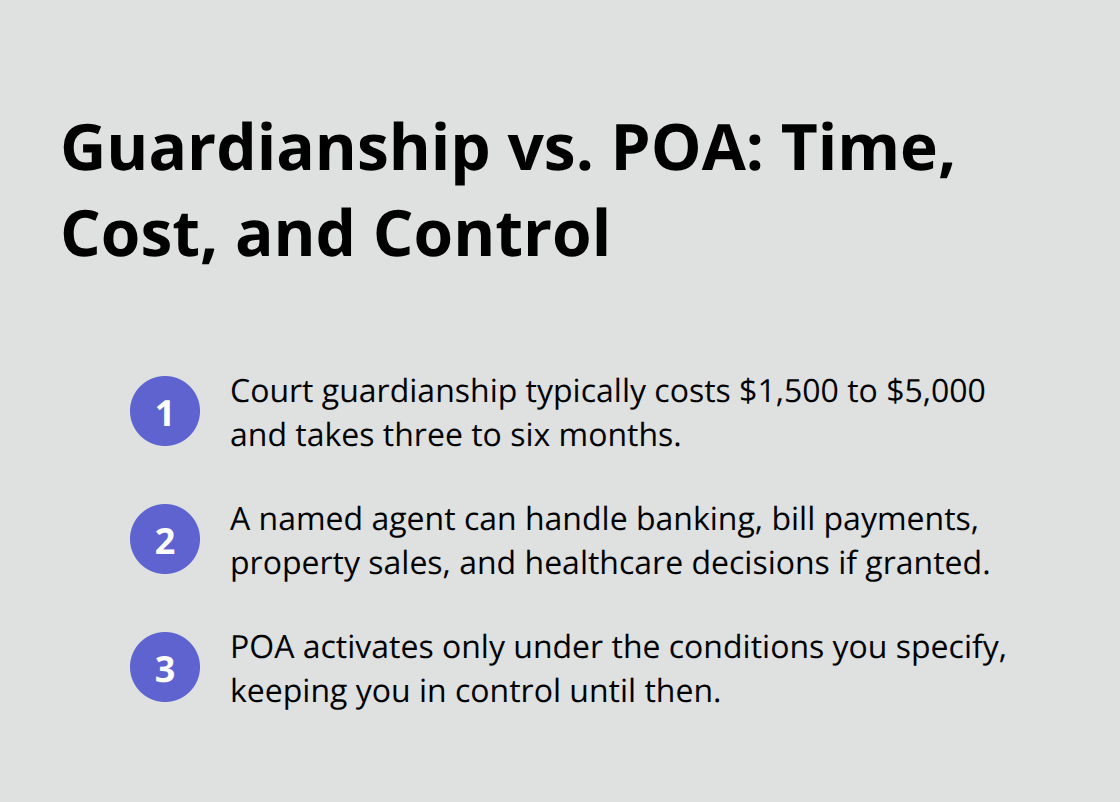
The document only activates when you sign it and specify the conditions, meaning you retain full control until that moment arrives.
Durable POA Protects You When Non-Durable POA Fails
Durable POA remains valid even if you become incapacitated, while non-durable POA terminates the moment you lose mental capacity. This distinction matters enormously because non-durable POA becomes useless precisely when your family needs it most. Durable POA eliminates the guardianship crisis that non-durable documents cannot address. Many states presume POA documents are durable unless explicitly stated otherwise, but you should confirm this with your state’s requirements rather than assuming. Non-durable POA has limited practical value except for temporary situations like authorizing someone to handle affairs while you travel.
Financial POA and Healthcare POA Address Separate Needs
Financial POA covers banking, investments, real estate, and tax matters, while healthcare POA addresses medical decisions and HIPAA authorization. You can name the same person for both roles or split responsibilities between trusted individuals with different strengths. Financial POA agents need organizational skills and understanding of your accounts, while healthcare agents need comfort discussing end-of-life preferences and communicating with doctors. Most seniors benefit from having both documents because one agent cannot legally handle decisions outside their designated scope. Your state’s specific statutes govern which powers transfer automatically and which require explicit written authorization.
Selecting Your Agent Requires Careful Consideration
The person you select as your agent carries significant responsibility and must act in your best interest at all times. You should choose someone who demonstrates reliability, financial responsibility, and willingness to handle potentially difficult decisions (medical or financial). Many seniors name adult children, spouses, or trusted friends, but the relationship matters less than the person’s actual capability and character. You can also name successor agents who step in if your first choice becomes unavailable or unwilling to serve. Discussing your wishes with your chosen agent before finalizing the document prevents surprises and confirms they accept the role.
Professional Guidance Matters for Valid Documents
Your state’s specific statutes govern which powers transfer automatically and which require explicit written authorization, making professional guidance during drafting essential rather than optional. An attorney can identify state-specific requirements, explain tax implications, and help you avoid common mistakes that render documents invalid or unenforceable. The cost of professional drafting (typically $300 to $1,000) pales against the expense and delay of guardianship proceedings or disputes over an improperly executed document. With your POA documents properly structured and your agent selected, you’re ready to move forward with the actual creation and execution process.
Choosing the Right POA for Your Situation
Financial POA and healthcare POA serve completely different functions, and combining them into a single document creates serious problems. Financial POA grants authority over bank accounts, investment portfolios, real estate transactions, and tax filings, while healthcare POA addresses medical decisions and HIPAA authorization to access your medical records. You cannot use a financial POA to make end-of-life medical choices, and you cannot use a healthcare POA to pay bills or sell property. The agent handling your finances may lack the emotional maturity or medical knowledge to discuss palliative care options, while your healthcare agent might freeze when facing complex investment decisions. Many seniors split these responsibilities between a detail-oriented adult child for finances and a more emotionally grounded family member for healthcare decisions. This separation prevents conflicts of interest and ensures each agent focuses on their actual strengths rather than attempting to handle both roles competently.
Your Agent Selection Determines Whether Your POA Actually Works
The person you name as agent carries legal responsibility to act solely in your interest, a duty called fiduciary responsibility that courts take seriously. You need someone with demonstrated financial responsibility if naming them as financial agent, which means reviewing their actual track record with money rather than assuming family loyalty translates to competence. Many seniors name adult children automatically, but adult children often lack banking experience, struggle with investment decisions, or live far away when urgent decisions arise. Discussing your specific accounts, passwords, account locations, and decision-making preferences with your chosen agent before signing the document prevents confusion and confirms they genuinely accept the role rather than reluctantly agreeing out of obligation. Some seniors name co-agents for financial matters, requiring both to sign off on major decisions (though this approach slows response time during emergencies and can create gridlock if co-agents disagree). Successor agents matter equally because your first choice might predecease you, move away, or become incapacitated themselves, leaving your POA unexecuted when you need it.
Three Avoidable Mistakes That Undermine Your POA Protection
Seniors frequently fail to update POA documents after major life changes, meaning a former spouse remains named as agent or outdated account information becomes useless. You should review and update your POA every three to five years or immediately after divorce, remarriage, significant relocation, or major financial changes. Many seniors also create overly broad POA language granting agents complete authority over all assets without restriction, a practice that exposes them to agent misconduct or unintentional poor decisions.
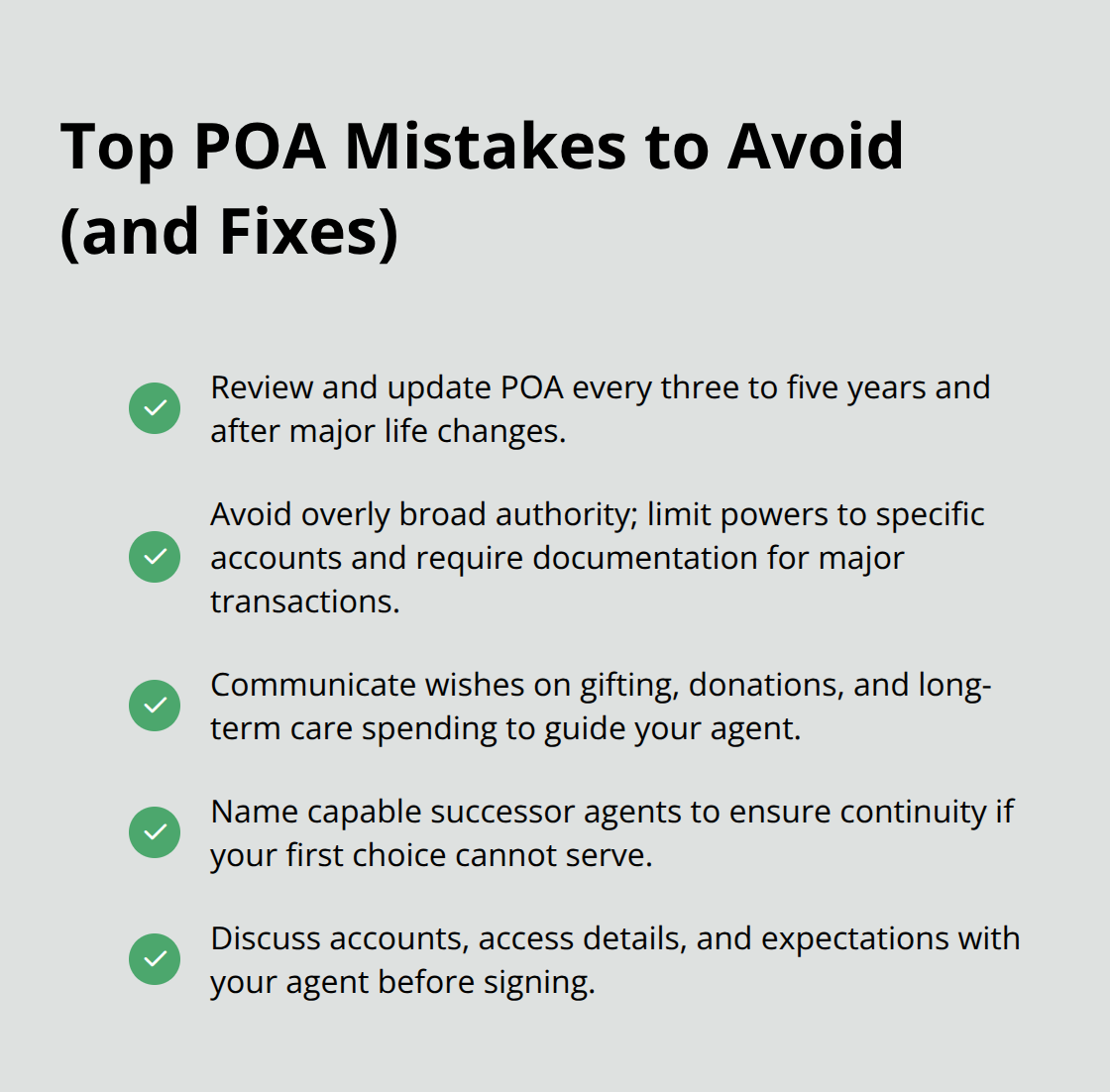
Specific language limiting agent authority to particular accounts or requiring documentation of major transactions provides protection without rendering the document useless. The third critical mistake involves failing to communicate your wishes regarding gifting, charitable donations, or spending down assets for long-term care planning, leaving your agent uncertain whether to preserve wealth or spend it on your care. Detailed written instructions accompanying your POA documents specify your values regarding medical intervention, financial priorities, and agent compensation to eliminate guesswork during actual use.
Moving Forward With Professional Document Creation
Your state’s specific statutes govern which powers transfer automatically and which require explicit written authorization, making professional guidance during drafting essential rather than optional. An attorney can identify state-specific requirements, explain tax implications, and help you avoid common mistakes that render documents invalid or unenforceable. The cost of professional drafting (typically $300 to $1,000) pales against the expense and delay of guardianship proceedings or disputes over an improperly executed document. With your POA documents properly structured and your agent selected, the actual creation and execution process requires attention to legal formalities that vary significantly by state.
Creating a Valid POA Document
Drafting your POA requires far more than downloading a template from the internet and signing it in front of a witness. State laws vary dramatically on execution requirements, witness standards, notarization rules, and which powers automatically transfer versus those requiring explicit language. Some states accept two witnesses while others demand notarization; some recognize electronic signatures while others reject them outright. A document that works perfectly in Florida may become completely unenforceable in New York or California, and financial institutions often refuse to honor POA documents that lack specific language about account access or investment authority.
Why Professional Drafting Protects Your Document’s Validity
An attorney licensed in your state identifies which specific power of attorney you actually need based on your accounts, property holdings, and healthcare preferences rather than granting blanket authority that creates unnecessary liability. The cost of professional drafting typically ranges from $300 to $1,000 per document, while correcting or redrafting an invalid POA after problems arise costs significantly more. An attorney explains your state’s specific requirements during the initial consultation rather than simply handing you a pre-filled template.
Understanding Your State’s Specific Execution Requirements
Ask your attorney whether your state requires notarization, how many witnesses you need, whether those witnesses must meet specific relationship requirements, and whether certain financial institutions demand additional acknowledgment language for their accounts. Many banks maintain their own POA forms that they prefer agents use, so gathering these forms before meeting with your attorney allows them to draft documents that institutions will actually accept without requiring re-execution. Financial institutions often refuse to honor documents lacking the specific language their systems require.
Timeline and Preparation Steps for Document Completion
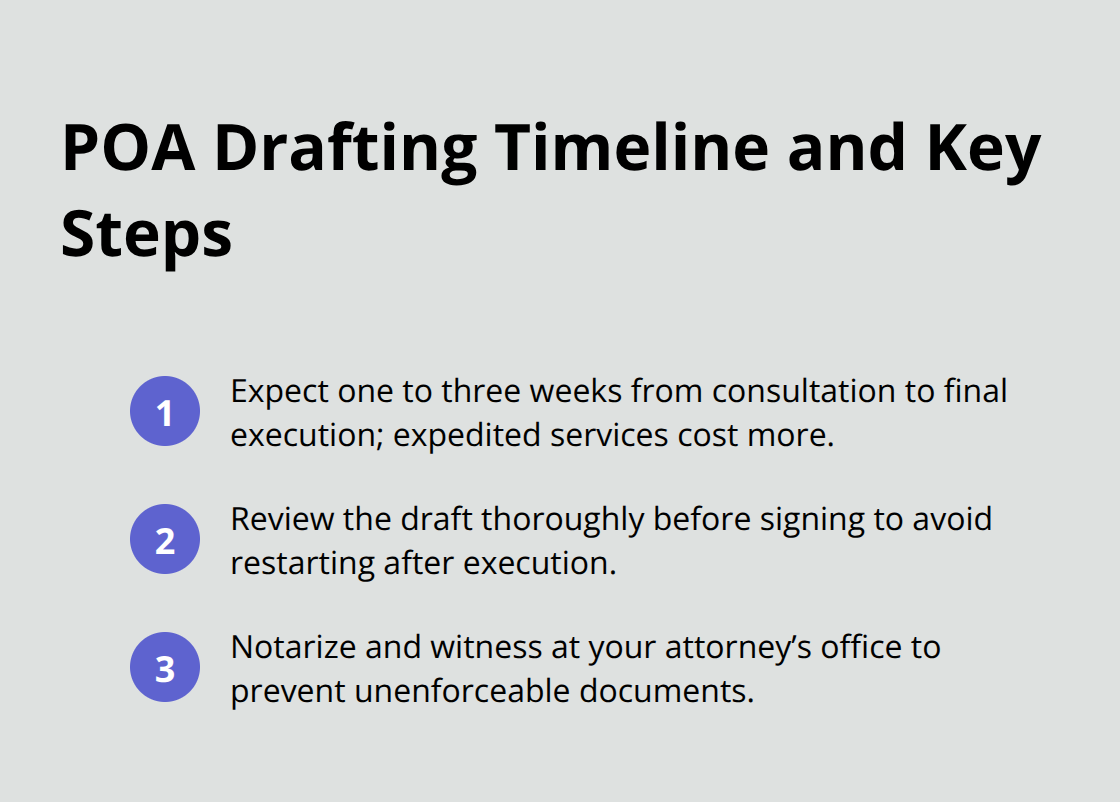
The drafting timeline typically takes one to three weeks from initial consultation to final execution, though expedited services cost more. After your attorney completes the draft, schedule time to review it thoroughly before signing because changes after execution require starting over. Plan to have the document notarized and witnessed at your attorney’s office rather than attempting this yourself, as improper execution stands as the leading reason POA documents become unenforceable during actual use.
Gathering Information Before Your Attorney Consultation
Collect your bank account numbers, investment account details, property information, and healthcare preferences before your first meeting. This preparation allows your attorney to draft documents tailored to your actual financial situation rather than using generic language that may not address your specific accounts or holdings. Institutions often refuse to honor documents lacking account-specific authorization language, making this preparation step essential for practical enforceability.
Final Thoughts
A power of attorney document stands as one of the most practical protections you can establish for your future. Without one, your family faces months of court delays, thousands in legal fees, and the inability to access your accounts or make medical decisions when you need them most. The senior POA options available to you-durable financial POA, healthcare POA, and combinations tailored to your specific situation-exist precisely because life doesn’t wait for perfect circumstances.
Scheduling a consultation with an attorney who understands your state’s specific requirements moves you from planning into action. Bring your account information, property details, and a clear sense of who you trust to handle your affairs, and your attorney will identify which senior POA options fit your actual financial situation rather than forcing you into generic templates that banks and financial institutions often refuse to honor. This conversation typically takes one to three weeks to move from initial planning through final execution, a timeline far shorter than the guardianship process it prevents.
We at Family, Estate & Mediation Law help individuals and families across Northeast Florida establish POA documents that actually work when needed. Whether you need financial POA, healthcare POA, or both, we guide you through state-specific requirements and help you avoid the common mistakes that render documents unenforceable. Contact us at our St Augustine or Palatka offices to discuss which senior POA options align with your circumstances and protect your future today.