
Most people avoid thinking about healthcare decisions until a crisis forces their hand. At Family, Estate & Mediation Law, we see firsthand how healthcare directives essentials protect what matters most-your health choices and your family’s peace of mind.
Without proper documentation, hospitals and loved ones face uncertainty about your medical wishes. The good news is that creating these documents is straightforward when you know what to include.
Healthcare Directives Essentials: What Your Documents Actually Accomplish in St. Augustine and Palatka, Florida
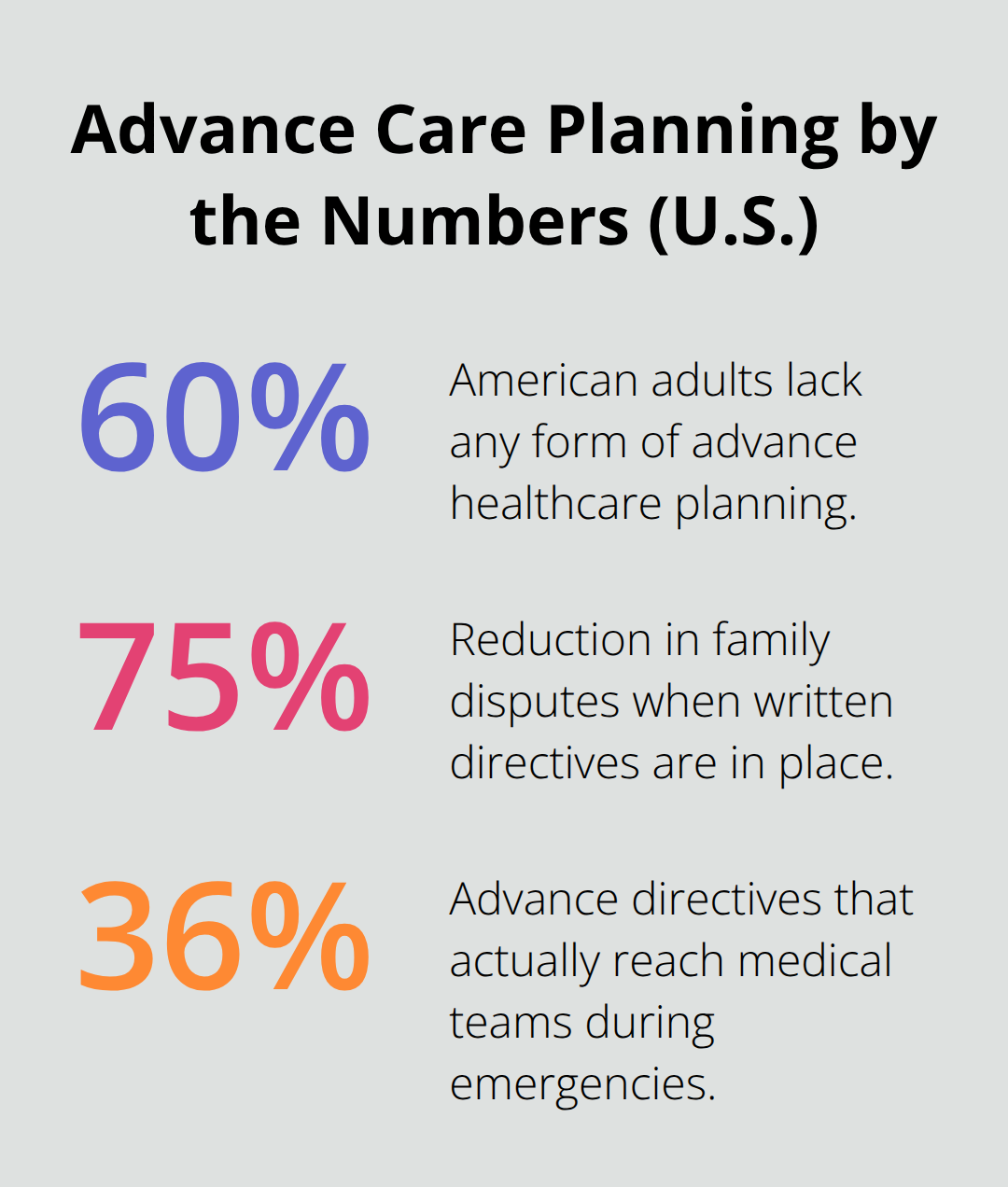
A healthcare directive is a legal document that communicates your medical preferences when you cannot speak for yourself. Florida law recognizes these documents under the Florida Statutes Chapter 765, which allows you to specify exactly what types of treatment you want or refuse. The practical value here is straightforward: your directives become binding instructions that hospitals and doctors must follow, removing guesswork from your care. Without them, medical teams default to aggressive treatment protocols, and your family faces painful decisions without knowing your actual wishes. Families torn apart by disagreements about end-of-life care often lack documented preferences in advance. The reality is that 60 percent of American adults lack any form of advance healthcare planning, according to research from the Harvard T.H. Chan School of Public Health, leaving millions of families vulnerable to preventable conflicts.
How Documentation Stops Medical Uncertainty
When you put your healthcare preferences in writing, you transfer decision-making power from emotion to evidence. Hospitals in St. Augustine and Palatka, Florida operate under specific protocols, and your written directives override default procedures. If you refuse intubation or resuscitation, that instruction must be honored when documented properly-not when your adult children argue about it in a waiting room. The American Hospital Association reports that written directives reduce family disputes by approximately 75 percent because the patient’s actual voice remains in the room. Your directive also protects your chosen healthcare agent from personal liability and moral burden; they execute your wishes rather than making impossible choices alone.
What Directives Actually Cover and Protect
Your healthcare directive is not a do-not-resuscitate order by default, and it does not prevent you from receiving comfort care or pain management. Many people mistakenly believe directives hasten death, when actually they clarify your values around quality of life versus quantity. Your directive should address specific medical situations: What happens if you suffer severe dementia? Do you want feeding tubes? Should doctors attempt resuscitation after a massive stroke? These concrete scenarios matter far more than vague statements about wanting comfort care.
Choosing Your Healthcare Power of Attorney
Your directive needs to name a healthcare power of attorney-someone you trust completely to make decisions your document doesn’t cover. This person should be willing to have difficult conversations with your medical team and capable of advocating firmly for your preferences. Try choosing someone in Northeast Florida who understands your values deeply, not the person with the most medical knowledge. Your directive works best when it reads like practical instructions for your actual life, not abstract medical philosophy. The person you select carries significant responsibility (and should understand this before you name them), so discuss your healthcare wishes with them directly before finalizing your documents.
Moving Forward With Your Healthcare Documents
Your healthcare directive forms only one part of a complete healthcare planning strategy. The documents you select and how you structure them determine whether your medical team can act on your preferences immediately or faces delays during a crisis. Family, Estate & Mediation Law Group helps individuals and families across Northeast Florida create healthcare directives that address real medical scenarios you might face. Understanding what each document accomplishes prepares you to build a complete healthcare plan that protects both your wishes and your family’s peace of mind.
The Three Documents That Actually Control Your Healthcare in St. Augustine and Palatka, Florida
Florida recognizes three distinct documents that work together to give you complete control over your medical care, and they serve fundamentally different purposes. Your living will states your end-of-life preferences in specific medical scenarios, but it only applies when you cannot communicate and face terminal conditions or permanent unconsciousness. This document does not cover routine medical decisions or situations where you might recover, which is why many people mistakenly believe a living will handles all healthcare planning.
How Your Healthcare Power of Attorney Works Differently
The healthcare power of attorney gives someone the legal authority to make any medical decision on your behalf whenever you cannot make it yourself, whether that situation lasts five minutes or five years. This agent can consent to surgery, choose medications, select facilities, and override your living will preferences if circumstances change and you would have wanted different care. Florida Statutes Section 765.401 specifically authorizes this document, and it remains active until you revoke it or die.
Why HIPAA Authorization Matters Separately
The HIPAA authorization form grants your healthcare agent and family members access to your medical records and allows doctors to discuss your condition with them, which hospitals cannot do without this written permission due to federal privacy laws. Many families arrive at hospitals only to discover they cannot obtain basic information about a loved one’s condition without this separate document on file.
The Critical Mistake Most People Make
The practical mistake most people make is creating only a living will and assuming they have completed healthcare planning. Your living will becomes worthless if your agent cannot access your medical records or communicate with your doctors about your wishes, which happens constantly when families lack proper HIPAA authorization. Florida hospitals require all three documents completed and properly executed to operate efficiently during a medical crisis.
What Each Document Must Contain
Your living will should contain specific instructions about resuscitation, mechanical ventilation, feeding tubes, antibiotics for infections, and comfort-focused care rather than vague language about wanting to die naturally. Your healthcare power of attorney should name someone willing to advocate aggressively for your preferences, even when medical teams resist or suggest alternatives. Your HIPAA authorization must explicitly list the people who can receive information and make decisions, and it should specifically authorize your agent to access mental health records and substance abuse treatment information if relevant to your situation.
Taking Action After You Execute Your Documents
Once you complete these three documents, schedule a conversation with your named agent and your primary care physician to confirm your doctor understands your preferences and your agent knows how to communicate them effectively during a crisis. This step transforms your paperwork into actionable instructions that medical teams can follow immediately when time matters most. Your next step involves understanding which specific medical scenarios matter most to your personal values and how to communicate those preferences clearly to everyone involved in your care.
Making Your Healthcare Directives Actionable in St. Augustine and Palatka, Florida
The moment you decide to create healthcare directives, you face a practical question: what specific medical situations should your documents address? This matters far more than generic language about comfort care or natural death. Start by identifying three to five concrete medical scenarios that genuinely concern you based on your family history, current health status, and personal values. If your parents developed dementia, address what quality of life means to you if you face cognitive decline.
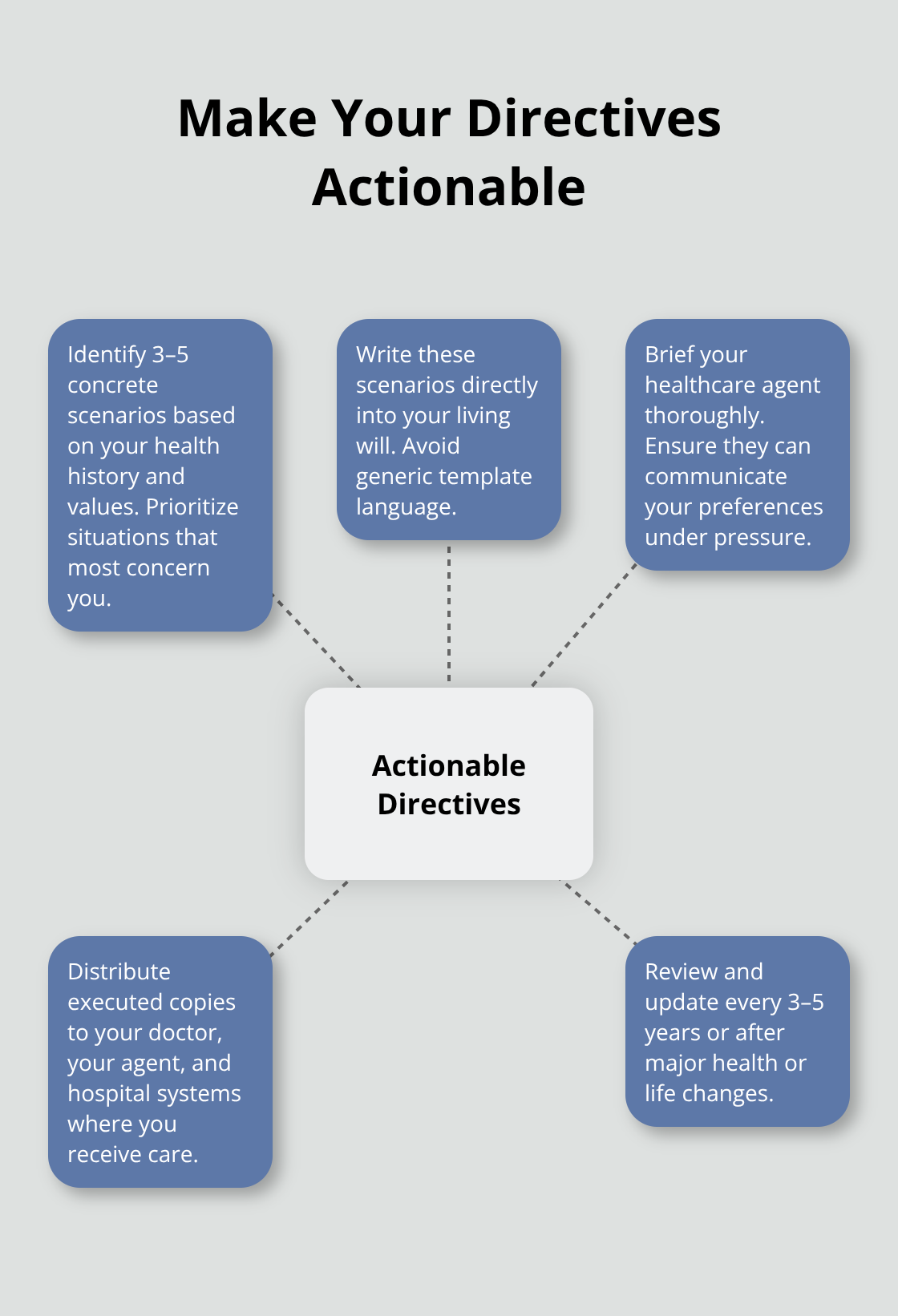
If you have heart disease, specify whether you want aggressive intervention after a cardiac event or comfort-focused care. If you fear prolonged unconsciousness, state exactly what conditions would trigger your preference to refuse life support.
Write Scenarios Into Your Living Will
Write these scenarios directly into your living will rather than using template language that hospitals see dozens of times daily. Your primary care physician can help you identify which scenarios are medically relevant to your situation. Your documents should reflect your actual life and values, not abstract medical philosophy that fails to guide your healthcare team when decisions matter most.
Have Detailed Conversations With Your Healthcare Agent
Once you complete your documents, schedule a dedicated conversation with your named healthcare agent at least one month before you anticipate any medical procedures or hospitalizations. This conversation should cover your specific medical preferences, explain why these preferences matter to you, and confirm your agent understands how to communicate them to medical teams under pressure. Many people name their healthcare agent but never discuss the actual decisions, leaving their agent to guess at preferences during a crisis. Your agent needs to know whether you fear dementia more than death, whether you value independence more than longevity, and whether your religious or ethical beliefs shape your medical choices. This conversation prevents your agent from second-guessing themselves later and eliminates the guilt that comes from making uninformed decisions for someone you love.
Distribute Your Documents to the Right Places
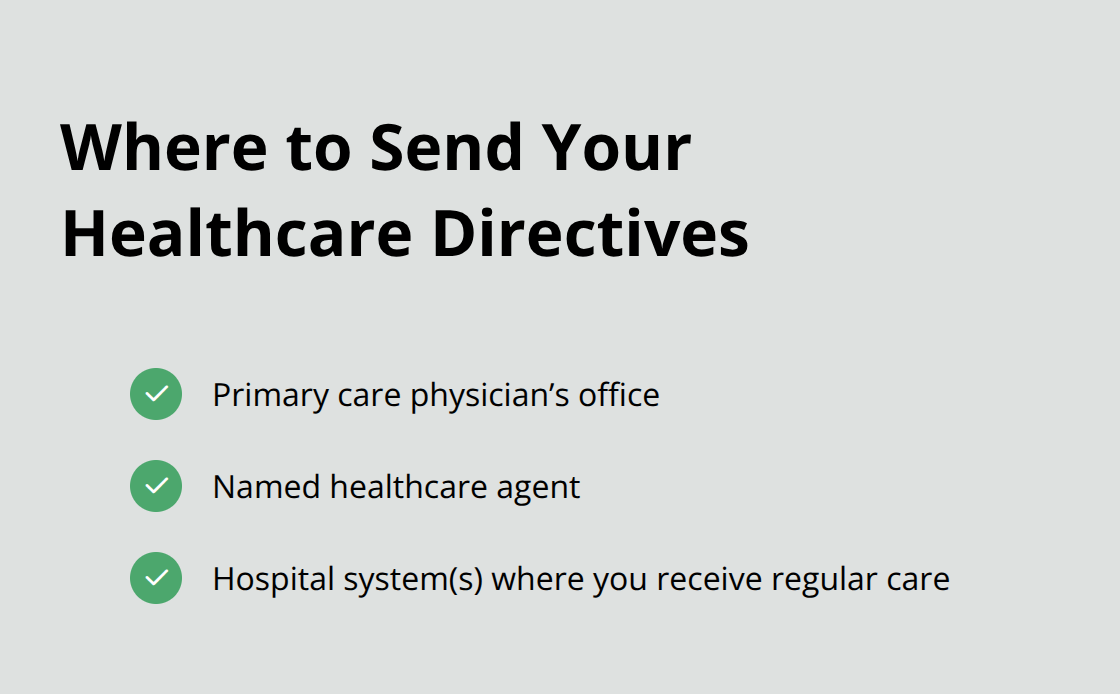
After completing these initial conversations, provide copies of your executed documents to three specific places: your primary care physician’s office, your named healthcare agent, and any hospital system where you receive regular care. Research from the Journal of the American Geriatrics Society found that only 36 percent of advance directives actually reach the medical teams who need them during emergencies, causing preventable delays and default protocols that contradict patient wishes. Do not simply email these documents or assume your doctor’s office filed them properly.
Call to confirm receipt, ask which staff member is responsible for maintaining your directives in your medical record, and request written confirmation that your documents are accessible in your patient file. Your healthcare power of attorney should also maintain a digital copy and know exactly where your physical documents are located.
Update Your Directives Periodically
Review your directives every three to five years or whenever your health status, family situation, or personal values change significantly. Many people create directives at age 45 and never revisit them, missing opportunities to update preferences as their life circumstances shift. If you experience a serious illness, complete a major life transition, or change your healthcare agent, schedule time to review and potentially revise your documents with legal guidance rather than assuming your original preferences still apply. Florida law allows you to update specific sections of your directives without recreating entire documents, which makes periodic reviews manageable rather than burdensome. Your healthcare agent should know about any revisions you make and understand how your updated preferences differ from your original documents.
Final Thoughts
Healthcare directives essentials require three documents that work together to protect your medical wishes: your living will states your end-of-life preferences, your healthcare power of attorney names someone to make decisions when you cannot, and your HIPAA authorization allows your medical team to share information with your agent and family. Without these documents in place, hospitals default to aggressive treatment protocols that may contradict your actual values, and your family faces impossible decisions without knowing what you would have wanted. The 60 percent of American adults lacking advance healthcare planning leave their loved ones vulnerable to preventable conflicts and medical uncertainty during the moments when clarity matters most.
Your written directives remove guesswork from medical decision-making and reduce family disputes by approximately 75 percent because your voice remains in the room through your documented preferences. Your named healthcare agent gains clear instructions rather than impossible choices, and your medical team receives actionable guidance they can follow immediately during a crisis. Identify three to five specific medical scenarios that concern you based on your health history and personal values, then write these scenarios directly into your living will rather than using generic template language.
Schedule a dedicated conversation with your named healthcare agent to discuss your preferences and confirm they understand how to communicate them to medical teams under pressure. Provide executed copies of all three documents to your primary care physician, your healthcare agent, and any hospital system where you receive regular care, then call to confirm receipt and ask which staff member maintains your directives in your medical record. Contact Family, Estate & Mediation Law Group to schedule a consultation and transform your healthcare preferences into actionable documents that your medical team can follow when time matters most.