
Being named a trustee is a significant responsibility that many people underestimate. The role requires you to manage assets, communicate with beneficiaries, and navigate complex legal requirements-all while protecting everyone’s interests.
We at Family, Estate & Mediation Law have seen firsthand how trust administration tips make the difference between a smooth process and costly mistakes. This guide walks you through your duties, essential tasks, and the pitfalls to avoid.
Fiduciary Duties and Timeline Expectations in St. Augustine and Palatka, FL
Your Legal Obligations as a Trustee
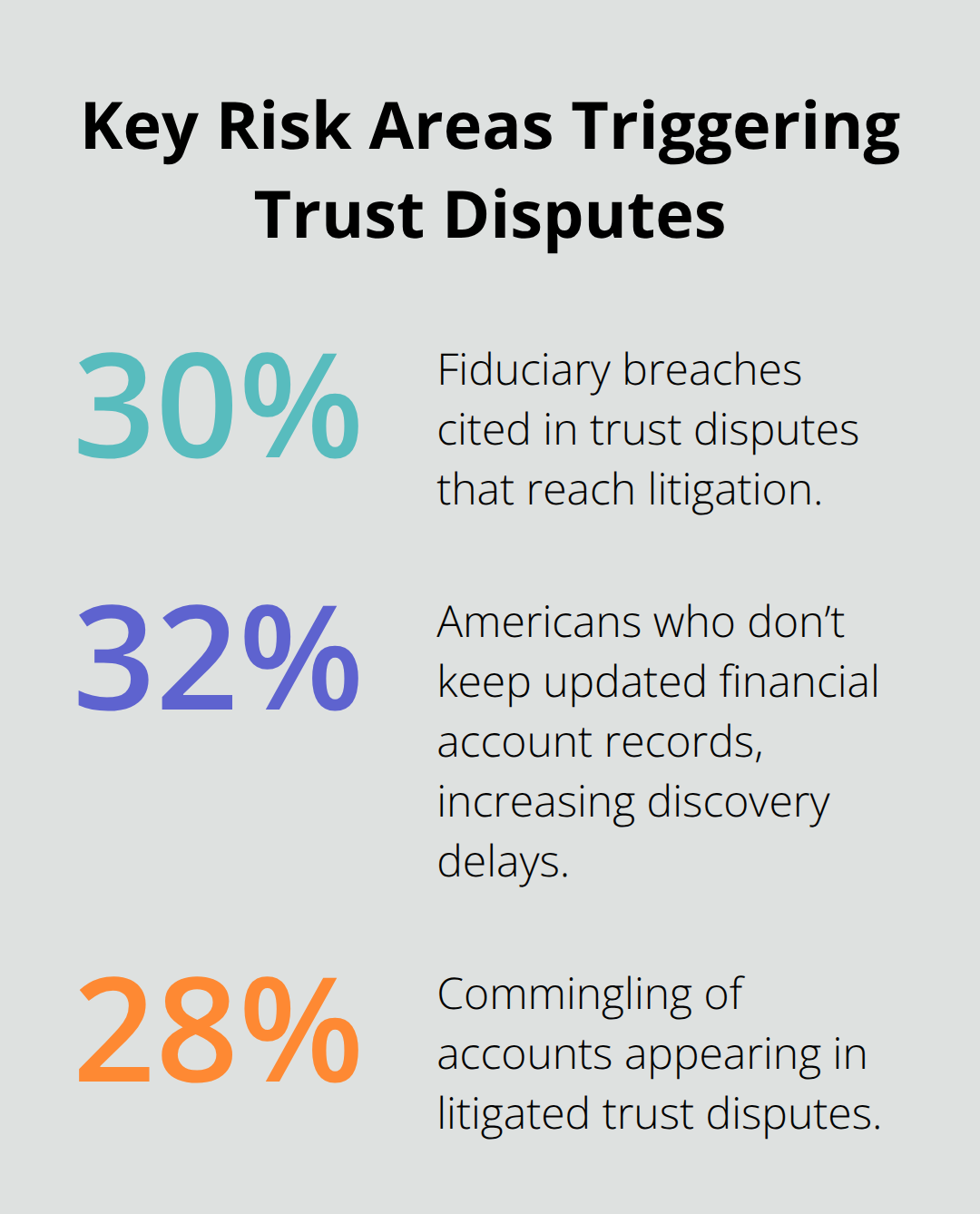
Your fiduciary duty as a trustee is absolute. Florida law requires you to act with complete loyalty to the beneficiaries, which means your personal interests come second to theirs. This isn’t a suggestion-it’s a legal mandate that courts enforce strictly. The American College of Trust and Estate Counsel reports that fiduciary breaches account for roughly 30 percent of trust disputes that end up in litigation. Most trustees fail to grasp that this duty covers not just major decisions but everyday actions like investment choices, fee approvals, and how quickly you communicate information. You cannot take commissions beyond what the trust document allows, invest trust assets in your own ventures, or delay distributions because you’re uncomfortable with a beneficiary’s choices.
The law holds you personally liable for violations, meaning beneficiaries can sue you directly for damages. Florida Statute 736.0802 outlines these duties clearly: you must know the terms of the trust, act in accordance with them, and keep beneficiaries reasonably informed about the trust’s administration. Many trustees wrongly assume they have discretion to bend these rules if their intentions are good. That’s false. Good intentions don’t protect you from breach claims.
Critical Milestones in the First 60 Days
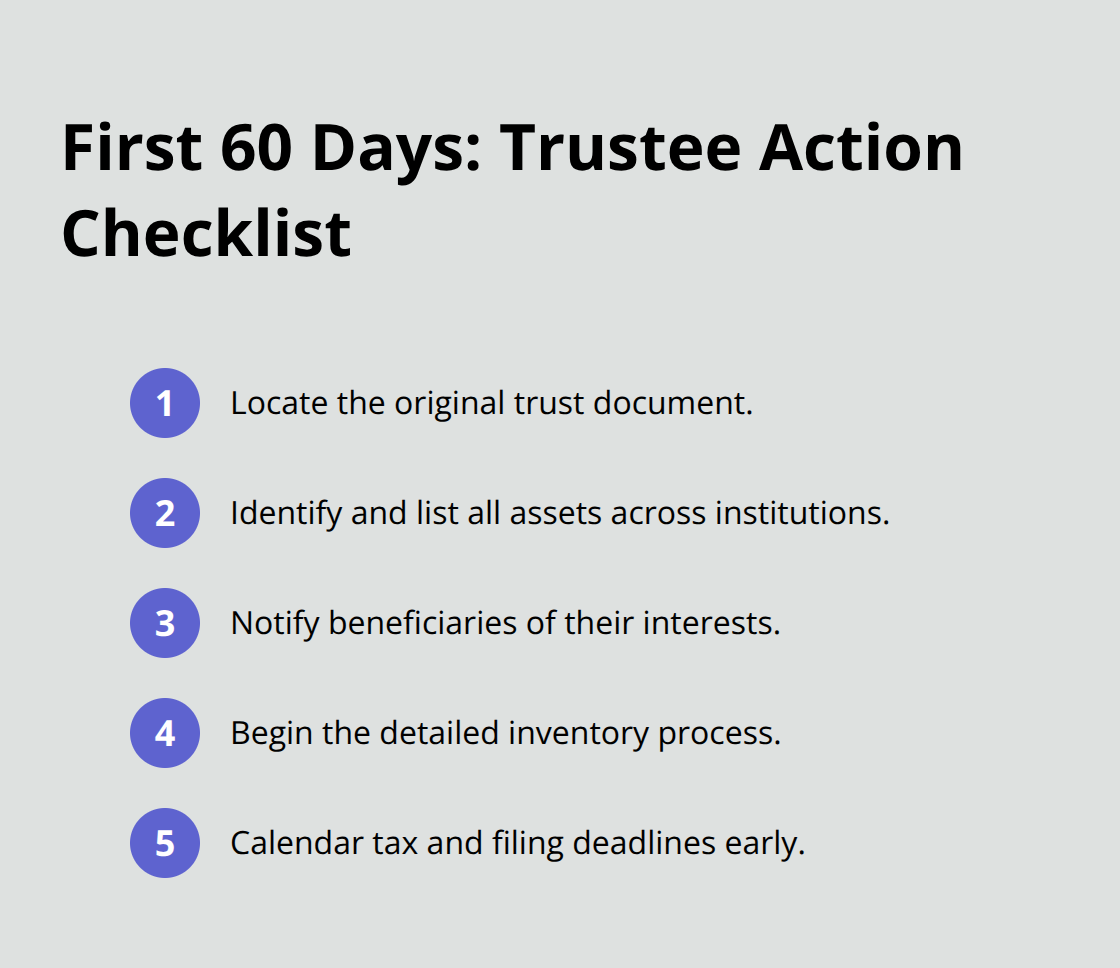
A revocable living trust typically closes within 6 to 12 months after the grantor’s death, but this timeline assumes you handle tasks promptly and beneficiaries don’t contest anything. The initial 30 to 60 days are critical-you must locate the original trust document, identify all assets, notify beneficiaries of their interests, and begin the inventory process. Tax returns are due within nine months for federal estate tax purposes if the estate exceeds the exemption threshold, which in 2026 stands at approximately 13.61 million dollars. Florida doesn’t impose a separate estate tax, which simplifies administration for Florida residents, but you still must file federal returns if required.
Asset Transfer Timelines You Need to Know
Many trustees underestimate how long asset transfers take. Real property transfers require title work and deed preparation, which can stretch timelines by weeks. Brokerage accounts may take 30 to 45 days to transfer. Retirement accounts have specific rules-some must distribute within 10 years under current law, others have different requirements depending on beneficiary status (and these rules shift frequently). Missing these deadlines creates penalties, tax complications, and beneficiary frustration. Create a master timeline immediately after your appointment and assign specific dates to each task rather than working reactively. This approach prevents the scrambling that occurs when trustees treat administration as a reactive process instead of a planned one.
What Should You Do First After Accepting the Trustee Role in St. Augustine and Palatka, FL
Locate and Inventory Trust Assets
You must gather the original trust document and search for financial statements, bank records, investment statements, and property deeds the grantor kept. Many grantors store these documents in safe deposit boxes, home safes, or scattered across multiple institutions. Contact the grantor’s employer, banks, and investment firms directly-don’t rely solely on what family members tell you exists. The National Institute on Retirement Security found that roughly 32 percent of Americans don’t maintain updated records of their financial accounts, which means you may discover assets months into administration.
Create a comprehensive inventory spreadsheet that lists each asset’s location, current value, account numbers, and access credentials. This single document prevents missed assets and keeps distributions accurate. Real property requires title searches through county records to confirm ownership and identify any liens or mortgages. For St. Augustine and Palatka properties, contact the St. Johns County and Putnam County property appraisers’ offices to verify current assessed values and tax obligations.
Notify Beneficiaries Within the Legal Window
Florida Statute 736.0813 requires you to provide trust information to beneficiaries within 60 days of your appointment-not later. Many trustees delay this notification hoping to avoid difficult conversations, but this violation exposes you to liability and beneficiary lawsuits. Send a formal letter introducing yourself, explaining the timeline, and setting expectations about when distributions will occur. Be specific: if distributions won’t happen for six months, state that clearly. Vague timelines breed frustration and suspicion.
Handle Tax Obligations and Documentation
You must file a federal Form 1041 if the trust generates income over 600 dollars annually, according to IRS guidelines. Obtain an Employer Identification Number for the trust and file it with the IRS. Keep meticulous records of all distributions, investment transactions, and fees paid-the IRS audits trusts at higher rates than individual returns, and poor documentation invites penalties. Florida doesn’t require separate state income tax filings for trusts, but federal compliance is non-negotiable.
Separate Trust Finances From Personal Accounts
Maintain separate trust bank accounts and investment accounts; never comingle trust funds with your personal money, even temporarily. This is where fiduciary breaches happen most frequently. The commingling of funds (whether intentional or accidental) violates your fiduciary duty and creates legal exposure that courts take seriously. Beneficiaries can challenge distributions and demand restitution when they discover mixed accounts, turning a simple administrative task into litigation.
These foundational steps establish the structure for everything that follows in trust administration. Once you’ve completed asset inventory, notified beneficiaries, and separated finances, you’re ready to address the specific distribution decisions that define your role as trustee.
The Three Mistakes That Turn Trust Administration Into a Legal Nightmare
Commingling Trust Money With Personal Accounts
Trustees in St. Augustine and Palatka, FL face a critical pitfall when they mix trust money with personal accounts. This violation happens more often than you’d think, and courts punish it harshly. A trustee who deposits trust distributions into their personal checking account-even temporarily-violates fiduciary duty. The American College of Trust and Estate Counsel reports that commingling accounts appears in approximately 28 percent of trust disputes that reach litigation. This isn’t a gray area. Florida courts view commingling as a red flag for misappropriation, and beneficiaries don’t need to prove intentional theft; the violation itself triggers liability.
Open a separate trust bank account immediately after accepting your role. This single step costs nothing but prevents the most common breach claim. Many trustees rationalize temporary mixing by telling themselves they’ll separate funds later, but that later never comes, or it comes after months of transactions have blurred the trail. One trustee transferred trust assets into their personal account to pay immediate bills, planning to reimburse the trust within days. The grantor’s death delayed the reimbursement, and by the time the trustee repaid the funds, a beneficiary had discovered the transaction. The lawsuit cost the trustee over 15,000 dollars in legal fees, even though the money was ultimately restored.
Failing to Maintain Adequate Documentation
Inadequate documentation creates chaos when beneficiaries question your decisions or the IRS audits the trust. You must maintain detailed records of every distribution, every investment transaction, every fee paid, and every communication with beneficiaries. The IRS audits trusts at roughly 1.1 percent annually according to recent filing data, which is significantly higher than the audit rate for individual returns. When audited without complete documentation, trustees face penalties, interest charges, and beneficiary liability claims.
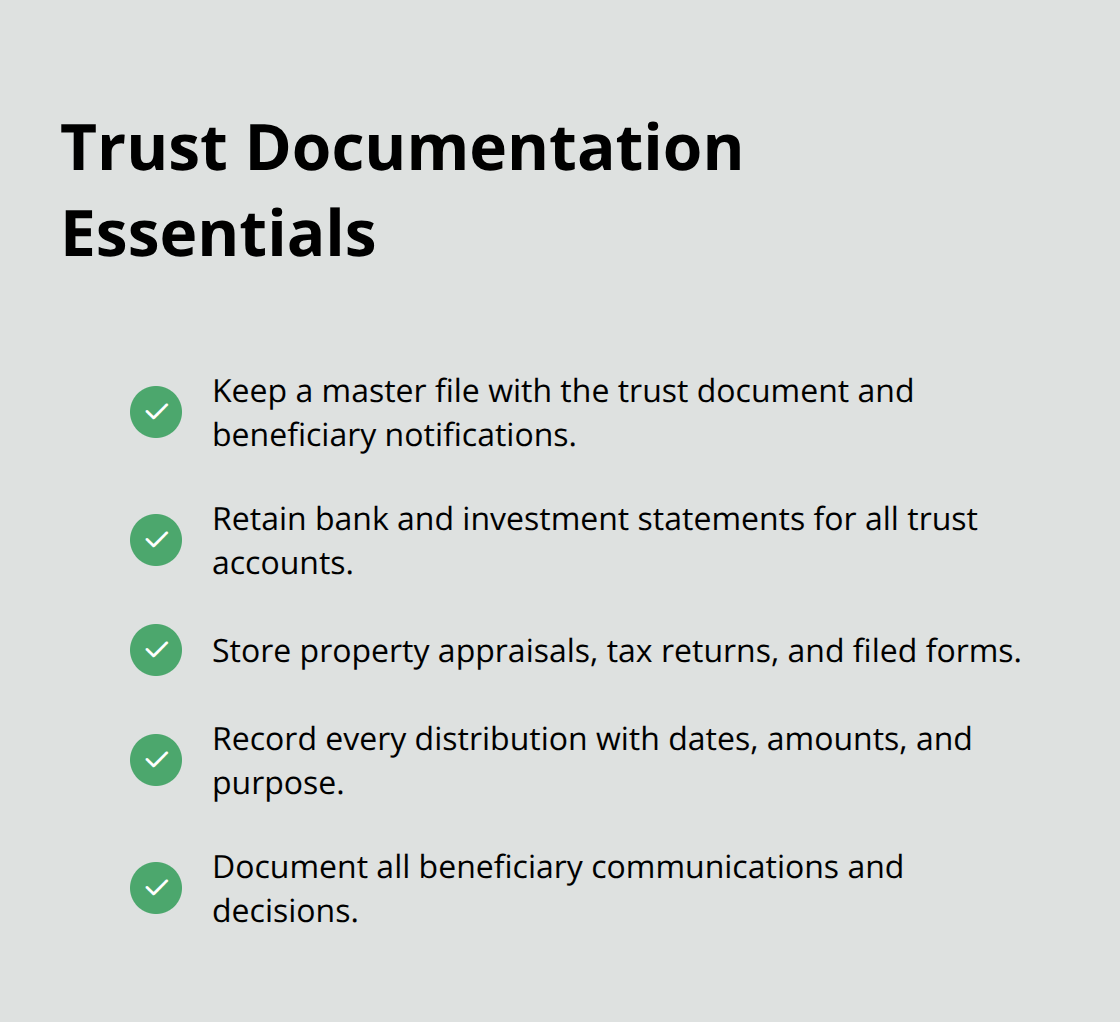
Create a master file for each trust that contains the original trust document, all beneficiary notifications, bank statements, investment statements, property appraisals, tax returns filed, and distribution records. Digital storage through cloud services protects these documents from loss and makes them accessible if you need to reference them months later. One trustee maintained handwritten notes about distributions but never recorded them in a formal accounting statement. When a beneficiary requested an accounting after eighteen months, the trustee couldn’t produce clear documentation of what had been distributed and why. The resulting dispute required a court-ordered accounting, costing both the trustee and the beneficiary thousands in legal fees.
Missing Statutory Deadlines
Missing statutory deadlines creates legal violations you cannot recover from. Florida Statute 736.0813 requires you to notify beneficiaries within 60 days of your appointment. The federal estate tax return, if required, is due nine months after death. Missing these deadlines doesn’t just delay administration; they expose you to surcharge claims where beneficiaries demand you pay penalties from your personal funds. Courts can hold trustees personally liable for interest and penalties that result from late tax filings.
Create a written deadline calendar the moment you accept the trustee role and assign specific dates to each task. Don’t work from memory or mental notes. One trustee missed the 60-day beneficiary notification deadline because they were waiting for the grantor’s attorney to provide copies of the trust document. When the beneficiary later discovered the late notification, they sued for breach of duty. The trustee’s defense-that they were waiting for documents-failed because Florida law doesn’t excuse the deadline based on administrative delays. The settlement cost the trustee 8,000 dollars in damages plus their own legal fees.
Final Thoughts on Trust Administration
Trust administration tips boil down to three core principles: separate your finances, document everything, and meet every deadline. If you follow these practices, you eliminate the mistakes that turn straightforward administration into costly litigation. The stakes are real-trustees who fail to maintain separate accounts, skip documentation, or miss statutory deadlines face personal liability that can exceed tens of thousands of dollars.
The first 60 days after you accept your trustee role determine whether administration runs smoothly or derails. Locate assets immediately, notify beneficiaries within the legal window, and establish separate trust accounts before you handle a single distribution. These foundational steps prevent the disputes that consume time and money months into the process.
When administration becomes complicated, when beneficiaries disagree about distributions, or when you’re uncertain about your legal obligations, professional guidance becomes necessary rather than optional. We at Family, Estate & Mediation Law have over 50 years of combined experience helping trustees navigate complex administration across Northeast Florida, and our team handles the legal and strategic decisions that protect you from liability while keeping administration on track. Contact us at femlg.com to discuss your trustee responsibilities and determine whether professional support makes sense for your administration.