
Most families in St. Augustine and Palatka don’t realize how much time and money probate costs. A revocable trust gives you control over your assets while you’re alive and makes the transition to your heirs straightforward.
At Family, Estate & Mediation Law, we’ve seen firsthand how revocable trust benefits protect families from unnecessary delays and expenses. This guide walks you through why a trust matters for your situation.
Why Revocable Trusts Keep Florida Families Out of Probate
The Real Cost of Probate in Florida
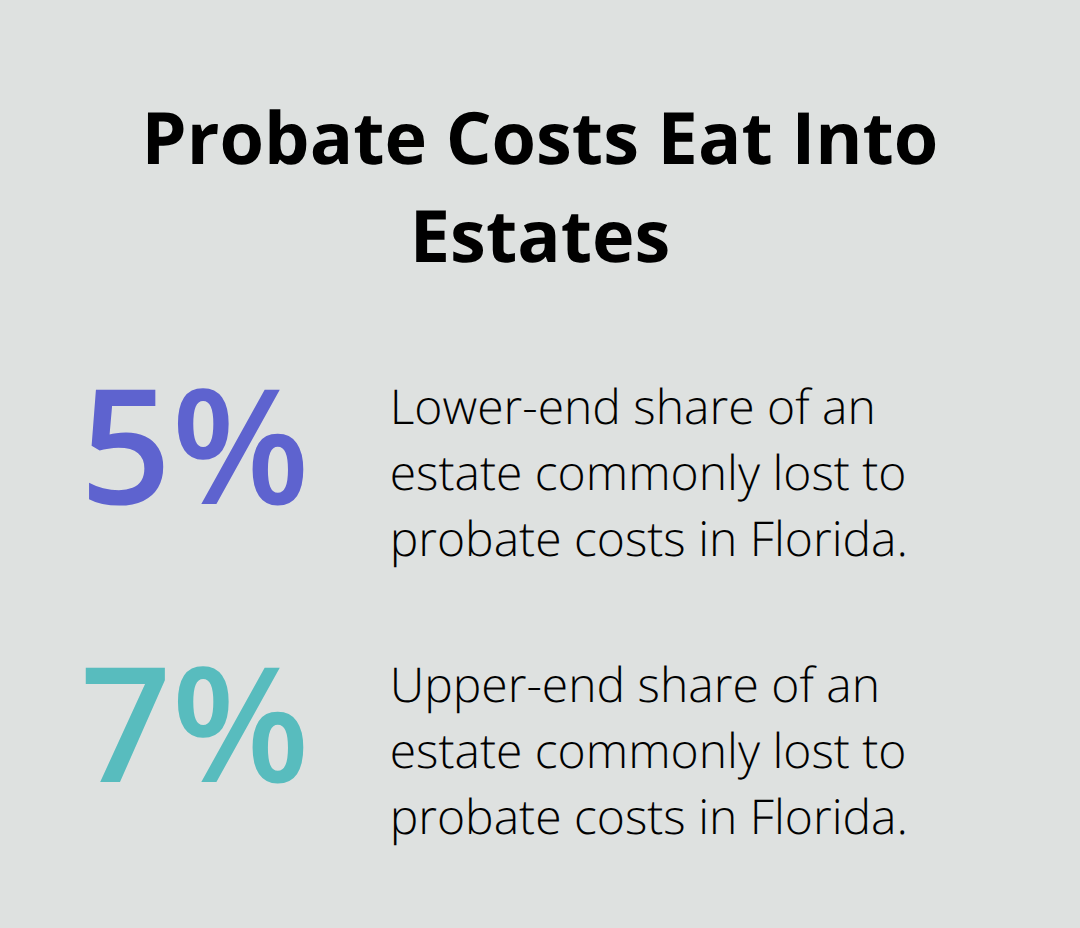
Probate in Florida takes anywhere from nine months to two years, depending on the complexity of your estate and whether anyone contests the will. During this time, your family cannot access funds for immediate needs, and court fees, attorney costs, and administrative expenses typically consume five to seven percent of your estate’s total value. Families in St. Augustine and Palatka often face unexpected delays when probate becomes necessary, even for straightforward estates.
A revocable trust bypasses probate completely because the trust owns your assets rather than you personally. Your successor trustee can distribute everything to your beneficiaries within weeks instead of years. Your family avoids public court proceedings, keeps financial details private, and saves thousands in unnecessary costs.
Privacy Protection Your Will Cannot Offer
Probate documents become public record in Florida, meaning anyone can access information about what you owned, who inherited it, and how much your estate was worth. A revocable trust keeps all of this confidential. Your financial information stays between you and your family, not available for public scrutiny or potential exploitation.
Flexibility That Adapts to Your Life
A revocable trust gives you flexibility that a will simply cannot match. You remain in complete control while alive and can modify or revoke the trust anytime your circumstances change. If you become incapacitated before death, your successor trustee steps in automatically without court intervention or guardianship proceedings (which can cost $5,000 to $15,000 in legal fees alone).
Customizing Distributions for Your Family’s Situation
For families with properties in multiple states or grown children with special needs, a revocable trust lets you customize exactly how and when beneficiaries receive their inheritance. You might specify that one child receives funds immediately while another gets distributions over time, or that a portion goes to a special needs trust to protect eligibility for government benefits. This level of control matters far more than most people realize when protecting your family’s actual situation rather than following a generic template.
The flexibility and control a revocable trust provides form only part of the picture. Understanding how a trust protects your family during incapacity reveals why this tool matters so much for Northeast Florida families.
How a Revocable Trust Protects Your Family During Crisis
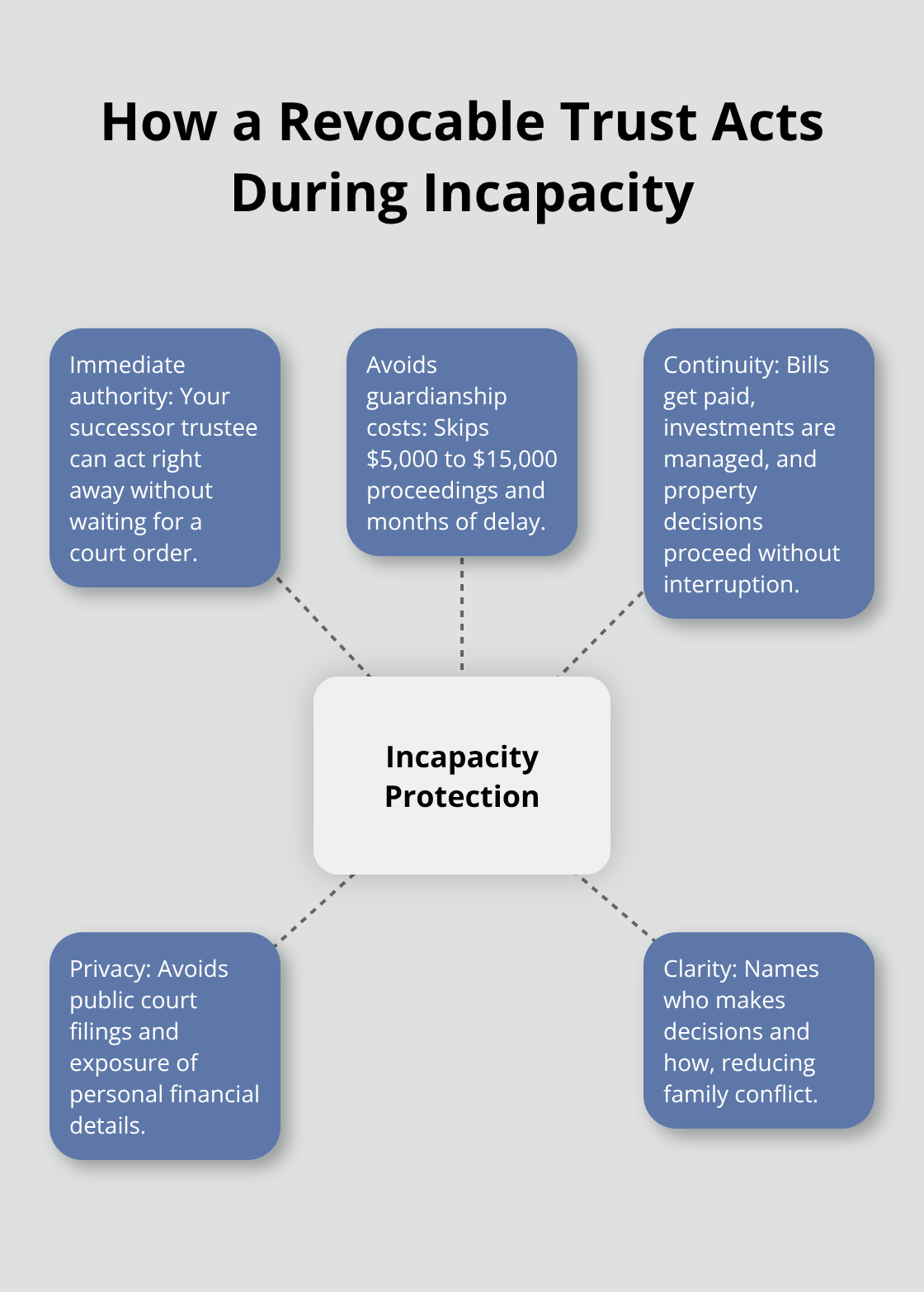
When you become incapacitated, a revocable trust operates automatically without court involvement. Your successor trustee steps in immediately to pay bills, manage investments, and handle property decisions-all without guardianship proceedings that cost $5,000 to $15,000 in legal fees and tie your family’s hands for months. Without a trust in place, your family must petition the court for guardianship or conservatorship, a public process that requires periodic accounting and court approval for even basic decisions. St. Augustine and Palatka families who structure their assets in a revocable trust avoid this bureaucratic nightmare entirely. Your chosen trustee has legal authority the moment you cannot act, meaning your mortgage gets paid, your medical bills are handled, and your business operations continue without interruption. This matters tremendously if you suffer a stroke, accident, or illness that leaves you temporarily or permanently unable to manage your affairs. The trust document itself specifies exactly who makes decisions and how they should handle your assets, removing guesswork and family conflict during an already stressful time.
Immediate Authority Without Court Delays
Your successor trustee gains legal power to act the instant you become incapacitated, without waiting for any court order. This automatic transition means your bills stay current, your investments remain managed, and your property decisions move forward without interruption. Guardianship and conservatorship proceedings, by contrast, force your family to navigate months of court hearings and paperwork before anyone can legally act on your behalf. The public nature of these court processes also exposes your financial situation to scrutiny that a trust completely avoids.
Seamless Wealth Transfer Without Probate
A revocable trust transfers your property to beneficiaries in weeks rather than the nine months to two years probate requires. Your successor trustee distributes assets according to your written instructions without probate court approval, avoiding attorney fees, court costs, and the public exposure that comes with will-based transfers. This speed matters most when your family needs immediate access to funds for living expenses, mortgage payments, or funeral costs. Families with liquid assets in a trust can access those funds almost immediately, while probate-bound estates force beneficiaries to wait months for court authorization. The trust also sidesteps complications that arise when you own property in multiple states, since trust property transfers automatically in every jurisdiction without separate probate filings. If you own rental properties in both Florida and another state, a revocable trust eliminates the need for ancillary probate in that second state-a process that adds months and thousands in additional legal costs.
Customized Control Over Inheritance Distribution
You can structure distributions to match your family’s actual circumstances rather than treating all beneficiaries identically. Specify that one child receives funds immediately while another receives monthly distributions over five years, protecting spenders from poor decisions while providing ongoing financial support. If you have a child with special needs, you can direct assets into a supplemental needs trust within your revocable trust, preserving government benefits like Medicaid and SSI while still providing for their care. Parents of young adults often specify that distributions occur at staggered ages-perhaps 25 percent at age 25, another 25 percent at 30, with the remainder at 35-giving maturing beneficiaries time to develop financial responsibility. You might also require that a distribution only occurs if a beneficiary achieves specific goals, such as completing college or maintaining sobriety, using your trust as a tool for encouraging positive outcomes. These customizations keep your money serving your family’s actual needs instead of creating windfalls that cause conflict or harm.
These protections during incapacity and after death form the foundation of what makes a revocable trust powerful, but many families hold onto misconceptions that prevent them from taking action.
Common Misconceptions About Revocable Trusts
Myth One: Revocable Trusts Offer No Asset Protection
Most families in St. Augustine and Palatka delay creating a revocable trust because they believe it provides no asset protection. This misconception confuses two completely different legal tools. A revocable trust protects your assets from probate and gives you control during incapacity, but it does not shield assets from creditors or lawsuits the way an irrevocable trust or LLC can. If creditor protection is your actual concern, you need a different strategy entirely, not a revocable trust.
Many families need both a revocable trust for probate avoidance and incapacity planning, plus additional structures like an LLC for business assets or an irrevocable trust for specific creditor protection goals. The right tool depends on your actual situation, not on assumptions about what one document can accomplish.
Myth Two: Setting Up a Trust Requires Expensive Professionals
The second myth claims that creating a trust involves hiring expensive professionals and navigating complicated legal processes. In reality, a revocable trust in Florida costs between $1,000 and $3,000 through an attorney-far less than the $5,000 to $15,000 guardianship fees you’ll pay if you become incapacitated without one.
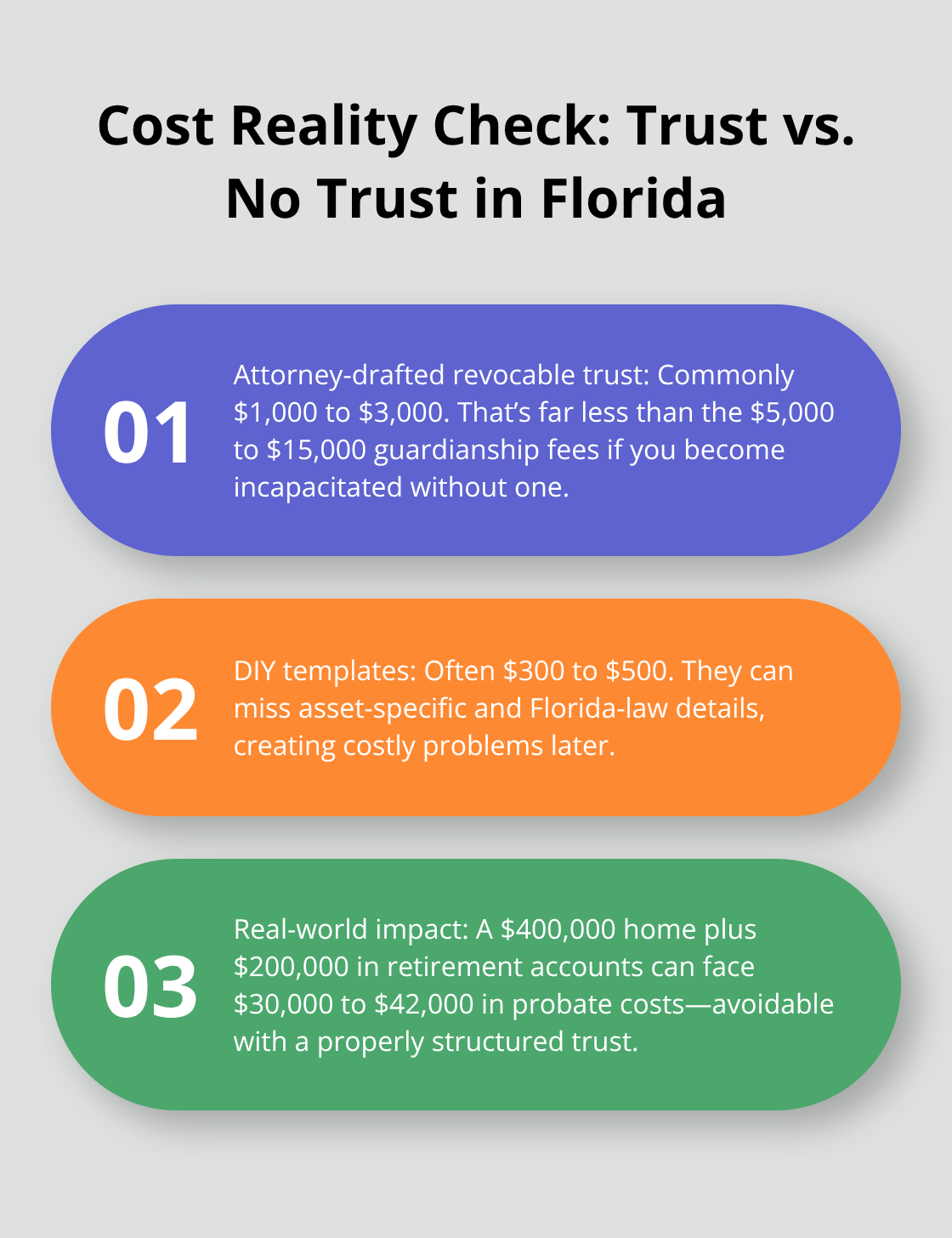
Online document services charge $300 to $500 for DIY trusts, but these templates often miss critical details about your specific assets, tax situation, or family circumstances. A Florida attorney spends time understanding your actual situation, ensuring your trust names the right successor trustee, coordinates with your other assets, and includes language that works specifically under Florida law. This personalized approach costs more upfront but prevents costly mistakes later.
Myth Three: Trusts Exist Only for Wealthy Families
The third misconception insists that trusts exist only for wealthy families with millions in assets. This belief costs middle-class families thousands in unnecessary probate costs and exposes them to guardianship proceedings they could have avoided. Any family owning a home, vehicles, investment accounts, or retirement assets benefits from trust-based planning.
A family with a $400,000 home and $200,000 in retirement accounts avoids $30,000 to $42,000 in probate costs through a properly structured revocable trust. Families with young children particularly benefit because a trust lets you name a guardian for your children and specify exactly how money for their care gets managed, rather than leaving guardianship decisions to a judge. The real barrier stopping families isn’t complexity or cost or wealth thresholds-it’s that most people simply don’t know these myths are false.
Final Thoughts
A revocable trust gives Northeast Florida families something most people overlook: control without complexity. You maintain complete authority over your assets while alive, modify the trust whenever circumstances change, and protect your family from probate delays that typically stretch nine months to two years. When incapacity strikes, your successor trustee steps in automatically without guardianship proceedings that cost $5,000 to $15,000 in legal fees alone.
The revocable trust benefits extend beyond avoiding probate. You customize exactly how and when each beneficiary receives money, protect special needs family members while preserving government benefits, and eliminate the need for multiple probate filings if you own property across state lines. Families in St. Augustine and Palatka with homes, retirement accounts, or investment assets face real costs from probate that a trust prevents entirely ($30,000 to $42,000 in unnecessary expenses for a $400,000 home and $200,000 in retirement accounts).
At Family, Estate & Mediation Law, we help families across Northeast Florida structure their assets to match their actual circumstances. Contact us at femlg.com to discuss how a revocable trust protects your family’s legacy.