
Most people in St. Augustine and Palatka never put their medical wishes in writing. When a health crisis hits, families are left guessing what their loved one would have wanted.
Healthcare directive drafting gives you control over your own care decisions. At Family, Estate & Mediation Law, we’ve seen firsthand how clear medical directives protect both patients and their families from confusion and conflict.
Why Healthcare Directives Matter in St. Augustine and Palatka
The Gap That Leaves Families Vulnerable
Without a written healthcare directive, hospitals and doctors face impossible decisions when you cannot speak for yourself. According to data from the American Hospital Association, approximately 55% of adults in the United States lack any form of advance directive. In Florida, this gap leaves families in St. Augustine and Palatka vulnerable to medical decisions made without knowledge of your actual preferences. When a stroke, accident, or sudden illness strikes, medical teams default to aggressive interventions regardless of whether you would want them. Your family members may disagree about your care, forcing doctors to navigate family conflict while you remain unconscious or incapacitated.
How Clear Directives Protect You and Your Family
A healthcare directive written clearly and stored accessibly changes everything. Florida law recognizes healthcare directives as legally binding documents that give you authority over your medical future even when you cannot advocate for yourself. This means naming someone you trust as your healthcare power of attorney, specifying exactly what interventions you do or do not want, and making certain your family knows where to find these documents. When your directive sits on file at your hospital and copies rest with your healthcare agent, medical teams follow your stated preferences without delay or family dispute.
Why Updates Matter More Than You Think
Life changes demand updates-a new marriage, serious diagnosis, or shift in your values means your five-year-old directive may no longer reflect your true wishes. Healthcare directives also protect your family financially and emotionally (often saving thousands in unwanted medical bills) by removing the burden of guessing your preferences during crisis moments. Your medical wishes become documented fact rather than family argument. A directive that no longer matches your current situation creates the same problems it was meant to solve.
Moving Forward With Your Medical Wishes
The practical advantage of a clear healthcare directive is immediate and measurable. Your family avoids the chaos that unfolds when patients never communicate their wishes in writing-families torn apart by disagreement, prolonged suffering when comfort care would have been preferred, and mounting medical expenses for treatments you never wanted. With your directive in place, medical teams know exactly what you want, and your loved ones can focus on supporting you rather than fighting over your care. The next step involves understanding what actually goes into an effective healthcare directive and which components protect your interests most thoroughly.
Key Components of an Effective Healthcare Directive
Selecting Your Healthcare Power of Attorney
Your healthcare power of attorney speaks for you when you cannot speak for yourself, which means selecting this person matters far more than most people realize. This individual needs to understand your values deeply and advocate for your wishes even when family members disagree or pressure them differently. We at Family, Estate & Mediation Law recommend choosing someone under 65 years old who lives close enough to reach your medical team quickly during emergencies. Your healthcare power of attorney should be someone emotionally stable enough to make difficult decisions without guilt, not someone prone to second-guessing or family drama. Have a direct conversation with this person before naming them-many people accept the role without fully understanding the weight of the responsibility.
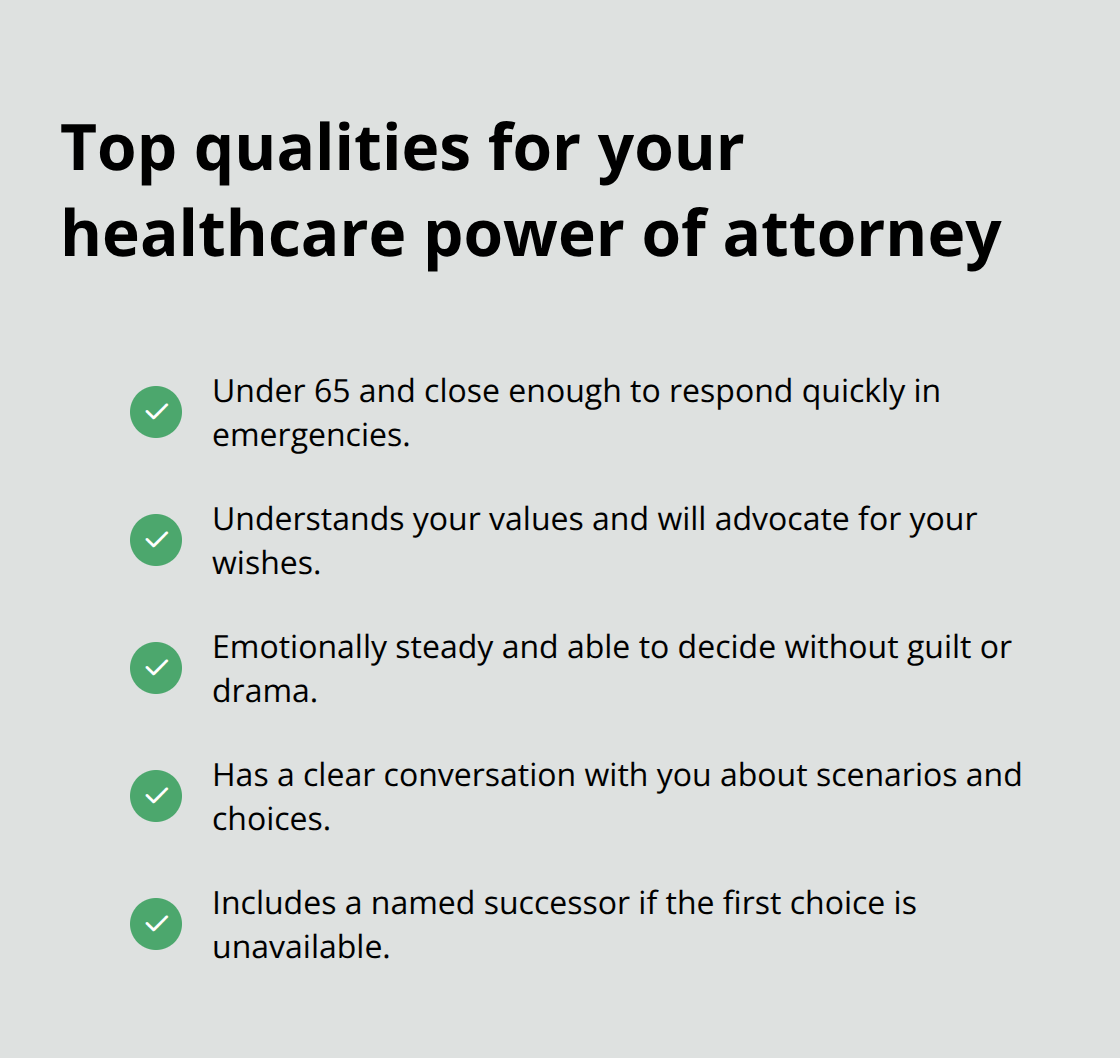
If your first choice becomes unavailable due to illness or relocation, name a successor agent in your directive so medical teams know exactly who takes over.
Writing Specific Treatment Preferences
Specificity in your treatment preferences separates directives that actually guide care from those that create confusion. Rather than writing vague phrases like “I don’t want to suffer,” state exactly what you mean: “I do not want mechanical ventilation if I have advanced dementia with no reasonable chance of recovery” or “I want comfort care focused on pain relief even if it shortens my life.” The Journal of the American Medical Association found that vague directives led to treatment decisions that contradicted patient wishes in roughly 40% of cases. Include your feelings about specific scenarios-CPR, feeding tubes, dialysis, ICU admission-because doctors need concrete direction, not philosophy.
Storing and Accessing Your Directive
Store original copies with your healthcare power of attorney, your primary care physician, and at the hospital where you receive most care. Digital storage through your hospital’s patient portal or services like MedFacts provides access during emergencies when paper documents sit at home. Update your directive every three to five years or whenever major life changes occur (a new marriage, serious diagnosis, or shift in your values), and always notify your healthcare power of attorney and physician of any changes you make.
Common Mistakes That Undermine Your Wishes
Many people draft healthcare directives but fail to communicate their wishes to family members, leaving loved ones confused during medical crises. Others use language so vague that medical teams cannot determine your actual preferences. Still others create a directive and never update it, so a five-year-old document no longer reflects your current situation or values. These mistakes transform a protective document into a source of family conflict and medical confusion-exactly what you wanted to prevent.
Common Mistakes That Sabotage Your Healthcare Directive
Vague Language That Leaves Medical Teams Guessing
Most healthcare directives fail because people draft them carelessly, using language so vague that medical teams cannot act decisively when your life depends on clear instruction. Phrases like “I don’t want to suffer” or “I want everything done” create exactly the kind of confusion a healthcare directive is supposed to eliminate. A doctor reading “I don’t want to suffer” has no idea whether you’re refusing a feeding tube, rejecting CPR, or declining pain medication that might shorten your life. Research from the American Medical Association shows that vague directives led to treatment decisions contradicting patient wishes in approximately 40% of cases studied.
Instead, state specific scenarios: “I refuse mechanical ventilation if I’m diagnosed with end-stage Alzheimer’s disease with no possibility of meaningful recovery” or “I want aggressive pain management even if it hastens death.” The more concrete your language, the more your actual preferences guide care rather than your family’s interpretation of what you probably meant.
Silence About Your Wishes Destroys Your Directive’s Purpose
The second critical failure happens after the directive is drafted: people write clear instructions and then tell nobody. Your healthcare power of attorney might not fully understand your wishes, your family members might not know the document exists, and your doctor might never see it. This silence transforms your directive into a useless piece of paper sitting in a drawer. Families torn apart by disagreement often discover that nobody knew what the patient actually wanted.
Schedule a conversation with your healthcare power of attorney before you finalize the document, walk through specific scenarios, and discuss why you made certain choices. Give copies to your primary care physician, your hospital, and anyone who might need to advocate for you during crisis moments. This communication step separates directives that actually protect you from those that create conflict.
Outdated Directives Contradict Who You Are Today
The third mistake compounds these failures: people create a directive and never update it. Your values shift after a serious diagnosis, a new marriage changes your priorities, or advances in medical technology alter what treatments are even available. A directive written ten years ago might contradict who you are today, creating the same family conflict and medical confusion you wanted to prevent.
Review your directive every three to five years and whenever major life changes occur (a new marriage, serious diagnosis, or shift in your values). Update it if your wishes have changed and notify everyone who has a copy. This ongoing attention transforms your directive from a static document into a living reflection of your actual medical preferences.
Final Thoughts
A healthcare directive drafted with clarity and specificity gives you control over your medical future when you need it most. Without one, your family faces impossible choices during medical crises, and your actual wishes remain unknown. Healthcare directive drafting isn’t something to delay-the time to make these decisions is now, while you’re healthy and thinking clearly, not during a hospital stay when your family is panicked and medical teams are waiting for direction.
Your healthcare power of attorney needs to understand your values deeply, your family needs to know where your directive is stored, and your doctor needs a copy on file. These practical steps transform a document from theoretical protection into real guidance that shapes your care. The three mistakes we’ve outlined-vague language, silence about your preferences, and outdated documents-destroy what should be your strongest protection, so avoiding them means writing concrete instructions and communicating your wishes to everyone who needs to know them.
We at Family, Estate & Mediation Law Group work with individuals and families across Northeast Florida to create healthcare directives that actually protect your interests and reflect your true medical preferences. Contact Family, Estate & Mediation Law Group to discuss your healthcare directive and make certain your wishes guide your care when you cannot speak for yourself.