
Most people don’t realize their will might be completely ignored when it comes to retirement accounts, life insurance, and bank accounts. Beneficiary designations override everything else in your estate plan, which means getting them wrong can derail your entire inheritance strategy.
We at Family, Estate & Mediation Law help St. Augustine and Palatka families navigate beneficiary designation guidance to protect what matters most. This guide walks you through the decisions that actually shape who gets your assets.
What Happens to Your Accounts When You Die
Beneficiary Designations Control Your Assets Directly
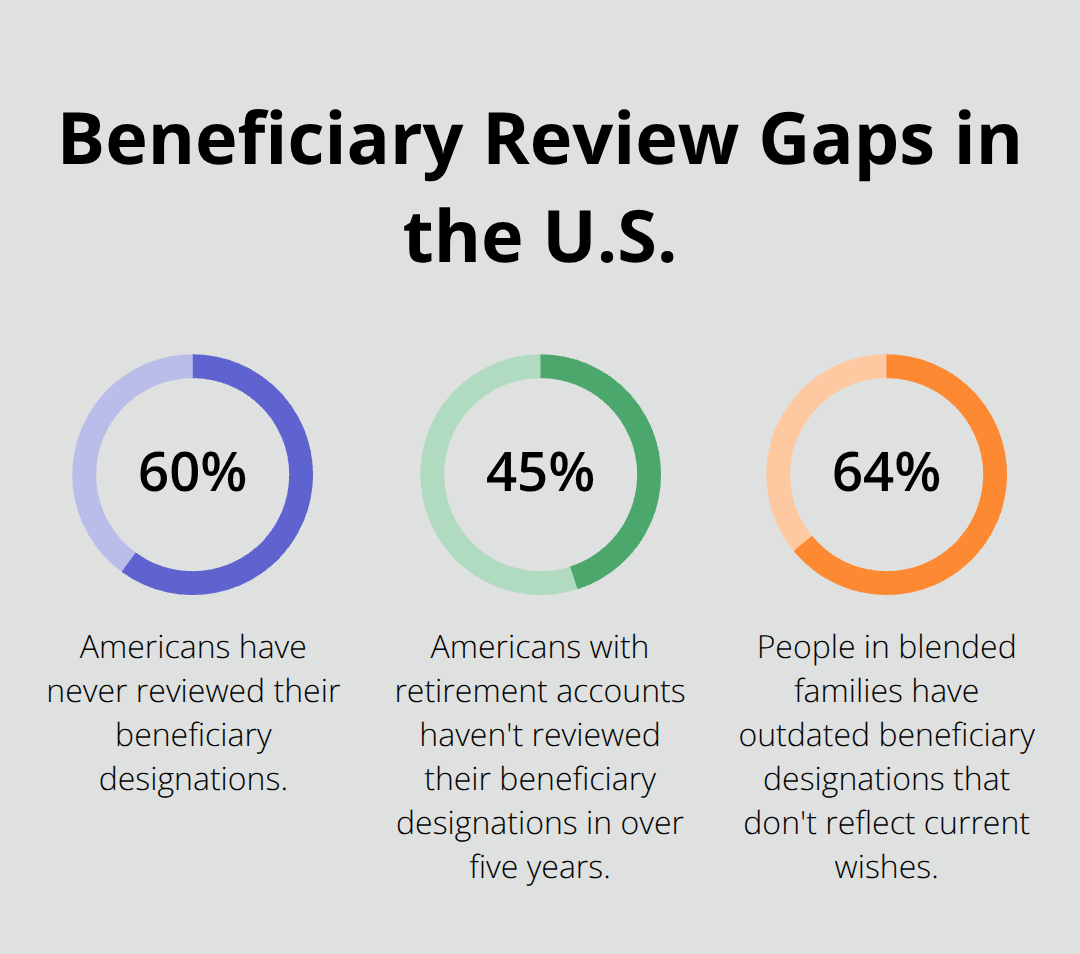
Beneficiary designations are legal instructions attached directly to specific financial accounts that tell the institution who receives the money when you pass away. Unlike your will, which goes through probate and takes months to settle, beneficiary designations transfer assets immediately upon death. This speed matters because your family needs access to funds quickly. According to the American College of Financial Services, 60% of Americans have never reviewed their beneficiary designations, leaving their families vulnerable to costly mistakes.
Why Your Will Cannot Override These Designations
Your will controls only assets that don’t have a named beneficiary. Think of beneficiary designations as a direct instruction to the financial institution, while your will is a general instruction to your executor. The institution follows the specific instruction first, every time. If you funded a 401(k) with $500,000 over your career and named the wrong person, that institution will hand over half a million dollars exactly as the old designation says, regardless of what your will states. Florida courts have consistently held that beneficiary designations take priority, so your family cannot easily override them even if they believe it was a mistake. The only way to change where these assets go is to update the designations before you die.
Accounts That Require Your Immediate Attention
Retirement accounts present the biggest challenge because they hold substantial wealth and carry tax implications. Your 401(k), 403(b), traditional IRA, and Roth IRA all require active beneficiary designations. Life insurance policies function the same way, and many people name beneficiaries decades ago and never update them. Bank accounts with payable-on-death options give you flexibility without involving probate, but only if you actually complete the designation form with your bank.
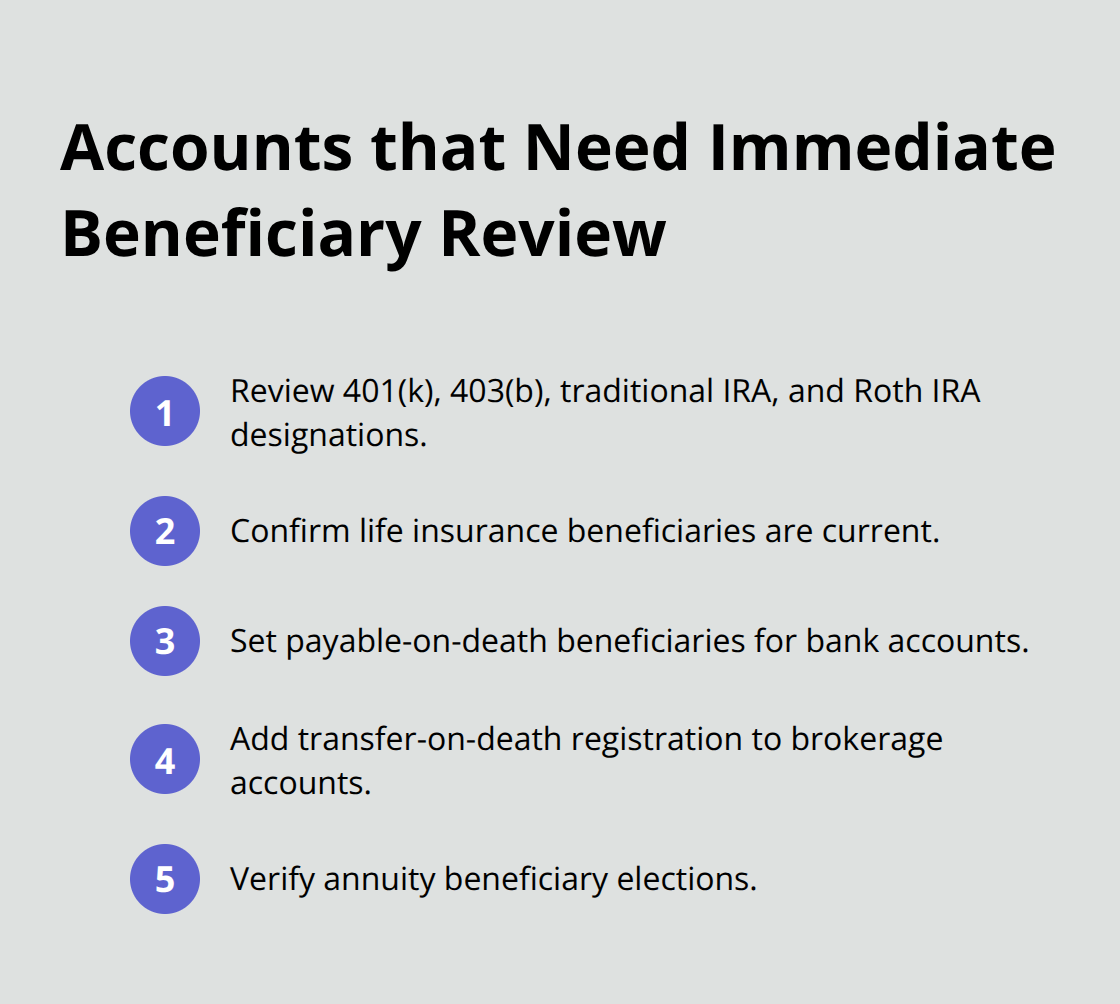
Investment accounts, particularly brokerage accounts with transfer-on-death registration, work identically. Even your annuities have beneficiary designations built in.
The Conflict That Emerges Across Multiple Accounts
The problem compounds when you have accounts spread across multiple institutions because each one has its own separate designation. One account might name your current spouse while another names a child from a previous marriage. These conflicts (especially in blended families or after divorces) create situations where multiple people believe they should inherit from different accounts. St. Augustine and Palatka families often face these complications during estate planning, and the conversations become uncomfortable fast when conflicting designations surface. Your next step involves identifying every account you own and reviewing exactly who you named on each one.
Mistakes That Derail Beneficiary Plans
Life Changes Demand Immediate Action
Life changes constantly, but beneficiary designations don’t update themselves. Most people name beneficiaries once and never touch them again, which creates a cascade of problems when marriages end, children are born, or financial situations shift. The Fidelity Investments 2024 Retirement Income Report found that 45% of Americans with retirement accounts haven’t reviewed their beneficiary designations in over five years. That statistic reflects a dangerous pattern we see repeatedly in St. Augustine and Palatka families. When you divorce and remarry, your old ex-spouse might still sit on your 401(k) while your new spouse receives nothing. Florida law does not automatically remove ex-spouses from beneficiary designations after divorce, which means your assets could transfer to someone you actively tried to separate from. The same problem surfaces when you have children after naming initial beneficiaries, or when your financial priorities shift and you want to help a grandchild through college instead of funding an adult child’s inheritance. Each life event demands a beneficiary review, yet most people treat designations as a one-time decision made in their thirties and never revisit them.
Estate Designations Create Tax Disasters
Naming your estate as a beneficiary on retirement accounts creates a tax disaster that most people don’t anticipate until it’s too late. When your estate inherits a 401(k) or IRA, the entire balance becomes subject to estate taxes and probate fees, which can consume 30-40% of the account value before your heirs see a single dollar. Additionally, retirement accounts inherited by estates lose their tax-deferred status and become taxable income to the estate itself, triggering an immediate tax bill your estate must pay. The Internal Revenue Service treats this differently than naming individuals directly, and the difference costs families thousands of dollars annually across Northeast Florida. Inconsistent designations across multiple accounts compound this mistake because you might name your estate on one retirement account while naming individuals on another, creating a chaotic mix where part of your wealth gets crushed by taxes while the rest transfers cleanly.
Conflicting Designations Across Accounts
The problem intensifies when you hold accounts spread across multiple institutions because each one has its own separate designation. One account might name your current spouse while another names a child from a previous marriage. These conflicts (especially in blended families or after divorces) create situations where multiple people believe they should inherit from different accounts. St. Augustine and Palatka families often face these complications during estate planning, and the conversations become uncomfortable fast when conflicting designations surface. Your next step involves identifying every account you own and reviewing exactly who you named on each one-a process that reveals whether your designations actually match your current wishes or whether they reflect outdated decisions that no longer serve your family’s needs.
Strategic Beneficiary Planning for St. Augustine and Palatka, FL Families
Coordinate Your Designations With Your Complete Estate Plan
Your beneficiary designations don’t exist in isolation-they’re part of a larger financial picture that includes your will, trusts, and overall estate plan. Many St. Augustine and Palatka families make the mistake of naming beneficiaries without considering how those decisions interact with their other planning tools. If you name your spouse as beneficiary on your 401(k) but leave your real estate through your will to your children, you’ve created an imbalanced inheritance that might leave one group with liquid assets and another with illiquid property.
The solution requires coordinating every account with your complete estate strategy. Start by listing every asset you own-retirement accounts, life insurance, bank accounts, investment accounts, and real estate-then document the current beneficiary designation on each one. Next, compare those designations against your will and trust documents. If they conflict, you’ve identified exactly where problems will surface.
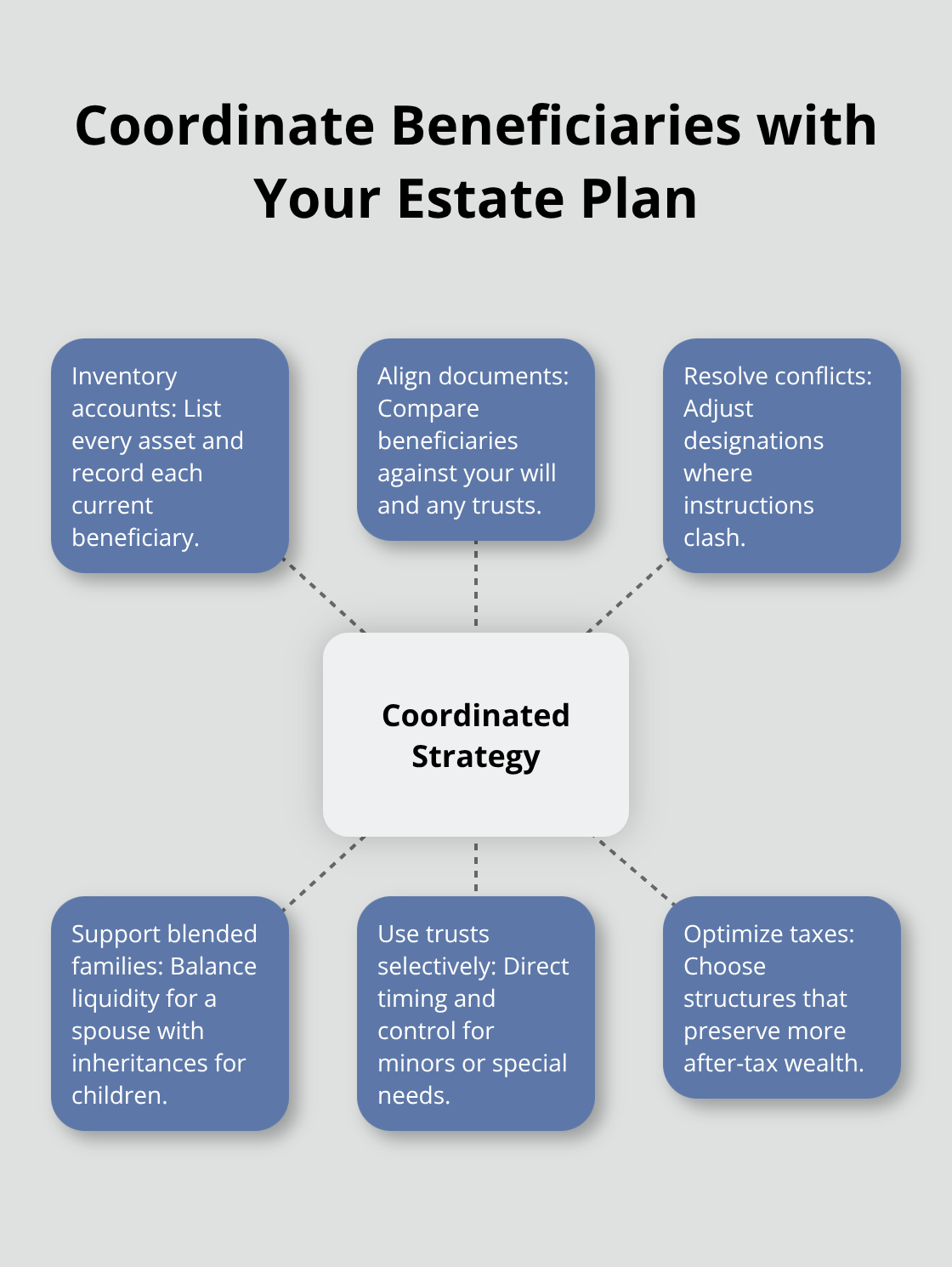
This coordination matters most in blended families where you might want your current spouse to have immediate access to liquid assets while ensuring your children from a previous marriage inherit your home. The AARP found that 64% of people with blended families have outdated beneficiary designations that don’t reflect their current wishes, which means your family situation likely demands immediate attention.
Use Trusts to Control How Beneficiaries Receive Assets
Tax efficiency transforms beneficiary planning from a simple naming exercise into a wealth-preservation strategy that protects your family’s inheritance. Naming individual beneficiaries directly on retirement accounts allows them to stretch withdrawals over their lifetime under current IRS rules, minimizing tax impact compared to naming your estate. However, certain beneficiaries-like minor children or spouses with special needs-require different structures.
Naming a trust as beneficiary on a retirement account gives you control over how and when distributions happen, which prevents an 18-year-old from inheriting $200,000 and spending it recklessly. The trade-off is that trusts don’t get the same tax-deferral benefits as individual beneficiaries, so you need professional guidance to structure this correctly. Similarly, if you own life insurance with significant death benefits, naming your life insurance trust as beneficiary keeps those proceeds out of your taxable estate, potentially saving your family thousands in estate taxes.
Maximize Tax Efficiency Across Your Accounts
For St. Augustine and Palatka families with substantial assets, coordinating your beneficiary designations with your tax situation isn’t optional-it’s the difference between your heirs receiving 70% of your wealth or 85%. Your tax return reveals whether your current setup is costing your family money unnecessarily. A professional review of your beneficiary designations alongside your tax situation identifies opportunities to preserve more wealth for the people who matter most.
Final Thoughts
Beneficiary designation guidance shapes who receives your most valuable assets, and outdated or conflicting designations cost your family tens of thousands of dollars in taxes and legal fees. Life changes demand that you review and update these designations regularly, not just once in your thirties. Coordinating your designations with your complete estate plan prevents the conflicts and tax disasters that derail inheritance strategies for St. Augustine and Palatka families.
We at Family, Estate & Mediation Law understand that beneficiary planning feels overwhelming when you hold multiple accounts across different institutions. Gather statements from every retirement account, life insurance policy, bank account, and investment account you own, then write down the current beneficiary designation on each one. Contact us to review whether your designations align with your current wishes and your overall estate plan so we can identify conflicts and flag tax inefficiencies.
Your family deserves to receive what you actually intend to leave them, and that starts with a beneficiary review conducted by someone who understands Northeast Florida estate planning. Visit our website to schedule your beneficiary designation guidance consultation today.