
What happens to your children if you’re suddenly unable to make decisions for them? Most parents in St. Augustine and Palatka haven’t answered this question, leaving their families vulnerable to court involvement and expensive disputes.
Guardianship strategies for families aren’t just about legal paperwork-they’re about protecting what matters most. We at Family, Estate & Mediation Law help families create clear plans that reflect their values and keep their loved ones secure.
Why Guardianship Planning Matters for Your Family
Without a guardianship plan in place, Florida courts make decisions about your children’s future if something happens to you. The state follows a legal hierarchy that typically prioritizes grandparents, then siblings, then other relatives-regardless of who you would actually choose. This process forces your family through probate court, where judges review custody petitions, hold hearings, and make final determinations. Court involvement costs money, takes months or years to resolve, and creates stress when your family needs stability most. St. Augustine and Palatka families often underestimate how quickly these situations escalate. A guardianship strategy eliminates this uncertainty by putting your preferences in writing before a crisis occurs.
The Real Cost of Court Involvement
Guardianship court proceedings in Florida average between $2,000 and $5,000 in legal fees alone, not counting filing costs and potential ongoing supervision expenses. If multiple family members dispute your preferences or the court questions the proposed guardian’s suitability, costs climb substantially higher. Beyond money, court delays mean your children could spend weeks or months in temporary arrangements while judges schedule hearings and review documentation. Meanwhile, your family experiences emotional turmoil during an already difficult time. A documented guardianship plan sidesteps this entirely.
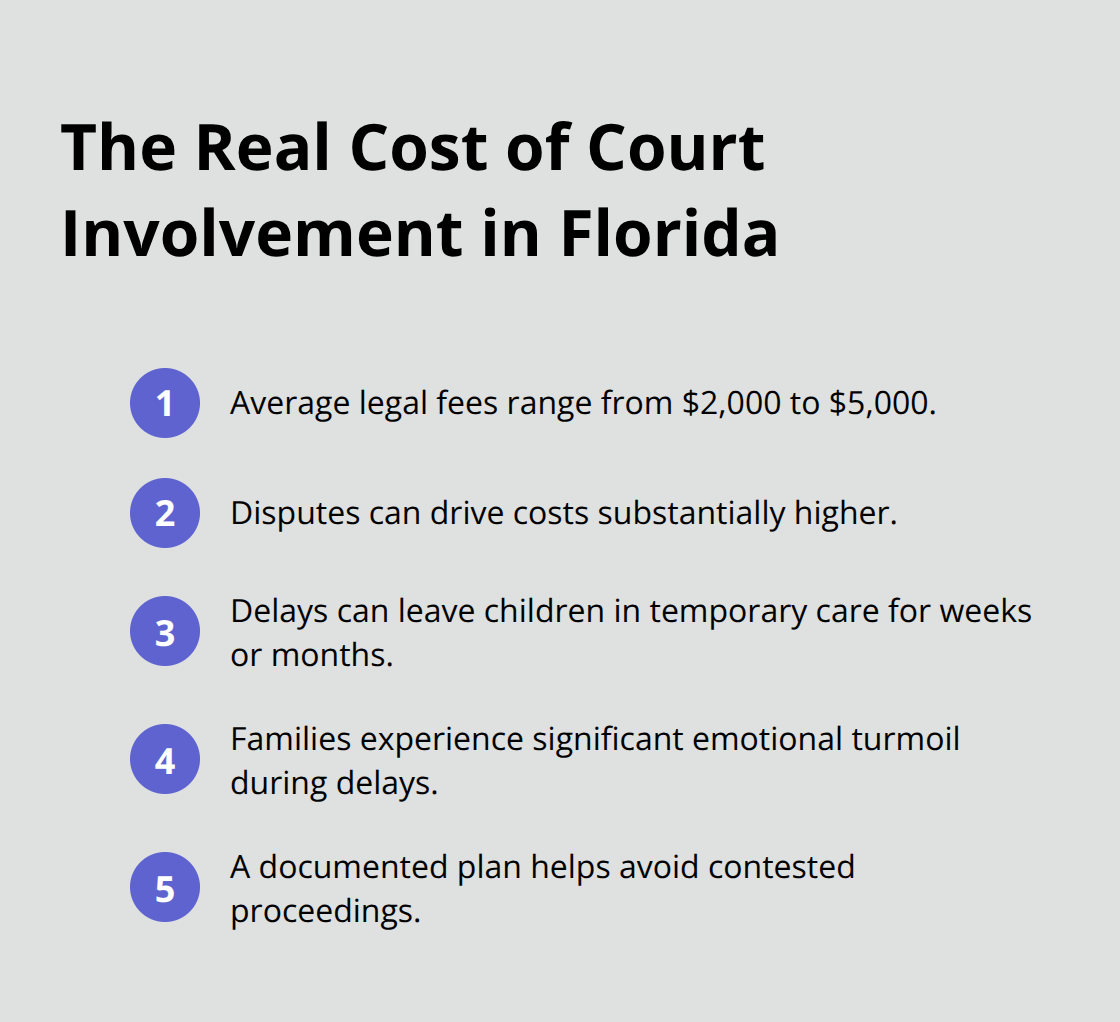
Clear written guardianship wishes that courts recognize and respect eliminate the need for contested proceedings.
Securing Your Children’s Future on Your Terms
When you name a specific guardian in advance, you control who raises your children and how they’re raised. You can select someone who shares your values, parenting philosophy, and religious or cultural practices. You can also designate alternate guardians in case your first choice becomes unable or unwilling to serve. This planning gives your children continuity and stability rooted in your actual preferences, not a judge’s interpretation of what’s best. Without this documentation, your family members might disagree about guardianship, forcing the court to choose sides and potentially placing your children with someone you would never have selected. Proactive planning prevents this outcome entirely.
What Happens Without a Written Plan
The absence of a guardianship plan creates a vacuum that courts fill with their own judgment. Your children may end up with relatives you didn’t intend to raise them, or worse, with strangers appointed by the state. Family members who disagree about guardianship (a common scenario in blended families or when multiple relatives want custody) force the court to hold contested hearings that drain resources and damage relationships. Your children witness family conflict at their most vulnerable moment. A written guardianship plan removes this possibility and keeps your family’s private decisions private.
Moving Forward With Clarity
Your next step involves understanding the specific guardianship options available to Northeast Florida residents and how each one fits your family’s situation.
Key Guardianship Options Available to Northeast Florida Residents
Full Guardianship vs. Limited Guardianship
Florida law gives you multiple guardianship options available, and the right choice depends entirely on your family’s circumstances and what you want to control. Full guardianship grants someone complete authority over your child’s personal, educational, and medical decisions-the broadest option available. Limited guardianship restricts the guardian’s powers to specific areas, leaving you (or another designated person) with authority over other decisions. This distinction matters because full guardianship removes all your parental rights, while limited guardianship preserves some of your control even if you become incapacitated.
St. Augustine and Palatka families often overlook limited guardianship, assuming full guardianship is the only choice. That assumption costs them flexibility they don’t need to lose. If you want your designated guardian handling day-to-day care and schooling but you retain medical decision-making authority, limited guardianship accomplishes exactly that. Court costs for establishing either type run $2,000 to $5,000 in Florida, but limited guardianship sometimes involves lower ongoing supervision fees because courts view it as less restrictive.
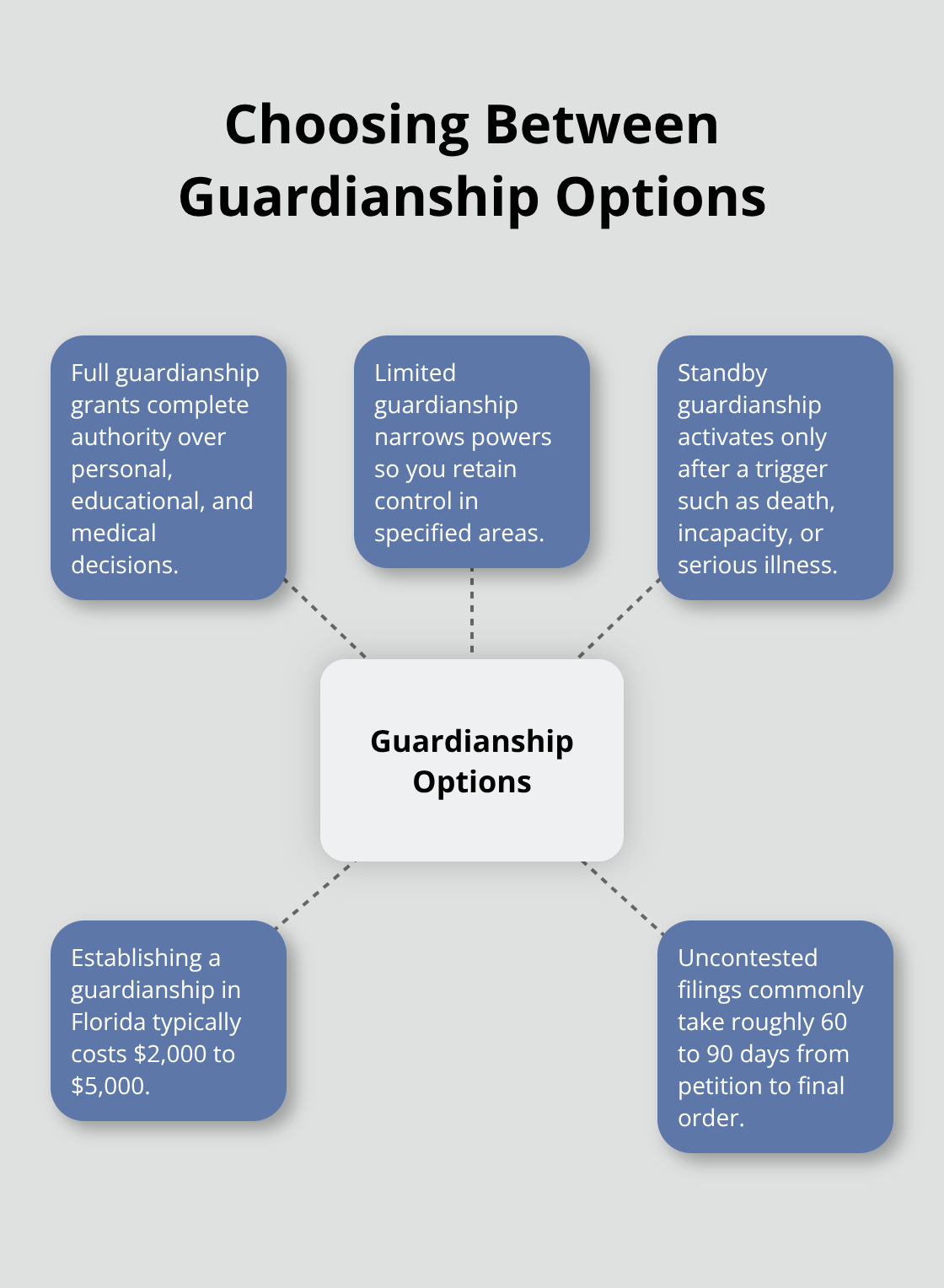
The filing process takes roughly 60 to 90 days from petition to final order, assuming no disputes arise.
Standby Guardianship for Unexpected Circumstances
Standby guardianship offers a fundamentally different approach that prevents guardianship from taking effect unless a triggering event occurs-your death, mental incapacity, or serious illness. You remain your child’s legal guardian until that moment arrives, maintaining full parental authority while preparing a backup plan. This option appeals to parents who want control now but recognize they may need someone to step in immediately if catastrophe strikes. The standby guardian can assume responsibility without court involvement in many situations, though Florida law does require proper documentation and sometimes judicial confirmation depending on the trigger.
Healthcare Proxies and Financial Powers of Attorney
Healthcare proxies and financial powers of attorney work alongside guardianship planning rather than replacing it entirely. A healthcare proxy lets you name someone to make medical decisions for your child if you cannot, while a financial power of attorney designates who manages money and property. These tools handle specific decisions without removing parental rights, making them valuable for parents who want targeted delegation rather than full guardianship. Many Northeast Florida families combine all three approaches-naming a healthcare proxy, establishing a financial power of attorney, and designating a standby guardian-creating layers of protection that address different scenarios.
The specific guardianship structure you select shapes how smoothly your plan functions when you need it most. Your next step involves identifying the right person to serve as guardian and having the conversations that make your plan real.
How to Choose the Right Guardian and Document Your Wishes
Selecting Someone Who Aligns With Your Values
Selecting a guardian ranks among the most consequential decisions you’ll make as a parent, yet most people approach it casually or avoid it entirely. The person you name will shape your child’s daily life, values, education, and emotional development during formative years. This isn’t a role for someone you simply like or feel obligated to ask-it demands someone whose parenting style aligns with yours, who has the financial stability to support additional dependents, and who genuinely wants the responsibility.
St. Augustine and Palatka parents frequently choose relatives out of habit rather than careful evaluation, then discover too late that the person they named lacks the temperament or resources to handle guardianship effectively. Start by identifying candidates who share your core values around discipline, education, religious practice, and daily routines. Interview them directly about their parenting philosophy, their willingness to maintain your family traditions, and how they’d handle specific scenarios like medical emergencies or school conflicts.
Having Honest Conversations About Guardianship
Don’t assume someone will say yes simply because you’re family-some people feel pressured into guardianship and resent the role, which damages both the guardian relationship and your child’s stability. Ask whether they have the time, finances, and emotional capacity to take on guardianship, including potential ongoing costs for healthcare, education, and activities. Florida courts recognize guardians who demonstrate financial responsibility and stable housing, so your chosen guardian’s circumstances matter legally as well as practically.
These conversations feel uncomfortable, but they prevent far worse problems later. A potential guardian who hesitates or expresses doubt may not be the right fit, regardless of how much you like them. Listen carefully to their responses and trust your instincts about whether they truly want this responsibility or simply feel obligated to accept it.
Creating Legally Recognized Documentation
The actual documentation step determines whether your guardianship plan holds up when courts review it. Write your guardianship wishes in a formal document that Florida courts recognize-typically through your will, a separate guardianship designation, or a standby guardianship petition filed with the court. Simply telling people your preferences verbally carries no legal weight; courts will ignore informal statements and follow state law instead.
Name at least one alternate guardian in case your first choice becomes unwilling or unable to serve before guardianship takes effect. Include specific instructions about your child’s upbringing (religious education, healthcare preferences, school choices, contact with extended family) so your designated guardian understands your intentions and can honor them. Have your guardian candidate acknowledge in writing that they accept the role and understand their responsibilities, which strengthens your plan’s credibility.
Maintaining and Updating Your Plan
Store your guardianship documents in a secure location and inform your chosen guardian, your spouse if you have one, and your attorney where to find them. Update your guardianship plan every three to five years or whenever major life changes occur-new children, relocation, changed relationships with potential guardians, or shifts in your values around parenting approaches.
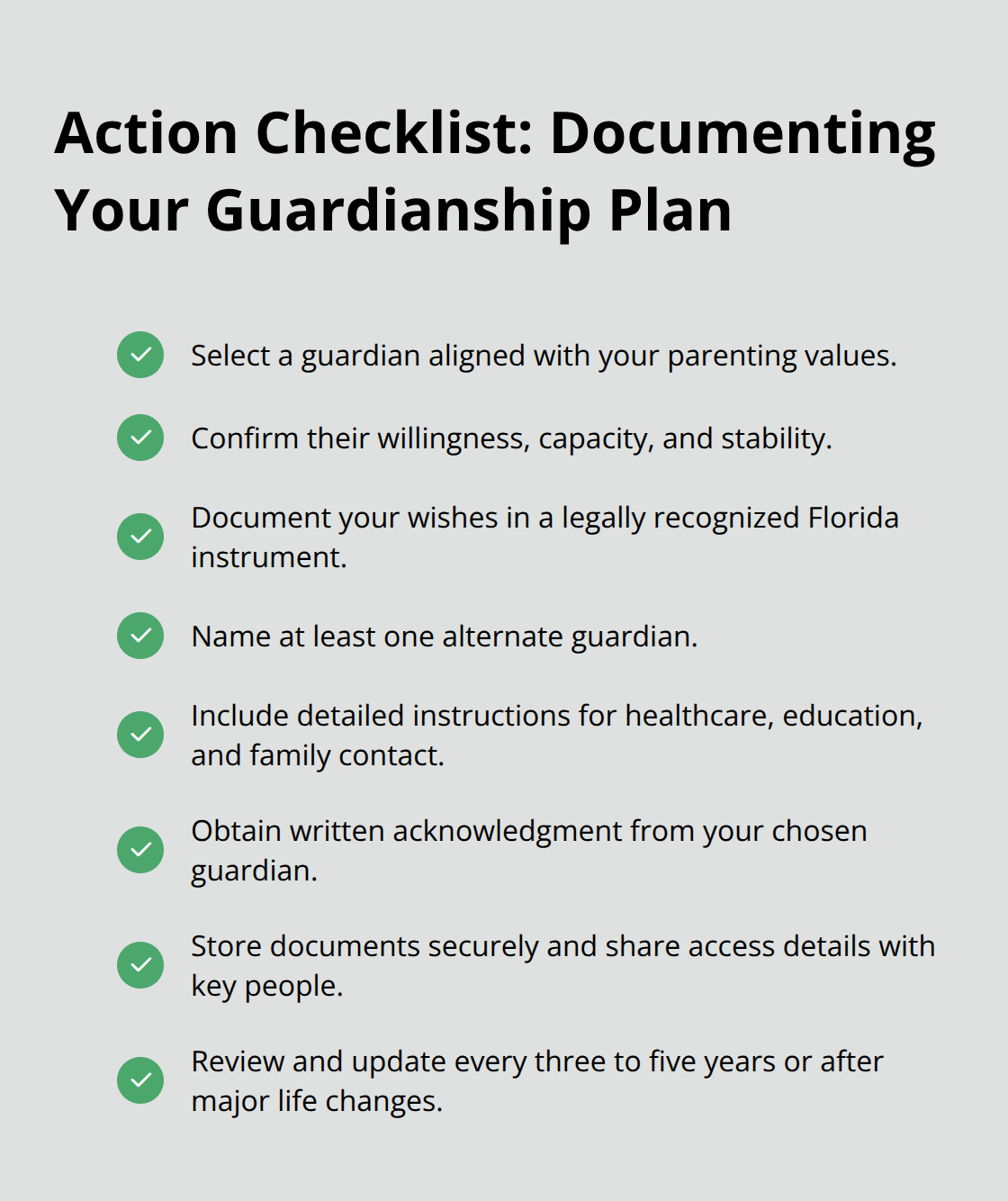
Life circumstances shift, and your guardianship plan must reflect your current situation and preferences to remain effective when your family needs it most.
Final Thoughts
Guardianship strategies for families only work when you act on them. Waiting for the right moment or the perfect plan leaves your family facing uncertainty exactly when they need clarity most. The families in St. Augustine and Palatka who implement guardianship planning sleep better at night knowing their children’s futures align with their own values and preferences, not a judge’s interpretation of state law.
Your guardianship plan requires three concrete steps: you select a guardian who shares your parenting philosophy, you have direct conversations with that person about their willingness and capacity to serve, and you document your wishes in writing so Florida courts recognize and respect your decisions. The cost runs between $2,000 and $5,000 in most cases, and the process takes 60 to 90 days-far less than the expense and emotional toll of contested court proceedings when your children need stability most. We at Family, Estate & Mediation Law help Northeast Florida families navigate guardianship planning with practical strategies tailored to your specific situation, and we guide you through each decision to make sure your plan reflects your actual preferences.
Contact our St. Augustine or Palatka office to schedule a consultation and take the step that protects what matters most.