A healthcare directive is one of the most important documents you’ll create, yet many people struggle to find clear, accurate guidance on how to complete one properly. At Family, Estate & Mediation Law, we’ve seen countless individuals waste time sorting through conflicting information or worse, rely on outdated templates that don’t match their state’s requirements.
The right healthcare directive search tips can save you months of confusion and protect your wishes when it matters most. This guide shows you exactly where to find trustworthy resources and how to spot the red flags that signal poor information.
Where to Find Trustworthy Healthcare Directive Resources
State Government Health Department Websites
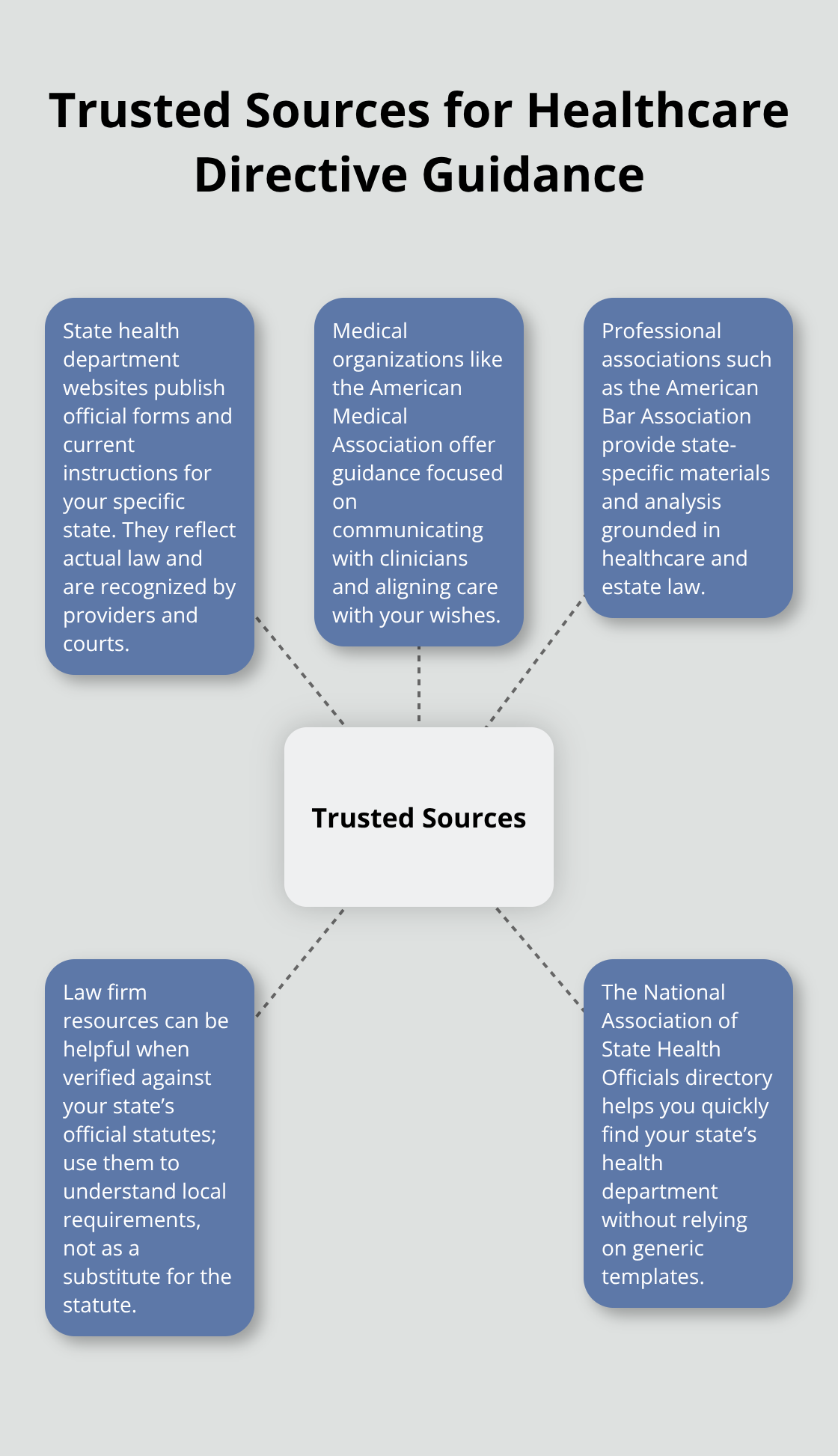
State government health department websites stand as your most reliable starting point. These sites publish the actual legal forms your state requires, along with instructions that reflect current law. The National Association of State Health Officials maintains links to every state’s health department, making it straightforward to locate your specific state’s requirements without wading through generic templates. Many states, including Florida, post their healthcare directive forms directly on their health department websites at no charge. This matters because outdated templates circulating online often miss recent legislative changes.
Between 2020 and 2024, some states updated their advance directive rules to address telehealth provisions and COVID-related scenarios, yet many free template sites never refreshed their content.
Medical Organizations and Professional Associations
Medical organizations and professional associations offer another strong resource channel. The American Medical Association provides guidance on healthcare directives that focuses on practical communication with doctors, while the American Bar Association’s Section of Real Property, Trust and Estate Law publishes substantive materials on state-specific requirements. These organizations typically hire professionals with deep knowledge of healthcare law, so their content reflects genuine understanding rather than generic advice.
Law Firm Resources and Verification
Law firm websites often provide free educational resources because they understand the specific needs of people in their service areas. However, approach individual law firm content with one critical filter: verify any state-specific claims against your state’s official statutes. A firm’s guidance on Florida requirements, for instance, must align exactly with Florida Statutes Chapter 765. Never assume that solid general information about healthcare directives automatically applies to your state’s particular rules.
The resources you select during your search phase directly shape the quality of your final document. Knowing where trustworthy information lives helps you avoid the common pitfalls that trip up most people when they attempt to complete this critical paperwork on their own.
Common Mistakes People Make When Searching for Healthcare Directive Guidance
Relying on Outdated or Generic Templates
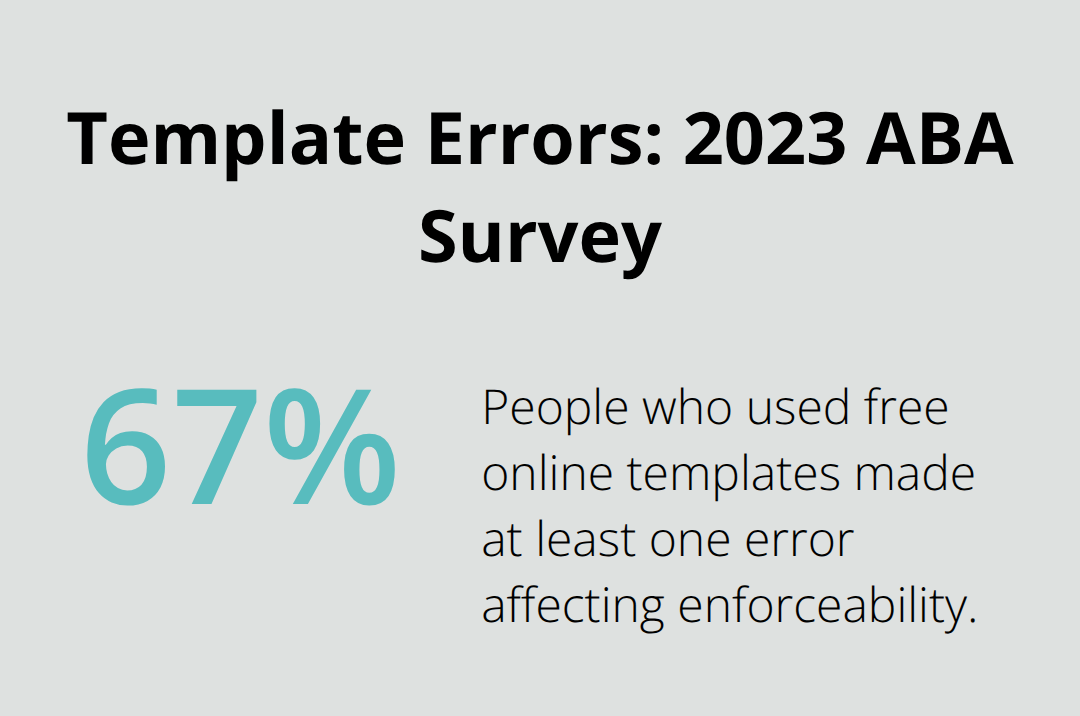
Outdated templates represent the single largest problem when people search for healthcare directive guidance online. A 2023 survey by the American Bar Association found that 67% of people who used free online templates for healthcare directives made at least one error that could affect enforceability. Templates circulating on general legal sites often reflect laws from five or ten years ago, missing critical updates.
Many states added specific language requirements around telehealth decision-making between 2020 and 2024, yet templates published before 2019 contain none of these provisions. When you use a generic template from a site that serves all fifty states, you gamble that the form addresses your state’s particular rules. Florida’s healthcare directive requirements under Florida Statutes Chapter 765 differ significantly from New York’s Public Health Law Article 29-C, yet search engines treat both states’ needs identically. The template that works perfectly in one state may fail legal scrutiny in another, leaving your wishes unenforceable when your family needs them most.
Ignoring State-Specific Legal Requirements
State-specific legal requirements are where most searches fail completely. People often find general information about what a healthcare directive should contain, then assume that generic guidance applies to their location. Your state’s health department likely publishes the exact form your healthcare providers will recognize, along with specific language requirements that courts will examine. This distinction matters far more than most people realize when they begin their search.
Confusing Healthcare Directives with Other Estate Planning Documents
Confusing a healthcare directive with a living will or power of attorney compounds the problem significantly. These documents serve different purposes-a healthcare directive addresses medical decisions, a living will addresses end-of-life wishes, and a healthcare power of attorney designates someone to make medical choices on your behalf. Many people complete the wrong document entirely because free search results blur these distinctions. When you search for healthcare directive guidance, you must verify every claim against your state’s official statutes and official forms. If a resource doesn’t cite specific state law or link to your state’s actual required form, that resource isn’t trustworthy enough to guide a document this important. The next section shows you exactly how to evaluate whether the resources you’ve found actually meet these standards.
How to Evaluate Healthcare Directive Resources
Check Who Wrote the Resource
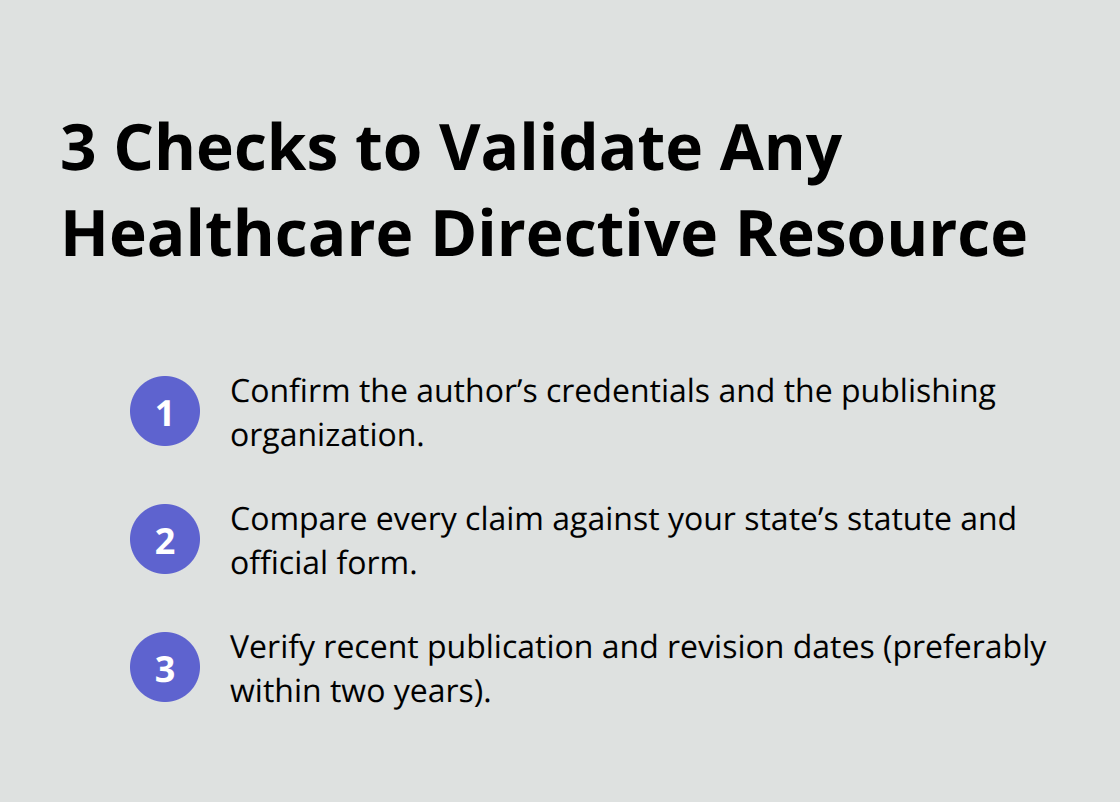
The author behind any healthcare directive resource matters far more than most people realize during their search. Medical professionals, healthcare lawyers, and state health officials who write about healthcare directives bring specific knowledge that general content writers simply don’t possess. When you find a resource, check who authored it and what organization published it.
The American Medical Association, state bar associations, and your state’s health department all employ people whose job involves staying current with healthcare law changes. A healthcare directive guide published by your state’s health department carries weight because that department enforces healthcare laws and knows exactly what courts and hospitals require. Contrast this with a template site operated by people with no medical or legal background, and the difference becomes stark.
If a resource doesn’t identify its author or organization, that’s your signal to move on immediately. Look specifically for authors with healthcare law credentials, medical licenses, or positions within recognized health organizations. A guide written by a nurse with healthcare law training differs fundamentally from one written by a general legal template service.
Verify Claims Against State Statutes
Official state statutes provide your verification checkpoint for any resource you’re considering. Pull up your state’s actual healthcare directive law on your state legislature’s website and compare what the resource claims against what the statute actually says. If a resource states that your state requires specific language about organ donation decisions, verify this matches your state’s statute word-for-word.
Many resources oversimplify state requirements or add unnecessary language that isn’t legally mandated, which confuses people into thinking they’ve missed something critical. Your state’s health department website typically provides both the official form and the statute it references, giving you two sources to check any claim. This direct comparison takes fifteen minutes and protects you from relying on inaccurate information.
Examine Publication and Revision Dates
Publication dates reveal whether a resource reflects current law or outdated requirements. Any healthcare directive guidance older than three years should raise immediate concerns, particularly for states that updated advance directive laws between 2020 and 2024. Check the revision date on every resource, not just the initial publication date.
A guide published in 2019 that claims it was last updated in 2021 may have missed significant 2023 or 2024 legislative changes in your state. If a resource shows no revision date at all, treat that as a red flag indicating the information may be stale. Current resources (updated within the last two years) reflect the actual legal landscape you’re navigating right now.
Final Thoughts
Finding trustworthy healthcare directive information requires you to start with your state’s health department website and official statutes-these sources reflect actual legal requirements, not guesses. You must verify any resource against your state’s specific laws by comparing claims directly to the statute text. You should check publication dates and author credentials before trusting guidance that will shape one of your most important documents.
Generic resources fail because healthcare law varies significantly by state, and the 67% error rate among people using free online templates demonstrates what happens when you skip verification steps. A template that satisfies Florida requirements won’t work in Georgia, yet search engines treat both identically. Your healthcare directive search tips should always include a direct comparison between what you find online and what your state’s actual statute requires.
State laws change, medical technology evolves, and your personal circumstances shift over time. We at Family, Estate & Mediation Law help individuals and families navigate estate planning, including healthcare directives tailored to your specific situation and state requirements. If you’re ready to move beyond generic templates and get guidance grounded in your actual state law, contact Family, Estate & Mediation Law to discuss your healthcare planning needs.