
Most parents never think about what happens if they become unable to care for their children. Without a preneed guardianship plan in place, the court decides who raises your kids.
At Family, Estate & Mediation Law, we help families establish preneed guardianship options before a crisis forces difficult decisions. This guide walks you through your choices and shows you how to protect your family’s future.
What Preneed Guardianship Actually Means
Understanding Preneed Guardianship
Preneed guardianship is a legal arrangement you establish now to designate who will care for your minor children if you become incapacitated or pass away. Unlike traditional guardianship, which courts impose after a crisis occurs, preneed guardianship lets you make this decision yourself. Florida law recognizes several preneed options, and the one you choose depends on your family’s specific situation.
The core difference matters tremendously: with preneed planning, your wishes guide the court’s decision rather than a judge making assumptions about what’s best for your children. This shift from reactive to proactive planning eliminates uncertainty and prevents family conflict when emotions run highest.
Why Control Matters Most
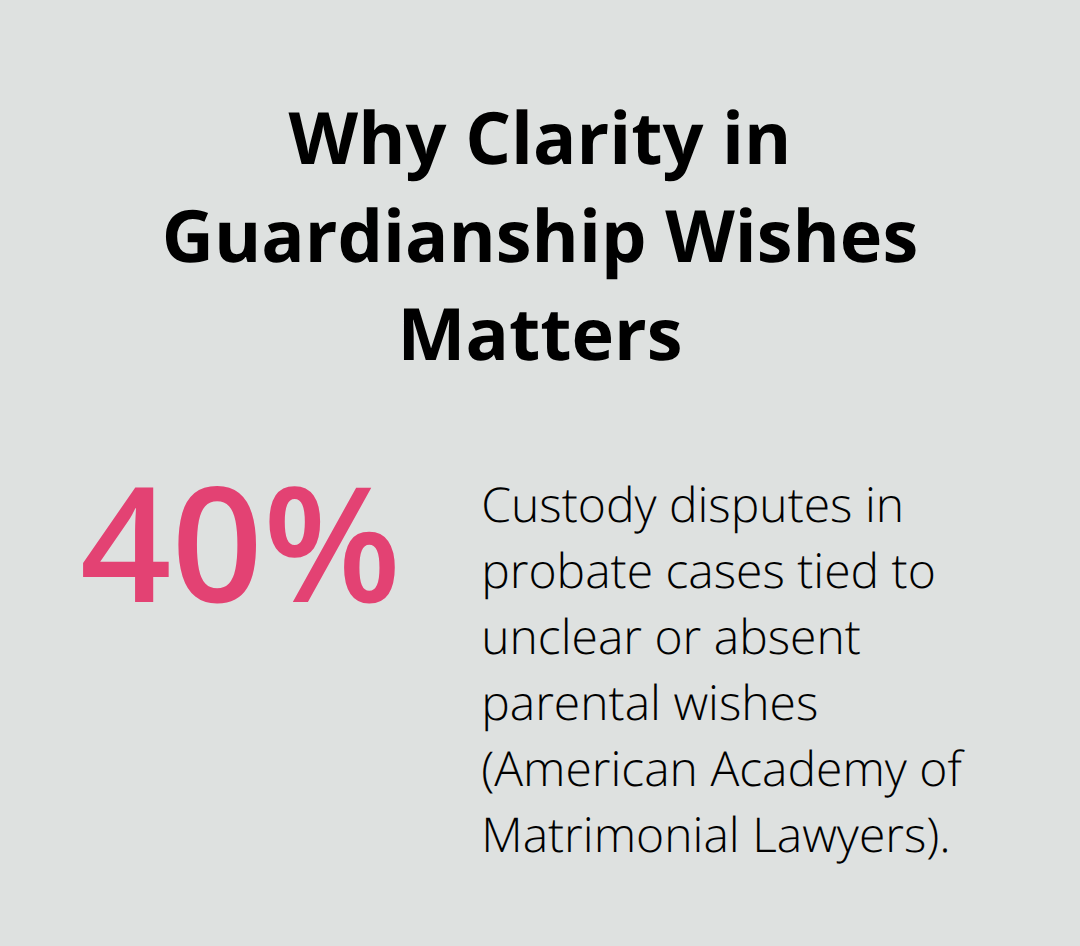
The practical benefit of preneed guardianship is control. According to the American Academy of Matrimonial Lawyers, over 40% of custody disputes in probate cases stem from unclear or absent parental wishes. When you don’t specify your guardianship preferences in advance, the court appoints someone based on the best-interest standard, which can mean a relative you wouldn’t have chosen or even a state-appointed guardian.
How Florida Courts Recognize Your Preferences
Florida courts do consider your written preferences, but only if you document them properly in a will, trust, or guardianship designation. Standby guardianship petitions filed before crisis offer the strongest protection because they activate guardianship authority immediately upon your incapacity without requiring a new court proceeding. This matters because traditional guardianship appointments after incapacity can take weeks or months, leaving your children in limbo.
The Real Cost of Inaction
The financial and emotional costs of contested guardianship battles burden your children and drain estate resources that should support them. Families who establish preneed guardianship arrangements report greater peace of mind, knowing their children’s care aligns with their values and priorities.
Understanding these distinctions positions you to explore the specific preneed guardianship options available in Florida and determine which structure fits your family’s needs.
Your Preneed Guardianship Options in Florida
Standby Guardianship: Immediate Protection When You Need It
Standby guardianship stands as the strongest preneed option available in Florida because it activates immediately upon your incapacity without requiring a separate court hearing. You petition the court now to appoint a standby guardian, but that guardian’s authority remains dormant until you become unable to care for your children. The moment your incapacity occurs-whether from illness, accident, or medical emergency-the standby guardian steps in without delay. This matters because traditional guardianship appointments after incapacity typically take 4 to 8 weeks to process, leaving your children in uncertainty while the court system moves slowly. Florida Statute 744.331 specifically allows this arrangement, making it the fastest path to protection.
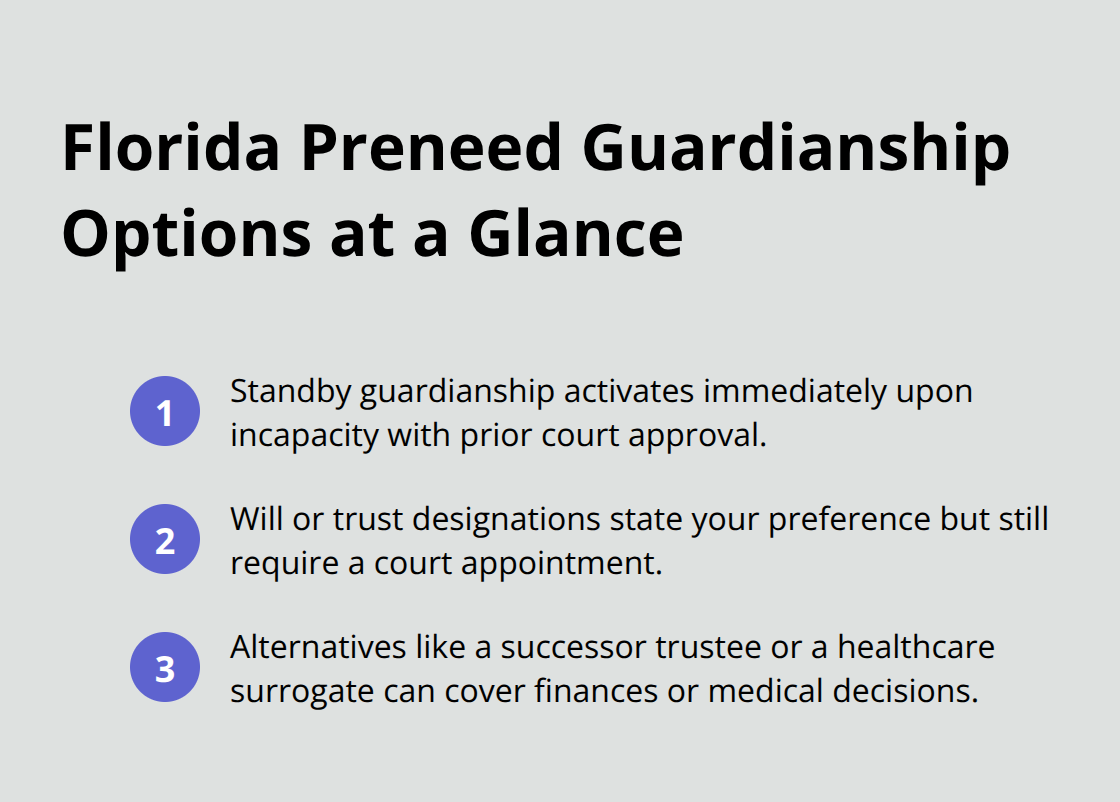
You must file the petition with the court, notify the proposed guardian, and have them consent in writing. The court then holds a hearing to determine if standby guardianship serves your children’s best interests.
Guardianship Designations in Your Estate Documents
Guardianship designations embedded in your will or revocable living trust offer a simpler alternative that works well if you expect several years before your children reach adulthood. You simply name your preferred guardian in these documents, and the court considers your written preference if guardianship becomes necessary. However, this approach lacks the speed of standby guardianship because the court must still hold a hearing and formally appoint the guardian after your incapacity or death is established. The court weighs your stated preference heavily, but the judge retains authority to override your choice if circumstances change or the designated person becomes unavailable.
Alternatives to Full Guardianship
If you want to avoid full guardianship entirely, Florida law allows alternatives like naming a successor trustee in a revocable trust to manage your children’s finances and living arrangements until they turn 18, or designating a healthcare surrogate who makes medical decisions during temporary incapacity. The surrogate option particularly helps if you face surgery or short-term medical treatment but expect to recover. Each structure carries different legal weight and practical implications depending on whether your incapacity is temporary or permanent and how much control you want your designated person to exercise over finances versus daily caregiving decisions. Your choice among these options determines not only who cares for your children but also how quickly they receive that care and what authority your designated guardian holds.
Understanding which option fits your family’s circumstances positions you to take the next step: selecting the right person for this responsibility and establishing the legal framework that protects your children.
How to Establish Preneed Guardianship in Florida
Establishing preneed guardianship in Florida requires specific paperwork, clear communication with your chosen guardian, and professional guidance to avoid costly mistakes. The process differs depending on whether you select standby guardianship or embed your preferences in estate documents, but both paths share one requirement: you must act while you have full decision-making capacity. Courts scrutinize any guardianship petition filed during or after incapacity, creating delays and potential challenges that defeat the entire purpose of planning ahead.
Choose Your Guardianship Structure First
Start by deciding which guardianship structure fits your situation. Standby guardianship demands the most immediate action because you petition the court now with your proposed guardian’s written consent, and the court holds a hearing to evaluate whether the arrangement serves your children’s interests. Florida Statute 744.331 governs this process, and the paperwork includes a petition to appoint standby guardian, medical documentation of your current capacity to consent, the standby guardian’s written acknowledgment of the responsibility, and often a physician’s statement confirming your ability to execute the petition.
If you choose guardianship designations within your will or revocable living trust instead, the process feels simpler initially-you simply name your preferred guardian in those documents-but this approach offers less protection because the court must still hold a hearing and formally appoint the guardian after your incapacity becomes established, which typically takes weeks. Standby guardianship works better for families with young children and genuine concerns about potential incapacity because the speed advantage matters tremendously when children need immediate care.
Have Honest Conversations with Your Chosen Guardian
Naming someone as guardian without their knowledge or consent ranks among the most damaging mistakes parents make in preneed planning. That person may refuse the role, lack the financial stability to care for your children, hold parenting philosophies that conflict sharply with yours, or face their own health challenges you didn’t anticipate. Before naming anyone, sit down and discuss the role explicitly.
Explain what you expect regarding education, religious upbringing, discipline, financial management of your children’s inheritance, and contact with extended family. Ask whether they genuinely want this responsibility and whether their life circumstances allow it. Many parents avoid these conversations because they feel awkward or fear rejection, but skipping this step creates far worse outcomes. If your first choice declines or becomes unavailable, having identified a backup guardian during these conversations prevents the court from imposing someone you wouldn’t have selected.
Consider whether your chosen guardian lives close enough to minimize disruption to your children’s schooling and friendships, whether they have the physical health to manage young children’s demands over potentially many years, and whether they possess the emotional stability to parent during grief after losing you. Geographic distance matters more than many parents realize-studies on guardianship placements show that children experience better adjustment outcomes when placed with guardians in familiar communities rather than relocated across state lines. Document these conversations and your reasoning in a letter to your children and the court explaining why you selected this particular person, which strengthens the court’s confidence in your choice if anyone later challenges it.
Work with an Attorney to Finalize Your Plan
Attempting preneed guardianship without an attorney creates vulnerabilities that can invalidate your entire plan or delay its activation when your children need it most. A guardianship petition filed incorrectly gets rejected by the court, requiring you to refile and extending timelines precisely when speed matters. An attorney handles the technical requirements-proper petition format, accurate legal descriptions, correct court filings, and all necessary notifications to interested parties-that separate valid arrangements from defective ones.
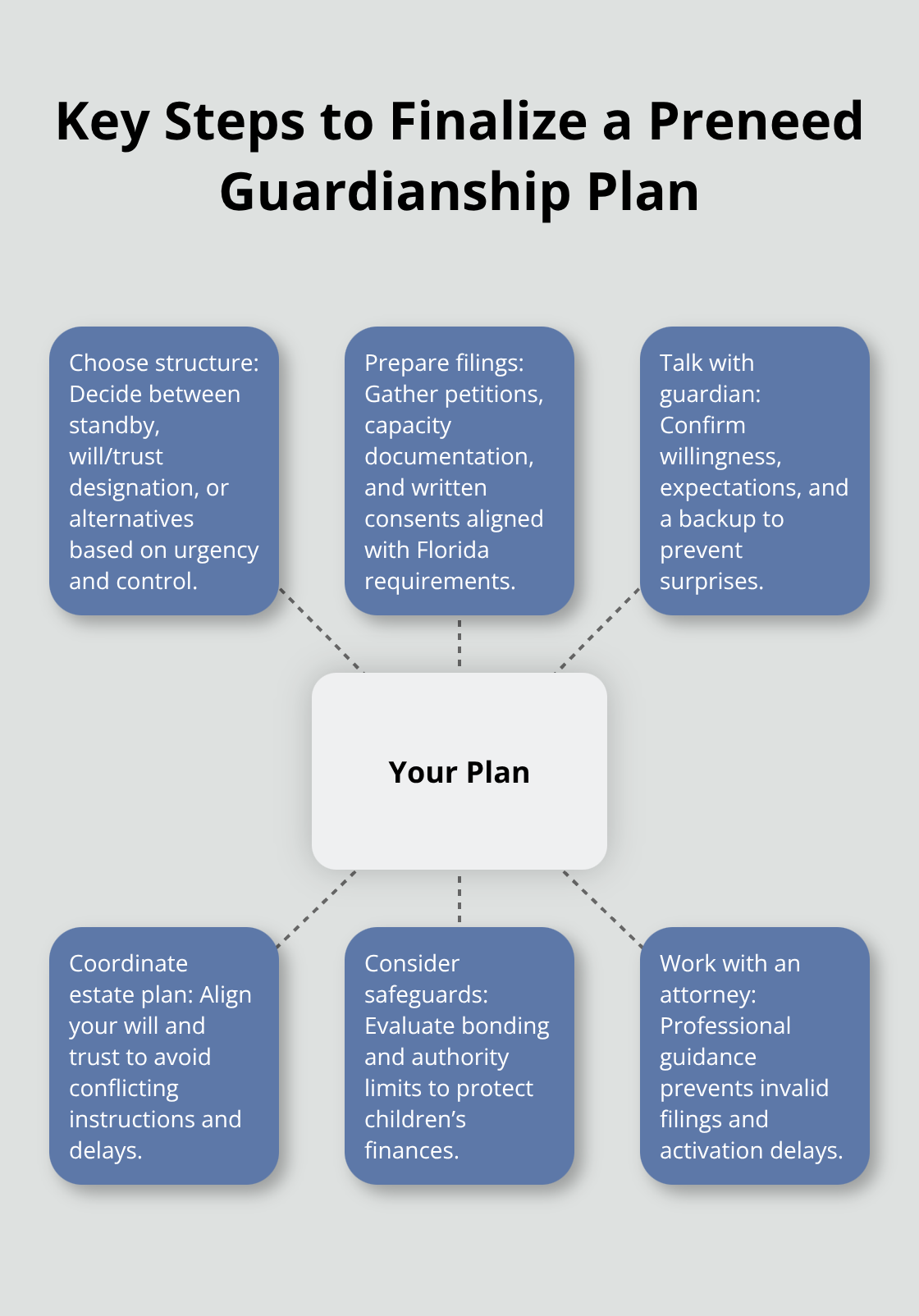
Your attorney identifies whether your situation requires standby guardianship, guardianship designations in estate documents, or alternative structures like successor trustee appointments. They coordinate your guardianship plan with your will and revocable living trust to prevent conflicting instructions that confuse the court and delay implementation. Additionally, your attorney can advise on whether your chosen guardian needs bonding protection (court-ordered insurance ensuring they manage your children’s finances properly) and whether you want to restrict their authority to preserve your children’s inheritance for education or other specific purposes rather than allowing unrestricted spending. The cost of professional guidance typically ranges from eight hundred to two thousand dollars depending on complexity, which seems substantial until compared against the months of court delays, contested hearings, and legal fees that result when families attempt this process without guidance and get it wrong.
Final Thoughts
Preneed guardianship options give you real control over your family’s future when you act now while you have full capacity. Standby guardianship offers the fastest activation when you need it most, while guardianship designations in your will or trust provide a simpler path if you expect years before your children reach adulthood. Whichever structure you choose, the key is having honest conversations with your chosen guardian about what the role actually demands.
We at Family, Estate & Mediation Law understand that guardianship planning feels overwhelming because it forces you to imagine scenarios you’d rather not consider. That’s exactly why we guide families through this process with practical strategies tailored to your specific circumstances. Our team has helped Northeast Florida families with estate planning and family law matters, and we’ve seen firsthand how preneed planning protects children and prevents costly court battles that drain resources meant to support them.
Taking the first step means scheduling a conversation with an attorney who can evaluate your situation and recommend the right guardianship structure for your family. Visit our office in St. Augustine or Palatka to connect with our team and begin the planning process that gives your children genuine protection.