
Most people in St. Augustine and Palatka don’t realize that will beneficiary designations bypass their will entirely. This means the person you named on your bank account or life insurance policy gets that money, regardless of what your will says.
We at Family, Estate & Mediation Law see families lose thousands because outdated or conflicting designations create chaos after someone passes. Getting this right now prevents heartbreak and legal battles later.
How Beneficiary Designations Actually Work
What a Beneficiary Designation Is
A beneficiary designation is a legal form you complete with your bank, insurance company, or investment firm that names who receives money from that specific account when you die. It operates separately from your will and carries its own legal weight. When you pass away, the financial institution follows this form directly, and the money transfers straight to whoever you named-completely outside the probate process. This transfer happens fast, often within weeks, which sounds convenient until you realize it might go to the wrong person. The Social Security Administration reports that roughly 35% of Americans have named beneficiaries on accounts, yet most haven’t reviewed those designations in over five years. That gap between what you intended and what actually happens is where real problems start.
Why Beneficiary Designations Override Your Will
The reason beneficiary designations override your will is straightforward: the financial institution only follows the form you signed with them. If your will states your money goes to your children equally, but your bank account still names your ex-spouse as beneficiary, your ex-spouse receives that account. No judge can change it. No will provision overrides it. This situation occurs regularly in St. Augustine and Palatka, creating conflicts where families fight over money that was already legally transferred before the will was even read. A divorce decree does not automatically remove an ex-spouse from these designations in Florida, which means you could be transferring money to someone you haven’t spoken to in a decade.
Which Accounts Use Beneficiary Designations
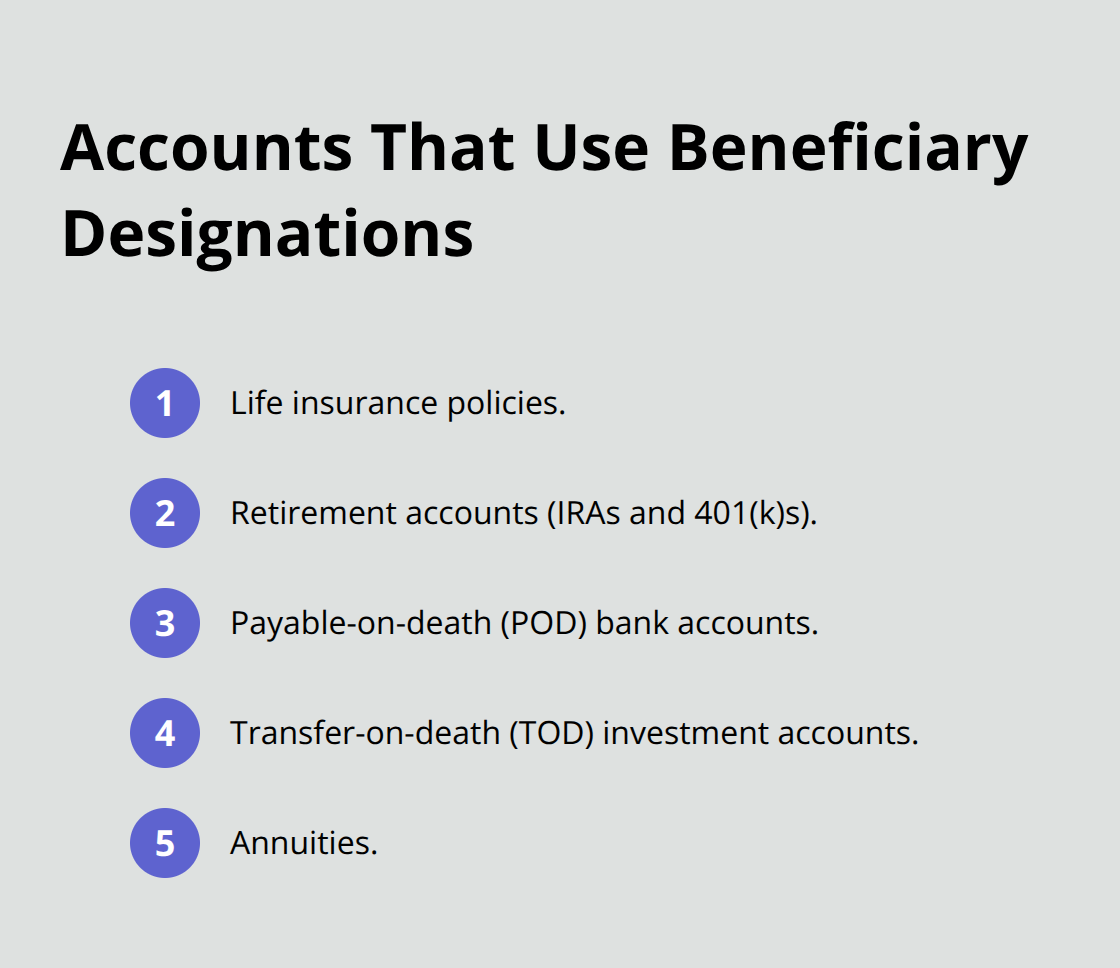
Life insurance policies, retirement accounts (IRAs and 401(k)s), payable-on-death bank accounts, transfer-on-death investment accounts, and annuities all use beneficiary designations. Some people don’t even know their employer’s retirement plan has one.
These accounts represent a significant portion of most people’s assets, yet they operate under rules completely separate from your will. Treating beneficiary designations as the primary way your money actually transfers-rather than relying on your will-prevents costly mistakes. The next section covers the mistakes people make most often with these designations and how those errors create unnecessary conflict for the families left behind.
Common Mistakes People Make With Beneficiary Designations
Outdated Designations That Don’t Match Your Life
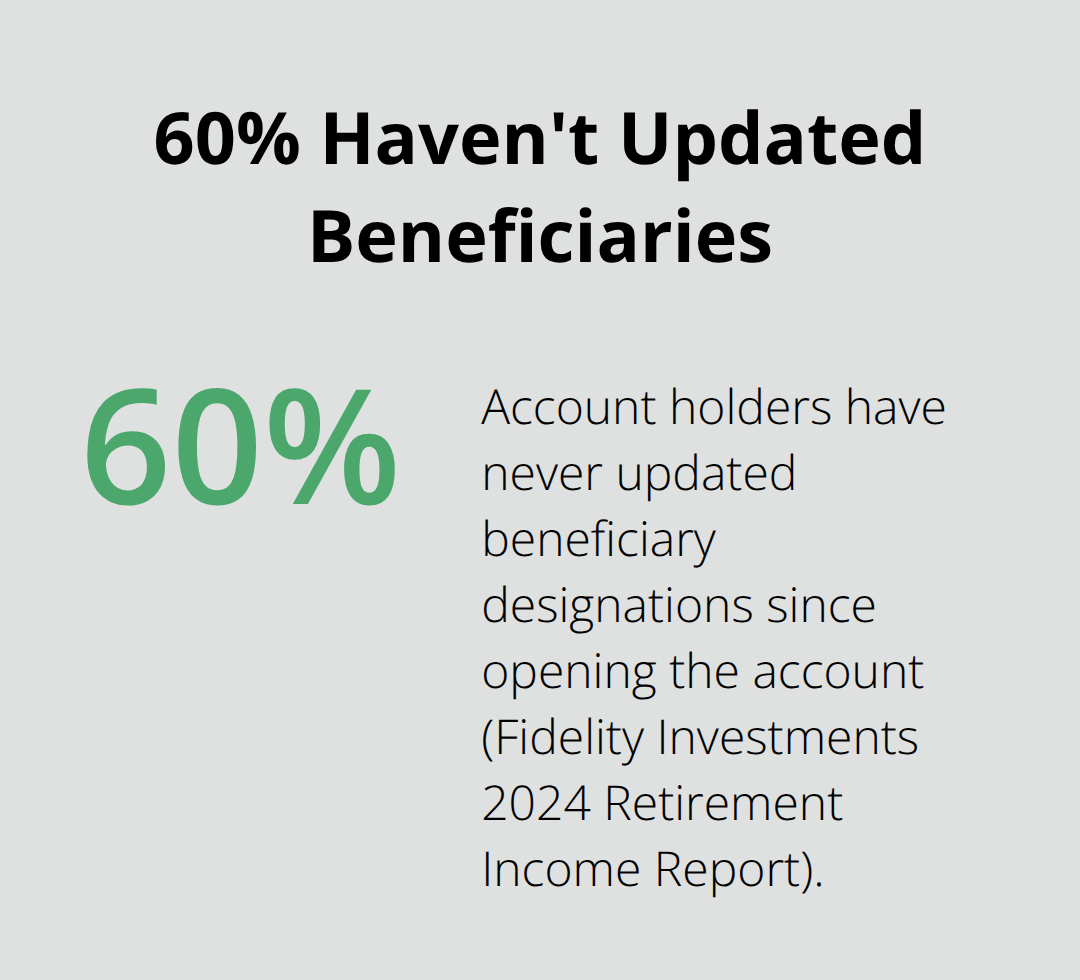
Most people in St. Augustine and Palatka hold beneficiary designations that no longer match their actual lives. A divorce happens, a child is born, a parent passes away-and the designation stays frozen in time. The Fidelity Investments 2024 Retirement Income Report found that 60% of account holders have never updated their beneficiary designations since opening the account. That statistic explains why families regularly lose money to ex-spouses named decades earlier. Florida law does not automatically remove an ex-spouse from beneficiary designations after divorce, which means your good intentions become someone else’s windfall unless you take action yourself.
When Life Changes Demand Action
Life changes require paperwork updates. Remarriage, the birth of grandchildren, significant shifts in your financial situation, or changes in your relationship with family members all demand that you contact your financial institutions and submit new designation forms. Many people assume their attorney handled this during estate planning, but beneficiary designations live with the financial institution, not in your will or trust. You must physically update them at each bank, insurance company, and investment firm where you hold accounts. This separation between your legal documents and your financial accounts catches people off guard repeatedly.
The Problem With Naming Minors or Incapacitated Beneficiaries
Naming a minor child or an incapacitated family member as a direct beneficiary creates serious complications that drain resources and delay money reaching the people who need it. When a minor inherits money through a beneficiary designation, a court-appointed guardian must manage those funds, adding legal fees and court oversight that costs thousands of dollars. If you name someone with a disability, that inheritance can disqualify them from government benefits like Supplemental Security Income or Medicaid, leaving them worse off financially than before. The solution involves naming a trust as your beneficiary rather than naming individuals directly, but most people never think to do this because beneficiary designation forms present the simplest option.
Conflicting Language That Freezes Your Accounts
Conflicting or unclear language in your designations creates another layer of problems. Naming someone as primary beneficiary without specifying what happens if that person dies before you, or using vague descriptions like naming your estate as beneficiary instead of specific people, leaves room for dispute. When language is ambiguous, financial institutions sometimes freeze the account while family members argue over interpretation, and the money sits untouched for months. Taking two hours to review and clarify every designation across every account you hold prevents these costly delays and disputes. The next section walks through how to conduct that review and align your designations with your overall estate plan.
How to Review and Update Your Beneficiary Designations
Create a Complete Inventory of All Your Accounts
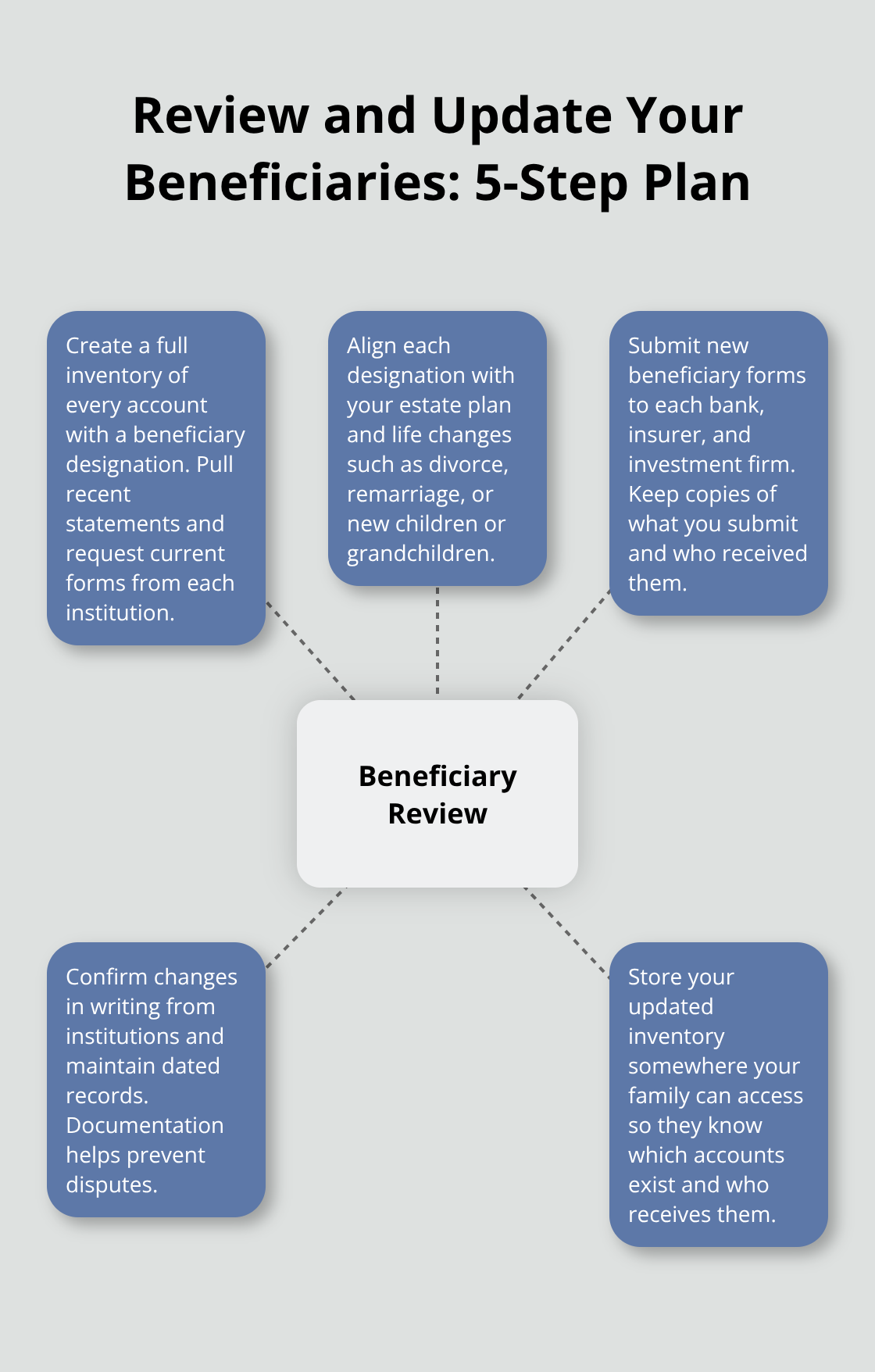
Start with a complete inventory of every account you own that has a beneficiary designation. This means your life insurance policies, retirement accounts at current and former employers, bank accounts with payable-on-death features, investment accounts, and annuities. Most people discover they have more accounts than they remember, especially if they’ve changed jobs or banks over the years. Pull statements from the past year for each account and contact the financial institutions directly to request current beneficiary designation forms. Don’t rely on old paperwork sitting in a drawer because institutions update their forms regularly, and outdated forms create confusion during the claims process.
Write down the exact names, Social Security numbers, and relationships of everyone currently listed as a beneficiary on each account. This simple list becomes your working document for the next steps.
Align Designations With Your Estate Plan and Life Circumstances
Once you have this complete picture, align each designation with your overall estate plan and life circumstances. If you’ve gone through a divorce, remarriage, or had children or grandchildren born since you opened these accounts, your designations almost certainly don’t match your actual wishes. Florida law requires you to take active steps to remove an ex-spouse from these designations, so a divorce decree alone doesn’t protect you.
Consider whether naming individuals directly makes sense or whether naming a trust as beneficiary would better serve your family (especially if any beneficiary is a minor, has special needs, or struggles with financial management). Family, Estate & Mediation Law can review how your beneficiary designations work alongside your will and trust documents, helping you align everything toward the same goals.
Submit New Forms and Document Your Changes
After you’ve made decisions about who should receive what, contact each financial institution and submit new designation forms. Keep copies of every form you submit, including the date you submitted it and the name of the person who received it. Financial institutions sometimes lose paperwork, so having documentation protects you from disputes later.
Once the institutions confirm your changes in writing, update your personal inventory and store it somewhere your family can find it after you pass away. This step ensures that when the time comes, your family knows exactly which accounts exist and who receives them (without confusion or unnecessary delays).
Final Thoughts
Your will beneficiary designations control where your money actually goes when you die, making this one of the most important decisions you’ll make for your family. The mistakes covered in this post-outdated names, conflicting language, naming minors directly-happen constantly in St. Augustine and Palatka, and they cost families thousands in legal fees while creating unnecessary conflict during an already difficult time. Fixing these problems takes just a few hours of your time right now.
Start this week by gathering statements from every account you own that has a beneficiary designation and writing down exactly who is named on each one. If you haven’t reviewed these designations since a major life change like divorce, remarriage, or the birth of grandchildren, they almost certainly need updating. Florida law won’t remove an ex-spouse automatically, so you must take action yourself to prevent money from going to someone you no longer want to benefit.
After you complete your inventory, align those designations with your overall estate plan and consider whether naming a trust as beneficiary makes more sense than naming individuals directly (especially if any beneficiary is a minor or has special needs). Contact each financial institution, submit new forms, and keep copies of everything you submit to protect your family from disputes later. We at Family, Estate & Mediation Law help families across Northeast Florida get their estate plans right, including reviewing how will beneficiary designations work alongside wills and trusts, so schedule a consultation at our St. Augustine or Palatka office to make sure your designations match your actual wishes.