
A will contest can unravel years of careful planning and leave your family in conflict. At Family, Estate & Mediation Law, we’ve seen how preventive steps make the difference between a smooth estate transfer and costly litigation.
Will contest avoidance starts with understanding what triggers challenges and taking concrete action now. This guide walks you through proven strategies to strengthen your plan and protect your wishes.
Why Wills Face Legal Challenges in St. Augustine and Palatka
Capacity Claims Remain the Primary Threat
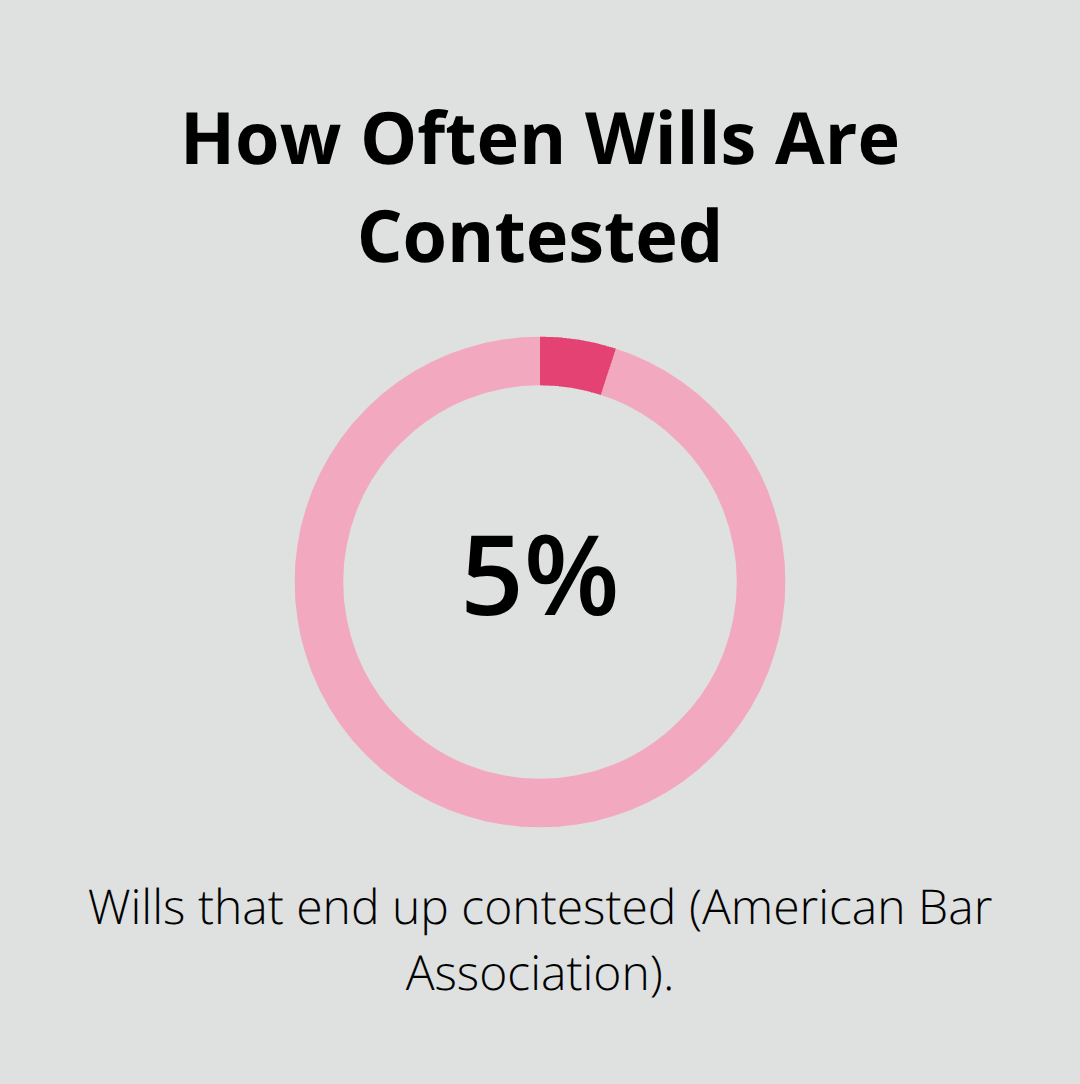
The American Bar Association reports that approximately 5% of wills end up contested, but that figure climbs significantly when families face financial strain or unclear intentions. The most common trigger remains capacity claims, where someone argues the testator lacked mental fitness to make decisions.
Florida law requires testators to understand the nature and extent of their property, recognize family members, and comprehend how their will distributes assets. Courts examine medical records, medication histories, and the timing of cognitive decline-often years after death. Without contemporaneous documentation of your mental state at the time you signed, challengers gain substantial ground in arguing you lacked capacity.
Undue Influence and Manipulation Allegations
Undue influence allegations follow closely behind capacity claims, with someone asserting that coercion or manipulation shaped your decisions. These cases rarely involve obvious pressure; instead, they involve adult children living in the home, caregivers with access to assets, or spouses in second marriages. Judges scrutinize whether the influencer had opportunity, motive, and whether your plan deviated dramatically from prior intentions. The absence of documented reasoning about why you made specific choices leaves your will vulnerable to these attacks.
Technical Execution Failures Create Avoidable Vulnerabilities
Technical execution failures represent the third major vulnerability. Florida requires strict compliance with statutory requirements: two witnesses present simultaneously, both signing in your presence, and you acknowledging the document. A single missing initial, a witness signing outside the room, or ambiguous language about intent can invalidate an entire will. These defects often succeed because testators assume proper execution happened without verifying each statutory requirement.
The Documentation Gap That Weakens Most Wills
The practical reality is that these challenges often succeed because the evidence supporting your will’s validity simply doesn’t exist. Testators rarely document their mental state or explain their reasoning, leaving courts to piece together intent from scattered evidence. Families in St. Augustine and Palatka benefit most from understanding that challenge prevention demands contemporaneous documentation, not assumptions that relationships will remain stable or that your will’s terms seem obviously reasonable. The stronger your documentation during creation, the harder it becomes for challengers to mount credible arguments. Video evidence, witness statements about capacity, and attorney notes explaining your reasoning transform a vulnerable document into one that withstands scrutiny. Your next step involves taking concrete action to strengthen your plan before challenges arise.
Build Documentation That Stops Challenges Before They Start
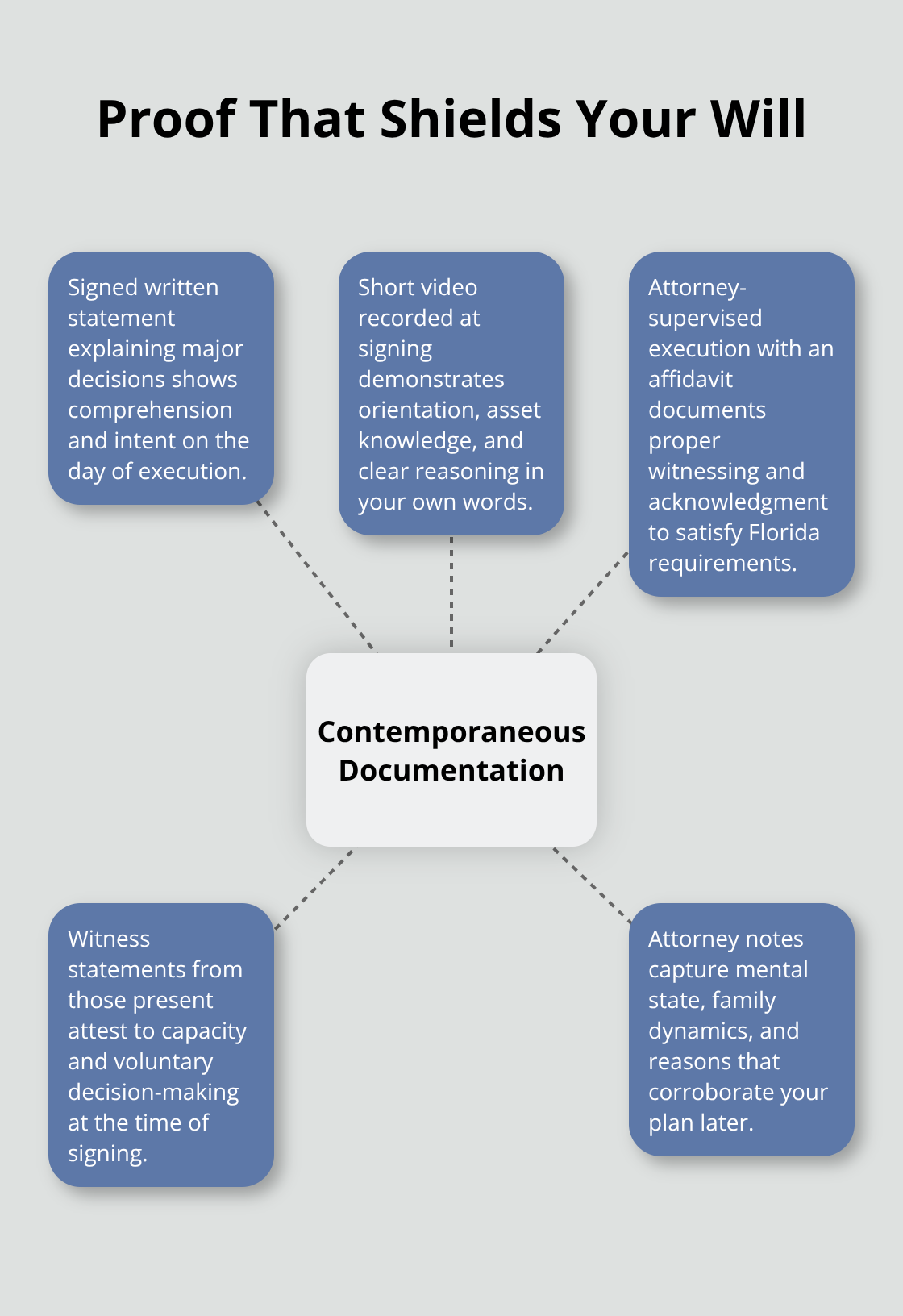
Creating a will that survives scrutiny requires contemporaneous evidence of your mental clarity and reasoning at the moment you sign. This isn’t about creating a perfect narrative-it’s about having objective proof that stands up in court. We at Family, Estate & Mediation Law recommend starting with a written statement explaining your major decisions. Document why you leave assets to specific people, why you exclude certain family members, and how you arrived at these choices. This document, signed and dated on the same day as your will, becomes powerful evidence against capacity claims. Courts see this as direct proof of your thinking process rather than relying on speculation about your state of mind years later. Include specific details about your assets, your family structure, and your understanding of how your plan distributes everything. A vague statement carries minimal weight; detailed reasoning demonstrates genuine comprehension of what you own and whom you’re affecting.
Video Recording Provides Irrefutable Evidence of Capacity
Recording yourself on video the day you execute your will offers unmatched protection against capacity challenges. The video should show you answering straightforward questions about the date, your family members’ names, your major assets, and why you made specific choices in your will. Speak clearly and naturally-this isn’t a performance. Courts viewing video evidence can assess your demeanor, speech clarity, and mental sharpness far better than they can interpret written documents created years earlier. Keep the recording under five minutes and store it securely with your will documents. Many attorneys in St. Augustine and Palatka now recommend this practice, and for good reason: a challenger arguing you lacked capacity faces an uphill battle when video contradicts their claims directly. Pair this video with witness statements from people present during execution who can attest to your clarity and voluntary decision-making.
Attorney-Supervised Execution Eliminates Technical Vulnerabilities
Working with an attorney who personally supervises your will’s execution prevents the technical defects that invalidate otherwise sound documents. Your attorney verifies that both witnesses are present simultaneously, watches each person sign in the correct order, and confirms you acknowledge the document with full understanding. This creates an attorney affidavit documenting proper execution-a legal tool that shifts the burden to challengers to prove the will invalid rather than requiring your estate to defend it. Florida courts recognize attorney-drafted wills with proper execution as substantially more difficult to challenge than self-created documents. Your attorney also maintains contemporaneous notes about your mental state, your expressed wishes, and any family dynamics that influenced your decisions. These notes become evidence supporting your will’s validity if challenges arise later.
The Power of Contemporaneous Documentation in St. Augustine and Palatka
Combining written statements, video evidence, and attorney supervision creates a documentation package that challengers struggle to overcome. Each element reinforces the others-your written explanation supports what the video shows, and your attorney’s notes corroborate both. This multi-layered approach (rather than relying on a single form of proof) transforms your will from a vulnerable document into one with substantial legal protection.
Families in St. Augustine and Palatka who take these steps during will creation avoid the expensive litigation that arises when documentation gaps invite challenges. The investment in proper documentation now eliminates years of potential conflict later. Your next decision involves selecting the right estate planning strategies that further reduce contest risk and protect your family’s stability.
Strategies That Actually Stop Will Contests
Trusts Provide Superior Contest Protection
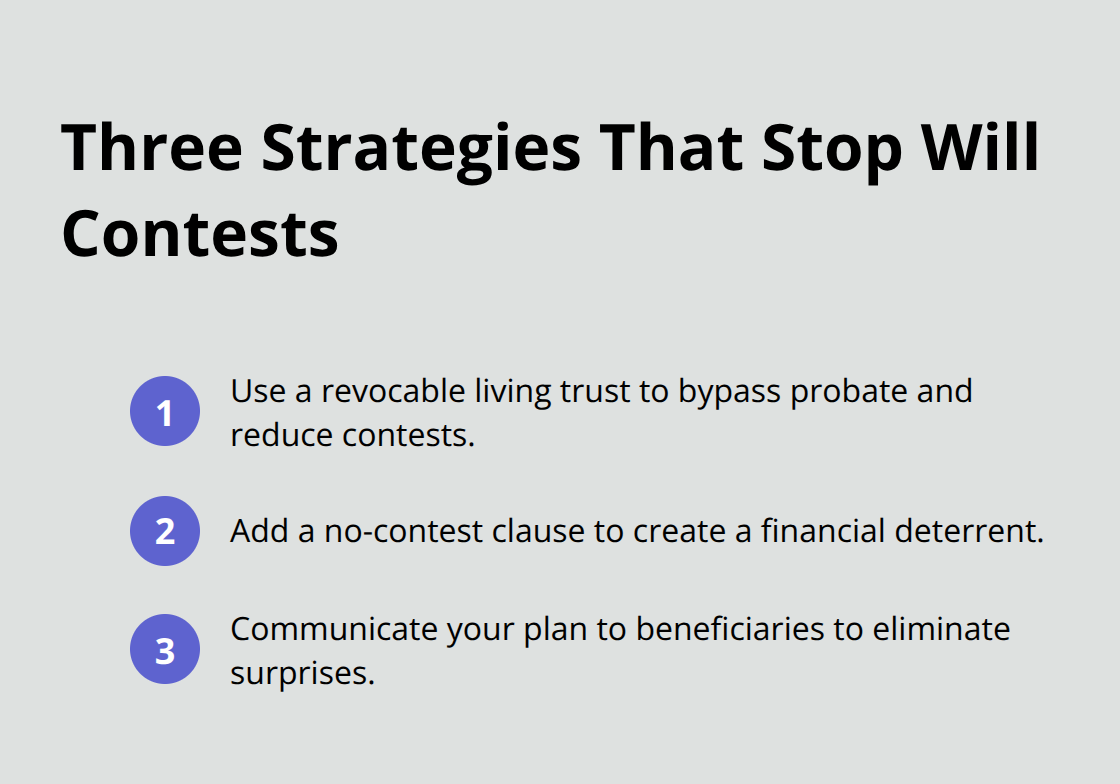
Trusts outperform wills in contest resistance because they operate outside probate court entirely. When your assets sit in a revocable living trust rather than passing through a will, challengers lose their primary legal avenue for attacking your plan. Florida law allows trusts to remain private, meaning family members cannot access documents during the challenge period the way they can with wills filed in probate court. The National Law Review reports that trust-based estates face significantly fewer contests than will-only plans, primarily because the trust document itself never becomes public record. Funding a revocable living trust with your primary assets-your home, investment accounts, vehicles, and liquid savings-requires more upfront work than a simple will, but the payoff in contest resistance justifies the effort. Your successor trustee manages the trust assets directly after your death without court involvement, meaning no probate delays and no opportunity for disgruntled relatives to file challenges that tie up your estate for years.
No-Contest Clauses Create Financial Deterrents
A no-contest clause inside your will or trust provides another powerful deterrent to potential challengers. This clause states that anyone who challenges your plan forfeits their inheritance entirely. Florida courts enforce these clauses with increasing frequency, and the financial consequence makes most potential challengers reconsider before filing suit. If your will leaves someone $50,000 and includes a no-contest clause, that person loses everything if they mount a challenge and fail. The psychological weight of this provision stops many contests before they start.
Family Communication Eliminates Surprises
Family communication represents the third pillar of contest prevention, though it requires genuine honesty rather than vague reassurance. Explain your decisions to adult children and beneficiaries before death, not after. If you’re leaving assets unequally among children, explain your reasoning directly-perhaps one child received substantial help during their education, or another has greater financial need, or you’re compensating for prior family dynamics.
This conversation feels uncomfortable, but families in St. Augustine and Palatka who have these discussions experience far fewer contests than those who leave decisions unexplained. Document these conversations through a letter of intent signed and dated, describing your wishes and your reasons. Your beneficiaries may disagree with your choices, but they cannot claim they were shocked or misled by your plan. This transparency eliminates the emotional fuel that often ignites contests-the sense that something hidden or unfair occurred.
Final Thoughts
Will contest avoidance requires three concrete actions you take during your lifetime. Document your mental clarity and reasoning the moment you sign your will through written statements, video evidence, and attorney supervision. Structure your estate using trusts and no-contest clauses that make challenges financially and legally difficult. Communicate your decisions to family members before death so no one faces unexpected surprises that fuel resentment and litigation.
Professional legal guidance transforms will contest avoidance from a theoretical concern into a practical reality. An attorney who supervises your execution, maintains contemporaneous notes about your capacity and reasoning, and structures your plan with trusts and protective clauses gives your estate the strongest possible foundation. This approach builds a record that makes challenges economically pointless and legally weak, without creating excessive paperwork or unnecessary complexity.
We at Family, Estate & Mediation Law work with families across Northeast Florida to implement these protective strategies before problems arise. Your next step involves scheduling a consultation to review your current plan and identify which protective measures fit your situation. Taking action now protects your family’s stability and preserves your legacy exactly as you intend.